The trouble with a food diary is its tense. It is written in the past. Breakfast has been eaten, lunch has been cleared, and the app arrives like a stern accountant to explain what those decisions cost. PurpleTeal's founders looked at that routine and noticed an awkward detail: the person receiving the advice could no longer do anything about the meal in question. Their answer was to move the conversation a few minutes earlier, when the plate was still on the table.
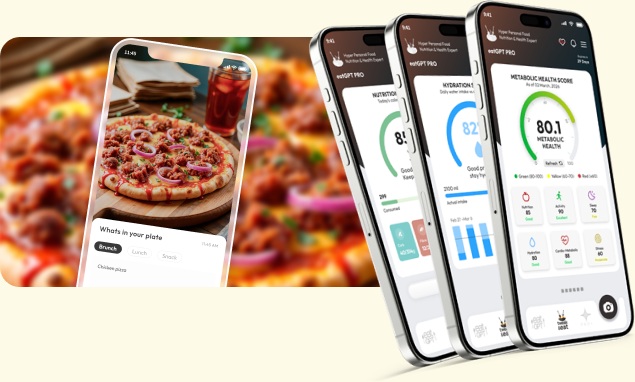
That is the idea behind Tweak & Eat. A user takes a picture before eating. The software identifies food and estimates its nutritional make-up; a nutritionist can suggest a smaller portion, a substitution, or a different eating sequence. The advice is meant to be small enough to act on immediately. No one needs to reconstruct yesterday's biryani from memory or pretend that dinner will be redesigned from scratch.
An app with a sense of timing
Narayanan Ram and Anand Subra co-founded PurpleTeal, which is based in Fremont, California. Ram brought a background in software and video technology; Subra had spent two decades at IBM working across strategy and health care. Their first distribution problem was less intimate than dinner. PurpleTeal operated personalized mobile health messaging for telecom companies and consumers, using prompts to encourage actions around wellness and chronic conditions. In Indonesia, the company worked with NextNation Prisma to reach Indosat and XL subscribers. A 2017 company release described strong growth there in late 2016. The channel had reach; it could put a health message in somebody's pocket.

Reach did not guarantee a useful decision. A message can remind you that healthy eating matters, but it cannot see the rice on your plate. In an account of the product's origin, the founders pointed to the limits of apps that logged food and explained mistakes only afterward. They wanted a way to give advice in the situation itself. Tweak & Eat launched on app stores in 2017, replacing the vague future tense of a reminder with the very specific present tense of a photograph.
The sequence matters because behavior is easiest to influence at the point where it happens. It also imposes a hard operational rule: advice that arrives after the meal is finished has missed its appointment. PurpleTeal answered that speed problem by developing Tweakyfai, its food-recognition system, to do preparatory work for nutritionists. In 2019 the company said the system had identified more than 200,000 unique real-world food plates. Subra made a useful distinction: ordinary meals photographed by users look different from polished food images on the internet. That is a product insight hiding inside a data problem. If the training material resembles a menu shoot, the app may stumble over a crowded household plate.
“There is a huge difference between photo shopped food images on the internet, and the real world food plates as an user consumes it.”Anand Subra, company release, 2019
PurpleTeal reported 100,000 “tweaks” during a six-month period by March 2019, when the app had about 350,000 users across five Asian markets. By October that year, it reported more than 800,000 installs. These are company-reported milestones, and they count different things: a tweak is an intervention, a user is a person, and an install is a download. Their common message is more modest and more interesting than a vanity number: people were willing to show a real plate to a phone and wait for a response.
The price of a timely nudge
The consumer offer began with a free base service and paid access to more direct coaching. A January 2020 release introduced a Premium Tweak Pack with unlimited photo submissions, nutrition labels, trend tracking and personalized guidance. After a free first week, it cost ₹99 per month at launch in its announced market. That is a historical launch price, not a current quote. Today the app stores list several different in-app purchases, while the product has expanded well beyond that first pack.
The economics explain the hybrid design. Human nutritionists can interpret an unusual meal and give advice in context, but their time is finite. Software can identify likely foods, estimate macronutrients and surface exceptions quickly. The company describes Tweakyfai as a tool that helps nutritionists, not merely a machine that replaces them. A customer can use the app for a healthier next meal; a nutritionist can use it to see what a client actually eats rather than what a plan assumes.
It is still a conditional promise. A photograph gives clues, not a laboratory reading. Hidden oil, portion size and mixed dishes complicate any estimate, and a hurried eater may never wait for a reply. The method fits someone willing to photograph meals and consider a small change. It will be less useful where that routine is impractical, or where a person needs clinical care beyond food advice. The product's own hospital expansion recognizes that a plate can be part of care without being the whole of it.
From the kitchen to the ward
PurpleTeal's latest product pages sell to two audiences. For individuals, Tweak & Eat now pairs food recognition with eatGPT and a “Metabolic Score” drawing on nutrition, hydration, sleep, stress, activity and cardio-metabolic signals. The August 2026 Google Play update added manual input for all six components, so a user does not need a wearable to fill in the picture. The company is trying to make the app useful between meals as well as at them.
For hospitals, Tweak & Eat Hub and its Continuum program extend the same photo-and-follow-up logic after discharge. The company describes patient meal photos, nutritionist support, clinician dashboards, reminders and conversational calls. A separate inpatient tool, N.A.V.I., lets a nurse or caretaker capture what a patient actually ate, including leftovers. The question is ordinary and consequential: did the food served become the food consumed? Hospitals often have a menu record; the plate gives a different answer.

PurpleTeal names several hospitals on its site, including VS Hospitals and Erode Cancer Centre. A 2021 deal with mobile commerce company Mondia aimed to distribute Tweak & Eat in South Africa, Oman and Saudi Arabia first, using Mondia's operator network. At the time, PurpleTeal said it served nearly two million subscribers across 15 countries and in a dozen languages. The current company site says Tweak & Eat has passed three million downloads; Google Play separately shows more than one million Android downloads. None of those totals tells us how many people still use the app every week, but they show the unusual span of the distribution experiment.
That span is what distinguishes PurpleTeal in a crowded nutrition market. A calorie logger asks the user to do the bookkeeping. A conventional diet plan asks the user to remember instructions. A remote consultation asks the expert to infer daily reality from a conversation. PurpleTeal's bet is that a photograph, taken at the right instant, can bring the meal into the conversation. AI makes the first reading faster; an expert can add judgment; a hospital can carry the exchange beyond the ward.
A lesson small enough to copy
The reusable idea here is not a proprietary food database. It is the decision to locate advice beside the action it is supposed to change. An education company could offer feedback while a student is solving a problem. A finance app could intervene before a purchase rather than graph regret afterward. The difficult part is earning the right to interrupt, then responding fast enough and specifically enough that the interruption helps.
PurpleTeal began with messages that could reach millions. It has spent the years since trying to make one of those messages arrive at a better moment. That is a quieter ambition than promising to fix everybody's health. It is also easier to picture: a person, a plate, a phone, and enough time left to make a different choice.
Keep exploring
PurpleTeal · Tweak & Eat · Hospital Hub · eatGPT · Android app · iPhone app
LinkedIn · X · Facebook · Instagram · Mondia partnership