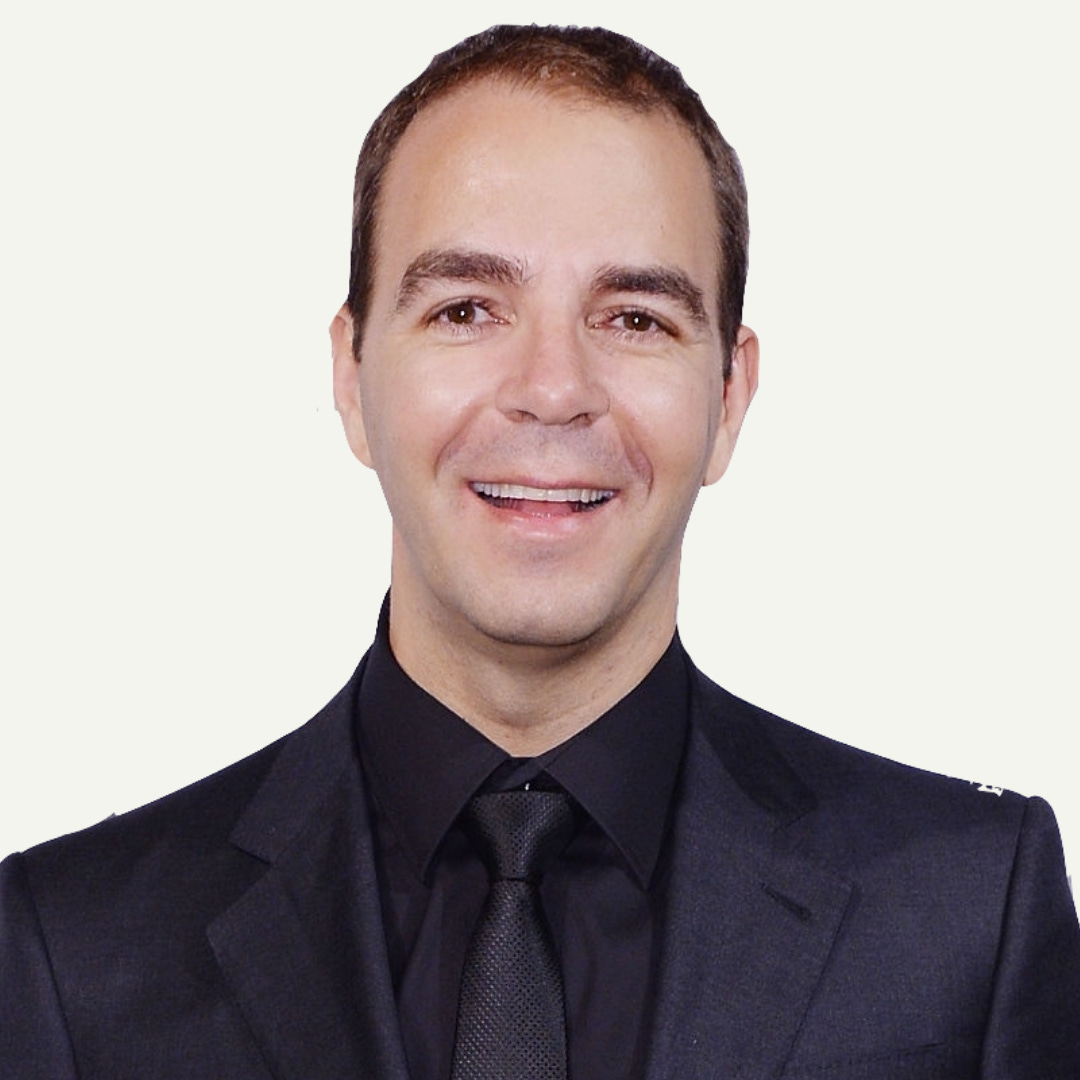
Profile
The Man Who Bet on Everything Before It Was Obvious
Three hundred startup pitches land on Fabrice Grinda's desk every week. He backs three. The math is brutal. The results are not. Over 25 years, that 1-in-100 filter has produced a portfolio that includes early stakes in Alibaba, Airbnb, Uber, Coupang, Vinted, and Flexport - companies that between them are worth hundreds of billions of dollars. Forbes named him the #1 Angel Investor in the world. He shrugs at the title and keeps reading pitches.
Grinda grew up in Nice, on the French Riviera, in a family where conversation was sport and technology was curiosity. He got his first PC at age 10, in 1984. The trajectory was set before he understood what a trajectory was. By the time he reached Princeton, he was already running a business - exporting high-end computers from the U.S. to Europe to help pay tuition. He graduated summa cum laude in 1996, taking two of the department's most prestigious economics prizes on the way out. McKinsey hired him. He lasted two years.
The first company he co-founded was Aucland, a European auction platform that raised $18 million from Bernard Arnault's venture fund in 1999. The dot-com bust took it out. Grinda walked away from the rubble and did what most people in that position do not: he started again immediately. He moved to New York, founded Zingy - a ringtone startup - and lived on approximately $2 a day, sleeping in the office during the post-bubble winter when money was not available at any price.
"The most meaningful point in my life is not the day I sold [Zingy]. It's the day we became profitable. Because we became masters of our own destiny."
- Fabrice Grinda
August 15, 2003. Zingy turned profitable. Grinda calls it the most significant date of his professional life - not the day the company sold for $80 million in 2004, not any funding announcement, not the Forbes ranking. The moment of self-sufficiency. Zingy briefly generated $400 million a year in revenue from ringtones, a category that barely exists today. That's the kind of thing Grinda noticed: products that look ridiculous until the numbers come in.
The same instinct drove OLX. In 2006, Grinda co-founded a free classified advertising platform with Alec Oxenford. The idea was to build something for markets that eBay and Craigslist were ignoring - emerging economies, non-English speakers, places where internet access was new and the category was wide open. OLX eventually reached 90 countries, 50 languages, 150 million monthly visitors, and 11,000 employees. South African media group Naspers acquired it in 2010. Grinda stayed on as CEO until 2013.
What he did in 2012, while still running OLX, is the part people tend to stare at. He sold his 20-acre New York estate. He sold his Manhattan apartment. He sold his car. He donated most of his possessions to charity, packed 50 items into a single carry-on suitcase, and spent the next three years living out of it - no permanent address, moving between hotels, Airbnbs, and friends' homes. Not because he had to. Because he wanted to know what it felt like to own nothing and owe nothing.
The Suitcase Experiment
For three years - 2012 to 2015 - Fabrice Grinda had no apartment, no car, and no permanent address. He was running one of the world's largest internet companies from a carry-on bag. He called it the best experiment he ever ran on himself. When he finally took a penthouse on the Lower East Side, he kept the minimalist habit: most rooms stayed empty.
In 2013, Grinda co-founded FJ Labs with Jose Marin. The structure is unusual: part startup studio, part venture fund. FJ Labs incubates companies from scratch and also takes stakes in external startups at the seed and Series A stage. The focus is marketplaces - businesses that connect buyers and sellers in categories where the friction was previously enormous. Labor. Real estate. Logistics. Consumer goods. The thesis is that marketplaces compound in ways that most investors underestimate, and that the global opportunity is vastly larger than Silicon Valley typically models.
The numbers support the thesis. FJ Labs has now made over 1,100 investments across more than 1,200 startups, with 300-plus exits and a realized internal rate of return of approximately 39% over 25 years. The portfolio includes more than 30 unicorns. Grinda publicly argues that 2022, 2023, and 2024 were the best years to invest in startups in the entire 2020s decade - a view that cuts against the consensus of nearly every person managing institutional capital.
"I am willing to bet that the very best time to invest in startups for the 2020s will have been 2022, 2023 and 2024."
- Fabrice Grinda
The bet-making isn't only financial. In December 2022, Grinda joined a scientific expedition to the South Pole. The "Last Degree" trip covered roughly 100 kilometers on foot through Antarctic conditions: ambient temperature around -30 Celsius, wind chill pushing it to -50. The team burned 7,500 calories a day and lost half a pound daily despite eating 6,000 calories. Grinda called it one of the hardest things he had ever done, including starting companies. He also considered extending the trip to kite back from the Pole to the base station on snow kites. He didn't. Next time, perhaps.
In 2024, Grinda co-founded Midas with Dennis Dinkelmeyer and Romain Bourgois. Midas is a fully regulated tokenization and vaulting platform - it takes conventional financial instruments and puts them on blockchain infrastructure, making them accessible to investors who previously couldn't reach them. Within nine months, Midas crossed $300 million in total value locked. By mid-2025, that number had reached $1.4 billion. A $50 million Series A followed. In March 2026, Midas raised another EUR43 million to expand across Europe.
Outside the portfolio, Grinda runs a philanthropy called the Dream Project that funds the education of roughly 600 children in the Dominican Republic. He hosts "dialoging dinners" - structured gatherings where every guest at the table engages with a single conversation topic together, rather than splintering into side conversations. He is a daily meditator. He plays tennis at near-college level and has built red clay courts, padel courts, and pickleball facilities at his property in Turks and Caicos. He turned 50 in July 2024 and threw a multi-day celebration with 100-plus guests across three themed nights: "Here be Dragons," "Temple Night" with mentalism and performance art, and a "Golden Jubilee & White Party."
Grinda writes publicly and often - quarterly fund updates, personal essays about family, spirituality, and what it feels like to live the life he has constructed. He calls himself a techno-optimist. He believes AI will solve the world's major productivity and debt problems. He is also a father, planning a second child through surrogacy, relocating from Turks and Caicos to Antigua, and thinking about where his son Francois will go to school. The investor and the person are not separate projects. That's the point of the whole exercise.