A fax arrives at a hospital. It is scanned, filed and technically available to the physician who needs it. The triumph of digital medicine is complete, except for one detail: the physician has to find the thing. At University of Iowa Health Care, a referral-heavy academic center, consultation material often landed in Epic’s Media tab or arrived through outside systems. The information was in the chart. It simply was not in the clinician’s path.
James Blum, Iowa’s chief health information officer, put the problem plainly in a case study: “It was just clear we weren’t going to fix this problem with education or native Epic functionality.” That sentence is a tidy indictment of a decade of health IT. We built the archive. We forgot the reader.
- Evidently reads patient histories across notes, scans, faxes and outside records.
- Its tools sit inside clinical workflows and link findings back to source material.
- Iowa reported a +0.1 case mix index shift during an initial 30-day pilot.
- Allina reported 6x return on its HCC deployment in its first 90 days.
A search problem in a building full of records
Evidently, founded in 2020 and based in San Francisco, sells what it calls clinical data intelligence to U.S. health systems. Its software reads both the tidy parts of a record - lab values, medications and coded diagnoses - and the untidy parts: clinical notes, scanned PDFs, faxes and records from elsewhere. It connects those fragments through a medical knowledge graph and presents summaries, suggested conditions, answers and draft notes to clinicians and documentation teams. The ambition is broader than faster typing. It is to make the old chart useful at the next encounter.
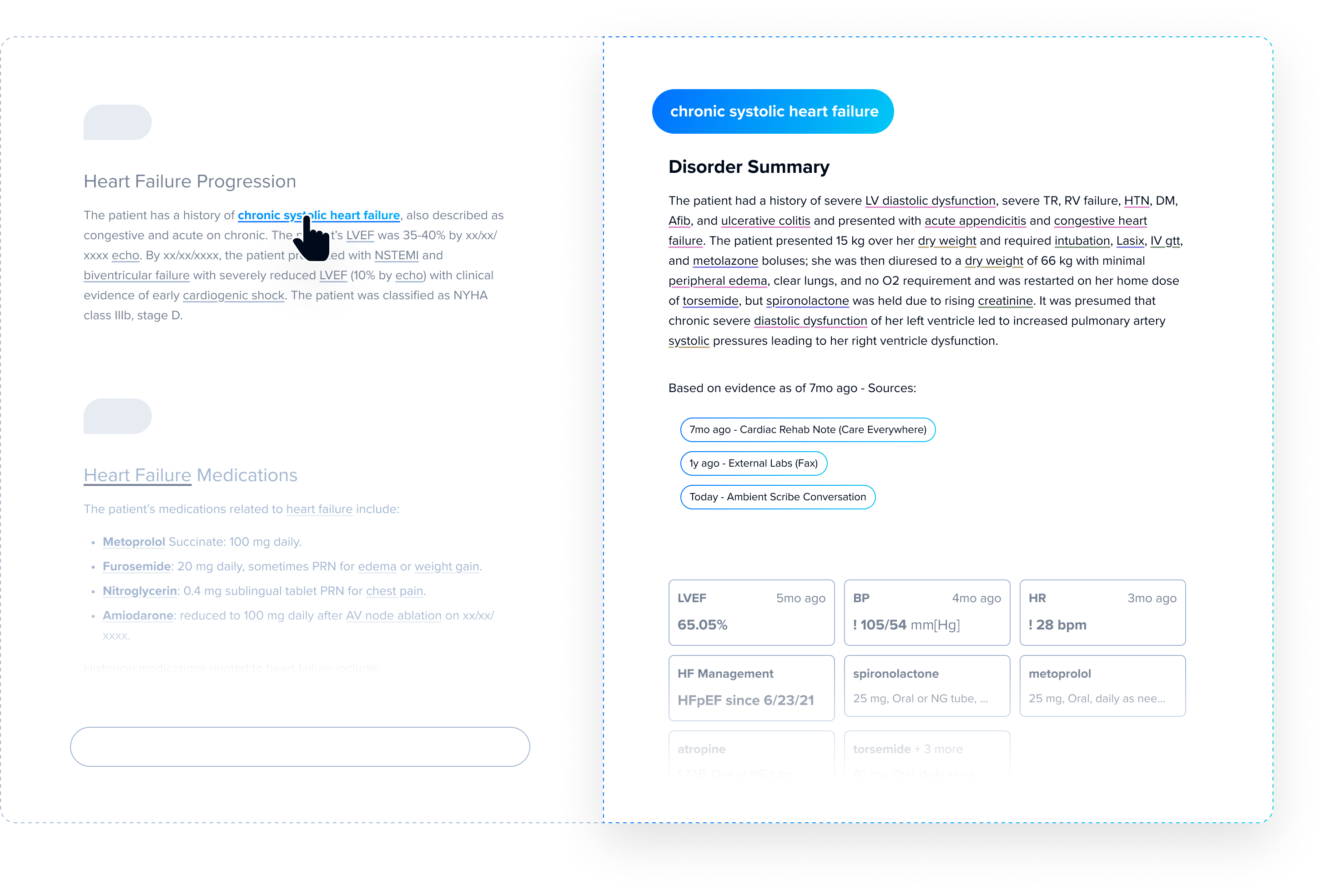
Consider the ordinary emergency department question: Has this patient been intubated before? The answer might be buried in an outside hospital note. A keyword search could miss a synonym, a scan or a document no one thought to open. Ask Evidently, the company’s chat interface launched in 2025, is designed to answer such questions inside the EHR and let a clinician click through to the underlying evidence. Its own product description says a typical record it processes may include more than 1,000 notes, 10,000 data elements, 100 outside records and 200 scanned documents. Those are company figures, but the shape of the problem is familiar to anyone who has navigated a medical chart.
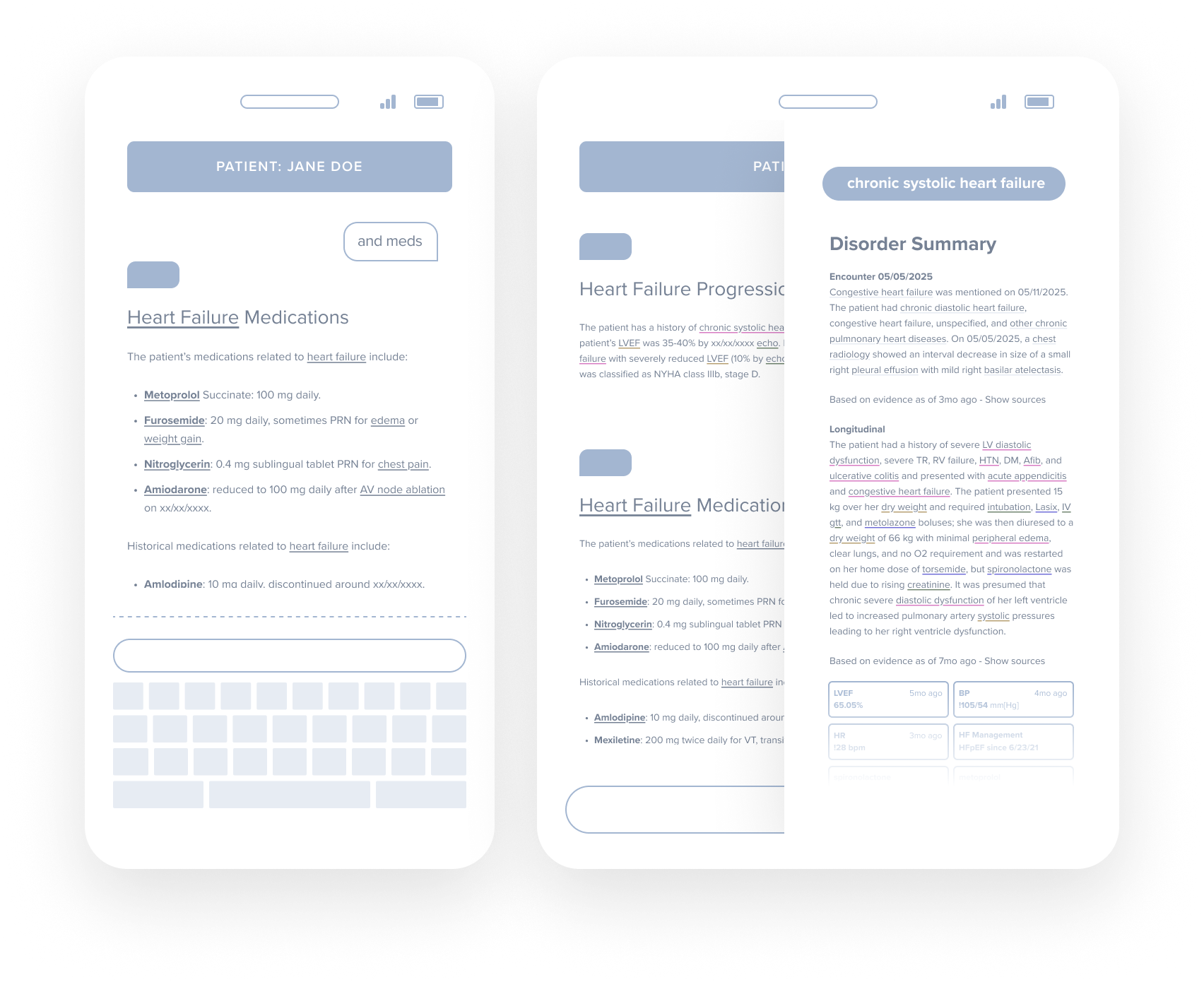
The company’s September 2026 Omni launch gives the underlying system a name. Omni aims to maintain a changing picture of a patient’s longitudinal history as new notes, results and outside records arrive. A finding is mapped to a clinical concept and tied to its source. Clinicians can then build “Skills” for recurring questions or document types. In plain English: the record becomes a live index, and the answer comes with a receipt.
That last step matters. A discovered condition is a prompt for clinical judgment, not a diagnosis by proclamation. The company describes its tools as aids for chart review, documentation integrity, risk adjustment and care decisions. Those jobs share a premise: the missing piece is often already somewhere in the record.
What Iowa saw when it stopped hunting
Iowa offers the clearest account of a change in mind. Its team had tried education and the native EHR. The referral flow still produced scattered outside material. During a controlled 30-day pilot, the health system integrated Evidently with Epic and external sources, then reported a +0.1 increase in case mix index. A later KLAS Arch Collaborative study recorded a 31.7-point rise in Net EHR Experience Score among repeat respondents. Iowa also said the technical integration took roughly 15 analyst hours. None of those numbers proves that every hospital will get the same result. Together, they explain why a health system might move from pilot to enterprise rollout.
At Allina Health, the problem had a different accent. The Minnesota system had trained clinicians and tailored its EHR for HCC coding, yet relevant facts in scans and outside records still escaped the workflow. Evidently processed more than 61,000 encounters for over 37,000 patients during the first 90 days. Allina’s case study says clinicians accepted suggested diagnoses at a steady 20 to 30 percent rate and that the deployment produced an expected sixfold return. “Expected” deserves its place here: the case study describes a financial projection from better risk capture, not a public invoice or an audited profit statement.
“We’re a really unique organization in that, because we have such a small primary care base and most of our patients are referred to us, we have data all over the EHR.”James Blum, University of Iowa Health Care
The product after the scribe
The easiest comparison is the ambient scribe, which listens to a visit and drafts a note. Evidently begins with what happened before the visit. Its system can help write a note, but its distinctive claim is that the draft should be grounded in the full chart, including facts a microphone could never hear. Traditional clinical documentation integrity software has another narrower brief: find missing documentation and coding opportunities. Evidently tries to move that discovery upstream, into the moment when the physician is reviewing the patient and writing the first note. EHR-native search remains the default alternative; Iowa’s experience explains where that default can strain.
The products are sold to institutions, not downloaded by patients. Evidently does not publish a price list. Its public economics are therefore customer outcomes and a $15 million Series A, announced in December 2024 and led by DN Capital, with FRAMEWORK, Clear Ventures and Fellows Fund participating. A buyer can ask what the license costs; the public record cannot answer. It can answer a more useful first question: where is the hospital paying today for information it already owns but cannot surface quickly?
UNC Health provides the next test of scale. After a 12-week pilot with 100 clinicians, documentation specialists and physician leaders, it selected Evidently for hospitals and clinics in North Carolina’s Triangle region in May 2026. UNC said pilot specialists saved as much as 40 minutes a day on chart review. “As much as” is a ceiling, not an average. The larger significance is the deployment decision: a large health system was willing to put chart intelligence into the daily work of multiple professions, not merely a single specialty demo.
A playbook hiding in the Media tab
There is a transferable method here for any organization drowning in documents. Find a task where staff already know the record is fragmented. Count a baseline: minutes of chart review, missing diagnoses, queries, or the share of answers found in outside documents. Put the new tool inside the workflow people already use. Keep a route back to the source. Run a bounded pilot with both experience and financial measures, as Iowa and Allina did. A clever answer without a traceable source is a parlor trick; a traceable answer in the wrong screen is a product no one opens.
This approach depends on access to the underlying documents, EHR integration, institution-specific rules and clinicians willing to review the output. A hospital with thin data exchange, poor scans or no agreed measure of success has a harder job. Better retrieval also cannot repair an incorrect source record. Evidently’s January 2026 partnership with Sholder Healthcare, which pairs chart intelligence with a care coordination framework, hints at another constraint: the tool works inside a process. A faster view of the patient will not, by itself, create the meeting, the handoff or the decision that follows.

That is the quiet appeal of Evidently. It is not asking the hospital to invent another kind of patient information. It is asking what happens when the information already paid for, faxed over, scanned in and filed away finally becomes legible. The answer may be a better note, a more accurate code or simply a physician who walks into the room knowing the story. The machine had the fax all along.