Imagine finishing a medical procedure and discovering that your work has acquired a second shift. The patient needs a record. The next clinician needs something legible. The quality team needs data it can count. The billing office needs codes it can use. Everyone wants the same event described slightly differently. A considerable amount of healthcare happens in this awkward interval between doing the work and making the work understandable.
- Provation sells documentation and workflow software for procedural care.
- Its customers include hospitals, surgery centers and physician groups.
- Specialty medical content, coding and EHR integration underpin its pitch.
- Fortive agreed to buy it for $1.425 billion in 2021.
Provation occupies that interval. Its software helps care teams produce procedure notes, nursing records and anesthesia documentation, then move the information into reporting and billing workflows. Gastroenterology and anesthesia are central to its business. Orthopedics joined its cloud platform in 2026. The attraction is easy to understand: clinicians would rather finish a case once than finish it repeatedly for everyone else.
01 / A vocabulary before a platform
Provation began in 1994 as cMore Medical Solutions, co-founded by Sean Benson and Dr. Dan Steinberger. Paper records were the starting problem. The founders’ answer paired physician-led medical content with an interface designed to make structured reporting practical. A database full of correct terms is little use if a physician has to wrestle with it between patients.
“By focusing on structured reporting, we made it possible to improve documentation without slowing down the physician.”
Dr. Dan Steinberger · Provation’s 2024 anniversary celebration
That origin helps explain the company’s enduring preoccupation with specialties. An endoscopy note has its own findings, images and terminology. An anesthesia record has a different rhythm. The useful question is how much of that work the software already understands. Every term supplied and maintained by a vendor is one less thing a customer must build, check and keep current.
The company name itself combines productivity and innovation. It is a modest little manifesto for a business whose success depends on making complicated work feel ordinary.
02 / The hospital computer has company
A hospital’s electronic health record, or EHR, gives Provation both an opportunity and a formidable alternative. If the institution already owns a system with a specialty module, another purchase needs a persuasive reason. The contest often comes down to very small acts: selecting a finding, attaching an image, reviewing a code, sending a completed note.
In a published Provation customer story, an unnamed Midwestern health system documenting roughly 7,000 GI procedures annually compared Apex with its existing EHR’s GI offering. The reported problems involved image capture, coding and quality reporting. Demonstrations, familiar clinical workflows and integration with the existing EHR favored Apex. This is a vendor-published account of one buying decision; it gives a useful view of the questions buyers asked.
Provation’s competitive proposition is specialty depth inside the wider clinical system. That puts it in the enterprise healthcare software market, alongside other specialist vendors and the modules offered by EHR suppliers. Paper remains an alternative too, particularly where a team has learned to tolerate its inconveniences. Familiar inconvenience has a surprisingly good sales department.
A schematic of the workflow. Interfaces and modules depend on the deployment.
03 / The chart that could finally be read
Bergen Anesthesia Group offers a more concrete example. The New Jersey practice adopted iPro in 2014 and integrated it with MEDITECH. Its published case study describes paper charts that hospital reviewers struggled to decipher and post-operative assessments that were often unfinished. The group reported assessment completion improving from 30-40% to 98-99%.
The useful change was visibility: office staff could identify a missing assessment and prompt the doctor to complete it on a tablet. Partners initially questioned the software’s cost. Dr. Ahmad Chaudhry said their attitude changed after a reported CMS payment of about $30,000-$40,000 and avoidance of penalties. Those figures describe that group’s experience, rather than a price or a promised return.
Vendor-published customer report. Bars show range midpoints; this is not a controlled study.
That mechanism matters more than a vague promise of efficiency. A missing task becomes visible, an accountable person can act, and the information becomes available to the next reader. Software buyers can look for that sequence in any workflow they are trying to improve.
04 / Two cords, three weeks
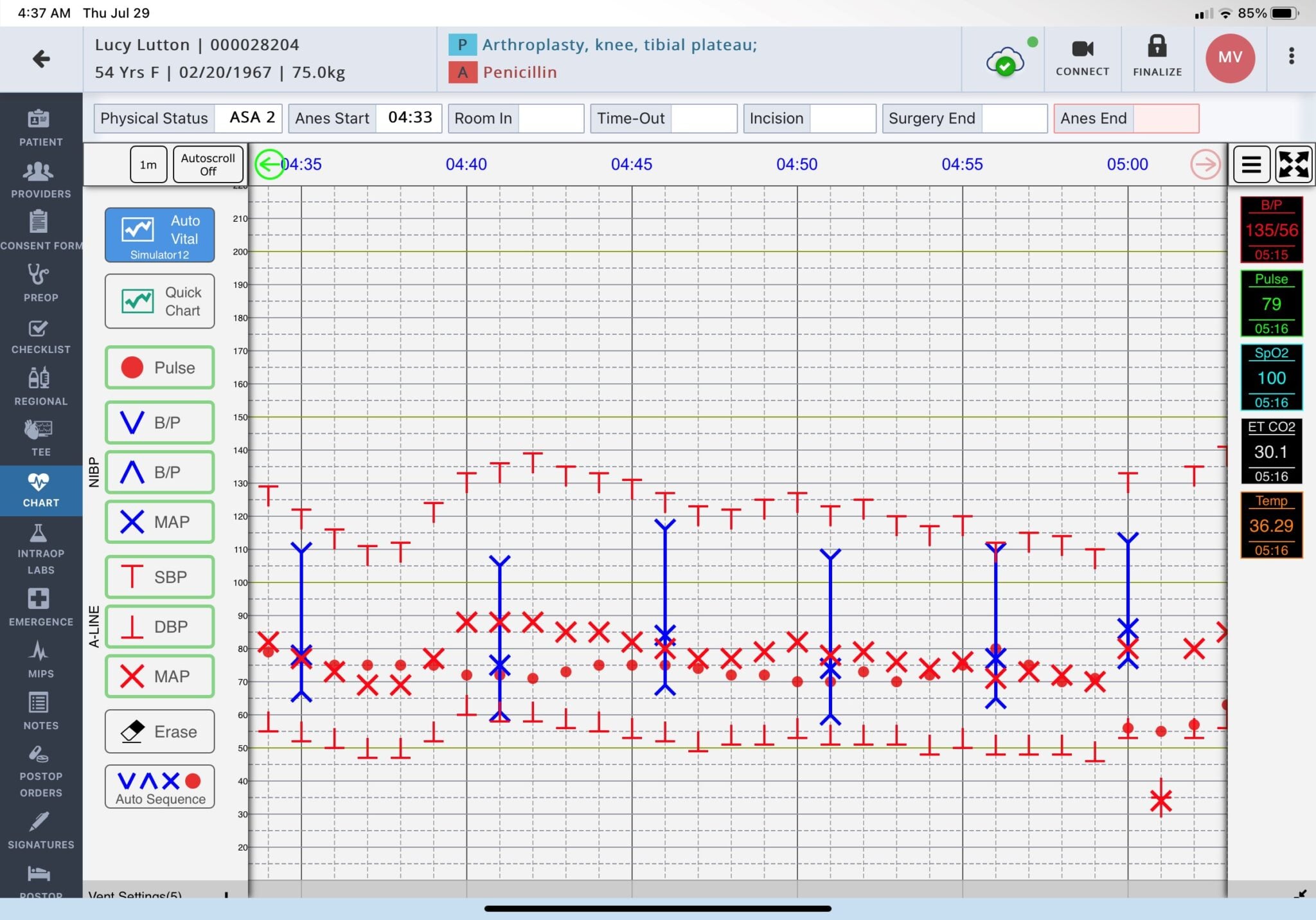
At Gotham Gastroenterology, the telling detail was the hardware shopping list. Its published migration account says moving from MD-Reports to Apex required buying two cords. Medical director Dr. Max Pitman reported going live within three weeks of signing and cutting his documentation time in half. The setup included workflow discussions, role-based training and launch support.
A small shopping list does not establish that every migration will be simple. It does suggest a better way to interrogate a demonstration. Ask what equipment must change, what information can move and who needs to learn which steps. Then have the people who perform those steps try them. A polished sales screen is pleasant; a nurse finding the correct chart during a busy morning is more informative.
05 / What the buyer paid for
Provation’s ownership history supplies the conspicuous numbers. It joined Wolters Kluwer in 2006. In 2018, Wolters Kluwer announced a $180 million sale to Clearlake Capital; the seller later reported $172 million in cash after adjustments. Fortive announced its $1.425 billion agreement in December 2021 and completed the acquisition on December 27.
$180m2018 · Clearlake
$1.425bn2021 · Fortive
At the 2021 announcement, Fortive expected approximately $110 million in annual revenue and described about 70% recurring revenue. These are dated deal figures. The attraction to a strategic buyer is intelligible: software woven into repeated clinical work can produce repeated commercial relationships.
Customers make a smaller, more practical calculation. Apex is sold through subscriptions with a scope-specific quote. A buyer must weigh the subscription and implementation effort against documentation time, maintenance, reporting and billing work. The acquisition price says what Fortive would pay for the business; it tells a surgery center very little about its own budget.
06 / Follow the note into the next specialty
The portfolio follows the people around a procedure. Apex provides cloud documentation; MD provides an on-premises option. Apex Patient Charting handles nursing documentation. iPro addresses anesthesia. Order Set Advisor helps organizations review clinical order sets against evidence, while Care Plans supports interdisciplinary planning. These products tackle related jobs, with different users and purchasing needs.
The order-set business reveals another kind of recurring burden. Clinical guidance changes, committees review it, and approved content must reach the working system. Keeping a document current takes governance as well as information. Provation’s tools offer gap analysis and collaborative review so an institution can decide what to update.
In January 2026, Provation launched Mira iPro Insights, bringing conversational queries and role-based analytics to perioperative data. It also introduced iPro Lite for outpatient anesthesia teams. In May, Apex expanded into orthopedic surgery with voice-driven structured operative notes and arthroscopic imaging integration. The common thread is making captured clinical information usable sooner, including for the revenue cycle.
The company’s public values emphasize customer proximity, ownership and continuous improvement. Its partnership network makes that proximity operational: iPro joined the MEDITECH Alliance in September 2024, while pathology interfaces connect another important set of results with procedure documentation. Buying specialist software still requires checking the actual interfaces a particular facility needs.

07 / Take one real case to the demo
The transferable lesson is to follow the information. Start with one representative procedure. Ask the clinician to document it, ask the next person to find it, then trace what reaches the EHR, quality report and billing office. Count repeated entry and unfinished handoffs. This gives buyers something more useful than a list of features: a view of whether their own work becomes easier.
That approach also exposes the conditions a purchase must satisfy. Specialty coverage has to fit the cases. Interfaces have to carry the required data. Teams need time for training, clinical review and a workable downtime process. A cloud system needs dependable access. An institution already satisfied with its EHR’s specialty workflows may find little reason to add another platform.
Provation’s proposition survives close inspection because the task is concrete. A procedure generates information that several people need. A good system helps them receive it in a usable form. The afterthought becomes part of the work - and the work has a better chance of actually being finished.