The Oklahoma City Thunder partnership began over drinks. Erika Lucas and her husband, Chris, knew members of the basketball team’s executive staff socially. Conversation turned to entrepreneurs, community, and what they might build together. Months of discussion followed. Eventually, a relationship that had begun outside anyone’s formal investment process became the Thunder Launchpad accelerator. For a founder trying to get a business moving, that is a consequential change in the function of a conversation.
Lucas has spent much of her working life around the people who decide where investment goes. She helped international manufacturers establish operations in Mexico, worked in Oklahoma’s economic development machinery, and moved into private equity. She could see the routes money traveled. She could also see the people those routes passed by. Her subsequent work at StitchCrew and VEST has concentrated on giving more people a way into the conversation.
An introduction sounds modest beside a funding announcement. It takes no ceremonial scissors. Yet it can put a founder in front of a customer, bring an investor within reach, or make a career decision less dependent on guesswork. Lucas’s story gives that small social transaction the attention usually reserved for the check that comes later.
A childhood on both sides of the border
Lucas was born and raised in Chihuahua, Mexico. At 13, she arrived in rural Oklahoma with her mother and younger sister, without English. An aunt lived there. She learned the language and made friends, but after two years she returned to Mexico to live with her grandparents. The familiar immigrant story of departure and arrival had, in her case, a return journey.
The English she had learned became useful at work. Mexico was opening to international business in the years following NAFTA. Lucas began helping multinational companies move operations into the country, where lower labor costs were part of the attraction. Her early career put her close to the practical business of globalization: getting companies established and operating across a border.
That background matters to the questions she asks today. Investment is an abstract noun until a company chooses a location, hires people, and starts paying bills. Lucas learned about those decisions through work. Later, visiting her mother in Oklahoma, she met the man who became her husband and stayed. Her professional life would come to span both countries. Her earlier manufacturing work had already involved helping companies operate across national boundaries.
She worked on trade and foreign direct investment for the Oklahoma Department of Commerce, then in private equity. The jobs gave her experience with companies seeking a place to operate and investors considering businesses to back. By the time she began building organizations herself, she had already spent years working around the allocation of opportunity.
When a basketball team said yes
Her family had offered an earlier education in enterprise. Relatives built businesses out of necessity. Lucas saw the effort involved and initially chose the corporate ladder. That history helps explain why the early-stage entrepreneur remained a particular concern: she knew the distance between owning a business and having an easy life.
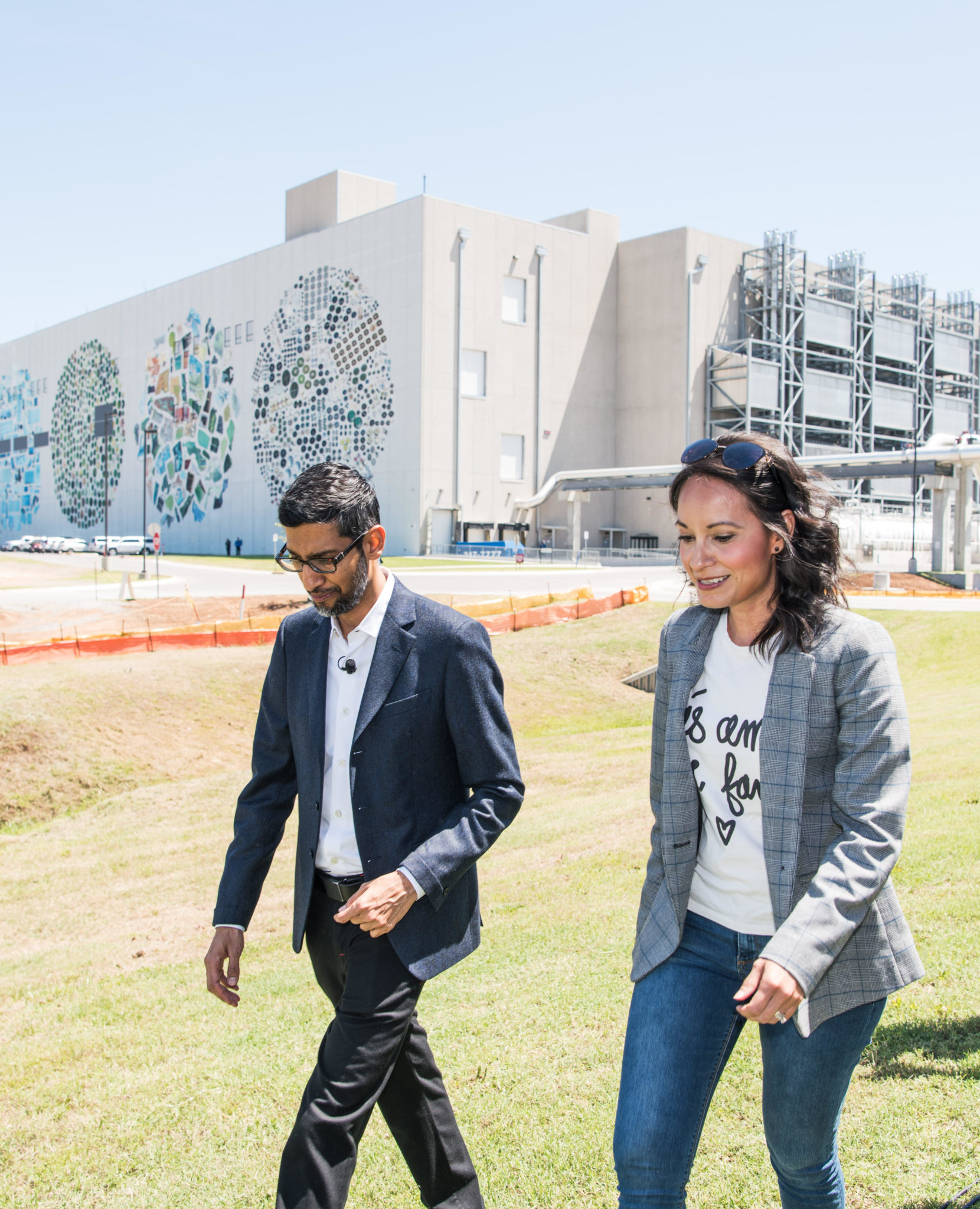
StitchCrew launched in 2017. Lucas would later describe the reception with little sentimentality. Some people questioned whether helping entrepreneurs counted as real economic development. The Thunder became an early institutional yes. Google followed, with a $50,000 grant in 2018. A basketball franchise and a technology company had found a reason to support the same work.
In January 2024, Lucas described another $65,000 from Google supporting Cherokee women entrepreneurs and a Latino accelerator program. Those details give the partnerships substance. An organization’s name on a sponsor list is useful; money directed toward a particular group of founders is more concrete. StitchCrew was working on who could participate in Oklahoma’s business economy.
The choice of Oklahoma was part of the effort. Founders in the middle of the country needed routes to resources without assuming that opportunity required a coastal move. Lucas’s work joined local relationships to wider networks. The accelerator gave that approach a practical home, and the Thunder partnership made an unlikely collaborator part of the entrepreneurial landscape.
The co-founder across the dinner table
Lucas built StitchCrew with someone whose working life she already knew. Chris had run businesses; she had traveled extensively in her corporate career. They had maintained separate professional lives and wondered whether sharing a company would work. Marriage does not automatically provide a sensible organizational chart.
They divided responsibilities. Chris handled operations, programming, vendors, and finances. Erika took investors, partners, and recruitment. The arrangement gave each authority in the areas they knew best. Her account of the collaboration is refreshingly specific about the less photogenic requirements: boundaries, disagreements, and learning to treat each other as peers in front of colleagues.
Working together also gave each a clearer view of the other’s experience. Chris saw the dismissive exchanges Erika had encountered as a Hispanic woman in rooms dominated by white men. Erika came to understand pressures of running a business that he had previously kept to himself. Being present for the work changed what they could recognize in one another.
They enjoy discussing strategy at home, on vacation, and in front of their daughters, who contribute ideas. Their rule is that either partner can ask to stop talking about work. It is an accommodating policy for a household with an unusually persistent agenda. As Lucas put it, “We both learned it's okay to make our own rules.”
“Nobody builds companies alone.”
Erika Lucas
A network with work to do
VEST, founded in 2020, extended Lucas’s attention from business founders to women’s professional lives. Its present community brings together women across industries, generations, and career stages. A promotion, a layoff, a return to work, or a new business can each create a need for information that a job description will never supply.
The organization offers gatherings, introductions, conversations, and a private member community. Its language puts women’s investment in one another at the center. That can mean sharing experience or making someone visible to a person who would otherwise never encounter her work. The useful question for any network is what its members are willing to put into circulation.
Membership is designed for participation across locations, with much of its programming available virtually. Workshops, coaching, VEST Sessions, and VEST Tables give members different ways to take part. Career re-entry and leadership growth sit alongside entrepreneurship. The range reflects the fact that professional progress can involve changing direction as well as moving up.
Lucas also established VEST Her Ventures to invest in women-led companies. Its portfolio includes Byrdhouse, which offers multilingual video conferencing with real-time translation, and Pivt, which supports workforce relocation. They are concrete examples of businesses addressing friction in how people work and move. VEST’s membership page currently says the fund is fully deployed and is making no new investments.
Her own education continued alongside the organizations. Lucas joined the Just Economy Institute’s 2024-2025 fellowship cohort, a community concerned with how capital and power can move differently. For someone building professional networks, participation in another learning community fits the working method: expertise is useful, and so is sustained contact with people asking related questions.

The question that follows the money
Lucas has carried the argument into public speaking and broadcasting. Her September 2019 TEDxOU talk, America’s Trillion Dollar Blindspot, examined investment access for overlooked entrepreneurs. The title describes a failure of attention with an economic cost. A business can be promising and still sit beyond the field of vision of people who might fund it.
Oklahoma Women in Technology recognized her with its 2021 Trailblazer Award. In 2024, she participated in the SEC’s Small Business Forum as StitchCrew’s CEO and VEST Her Ventures’ general partner. Those appearances brought a regional founder-support perspective into discussions about capital access. Her work had become a subject for rooms beyond the accelerator itself.
She also writes about the arguments women encounter at work. In a March 2021 essay, Lucas offered seven tips for responding to equal-pay critics. That is a different scale of intervention from building an accelerator, but it deals with another practical obstacle: being expected to defend the existence of a problem before anyone will discuss addressing it. The writing gives readers a way to enter that conversation with preparation.
The VEST Her Podcast examines the workplaces, policies, and economic forces shaping women’s careers. Lucas also appears on other people’s shows. On Tamarindo in September 2025, the conversation included her economic equity work and public educational videos. On Immigrantly in August 2026, she returned to her own migration story and the decisions investors make about founders.
THROUGH STITCHCREW
THROUGH VEST
Cumulative figures reported by StitchCrew on its impact page, accessed October 2026.
The same impact page reports more than $43 million in revenue generated by supported companies and more than 1,000 jobs created. These are the companies’ outcomes, rather than Lucas’s personal earnings or StitchCrew’s own revenue. The distinction matters: her effort is directed toward what other people can build when they have better access.
Her career keeps returning to who benefits from economic growth. She has approached the question through factories, public investment, private equity, an accelerator, a women’s community, and a microphone. Each gives her a different way to work on it. Back at the beginning of the Thunder relationship, there were people talking over drinks. The important part came when they found something useful to do together.
Follow the conversations
- Erika Lucas’s website
- StitchCrew’s work and reported impact
- VEST’s professional community
- Listen to the VEST Her Podcast
- Watch America’s Trillion Dollar Blindspot
- On YouTube: Nobody Builds Companies Alone
- Erika and Chris Lucas on How That Happened
- Read Lucas’s essay about working with Chris
- The early yeses and Google’s support
- Lucas’s August 2026 Immigrantly interview