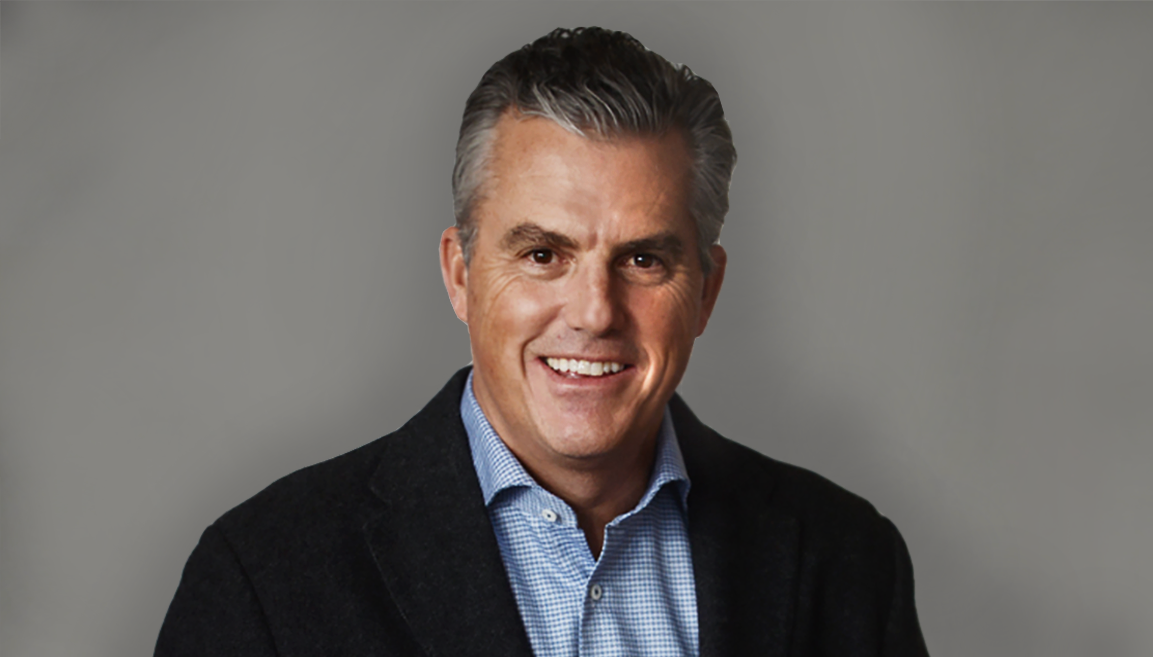
An English Major at the Center of Enterprise Tech
In January 2026, Tata Consultancy Services paid $700 million for Coastal, a Salesforce consulting firm based out of Palm Coast, Florida. The CEO who closed that deal holds a master's degree in creative writing. He has never taken a computer science class. His TED talk is about why the tech industry needs more people exactly like him.
Eric Berridge's career is a long argument against the premise that technology is a hard-science business. He graduated from UC Berkeley with a degree in English, picked up an MBA in entrepreneurial finance from NYU Stern, then rounded it out with an MFA in creative writing from The New School. Then, in the year 2000, when Salesforce itself was still a startup, he co-founded Bluewolf - one of the first consulting firms dedicated entirely to the Salesforce platform. He was betting on a company most people had never heard of, and his only technical credential was a deep belief that the people who understood customers were worth more than the people who could write code.
He was right. Over sixteen years, Berridge built Bluewolf into a leading global Salesforce consultancy with hundreds of employees and a reputation for doing something unusual in enterprise technology: actually delivering on time. IBM acquired the firm in 2016. The price was never disclosed.
"We need more poets. We need more philosophers. We need more artists."- Eric Berridge, TED Talk: "Why Tech Needs the Humanities"
After the IBM acquisition, Berridge spent two years inside Salesforce itself, serving as Executive Vice President and Commercial Officer, overseeing professional services. It was a rare vantage point: most consultants see only the partner side of the ecosystem. Berridge got to see the whole machine from inside. By 2018, he was on a TED stage arguing that the industry was hiring wrong - not too few engineers, but too few English majors. The talk hit a nerve. It has been viewed millions of times and sparked debates in engineering forums that are still running.
Berridge built Bluewolf with a consulting team where less than 10 percent of employees held engineering or computer science degrees - and still became the most prominent Salesforce partner of its era.
The pivot to Coastal began in 2020. Berridge joined the Florida-based consultancy's board as it was scaling fast, bringing with him the credibility of a founder who had already run this exact play once before. By September 2023, he was announced as CEO at Dreamforce - the Salesforce world's annual ritual of keynotes, demonstrations, and the kind of partner deal-making that actually drives the ecosystem. His appointment was greeted as a signal: Coastal was entering a new phase.
That new phase moved faster than most people expected. Coastal grew to 500+ employees, earned Salesforce Summit Partner status (the highest tier), and accumulated more than 3,000 multi-cloud certifications. It ran over 8,000 projects across every major Salesforce product line - Sales Cloud, Service Cloud, Marketing Cloud, Revenue Cloud, Data Cloud, Tableau, MuleSoft, and Agentforce. It was not a boutique. It was an industrial-scale Salesforce shop with a culture that Berridge had shaped: customer-first, outcome-oriented, and built on the conviction that the people answering the phones and running the workshops mattered as much as the people writing the integrations.
The TCS acquisition, announced in December 2025 and closed in January 2026, was the largest professional services acquisition in the history of the Salesforce ecosystem. Seven hundred million dollars. Berridge stayed on as CEO. The team stayed intact. The deal was not an acquihire or a consolation exit - it was a deliberate bet by one of the world's largest IT firms that Salesforce-native consulting at scale was worth owning outright.
For Berridge, it was the second time he had built something an enterprise giant wanted to buy. The first time, the buyer was IBM. This time, it was TCS. Two exits. Two different tech giants. Same underlying idea: that the people who know how to configure a customer relationship platform and teach humans how to use it are worth serious money.
The book came out during the Bluewolf years. "Customer Obsessed: A Whole Company Approach to Delivering Exceptional Customer Experiences" was published by Wiley and carried a foreword by Marc Benioff, the CEO of Salesforce. That foreword is a detail worth sitting with. Benioff doesn't write forewords for people he doesn't think have something worth saying. The book's argument is simple and, in practice, difficult: customer obsession is not a department. It is not a job title. It is a posture that has to run through every function in a company, or it doesn't run at all. Co-written and published with the kind of conviction that comes from building a company around the idea, "Customer Obsessed" became a standard reference in the Salesforce consulting world.
Berridge also co-authored "Iterate or Die" - a second book that applies similar thinking to organizational transformation. Two books, both grounded in the work rather than in theory. This is what an MFA in creative writing produces when it meets sixteen years of running a consulting firm: prose that is direct, ideas that are earned, and an argument that has been tested against actual enterprise customers in actual enterprise situations.
"Customer obsession isn't a department. It's a whole company approach."- Eric Berridge, "Customer Obsessed"
What Berridge represents in the Salesforce ecosystem is something specific: the category of person who understands both the technology and the human layer on top of it. He did not build Bluewolf and Coastal because he was the best Salesforce administrator in the room. He built them because he understood what customers actually needed from the platform, and he knew how to build teams that could deliver it. That distinction - between knowing the product and knowing the customer - is the argument of his entire career.
The TED talk made that argument explicit. Delivered in 2017 at TED@IBM and published in May 2018, "Why Tech Needs the Humanities" is eleven minutes of a tech entrepreneur explaining to a tech audience that they are systematically undervaluing the skills that make technology useful. The ability to listen. To ask good questions. To understand what a customer actually means when they describe a problem. To communicate across the gap between what engineers build and what human beings need. These are not soft skills. They are, Berridge argues, the critical path.
He is based in San Jose, California. He describes himself on Instagram as entrepreneur, public speaker, author, and philanthropist. He has been on Twitter since March 2009. He participates in podcasts, fireside chats at industry conferences, and occasional written essays. He is not a reclusive founder who appeared once and disappeared. He is, by temperament and profession, someone who communicates for a living - which may explain why his career has been built on a discipline that most tech investors would consider irrelevant to enterprise software.
The $700 million deal closed in January 2026. Eric Berridge is still CEO. Whatever comes next in the Salesforce ecosystem, the person running Coastal's integration into TCS's global footprint is someone whose most important credential is knowing how to read a room - a skill they teach in English departments, not computer science programs.