Consider the journey before the operation. A physician can reach a lesion inside the digestive tract with a flexible endoscope. Seeing it is one achievement; holding, lifting, and cutting tissue with control is another. EndoQuest Robotics has built its company around that awkward interval between arrival and action. Its proposition is wonderfully literal: bring two surgical hands through an opening the patient already possesses.
- Flexible robotic tools aim to bring two-handed surgical technique into the GI tract.
- PARADIGM completed enrollment with 50 procedures in 49 subjects in July 2026.
- The system remains investigational; commercial availability and broader benefits remain ahead.
The attraction extends beyond avoiding a visible scar. EndoQuest wants physicians to treat disease through natural passages while reducing the burden of reaching it. Whether that translates into faster recovery or lower costs needs evidence. A shorter route on a diagram does not automatically produce a better hospital stay.
Two hands, around the bend
The Endoluminal Surgical System, or ELS, combines a physician console, a patient cart, and flexible instruments. The console translates the operator’s hand movements into movements inside the patient. Its EndoDrive delivers two 6 mm instruments and a 3.7 mm high-definition camera to the target. Additional channels accommodate suction, irrigation, insufflation, and accessories. The plumbing deserves some applause, too.
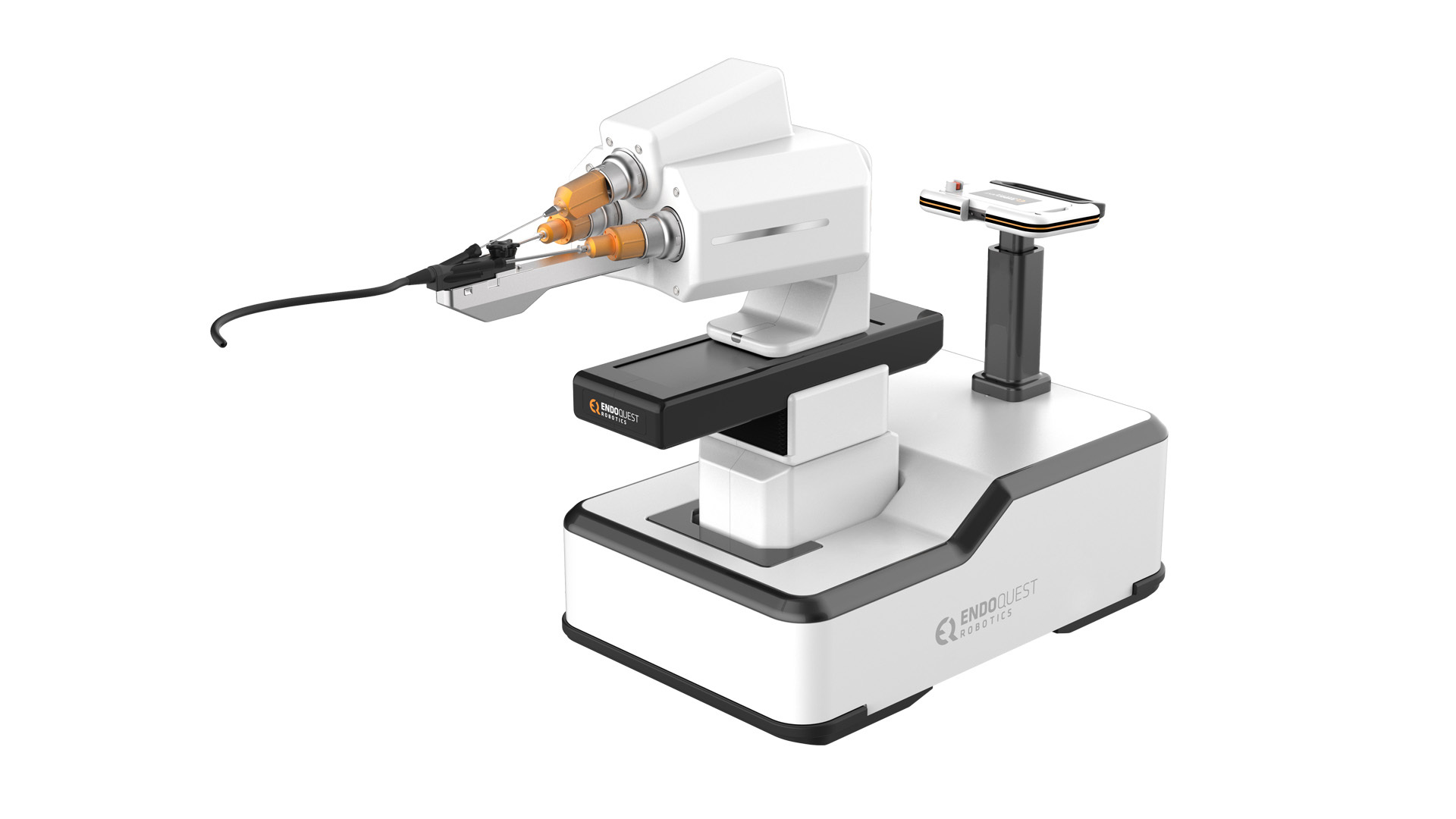
The crucial feature is triangulation: instruments can approach tissue from different angles. One can hold or retract while the other dissects. Up to seven degrees of freedom give the tools room to articulate in narrow anatomy. The robot is physician-controlled. The distinction matters when the word “robot” tempts the imagination to leave the surgeon out.
This places EndoQuest between therapeutic endoscopy and operative surgery. Conventional endoscopic submucosal dissection, or ESD, is an immediate alternative; more invasive surgery remains necessary in some cases. EndoMaster EASE is another flexible robotic platform with published clinical research. EndoQuest’s differentiation centers on combining flexible access, robotic instrumentation, and surgical technique. Its competitive task is to make that combination clinically useful.
A promising number needs a small-print companion
In December 2024, the FDA granted an investigational device exemption for PARADIGM, permitting the U.S. clinical study. The first procedures were announced in May 2025. By July 2026, enrollment had concluded after 50 robotic ESD procedures in 49 subjects. Six investigators, including colorectal surgeons and gastroenterologists, performed the procedures across five institutions.
Company-reported data as of July 18, 2026. Follow-up, verification, and database review ongoing.
The company reported preliminary en bloc resection of 100%, meaning removal in one piece, and R0 resection of 95.8%, indicating negative margins on pathological assessment. It also reported no conversions and no device-related bleeding or perforation to date. These are encouraging observations in a defined study population, with follow-up and verification continuing. They do not establish superiority over competing techniques.
The study concerns lesions in the rectum and sigmoid colon. Its findings cannot simply be borrowed for stomach operations, bariatric procedures, or other proposed applications. An IDE is permission to investigate. EndoQuest plans a De Novo submission for U.S. market authorization; its system remains uncleared and unavailable for commercial sale in the United States.
The machine also needs a classroom
A clever instrument can still be difficult to introduce. EndoQuest announced a VirtaMed partnership in February 2023 to develop a surgical training simulator. The following month, it agreed a multi-year partnership with Proximie for digital surgery support, including sharing live procedures and recordings. Training and observation belong in the product’s development, because a new control system arrives with new habits to learn.
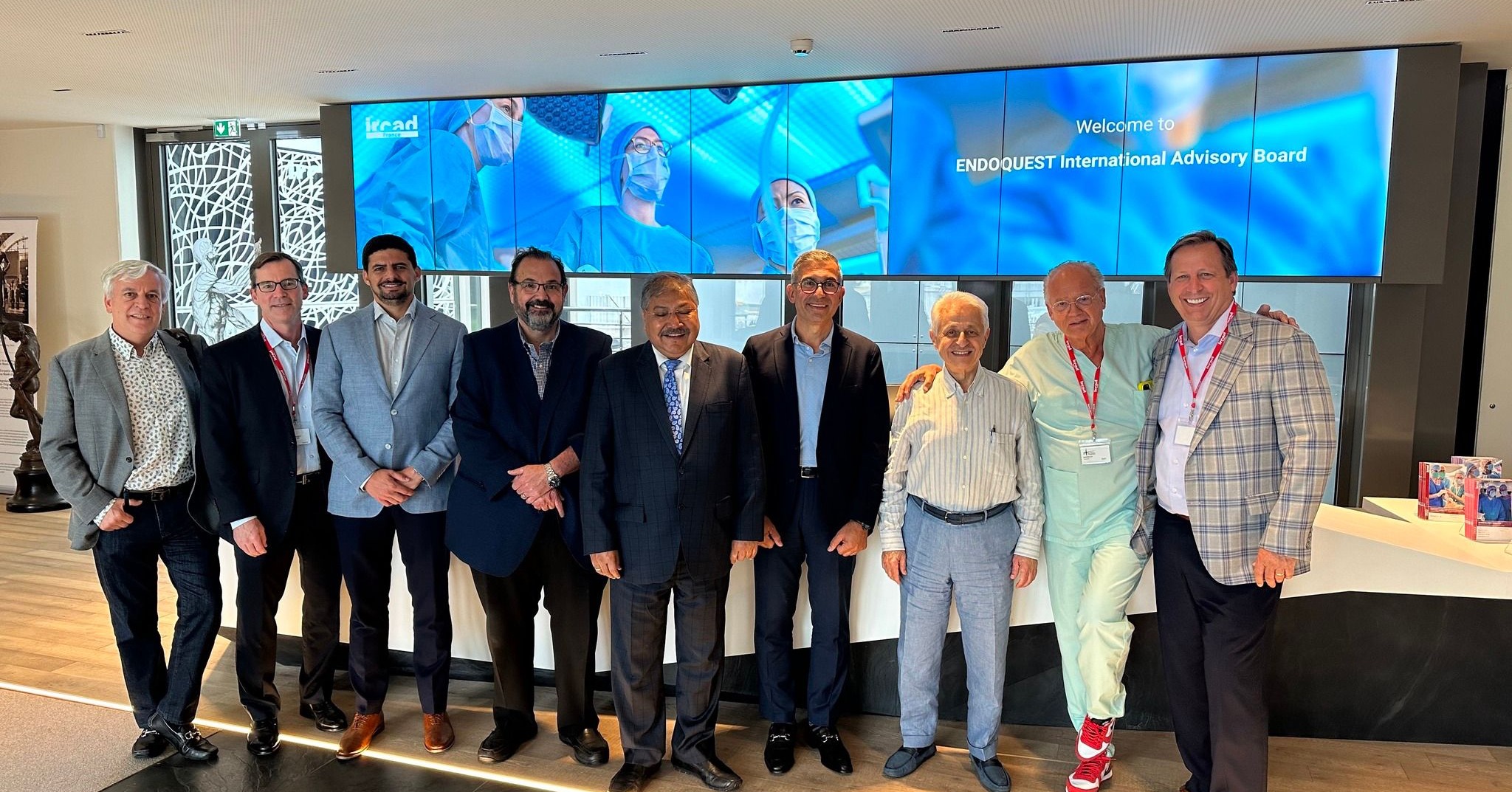
IRCAD in France installed an EndoQuest robot in 2023 for research into endoluminal and percutaneous surgery. Brigham and Women’s Hospital had announced a placement the previous year. Such settings give engineers and clinicians somewhere to develop procedures together. EndoQuest’s expertise consequently spans miniature instrumentation, flexible navigation, surgical imaging, and the less photogenic work of clinical and regulatory development.
Imaging has its own partners. In January 2024, EndoQuest announced integration of OMNIVISION’s OCHFA CameraCubeChip. In October 2025, it announced plans to incorporate NVIDIA IGX Thor into a next-generation system. Those computing plans concern future capabilities. They should be read separately from what the current clinical study has tested.
The bill has more than one line
EndoQuest’s intended buyers are hospitals and health systems; its operators are trained endoscopists and surgeons. The likely commercial logic is equipment plus instruments, although public materials do not establish final contract terms. Multi-use instrumentation is part of the company’s cost argument. For a hospital, utilization, staff training, room time, and maintenance will also shape the arithmetic.
A 2025 research review reported a capital price of $1.75 million and consumables at $250 per instrument per use. These are published figures, not a current sales quote, a patient bill, or the complete cost of a procedure. Nor are they a measure of what development cost. EndoQuest disclosed a $42 million C-1 financing in December 2023, backed by CE Ventures, McNair Interests, and Puma Venture Capital.
“For a new robotic platform to succeed, it must provide meaningful clinical and commercial value.”
Eduardo Fonseca, CEO · July 2026
A July 2025 Series D-2 announcement named Crescent Enterprises and Dr. Fred Moll as co-leads, with Puma and UTHealth Houston participating. The announcement left the amount undisclosed. It directed the funding toward the pivotal study, the regulatory pathway, upper-GI feasibility work, and visualization. The spending agenda shows how much work remains beyond manufacturing an impressive machine.
A narrow trial, a longer road
Founded in 2017 as ColubrisMX, the company adopted the EndoQuest name in 2022. Investor materials identify neurosurgeon Daniel H. Kim as its founder. Its path now offers a practical lesson for anyone building complicated tools: choose a specific first job, develop the training alongside the hardware, and measure the result before enlarging the claim.
The boundaries are concrete. PARADIGM eligibility limits lesion size and location and excludes anatomy unsuitable for endoluminal surgery, among other restrictions. A lesion outside that scope needs a different assessment. The eventual commercial test will ask whether the robot earns its equipment, training, and workflow costs. EndoQuest has made the route plausible. The remaining question is how often taking it makes care better.