A television remote has a modest job description. Change the channel. Adjust the volume. Remain somewhere a person can find it. The third requirement has defeated households for generations. When Elie Chemtob previewed ideas for RCA accessories in December 2025, he included a find-my-remote feature. It was a small detail in a conversation about a large business. It was also a useful place to begin understanding him.
Chemtob is the co-founder and CEO of JEM Global, a New Jersey electronics and accessories company whose work often reaches shoppers under another name. His world includes the things surrounding the main attraction: cables for the television, lighting for the room, power for the phone. The remote belongs here. So does the problem of having bought a rather impressive screen and then losing its controls between two cushions.
There is a particular kind of business judgment in taking these objects seriously. They have to fit into lives already in progress. A customer may want an accessory to solve one problem and then kindly stop demanding attention. Chemtob’s career has developed around supplying those everyday products, increasingly through names that already mean something to the people choosing them.
A cable business learns new names
JEM began in 1999 with professional home theater cables and accessories. Chemtob co-founded the company with his brother Marco Chemtob and Adam Romano. The starting point was tangible: the connections and components people needed around their entertainment equipment. Before the portfolio of licensed names, there was a cable business.
The chronology matters. It places Chemtob in the accessories trade well before the later smart-home announcements. His public LinkedIn profile also lists New York University from 1993 to 1994. By the time JEM began extending established brands into connected products, he had spent years in a business where the product’s usefulness depends on how well it works with something else.
In May 2017, JEM announced a licensing partnership with Energizer covering smart-home devices in the United States, Canada and Mexico. The planned assortment included cameras, thermostats, plugs, sensors and Wi-Fi speakers. An Energizer Connect app would provide control. A brand associated with portable power was being invited into the connected home.
That invitation illustrates the task Chemtob had taken on. Recognition offers a starting point; a new category asks the customer to make another association. Someone still has to decide which products belong together and how the familiar name will help explain them. A logo can be printed very quickly. An assortment takes considerably more thought.
and accessories
licensing agreement
partnership in Canada
Distribution supplied another piece. In June 2020, JEM announced a partnership with Gentec International, whose president Joel Seigel described exclusive Canadian distribution rights. Chemtob’s explanation paired Gentec’s knowledge of the Canadian electronics market with JEM’s development work and brands. It is a revealing division of labor: make the products, then work with someone who knows the market they are entering.
The room joins the game
The Monster business shows how far an accessory can move from its original setting. In 2019, the planned broader range included Monster-branded HDMI cables, surge protectors and automotive accessories, following an exclusive period at Walmart. Chemtob described Monster as occupying a price position above JEM’s opening-price Xtreme products. Different names could have different jobs within the same supplier’s range.
By January 2022, JEM was announcing something more theatrical: Monster Smart Illuminessence lighting integrated with Razer Chroma. Tuya supplied the underlying connected-device technology. Lighting around a computer could respond to what happened on the screen, extending a game or other PC entertainment into the room.
Chemtob’s role in that announcement was the supplier executive connecting several businesses. Monster supplied a consumer identity, Razer a gaming ecosystem, Tuya a technology platform, and JEM the licensed lighting products. The result depended on their working together. Even a colorful room has a supply chain.
For someone who began with home theater accessories, the progression has a certain continuity. A cable helps the equipment communicate. Reactive lighting lets the surrounding space participate. The product has changed, and the partnerships have become more elaborate, but the relationship to the customer’s existing entertainment setup remains easy to see.
An appliance that skips the password
Two years later, Chemtob was talking about a different approach to household technology. At CES 2024, JEM introduced AIWA INTELLIGENCE, a range of home products advertised with voice activation that did not require Wi-Fi. The proposition included operating appliances through spoken commands without uploading conversations or depending on a home network.
In a category that can turn a simple task into an account-registration exercise, the appeal is understandable. A person may wish to operate an appliance without first remembering which password belongs to the router. The AIWA announcement put that preference into the product brief. Convenience was being expressed as fewer conditions between a command and its result.
Set beside Monster’s connected lighting, the choice becomes interesting. Chemtob’s company was participating in networked entertainment and offering offline voice operation in appliances. Each approach served a different use. There is no need for every object in a house to have the same relationship with the internet, however enthusiastically the internet might apply for the position.
Also in January 2024, JEM announced an exclusive BLACK+DECKER lighting license. Here the familiar name was attached to practical LED lighting for workspaces and everyday tasks. Across the two launches, Chemtob was working with established identities while changing the object a customer might encounter under each one.
The name on the box has a job
The distinction between owning a brand and licensing particular product categories is essential to Chemtob’s story. In December 2025, JEM announced a license for RCA AV accessories and power products. That agreement concerned a defined part of RCA’s consumer presence. The planned 2026 assortment included antennas, remotes and television wall mounts.
Those are fitting categories for a supplier with roots in home theater. They also make the licensing proposition concrete. JEM could develop new accessories under a name with an existing place in home entertainment, while retailers could offer those products within a recognizable brand family.
“Starting from scratch with a new brand is such an uphill battle.”
Elie Chemtob, December 2025
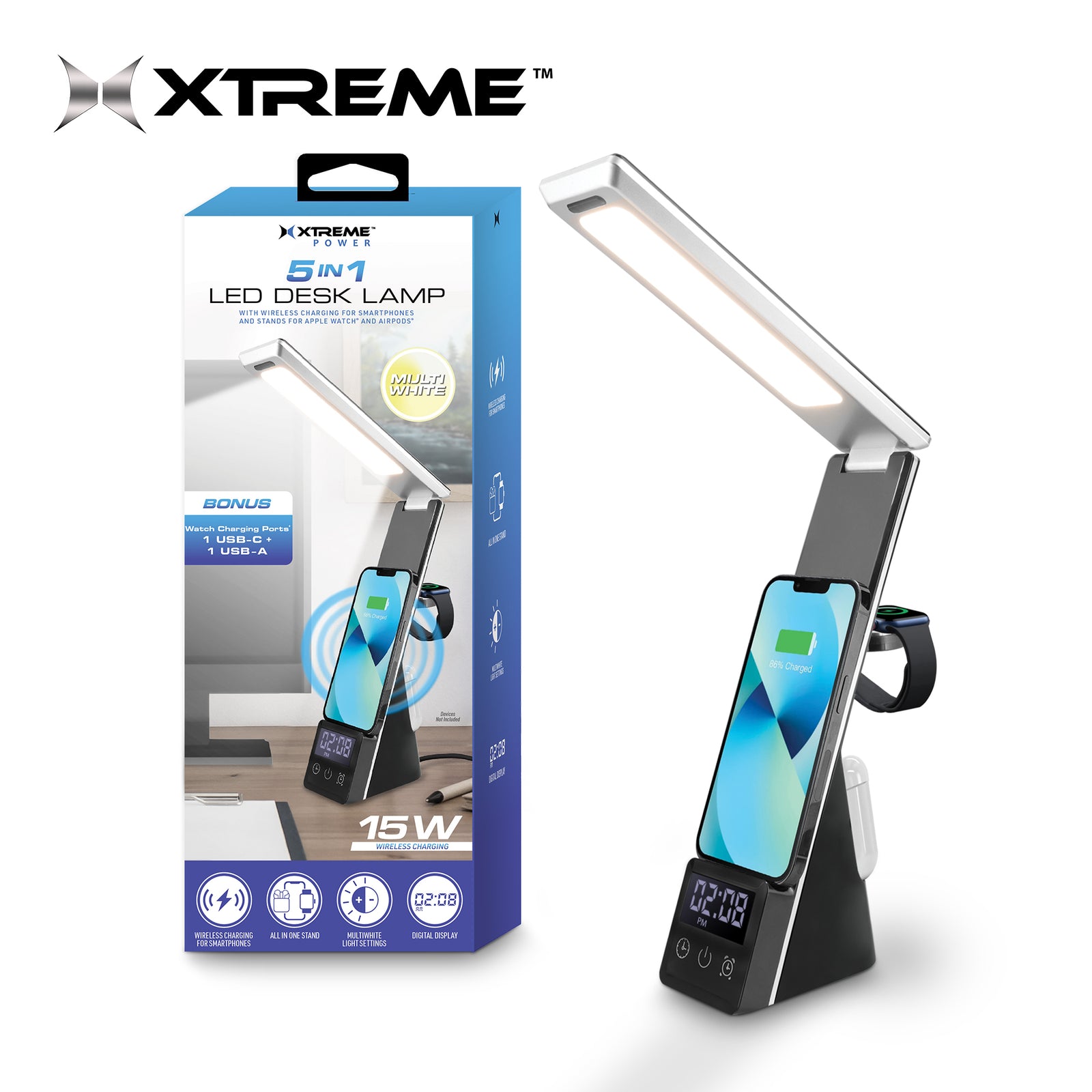
The same business continues to develop its own names. At CES 2026, Xtreme unveiled a refreshed identity and introduced products including a four-in-one jump starter with an air compressor, power bank and flashlight. Cut & Link lighting strips were another introduction. The assortment stretched from the living room to the possibility of a car refusing to start.
That breadth gives Chemtob several kinds of work at once. A house brand needs an identity of its own. A licensed range needs products appropriate to the name it carries. Both need a place in the retailer’s assortment. The combinations are practical decisions, made product by product.
- 01Design
- 02Engineer
- 03Package
- 04Distribute
Different brands. Shared work between the idea and the shelf.
Chemtob’s name also appears alongside Jennifer Garrett’s on an electronic cable patent application assigned to JEM. The design describes connectors with a luminous lens and an LED inside the housing. It is a small technical detail, down at the end of a cable, and another point of contact with the company’s original trade. The filing adds an inventor credit to a career usually described through executive titles. It also brings the story back to the object itself: beneath the assortment, the licensing agreement and the retail display are components that someone has to design.
JEM describes internal teams covering industrial design, engineering, quality control, merchandising and e-commerce. Its retail services include planning shelf displays and producing packaging. Warehouses on both coasts support distribution. These details explain what a supplier must contribute after the brand agreement is signed. The box still needs to arrive, contain the right object and make sense to the person looking at it.
Chemtob put a number on his expectations in December 2025: he believed JEM would ship more than 100 million units in 2026. That was a forecast attached to a planned year of introductions. Its significance here is the scale of his ambition. It should be read as a target he described before the year began.
Units Chemtob forecast JEM would ship in 2026.
A forecast, rather than a completed annual result.
Beyond the electronics aisle
There is another boardroom in Chemtob’s working life. He serves as a board member at TrueStone Group, the real estate investment and lending firm. His responsibilities there include business growth, drawing on wholesale experience and a background in real estate. The connection broadens the picture beyond the next product launch.
Marco, JEM’s CFO and Elie’s fellow co-founder, is also listed on TrueStone’s board. Their careers overlap across the electronics business and this property-focused organization, with distinct executive responsibilities. It is a more specific picture of a family business than the phrase alone provides: two brothers appearing in more than one working setting.
Outside those settings, Chemtob enjoys sports, movies and time with his family. The details are ordinary and welcome. An executive whose products surround home entertainment also makes time to watch a film. There is no reason to turn that into a grand theory of leadership. Sometimes a movie is an evening well spent.
The more useful connection is between the scale of his plans and the smallness of the tasks his products address. A shipment forecast can run to nine figures. A customer may be interested in one working charger, one useful lamp, one remote that can be located before the opening scene ends. Chemtob has built his career in the distance between those two perspectives. The familiar name gets its place on the box. The object inside still has a job to do.
Follow the work
- Elie Chemtob on LinkedIn
- JEM Global: the business and its capabilities
- The December 2025 CEO conversation
- The 2017 Energizer agreement
- JEM and Gentec in Canada
- Monster lighting meets Razer Chroma
- AIWA INTELLIGENCE at CES 2024
- BLACK+DECKER lighting announcement
- The RCA accessories license
- Xtreme’s CES 2026 introductions
- TrueStone Group’s team
- The illuminated cable connector application