A payslip gives an employee a reason to open a website. It gives them remarkably little reason to linger. For Electronic Commerce, the Indiana company known as ECI, that small distinction became a large business question. What else could happen in the place where people went to get paid?
- ECI sold cloud payroll and HR software to employers.
- A 2017 acquisition combined that foundation with employee engagement under the Vibe HCM name.
- The product was later discontinued. Its design choices still offer something to study.
The name is a useful little trap. Electronic Commerce sounds like shopping carts and checkout buttons. This company dealt with the other side of working life: employee records, benefits, time sheets, hiring and payroll. Its customers needed the administrative machinery of employment to work. Eventually, ECI wanted that machinery to become a place people actually visited.
A good reason to log in
Founded in 1996, ECI built its business in Elkhart, Indiana. Its cloud suite, Empower, collected work that might otherwise be scattered across separate systems. HR staff could manage records and benefits; recruiters could handle applicants and onboarding; managers could track performance and learning. Payroll, time and labor management, self-service and reporting rounded out the offering.
The attraction was practical. A new employee creates several jobs at once: record their details, arrange their pay, explain their benefits and get them started. Putting those jobs within a unified system offered a way to reduce administrative handoffs. ECI was selling employers a connected workflow across the employee lifecycle.
There were signs that the proposition was finding buyers. In April 2014, the company reported 97 percent client retention and new client growth approaching 20 percent. It planned to add at least 20 employees, including seven software development professionals. Those are historical company claims, but the hiring priorities are revealing: mobile development, integrations and user experience were already on the agenda.
Frontier Capital’s majority growth investment in ECI. Investment capital, not a customer price or a company valuation.
The acquisition that supplied a new name
Frontier Capital invested in June 2015 to support growth, product expansion and shareholder liquidity. Two years later came the more interesting transaction. On May 25, 2017, ECI announced its acquisition of Saskatchewan’s cfactor Works and its Vibe HCM product suite. The combined organization would take the Vibe HCM name.
The announcement set out the logic plainly. ECI brought experience in payroll, compliance and HR transactions. Vibe brought a focus on “the employee experience.” Its software was being used in multiple languages across 29 countries. The deal widened the question from whether an employee’s information was correct to how that employee encountered the company.
“the employee experience”The focus of Vibe in the 2017 acquisition announcement
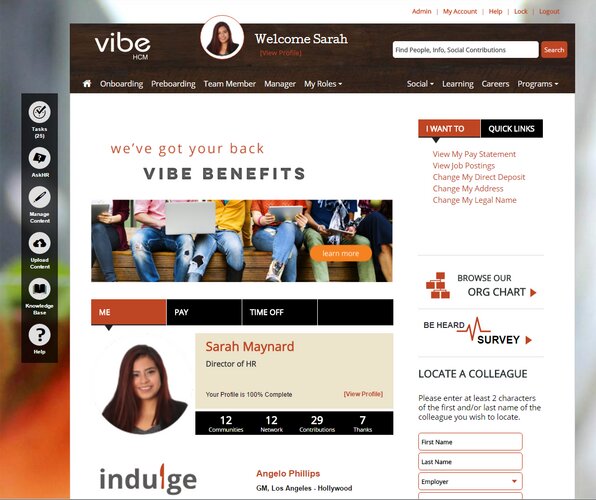
That was a change in emphasis with consequences for the product. A place to update a record could also contain recognition, company information and conversations. ECI’s Todd Tyler became chief executive of the combined business; cfactor founder Cary Schuler became senior vice president of marketing. Susanne Bowen took over as CEO in April 2018.
The people beyond the HR department
Vibe HCM’s product range covered recruiting, onboarding, HR, talent, engagement, analytics and payroll. Essentials and Edge packaged its capabilities. Vibe Insights combined conventional workforce information with engagement, sentiment, peer recognition and social activity. The ambition was to give decision makers a wider picture of organizational life.
Vibe Connect made the communications proposition particularly visible. Its featured customer list included California Pizza Kitchen, VASA Fitness, Zions Bank and Musashi Americas. Restaurants, fitness clubs, banking and manufacturing have different routines. Their presence on the same list suggests a shared challenge: reaching employees across locations, roles and schedules.
Mobile access mattered to that proposition. Vibe Anywhere supported the experience beyond a desktop, while personalization let organizations give the platform their own branding and voice. The competitive position rested on combining necessary transactions with communication and participation. It was a pitch to employers who wanted fewer disconnected destinations for their people.
The bill included getting it to work
This was business software sold through subscriptions, accompanied by implementation and support. A 2019 HRMSworld directory described pricing per user, per month; product listings directed buyers to request a quote. Comparing it meant looking beyond the subscription to the work needed before employees could use it.
The historical implementation offering included project management, data conversion, sandbox verification environments and launch support, with a client success manager assigned during implementation and afterward. That list is a useful buying checklist. Before choosing an HR system, map the records that must move, the workflows that must survive and the people who will need training.
In 2020, the combination acquired a timely purpose. Vibe announced pandemic-related reporting updates, including a report with payroll cost and headcount information for PPP loan applications. It also offered communication resources and partnered with SaaS Research on an HR survey. Vibe Connect subsequently received a gold award for remote workforce technology in the 2020 Brandon Hall awards.
A useful idea, with an ending
The ending belongs in the story. A September 2021 Gartner customer review described bugs, substantial implementation effort and an announcement that Vibe was closing. That is one customer’s account, rather than an explanation of the business’s collapse. HRMSworld dates the end of business to June 2022. TrustRadius labels the product discontinued.
For readers, the transferable idea is straightforward: attach communication to tasks people already need to complete. Then test the whole journey. A combined portal earns its place only if payroll works, information is useful and employees can get to both. Fragmented workflows, difficult implementation or weak participation can undo the convenience of a single destination. ECI’s story also adds one final procurement question: how will you move your people and their records when the destination closes?