An infusion pump can leave the hospital with a patient. The nurse cannot. That small separation creates a surprisingly large information problem: what happened to the treatment between one visit and the next? Eitan Medical, the Israeli device maker behind Sapphire and Avoset, has built its current strategy around narrowing that gap. The pump delivers medication. A connected system gives the care team a way to see the delivery.
- The hardware: portable pumps for hospital, ambulatory and home infusion.
- The connection: treatment data that clinicians can review remotely.
- The business bet: make the pump part of the provider’s everyday workflow.
01 The reading is already on the screen
Consider the modest task of recording an infusion’s flow rate. The pump knows it. The nurse needs it in the patient record. For years, those two facts have been joined by a person copying a number. In April 2026, Eitan Medical and home-care software company AlayaCare announced an integration designed to move pump readings into clinical documentation automatically. Flow rates, delivered volumes and therapy parameters would travel with fewer manual detours.
AlayaCare chief executive Adrian Schauer described the target precisely: “This integration removes a manual step that nurses deal with on every visit.” It is an unglamorous sentence, and an unusually useful description of a medical technology product. The work already exists. The proposed improvement is to stop asking a nurse to do it twice.
02 One small pump, several jobs
Sapphire is a compact volumetric infusion platform used across hospital, ambulatory and emergency settings. Its modes cover treatments including continuous infusion, patient-controlled analgesia and total parenteral nutrition. The last delivers nutrition through an intravenous route. These are different clinical jobs, supported by configurable software and appropriate administration sets.
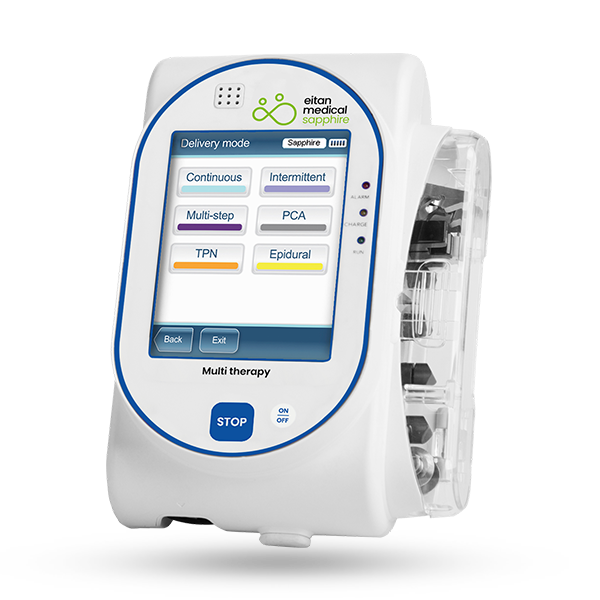
Without battery.
143 × 96 × 49 mm.
Portability matters in mundane ways. A smaller pump takes less space on an IV pole; an ambulatory patient has less equipment to carry. But the useful engineering extends beyond size: drug libraries, access controls and mechanisms intended to prevent uncontrolled fluid flow help clinicians manage delivery. Eitan also supplies maintenance software, certification tools and training. The expertise sits across hardware, software and the clinical routines surrounding both.
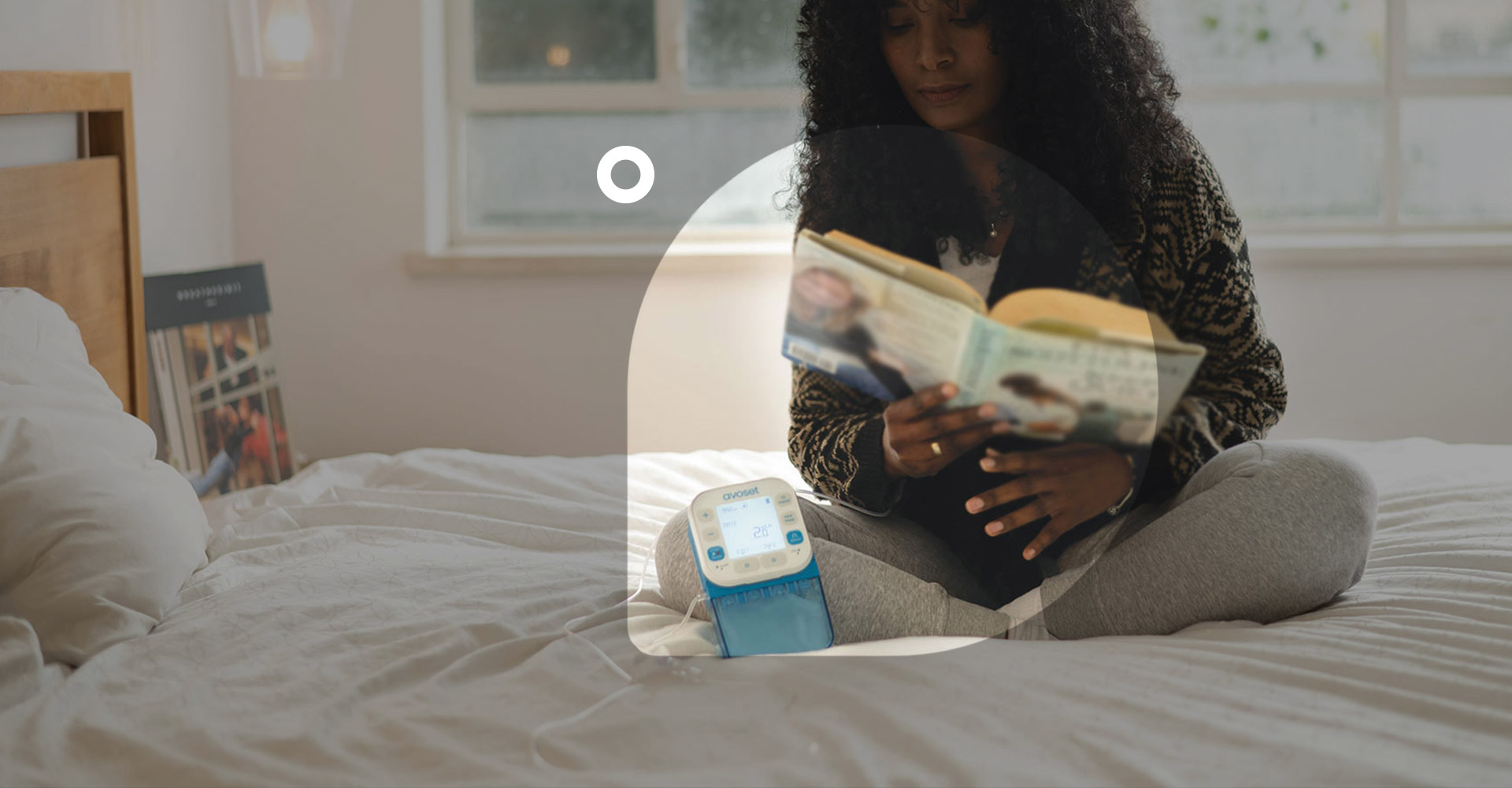
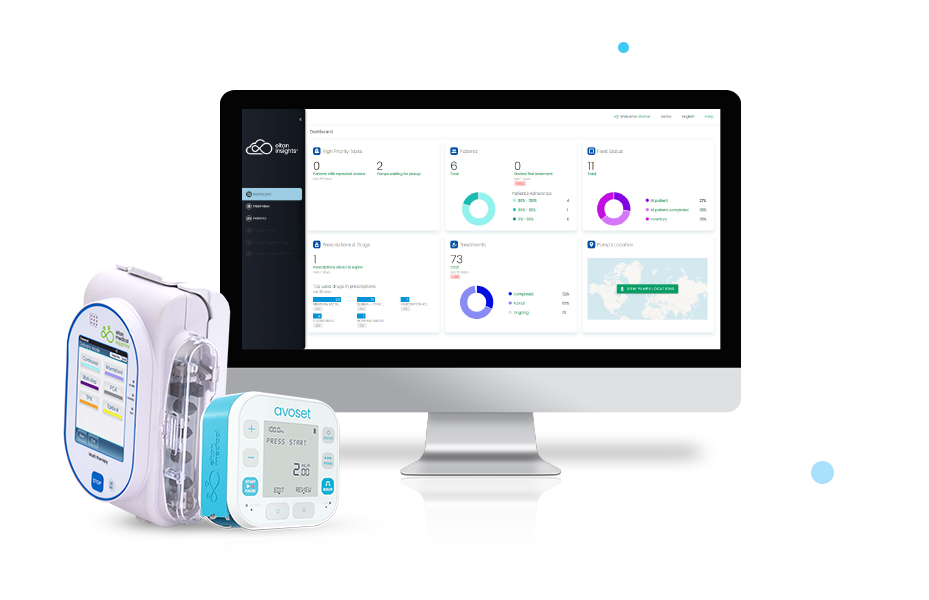
Avoset, launched as a connected infusion platform in April 2023, concentrates on specialty and post-acute care. Eitan Insights supplies the cloud layer: remote treatment visibility, analytics and fleet-management functions. Sapphire can join that system through Sapphire Connect, a cellular accessory. Together, the products address two customers’ needs: the patient’s ability to move and the provider’s need to understand treatment away from the clinic.
03 The company they almost didn’t buy
The modern business began with an improbable investment. In 2009, Boaz and Tali Eitan bought predecessor Q Core out of receivership. Medical devices had initially been outside the family’s investment brief. Their son Shaul’s interest helped change that. Boaz brought a semiconductor background; the attraction included adaptable software on common hardware.
“a generic pump comes off the production line”Boaz Eitan, on adapting hardware through software, 2019
Distribution proved less predictable. A major relationship with Hospira became difficult after successive ownership changes. Q Core cut 30 jobs in late 2017 and subsequently expanded direct sales. A partner’s acquisition had become the smaller company’s operating problem.
The purchase also required capital. A 2023 Globes account put the acquisition at NIS 5.6 million, plus a NIS 20 million investment commitment. That year brought another consequential transaction: Eitan sold its wearable-injector business, Sorrel, to LTS. Management said the sale concentrated resources on the core infusion portfolio. Readers encountering Sorrel in older company descriptions should put it in the history column.
04 The return envelope is part of the product
Eitan sells into an established market. ICU Medical’s CADD-Solis family also serves ambulatory and pain infusion. A small electronic pump alone is therefore an incomplete competitive argument. Eitan’s positioning combines configurable delivery, remote visibility, support and connections to other providers’ software.
The customers are organizations responsible for repeated, supervised treatment: home-infusion providers, specialty pharmacies, hospitals and infusion centers. Eitan has publicly described MPP Infusion Centers using Sapphire for COVID-19 treatments in 2021. Its service materials recommend annual preventive maintenance and provide routes for technicians to qualify. Buying the device starts a continuing operational relationship.
Its business model includes pumps, administration sets, accessories and connected services sold to healthcare organizations through regional operations and distributors. A revealing extension arrived in April 2026: the U.S. Avoset Pain Management System. Surgical facilities access a kit containing a reusable pump, tubing, educational materials and prepaid return packaging. A nurse-staffed hotline provides pump support around the clock. The facility need not own and manage the pump inventory.
In June, Eitan and WeInfuse announced plans for bidirectional software integration, including treatment documentation and equipment tracking. Start times and rate changes would feed clinical records; location and maintenance information would support fleet management. These are announced capabilities, rather than evidence of a measured improvement in outcomes.
05 A connection still needs a dependable pump
There is a harder chapter. In September 2023, Eitan initiated a correction for affected Sapphire pumps running software Rev 16.10. The FDA classified it as Class I: on battery power, the pumps could fail to detect air in the line. Its notice covered 1,383 U.S. devices and reported no associated injuries or deaths. The action was a software correction, rather than removal of the products.
That history makes the purchasing questions concrete. Which therapy? Which software version? Which approved set, service arrangement and trained operator? Remote visibility also depends on connectivity and people who can act on the information. A dashboard cannot supply those people.
For a prospective customer, a useful demonstration would trace one complete visit: prepare the pump, document the infusion, review the transmitted information and arrange service afterward. That exposes whether the software fits the organization’s existing records and responsibilities. It also keeps the comparison with competing devices grounded in actual work, beyond a list of features. Eitan’s published values emphasize patient independence; this is where that ambition meets the staffing and systems needed to support it.
The useful lesson for other builders is to follow the information beyond the machine. Eitan’s strategy reaches into documentation, troubleshooting and the return journey of a reusable pump. For a provider evaluating it, the test is practical: can this system remove a handoff from the working day while keeping treatment dependable? The answer will be found in that provider’s workflow.