On The Old Road in Valencia, the energy transition arrived in a bucket truck. In April 2020, Southern California Edison crews were replacing overhead wires with covered conductor: wire wrapped in a protective coating. The assignment was wonderfully unglamorous. Make it harder for a branch, airborne debris or clashing lines to produce a spark. California’s electric future includes a great deal of work that looks like this.
- Edison International owns SCE, the utility delivering electricity to about 15 million people.
- Its business depends on regulated infrastructure investment, safety and customer affordability.
- Electrification creates demand. Wildfire exposure makes delivering it a harder promise.
That helps explain Edison International better than a photograph of solar panels. The parent company’s central task is to finance and oversee an electricity system people depend on every day. A refrigerator, an apartment charger and a factory motor become part of the same practical question: can the network carry what comes next?
The business beneath the socket
Edison International is the listed parent; Southern California Edison is the regulated utility. SCE serves roughly five million customer accounts across 50,000 square miles of Central, Coastal and Southern California. Those accounts include households, businesses and public institutions. Fifteen million people and five million accounts describe different things. A family can share one meter.
The distinction between supplying electricity and delivering it matters, too. Some customers obtain generation through community choice arrangements while SCE still operates the delivery network. Buying power from someone else does not make the local wires disappear. Edison’s place in the market is largely determined by geography and regulation, rather than a customer acquisition contest with the utility next door.
PG&E and San Diego Gas & Electric are useful peers for comparison. They generally serve different territories. Edison’s particular challenge is the combination of its California footprint, wildfire exposure and the state’s electrification ambitions. Its expertise sits in engineering, grid operation, procurement and the regulatory process that pays for the work.
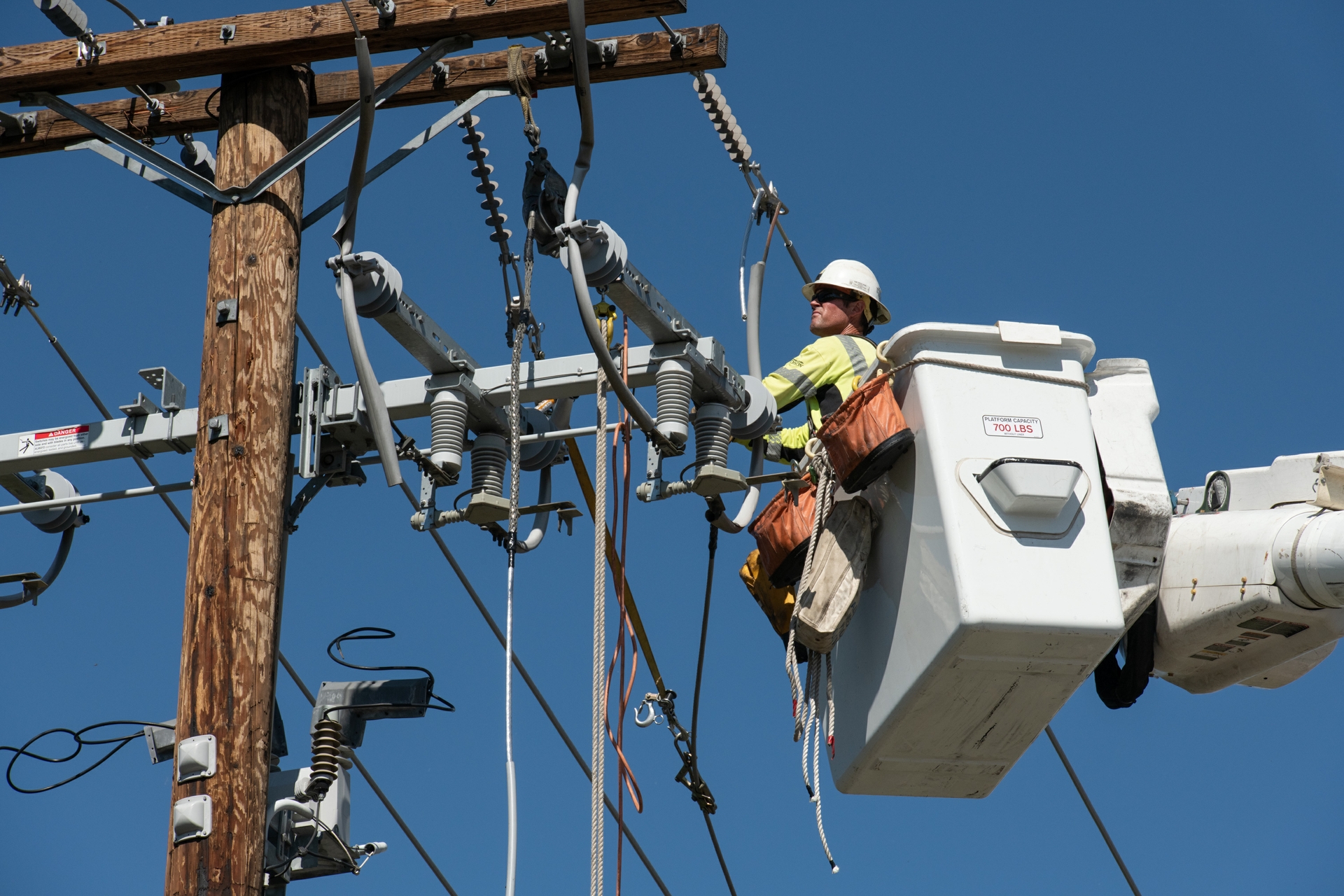
A coat of protection
Covered conductor is an unusually clear example of matching a remedy to a failure mechanism. Its coating helps prevent sparks when objects touch a line or lines strike each other. SCE also uses targeted undergrounding, vegetation management, equipment inspections and protective operating measures. Each addresses a different part of the problem.
By March 31, 2026, the company reported more than 7,110 circuit miles of covered conductor installed since 2018. Its monitoring system included roughly 2,000 weather stations and 200 high-definition cameras. These are measures of work and visibility. They should be read alongside outcomes and remaining exposure, rather than treated as a guarantee.
since 2018
deployed
watching conditions
There is a lesson here that travels beyond utilities: describe the failure you are trying to prevent before choosing the intervention. Coating overhead wire and burying a line solve overlapping problems with different construction requirements. SCE says undergrounding decisions consider feasibility and locations with especially serious potential consequences, including communities with limited access routes.
The bill comes with the blueprint
Infrastructure earns its keep over decades, but customers pay bills every month. SCE reported about $6 billion in grid capital investment in 2024. That figure covers broad investment in the system; it is not a price tag for covered conductor alone. Mixing those scopes would make the story tidier and the arithmetic worse.
Regulators decide what costs the utility can recover and what return it has an opportunity to earn on eligible investment. Purchased power and fuel generally pass through without a profit markup. In September 2025, the California Public Utilities Commission approved a $9.664 billion revenue requirement for that year’s general rate case, $819 million below SCE’s request. That allowance is not the company’s total revenue.
“Safety and affordability remain at the core of our commitment to customers.”
Pedro J. Pizarro / February 2026
The tension is built into the model. Edison needs capital for equipment and construction. Customers need the resulting service to remain affordable. Edison reported $19.317 billion in consolidated operating revenue for 2025, but revenue alone cannot tell a reader whether a particular investment was economical or a household’s bill manageable.
The risk the coating cannot settle
The Eaton Fire makes any account of progress incomplete without accountability. In its 2025 annual report, SCE described its review as ongoing and identified an idle, de-energized transmission facility as a viable explanation for ignition. That disclosure is different from a completed official determination. Transmission equipment also requires separate consideration from the covered distribution wires.
By October 20, 2026, SCE reported nearly $1.1 billion in compensation offers through its voluntary recovery program and more than $580 million paid. Those figures belong in separate columns. An offer is a proposed settlement; payment is money delivered. Neither figure establishes the eventual total cost of the fire.
More plugs, more conditions
The growth argument begins with cars and buildings. SCE’s Countdown to 2045 analysis projects California electricity demand rising about 80% as the state pursues its climate goals. This is a modeled pathway, with assumptions about adoption, infrastructure and policy. A forecast does not install a transformer.
Illustrative demand index. An 80% increase in SCE’s California scenario, not a measured outcome.
Charge Ready makes that transition tangible. In 2020, regulators authorized up to $436 million for its second phase, covering charging infrastructure across settings including apartments and workplaces. The useful product is the connection work that lets charging happen. For a property owner, the questions are eligibility, available capacity, installation responsibilities and operating costs.
The savings case has conditions. Electrifying a car or heating system changes both electricity spending and fossil-fuel spending. Compare the combined bill, including equipment costs. Renters, constrained sites and households facing expensive upgrades may face a very different calculation from a homeowner with suitable wiring.
The people at the other end
Edison’s history contains an instructive change of mind. In 1975, after environmental concerns and the oil embargo’s fuel-price shock, SCE turned toward customer conservation programs. Circumstances changed the assignment. In 2026, another boundary changed: Edison sold its Trio advisory business in the second quarter. Describing those services as a current subsidiary would miss the update.
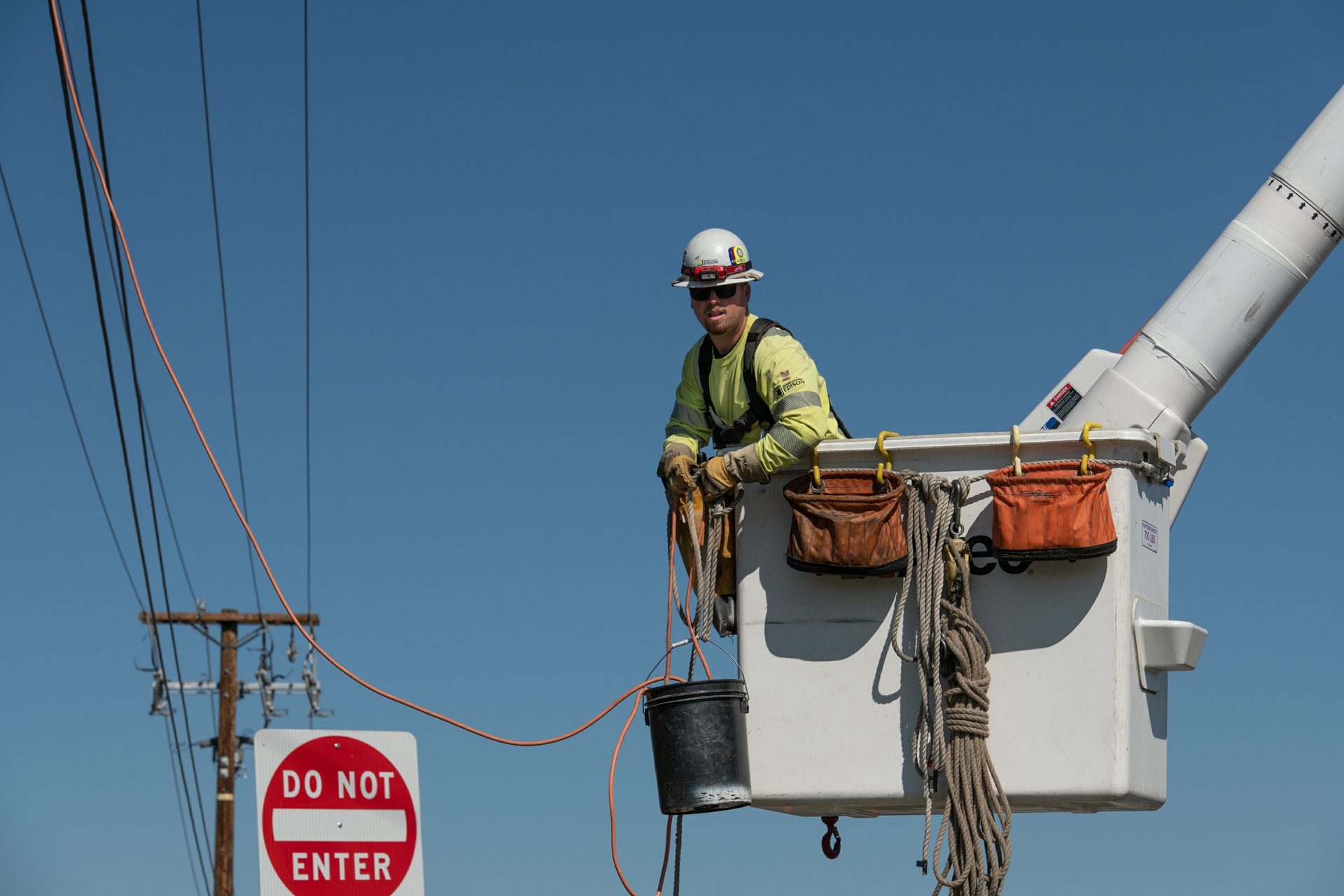
Then there is the workforce. Edison’s partnership with IBEW Local 47 offers lineworker scholarships supporting training at Los Angeles Trade-Technical College. The 2026 program offered up to $25,000 per recipient. Whatever happens in a financial model, someone still has to climb, connect and inspect. The grid’s promises eventually arrive at the end of a wire.