Ten iPhones on a desk make an unconvincing vision of the future. Eden Full Goh was tapping her way down a line of them, repeating tests by hand. Software had automated plenty of work around her. Here, however, was a finger, attached to a person with other things to do. The arrangement invited a fairly practical question: could a robot take that shift?
She remembers the idea returning while she showered around nine one evening, with more testing still ahead. It persisted for weeks. Full Goh had already built a nonprofit around a physical invention; another stubborn task was well within her territory. In 2018, she founded Mobot, which puts mechanical robots to work testing apps on actual devices. Its founder’s path to that business involves a solar-powered toy car, a substantial interruption to university, and a seat in a Canadian rowing boat.
“If I can do that with my finger, can we get our robot finger to do that?”
Eden Full Goh
The desk is a useful place to begin because it makes the business comprehensible. An application reaches its user through glass, buttons, connections, and moving hands. Some of those interactions remain awkward to reproduce through code alone. Full Goh noticed the person doing the awkward part. She also happened to be that person.↗
The sun declined to stand still
Growing up in Calgary, Full Goh built a solar-powered toy car at ten. In high school she began working on what became SunSaluter, a mechanism for turning a panel as the sun moved. At an international science fair, an Indonesian student pointed out that the device could be useful in rural villages. A project intended for a competition acquired a possible life beyond the judging table.
She entered Princeton in 2009. Professor Winston Wole Soboyejo became an adviser, and the university’s Grand Challenges program supported a 2010 trip to Kenya to test prototypes. The journey brought a question about energy efficiency into contact with the people who might actually use the invention. A solar panel’s specifications could tell her one thing; a village’s needs could tell her something else.↗
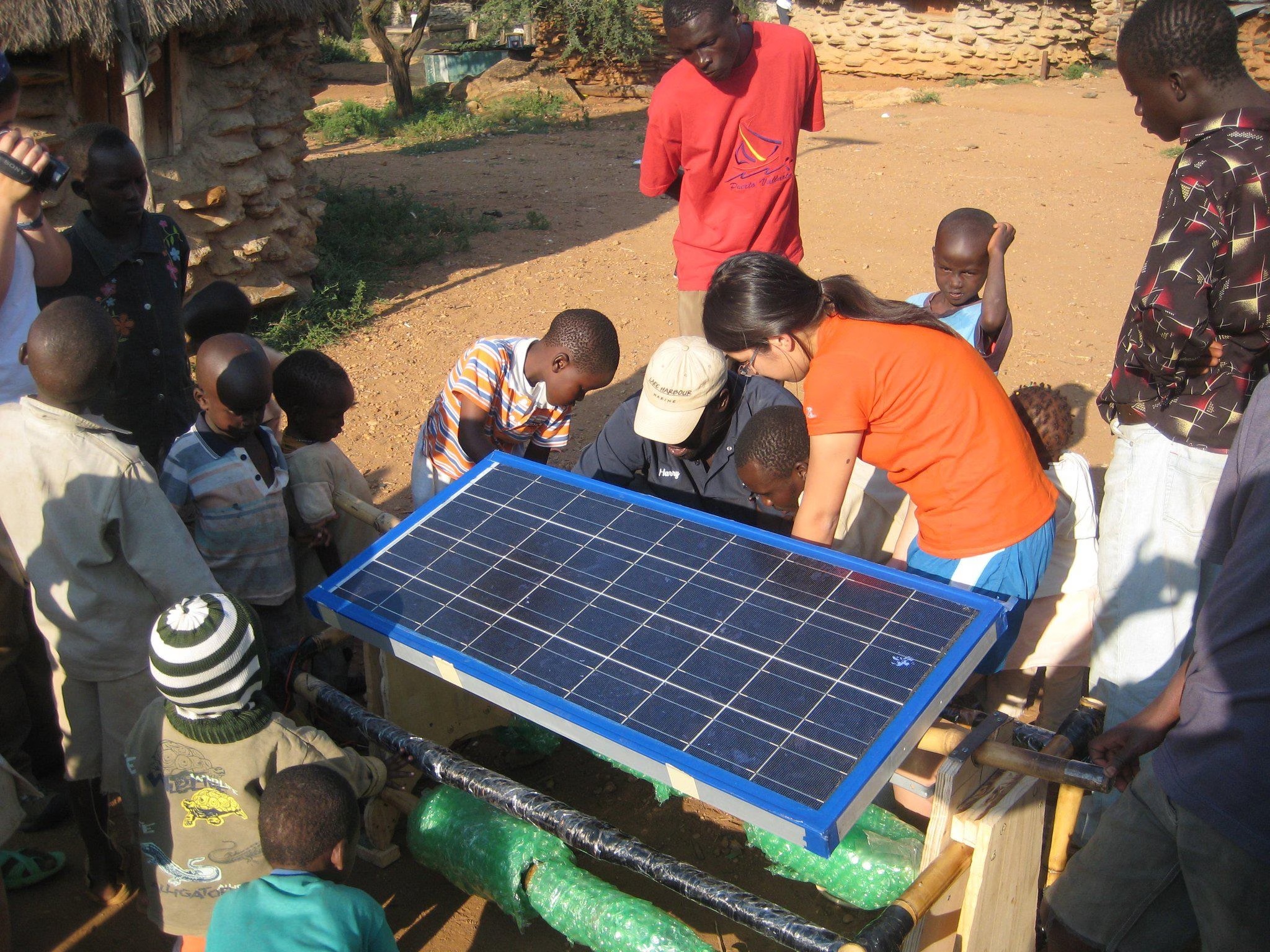
The design evolved into a panel balanced between a weight and a water clock. As water drains, the balance changes and the panel rotates. Fill the container in the morning, set the flow, and gravity handles the movement. An optional filter gives the draining water another job. The mechanism makes economical use of things already present: sunlight, water, weight, and time.
There is a pleasing lack of theatricality about it. The sun conducts its daily business; the panel adjusts. No motor is required for the passive design. The engineering problem becomes one of making the arrangement affordable, understandable, and buildable with available materials. Wood, bamboo, or recycled metal can form the structure. A clever mechanism has to survive its encounter with an ordinary morning.↗
A grant with an awkward condition
In May 2011, Full Goh had news for her parents: she had won a $100,000 Thiel Fellowship. The money would give her time to develop SunSaluter. Accepting it required leaving college. For a family that cared deeply about her education, the call demanded rather more explanation than an announcement about a scholarship usually does.
She joined the fellowship’s inaugural class. The two-year break brought work, travel, and a place in a former Oakland firehouse owned by energy entrepreneur Danielle Fong. Fong offered space to young founders developing their own projects. It was an unusually literal version of a startup incubator: somewhere to sleep upstairs, somewhere to make things below.↗
The attractive version of a founder’s biography often leaps from an idea to a company, skipping the repeated negotiations in between. SunSaluter required Full Goh to design for deployment, find partners, raise money, and hire people. Each activity introduced an audience whose judgment mattered. The fellowship made room for those lessons, though it could hardly do the learning for her.
Nor does the familiar college-dropout shorthand capture every turn. Princeton’s rowing record documents her return to competition there, including a bronze medal at the 2014 Eastern Sprints, followed by an assistant coaching role for the 2014-15 season. Her university story contains departures and returns. A résumé can flatten a life surprisingly efficiently.↗
The person steering the boat
Full Goh walked onto Princeton’s rowing team as a freshman. She was a coxswain, the crew member responsible for steering and directing the rowers. In 2012, she served with Canada’s senior women’s pre-Olympic development team. The crew won gold at Holland Beker in Amsterdam and the Remenham Challenge Cup at Henley Royal Regatta.↗
Consider the peculiarity of that job. The coxswain helps organize an effort she cannot perform on everyone else’s behalf. The rowers supply the strokes. Someone still needs to keep the boat pointed correctly and communicate what the crew should do next. It is a useful setting in which to examine leadership: instructions have immediate consequences, and nobody can schedule a meeting halfway down the course.
Years later, a rowing connection helped bring Mobot its first customer. Full Goh contacted an old college teammate; several introductions later, a company prepared a version of its app for her prototype to test. The route from sports to business was quite concrete. A person she knew helped her reach a person who would let her try something.
Her account of the early business is disarmingly spare. She had one modified robot, her own iPhone, and six months of runway saved during more than two years as a product manager. She had no cofounder, employees, customers, or affection for selling. Calling herself an “introverted solo founder,” she described searching for introductions and pushing beyond her comfort zone. The first customer was still working with Mobot two and a half years later.↗
A greeting-card robot changes careers
Before Mobot, Full Goh worked at Palantir Technologies and Butterfly Network. The move from web products to mobile devices exposed a different testing burden. Her experience gave her a close view of the gap between an automated test suite and the physical work still needed before a release could be trusted.↗
For an early prototype, she modified a robot originally designed to sign greeting cards. A machine employed in reproducing handwriting found new work interacting with a screen. The change is amusing, but also revealing. Full Goh began with a mechanism that existed and adapted it to a task she understood. Getting a robot to touch an app was something a customer could watch and assess.↗
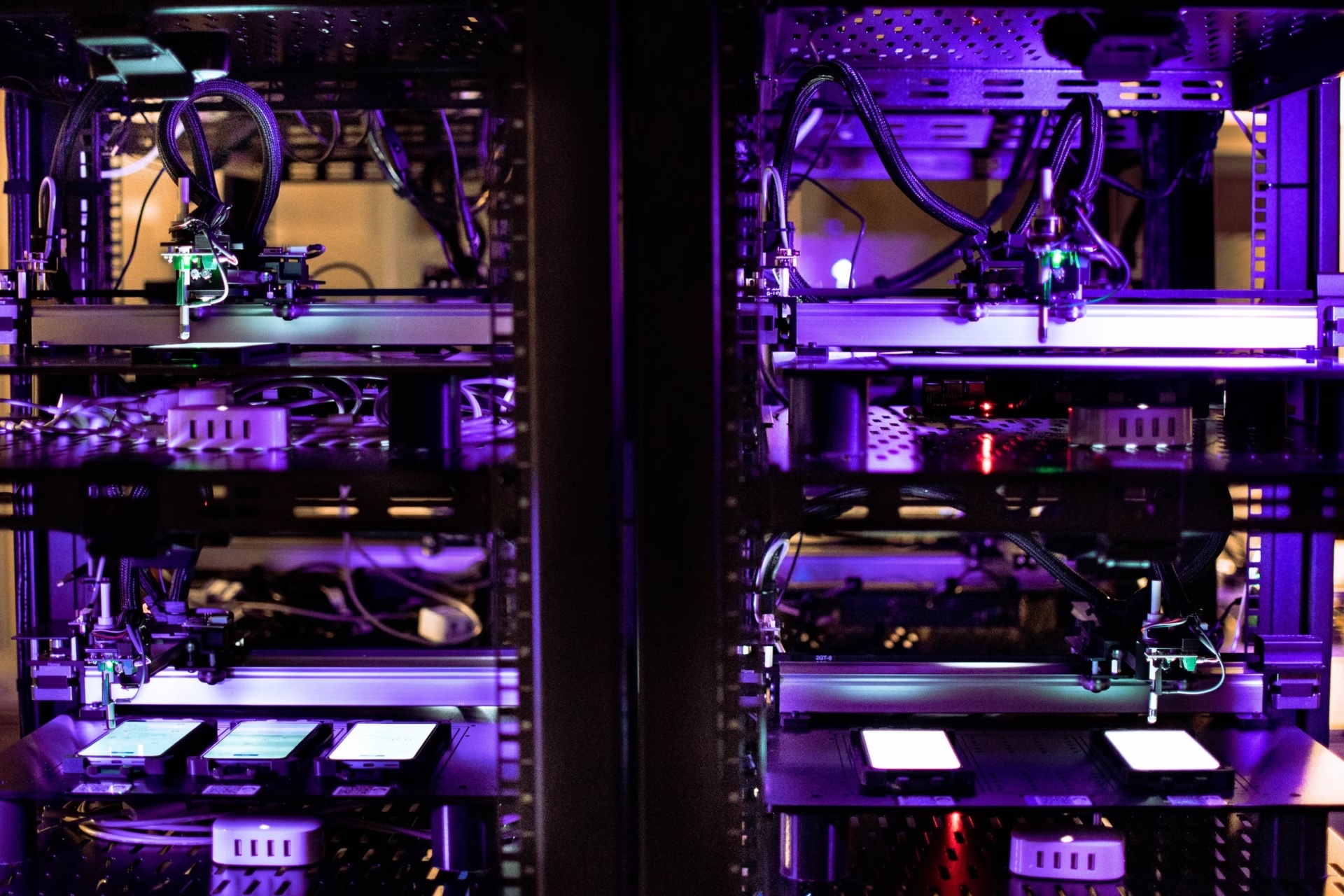
Mobot entered Y Combinator’s Winter 2019 batch. Its service uses human-supervised mechanical robots to automate repetitive functions on real mobile devices. The arrangement lets a software team use robotic testing without building and operating the equipment itself. The customer has an app to release; Mobot supplies another way to examine how it behaves.↗
The distinction becomes easier to grasp with a connected device. A tap may be followed by a notification, a Bluetooth interaction, or a transition between applications. The product experience crosses several boundaries. Testing each component is useful, but a person eventually encounters the sequence as a whole. Full Goh’s business follows those interactions out into the physical world.↗
Conceptual workflow, not a performance comparison.
Letting an invention out of the house
SunSaluter presented Full Goh with an unusually candid version of user feedback. A field study in India found that some people did not consider filling the tracker’s water container every morning worth the effort. The mechanism could work and still ask too much of someone who already had other morning duties. An engineering diagram has no chores; its eventual owner does.
That discrepancy mattered. Full Goh’s response included revisiting training and the kits being manufactured. “All feedback is good feedback,” she said. The point was to discover how the thing fitted into daily life, including the occasions when a person decided to leave it alone.↗
By August 2016, SunSaluter had 200 deployments across 19 countries. It was building partnerships in India and distributing open-source materials. Full Goh also assembled a board, spending nine months on the process. She valued people who worked hard and whom she could trust, alongside patience and a willingness to learn.
A patent had finally cleared, but her explanation resisted the usual tale of defending an invention from imitators. She wanted protection against someone else restricting her ability to use the design. Sharing it was part of the purpose. “Patents are sort of a luxury and should not be step one,” she said.↗
Her public biography reports an impact on more than 17,000 people. A deployment record, not a forecast.
The luxury of a to-do list
In a 2021 reflection, Full Goh identified an unlikely professional milestone: she could finally write a proper to-do list. During Mobot’s earliest period, the urgent priorities were so obvious that she kept them in her head. As the founder’s role developed, she began making room for ideas that mattered without demanding immediate attention.
The small change gives a more useful picture of growth than a ceremonial photograph. Having a list meant she had space to think about future opportunities. It also meant the business had become complicated enough to require one. A founder’s calendar had acquired room for something beyond the next emergency.↗
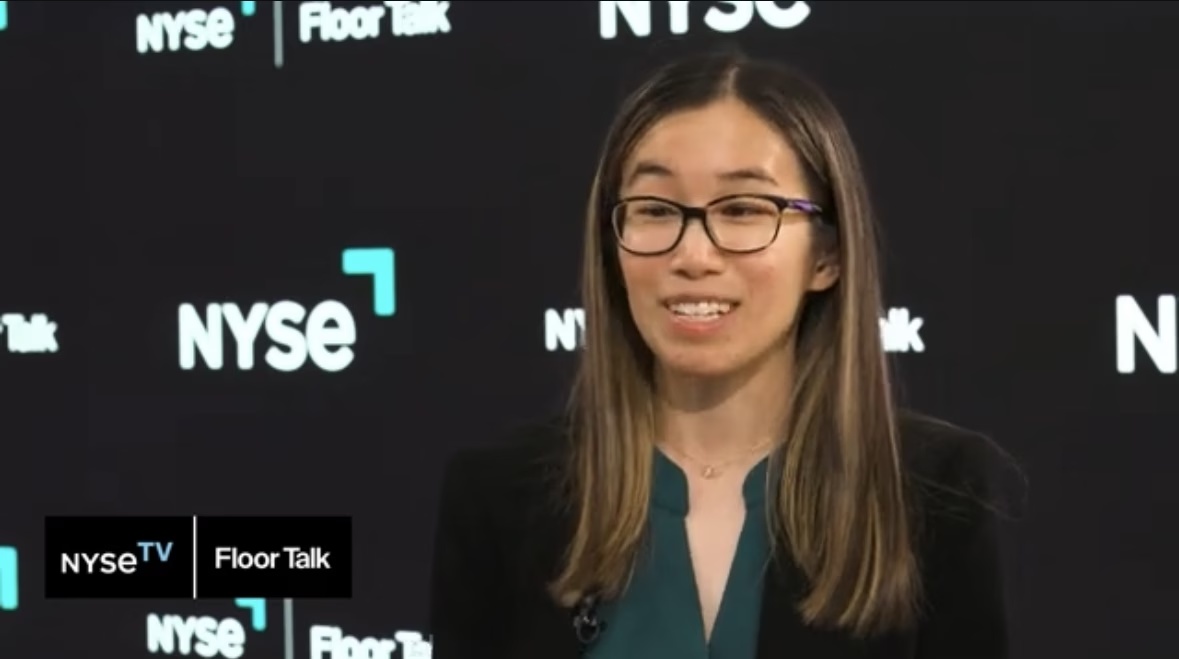
Her later public work includes conversations about the craft of testing itself. In November 2024, she hosted Rosie Sherry, founder of the Ministry of Testing, on the How It’s Tested podcast. Their discussion examined changing testing roles, AI, and how a company develops a culture of quality. There is room in Full Goh’s robot business for questions that machines cannot settle on their own.↗
She lives in New York with her partner and their senior pug. Her biography identifies her as Chinese-Canadian, born and raised in Calgary, and records the rowing medals alongside her inventions. The details restore some scale to a career that can otherwise become a procession of organizations. Boats, prototypes, and a dog are allowed to occupy the same life.↗
“At the end of the day, I want to do work that helps others do their work better.”
Eden Full Goh
That ambition is broad, but the work beneath it has been specific: move a panel, coordinate a crew, repeat a tap. In her 2025 account of her career, Full Goh spoke about learning across industries and continuing to build. The common thread is an attention to the practical demands an idea places on somebody else.↗
Back at the row of phones, the question remains refreshingly modest. Someone has to touch the glass again. Full Goh has made a business of asking who, or what, that someone ought to be.