A drone to check on the dog sounds like the sort of invention that arrives shortly before the dog acquires a lawyer. In 2016, it was also Jackie Wu’s business. The Northwestern graduate and his team at Eighty Nine Robotics were developing Rook, a small indoor aircraft that could send live video to a smartphone. You could be somewhere else and steer a camera around your home. The pitch included forgotten lights, an unattended toaster and the reassuring sight of the family pet.
Wu had completed his undergraduate studies in 2013 and a master’s degree in robotics in 2015. Rook brought that training into a domestic setting: a room, a camera, a machine that needed to move through it. The proposed early preorder price was $179. Beyond home monitoring, Wu pictured real estate companies using the aircraft to make virtual tours. A little drone had quite a crowded appointment book.
The team had real institutional help. Northwestern’s Garage incubator provided a place to work and guidance on the paperwork that follows invention around like a loyal, joyless assistant: incorporation, patents, accounting. Rook’s development began in September 2014. A proof of concept followed four months later. The engineers took existing drones apart, worked through weight and power constraints, and produced 15 iterations before settling on a prototype.
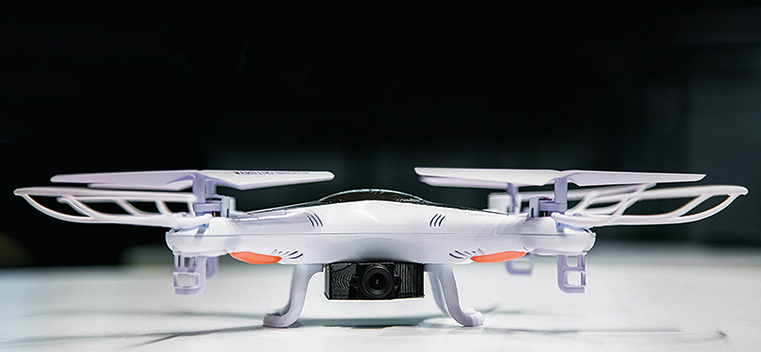
Crowdfunding supplied enthusiasm and money. By summer 2016 the team had raised more than $57,000 on Indiegogo. The plan was to deliver to consumers by early 2017. It is an appealing place to pause a founder’s biography: educated engineer, useful gadget, supportive campus, paying backers. The next part is less decorative, and more revealing.
An aircraft meets arithmetic
In January 2017, Wu told backers that Rook would not be delivered. Manufacturing a dependable drone at the promised price, finishing the return-to-base features and getting useful battery life from such a small aircraft had proved too difficult. Each problem was concrete. A camera that can fly is impressive; a camera that can fly, return, recharge and justify its price is a business with several additional exams to pass.
Wu offered full refunds, plus an optional extra 2 percent. Some campaign money had already gone into development, and payment and platform fees had reduced what reached the team. He said the refund money would come from his personal savings and future salary. His offer placed the obligation squarely on him.
The sequence resists a tidy origin myth. Wu worked on indoor flight, confronted the cost of delivering it, and continued to build. Moving from a home camera to a warehouse robot meant carrying engineering experience into a different commercial problem. The customer changed, along with the task and the price of getting it wrong. Hardware sends invoices for the parts of a dream that software can sometimes leave vague.
“I think this is the most fair way to treat people who supported my dream.”
Jackie Wu, on his Rook refund offer, 2017
A dorm room, then a warehouse
Wu and Mohammed Kabir began building autonomous drones together in 2017. Their first in-house aircraft took shape in Kabir’s MIT dorm room. Corvus Robotics joined Y Combinator’s Summer 2018 batch. The setting changed from a home to a warehouse, and the job became inventory tracking: reading the labels on stored goods and checking where the goods actually were.
The difference matters. Rook’s owner was meant to steer it remotely. Corvus was pursuing a machine that could fly without a human pilot or external localization infrastructure. In a warehouse, assigning an employee to escort a robot would preserve much of the labor the robot was supposed to remove. Wu’s early description of Corvus emphasized software for indoor drones that could work without that supervision.
He was learning how to run the organization alongside learning what its machines should do. As a member of the 2016 Future Founders fellowship, he valued mentors who held him accountable and peers who were building companies in very different industries. Their products differed; their difficulties overlapped. Revenue targets, hiring and getting a product into customers’ hands were familiar across the room.
His mentor Aaron Gillum described Wu as energetic, and singled out his progress from having an idea to bringing it to market and managing a team. That is a less cinematic achievement than building a flying machine. It is also the one that determines whether the flying machine ever leaves the workshop. Wu’s career contains both kinds of work, often at the same time.
Northwestern
with Mohammed Kabir
Summer batch
The shelf and the spreadsheet disagree
A warehouse can possess something its computer has effectively lost. A pallet occupies the wrong position. A label goes unread. The recorded location and the physical location separate, and someone discovers the disagreement while trying to fill an order. The object has not vanished. Its usefulness has been reduced by bad information. Corvus’s inventory work lives in that gap.
At MSI Surfaces, which distributes flooring, countertops and other building materials, manual counting had involved two to four employees driving through racks and comparing positions with the system. The company reported roughly 80 percent inventory accuracy before drone-led validation, rising to 99 percent after deployment. These are customer deployment results, rather than a forecast for every warehouse. They show what the problem looked like when measured in a working operation.
The human change is just as specific. MSI described shifting associates toward picking and replenishment. Its operations team also used drone data to examine how material went missing in the first place. An inventory count can tell you a record is wrong. Repeated counts can help you see the process that keeps making it wrong. Wu’s product gives customers a way to ask the second question more often.
Closer to what’s actually there
Please leave the building as you found it
Corvus One’s design asks relatively little of the warehouse around it. It needs a landing pad, but no network of localization beacons or stickers on racks. Its October 2024 update added operation in lights-out distribution centers. The same announcement put combined Series A and seed investment at $18 million. The attraction was practical: a building could gain inventory automation without first becoming a construction project.
That choice appears repeatedly in Wu’s explanation of the business. Warehouse layouts change. Racks move. Stock gets reassigned. A system that depends on carefully installed reference points adds another job whenever the physical arrangement changes. In his conversations about Corvus, he returns to the advantage of avoiding that dependency. The robot has to cope with the room that customers use, including its inconvenient revisions.
The company designs and manufactures its systems in Mountain View, California. Wu has connected domestic production with control over development: engineers and manufacturing can stay close, customer feedback can reach the design process quickly, and adjustments can happen without a long separation between the people specifying a part and the people making it. Keeping the work together is a product decision as well as a geographical one.
Hiring is another navigation problem
Wu’s public comments about recruiting offer a smaller window into his standards. For specialized robotics roles, he had worked with more than a dozen agencies and found very few useful. A marketing director needed both the functional skills and familiarity with warehouse robotics. Being broadly qualified did not settle the question. The company needed someone who understood the particular business it was building.
In one recruiting engagement, the role was filled in three weeks. The difficulty is recognizable: a small hardware business needs expertise in intersections that do not fit neatly into a job-board category. Wu was trying to reduce the founder time spent searching while retaining the specificity of the search. Automated flight does not eliminate the need for very deliberate hiring.
His own public description of the Corvus team stresses ability and humility. In an October 2024 post, he explained that he had kept his head down for years while the team worked on autonomy and products ready for scale. He wanted demonstrable work before talking expansively about the future. Even his excitement arrived with a condition: the team had to have something that worked.
“If there’s a will, there’s a way.”
Jackie Wu, on domestic manufacturing, 2025
The room supplies the difficult questions
In his conversation with Kevin Lawton on The New Warehouse, Wu discussed why Corvus builds its own vehicles. The hardware determines the sensor data available; that data shapes how the system is trained. Owning those choices gives the team a tighter connection between what the machine encounters and what its engineers can improve. A warehouse provides a rather less polite examination than a laboratory.
One example involved standing water from roof leaks, a condition the drone fleet had not encountered before. The episode illustrates the variety hidden inside an apparently repetitive task. Flying an aisle means meeting whatever that aisle contains today. The same inventory passes can expose damaged labels or goods in the wrong position. A count becomes a recurring look at the physical building.
Wu’s ambitions extend beyond reading barcodes. He has discussed large world models, which deal with spatial environments, and the prospect of AI systems doing more physical work. The aspiration has a sensible starting constraint: obtain useful observations from real operations. A warehouse has its own vocabulary of racks, cartons, labels and movements. Learning it requires spending time there, regardless of how fluent a model may be elsewhere.
 ▶ WATCH THE CONVERSATION
A company that kept going indoors
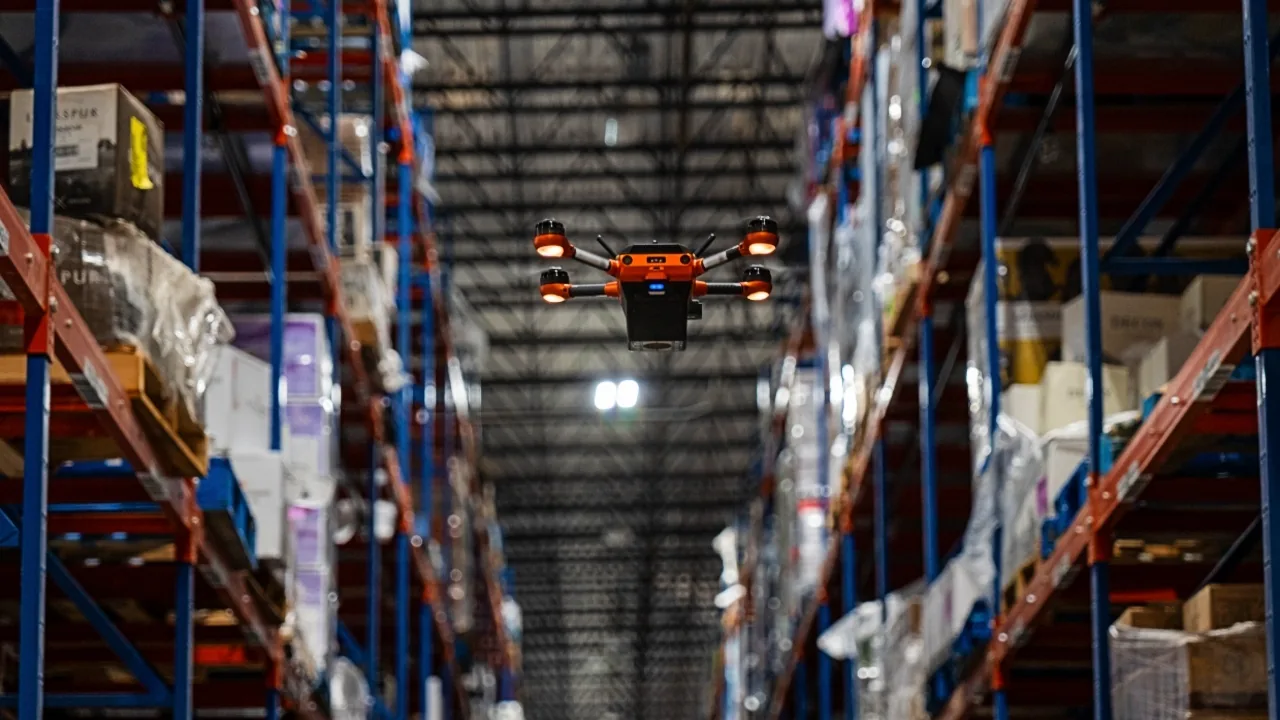
By March 2026, Southern Glazer’s Wine & Spirits had deployed more than 40 Corvus One drones across nine distribution centers in under 18 months. The announced rollout included more than 5,000 flights and over 35,000 verified inventory discrepancies. Those figures describe accumulated operational work. Each discrepancy represents a disagreement that staff could address sooner, before it traveled further into fulfillment.
In April, Corvus introduced Trident, a device mounted to forklifts and other material handling equipment to capture pallet movements during normal operations. Corvus One checks stored inventory; Trident follows inventory being moved. For Wu’s broader aim of making physical operations legible to software, this is an extension of the same question: what happened to the goods between one recorded position and the next?
The company’s leadership changed on August 25, 2026. Kabir became CEO after leading technology and product since the founding. Wu remained a co-founder and member of the board. Corvus also announced $20 million in new funding and reported more than 300 devices deployed across 26 US states, Canada and Mexico. The dorm-room aircraft had become a fleet with customers in several countries.
Wu’s story stays interesting because the household drone remains in it. The price was ambitious, the technical demands were stubborn, and the product did not arrive. He continued working on indoor machines anyway. Years later, the useful question had become more prosaic and more commercially consequential: where is the pallet? A warehouse is a large place to mislay something. Wu helped build a company that goes looking, then goes looking again.