Earl Bakken watched Frankenstein and came away interested in the equipment. There were flashing lights, electrical apparatus, a scientist attempting something outrageous. For a boy growing up in Columbia Heights, Minnesota, the laboratory offered considerable competition to the monster. Other children could leave the cinema discussing the fright. Bakken had found something to do with his afternoons.
The film was the 1931 version, with Boris Karloff. Bakken returned to its possibilities throughout his life. Electricity seemed to promise that ordinary materials, properly arranged, could do extraordinary things. His early projects included radios, a telephone connection to a friend's house, and a robot that could blink and speak. These were ambitious ways of avoiding a quiet childhood.
His mother encouraged the electrical experiments, even when an electrician uncle thought she ought to stop them. That small domestic disagreement matters. Before Bakken had a company, a qualification, or an institution bearing his surname, he had someone willing to buy him parts. Curiosity needs encouragement, certainly. Sometimes it also needs a shopping budget.
Born on January 10, 1924, Bakken would become an engineer, business founder, collector, and philanthropist. Those nouns can make a life sound tidier than it felt while being lived. His story has a more appealing continuity: a child made things because he wanted to know what would happen, and the adult kept arranging circumstances in which other people could do the same.
Eight dollars, two partners, one garage
During World War II, Bakken served as a radar maintenance instructor. He later studied electrical engineering at the University of Minnesota, graduating in 1948. The sequence brought together practical troubleshooting, teaching, and formal study. All three would remain useful. An engineer who can repair a machine has one skill; an engineer who can help someone else understand it has another.
On April 29, 1949, he and his brother-in-law Palmer Hermundslie started Medtronic. The business occupied a garage in northeast Minneapolis. There is a temptation to treat every famous garage as a monument waiting for its plaque. This one was also a place where two partners needed paying work. Their first month's revenue was eight dollars.
They repaired equipment, and household radio and television work helped support the young company. The origin carries none of the certainty that later success lends it. Eight dollars does not make a persuasive victory speech. It does, however, make the next repair rather important. The early business depended on a willingness to attend to somebody else's malfunctioning machine.
Bakken's partnership with Hermundslie also complicates the solitary-inventor picture. One name eventually went over a museum entrance, but the company began with two people. The business grew through relationships, customers, colleagues, and accumulated experience. The garage was a workshop where those connections could develop. Its value lay in the people and work moving through it, rather than any special property of the building.
Every company starts somewhere.
Leave room for somebody else
As Medtronic expanded, Bakken acquired a problem that a childhood robot had never presented: other people needed room to make decisions. Earl Hatten, an early employee, remembered a founder who chose capable people and allowed them to do their jobs. It is an unshowy description of leadership. It also gives the employees a substantial share of the credit.
That recollection helps explain a company builder who continued to value engineering without requiring every useful idea to originate at his own desk. Hiring someone entails a judgment about what that person can contribute. Letting them contribute requires another judgment, repeated daily. A founder accustomed to fixing things personally has to learn when his hands are no longer needed on every tool.
Bakken wrote Medtronic's mission statement in 1960. Its six tenets made room for quality, employees, financial performance, and corporate citizenship. He kept explaining the mission to new employees after his retirement. A document could be copied and distributed; its author still thought it worth turning up to discuss what the words required of people.
The persistence is revealing. Business culture often celebrates the next announcement, the new strategy, the freshly designed slogan. Bakken spent decades returning to a statement written when the company was young. For him, repetition could be useful work. People entering an established company deserved to hear why it existed, rather than merely inherit its procedures and learn where to park.
Ready, fire, aim
Bakken condensed his leadership philosophy into three words: “Ready, fire, aim!” The order is deliberately mischievous. An engineer had apparently misplaced the instruction to finish aiming before proceeding. Yet his explanation was about learning through action: leaders gained experience by doing, then shared that experience as coaches. Activity supplied information that preparation alone could never provide.
Read alongside his long attention to a mission statement, the phrase becomes more interesting. He valued movement and continuity together. The work could change as people discovered what was possible; the purpose required a steadier sort of attention. That combination offers a more human picture than either the impulsive tinkerer or the executive who has a policy for every eventuality.
His public legacy website carries another concise statement: “I have been driven to use my knowledge and energy to help humankind.” The ambition is broad, but the verbs are practical. Knowledge and energy are resources to be used. They can go into a business, a collection, an educational program, or an afternoon spent helping someone understand how a device works.
“Ready, fire, aim!”
Earl E. Bakken · a philosophy of learning by doing
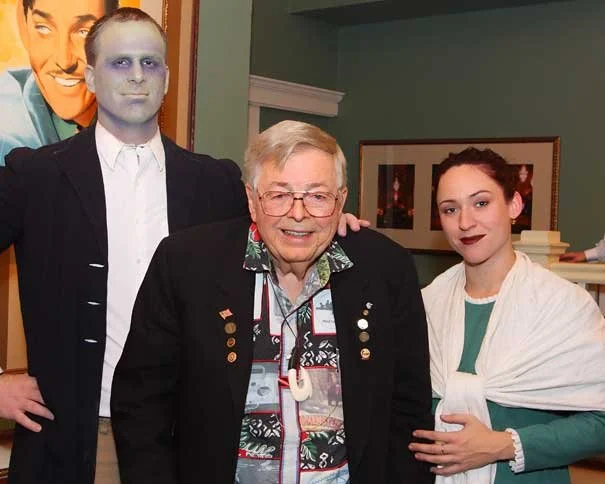
A collection with the doors open
In 1975, Bakken founded the museum that bears his name in Minneapolis. He had already begun collecting artifacts and literature at Medtronic. Making an independent institution out of that interest gave the collection a public future. The habit of wondering how things worked now had rooms, exhibits, and visitors who could bring questions of their own.
The Bakken Museum explored electricity and magnetism through history and hands-on learning. Frankenstein belonged there too. It was a satisfying return for the story that had helped turn a Minnesota boy toward engineering. A childhood fascination could have become a private keepsake, mentioned at dinner. Bakken made space for other children to encounter its mixture of imagination, apparatus, and questions.
A museum also changes the audience for technical objects. Something that once belonged to a specialist becomes available to a family on an outing or a student who has never considered engineering. The explanation has to reach beyond the people who already understand the machine. Bakken had taught radar maintenance; here was another setting in which knowing something created an opportunity to teach.
In 2025, the institution marked its fiftieth anniversary. Its programs included student-driven activities, classes, and workshops. The anniversary gives a useful measure of Bakken's intentions: fifty years after the founding, people were still being invited to ask questions and make things. An institution needs staff, care, and repeated effort to keep that invitation credible.
- 1949A garage business
Medtronic co-founded - 1975A public collection
The Bakken Museum founded - 1988A home for radio history
Pavek Museum opens - 2025Fifty years of questions
The Bakken Museum anniversary
The radios needed somewhere to go
One museum did not exhaust Bakken's appetite for old equipment. Joe Pavek had assembled a collection of radios and broadcasting apparatus, but finding a permanent home for it proved difficult. An auction threatened to disperse it. Bakken recognized both a fellow enthusiast and an educational possibility in the accumulation of machines.
Together with Pavek and broadcaster Paul Hedberg, he helped establish the nonprofit behind the Pavek Museum. It opened on October 29, 1988, the weekend of the fiftieth anniversary of the War of the Worlds broadcast. For someone whose imagination had been stirred by Frankenstein, another encounter between science fiction and electrical equipment seems entirely appropriate.
After Pavek died in 1989, Bakken urged the museum to use its collections to create opportunities for children. A Broadcast Workshop followed in 1991, letting school groups make a radio program in the style of the 1960s. The object in the display case gained a second life as the starting point for somebody else's activity.
There is affection in preserving an old radio. There is a further generosity in letting its history become useful to a child. Bakken understood the appeal of the knobs, wires, voices, and invisible connections. He had worked on radios himself. The museums extended that personal pleasure into public places where an interest could develop without anyone having to arrive as an expert.
A coat for the founder
Bakken retired from Medtronic in 1989 and later lived at Kīholo Bay on Hawaii Island with his wife, Doris. He maintained connections with the company and with Minnesota. Retirement changed the setting of his life, but it did not remove the institutions and relationships he had spent years building.
Ron Hagenson, his longtime executive assistant, recalled an affectionate custom involving a statue of Bakken at a company facility. When Bakken visited from Hawaii, employees would give the statue a lei. When Minnesota turned cold, they put a coat on it. Corporate monuments are often asked to look dignified. This one had colleagues worrying about its wardrobe.
Bakken died on October 21, 2018, aged 94. The objects and papers he left to his museum opened another route into his life. More than 1,100 pieces were processed for the Earl Bakken Legacy Collection. Together they offer material evidence of his interests, beyond the polished outline of a founder's career.
Medtronic marked its seventy-fifth anniversary in 2024; the museum followed with its fiftieth in 2025. Both dates invite reflection on duration. Bakken's childhood projects had become organizations that needed successive generations of people to keep them going. His contribution included making places where those people could find worthwhile work, ideas to examine, and equipment to try.
The robot, the garage, the radios, and the museum collections belong to the same life. So does that coat on the statue. It is a pleasing final detail for a founder who thought technology should serve people: somewhere along the way, people became sufficiently fond of him to return the favor, even to a likeness standing outside in the Minnesota cold.
Follow the curiosity
- Earl Bakken's legacy website
- Explore the Earl Bakken Legacy Collection
- The Bakken Museum at fifty
- The Pavek Museum's radio story
- A remembrance from Minnesota Public Radio
- Read Bakken's 2007 oral-history interview
- Watch Earl Bakken · Big Island TV, Hawaii
- Watch Oral Histories: Earl Bakken · Vast Expanse Productions
- Earl Bakken on Wikipedia
- Medtronic's company profile