At 11:59 p.m. Central time on December 31, 2024, three natural gas pipelines changed hands. The price was $1.2 billion. Guardian, Midwestern and Viking were already doing their unglamorous work, moving gas across the Midwest. DT Midstream bought them from ONEOK. To understand the purchase, look past the steel. Look at who was waiting at the other end.
- DT Midstream connects gas producers with utilities, power plants and industrial markets.
- Long-term contracts help pay for infrastructure before the new capacity arrives.
- Existing routes offer room to grow, but customers and permits still set the pace.
The three systems added roughly 1,300 miles across seven states. Guardian connected with DT Midstream’s Vector pipeline. Midwestern linked Appalachian supply with the Chicago market. Viking brought Canadian supply toward utility customers in Minnesota, Wisconsin and North Dakota. Taken together, these were connections to places where gas had a job to do.
The customer at the other end
There is a temptation to describe natural gas as a story about abundance. A producer drills a well; gas comes out. But abundance in one place does little for a power plant somewhere else. Between those two points sit gathering pipes, treatment equipment, compressors, transmission lines and storage. Each connection determines which customers a producer can reach.
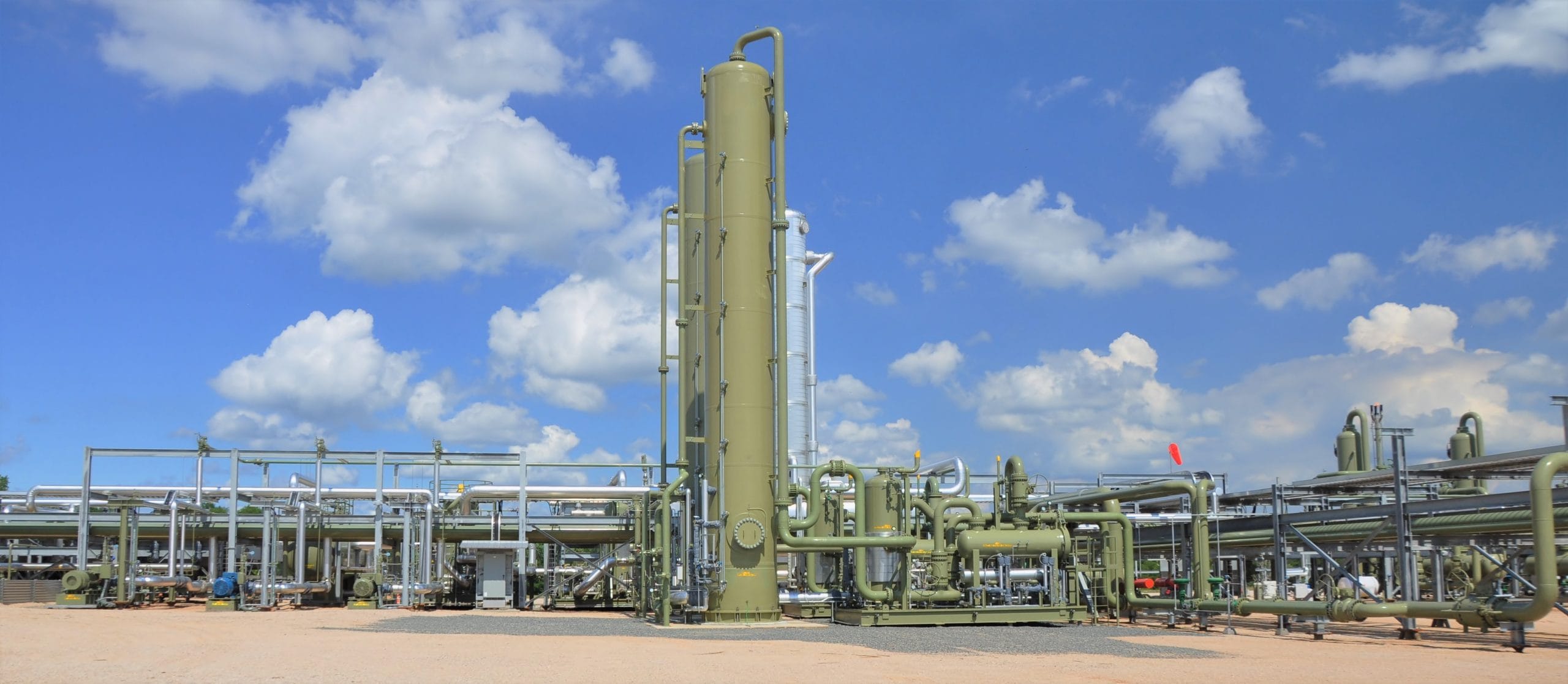
This is DT Midstream’s territory. Its systems link the Haynesville basin in Louisiana and Texas with Gulf Coast markets, including the LNG export corridor. Farther north, its network connects Marcellus and Utica production with Midwest, northeastern and Canadian demand. Gathering collects production. Treatment prepares it for onward delivery. Transportation covers the distance. Storage helps reconcile different schedules for supply and consumption.
The business became independent of DTE Energy in July 2021. It arrived with operating assets and an experienced team. Today, David Slater is executive chairman and CEO; Chris Zona is president and chief operating officer. Their expertise spans commercial development, engineering, construction and operations. In this industry, a promising route needs people who can negotiate it, build it and keep it running.
A reservation with steel around it
A pipeline customer often pays for the right to use capacity. DT Midstream’s majority contract structure uses fixed demand charges or minimum-volume commitments. That gives infrastructure owners some protection when actual flows fluctuate. Think of a reservation: keeping the space available has value even when the customer does not use every bit of it.
Utilities, generators, marketers, industrial users and producers buy these services. A producer needs a dependable exit from its acreage. A utility needs dependable access to supply. DT Midstream can serve both ends of that journey. Its customer resources include shipper setup and nominations, the instructions customers use to arrange gas movements through particular systems.
The contract helps explain the acquisition price. Management described the Midwest purchase as roughly 10.5 times expected 2025 adjusted EBITDA. Actual financing included about $406 million in net equity proceeds and $650 million of notes, with borrowing and cash covering the remainder. Shareholders and lenders supplied capital for infrastructure whose customers were already established.
Competition is intensely geographic. An alternative operator must connect the right supply with the right destination at an acceptable price. Reliability and available capacity matter, too. A long pipeline in the wrong place offers little help. Enbridge illustrates the market’s overlapping relationships: it competes in gas transportation while partnering with DT Midstream in NEXUS and Vector.
More room on the same road
Once a route exists, adding capacity can involve compression or looping: installing parallel pipe along part of the route. LEAP, the Louisiana Energy Access Project, expanded to 2.1 billion cubic feet a day when Phase 4 entered service in 2025, ahead of its previously announced first-half 2026 target. In July 2026, DT Midstream disclosed new long-term contracts supporting another expansion.
“We continue to advance our organic growth backlog, with $2 billion of projects now commercialized.”
David Slater / July 30, 2026
Guardian G3 makes the sequence particularly clear. Five utilities committed to its entire planned capacity. The proposed project combines approximately 68 miles of new loop with compression changes and a new interconnect. Company materials estimate $890 million of investment and target November 2028 service, pending approvals. The customer commitments come years before the expected first delivery.
Vector offers another example. In May 2026, Enbridge announced a sanctioned westbound expansion with DT Midstream, supported by 20-year firm transportation agreements with investment-grade utilities. The transferable lesson is commercial discipline: find the customer, secure the commitment, then decide how much infrastructure to add.
The useful limits of certainty
Long contracts leave plenty to watch. Expand Energy accounted for approximately 45% of DT Midstream’s 2025 operating revenue, excluding unconsolidated joint-venture revenue. Customer concentration remains even when payment terms are protective. In the same year, lower Susquehanna gathering volumes reduced revenue by $22 million. Regional weakness can coexist with growth elsewhere.
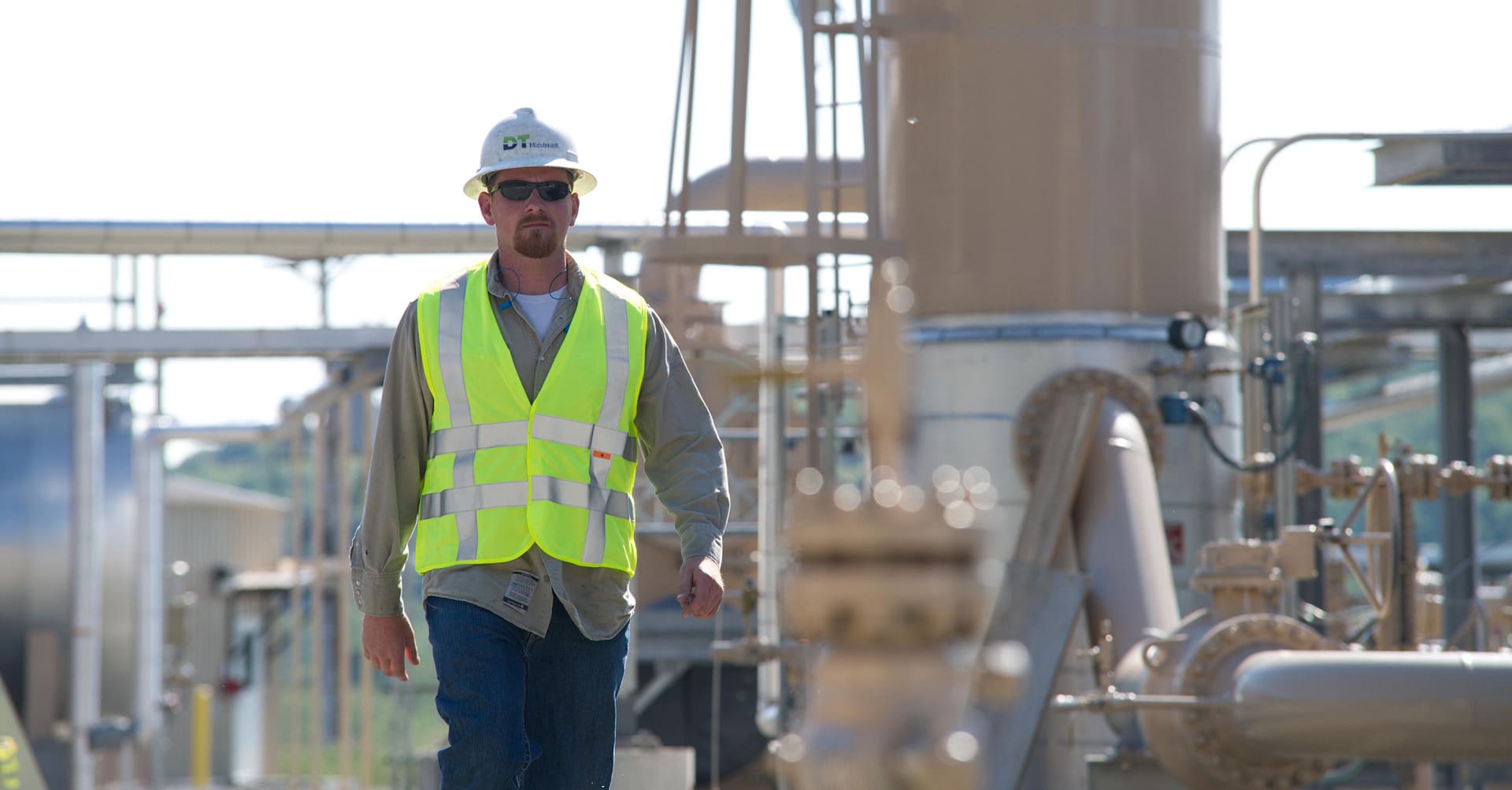
Environmental ambitions face their own sequence of practical tests. DT Midstream targets net zero greenhouse gas emissions by 2050. Its Louisiana carbon capture proposal advanced to formal technical permit review in July 2025, according to its annual filing. A climate target, a permit application and an operating storage project represent different stages of work.
The same discipline applies to the core business. Growth requires approvals, creditworthy buyers, financing and demand that survives beyond today’s forecasts. DT Midstream’s useful insight is that access can be valuable even where the commodity is plentiful. For anyone evaluating an infrastructure business, the question to borrow is wonderfully concrete: who has committed to paying at the other end?