A telecom dealer can make a sale and still have a remarkably unfinished day. Someone must check the address, enter the order, arrange installation, find the equipment, and work out whether the commission arrived. DSI has spent decades moving into those ordinary, troublesome spaces. Follow its history and the interesting object gradually changes: first a satellite dish, then a dealer’s entire working day.
- Founded by Dave and Doug Robison in 1984, DSI began selling C-band satellite equipment in Des Moines.
- Today it combines telecom distribution, dealer software, training, field sales, logistics, and call center support.
- Its 2026 DSIGem launch connects orders, commissions, and disputes; core access is free for DSI dealers.
That makes the company useful to two audiences. Independent dealers need products they can sell and systems they can operate. Service providers need a dealer channel that can explain offers, submit orders, and support customers consistently. DSI stands between them. Its proposition is practical: let the dealer borrow capabilities that would be burdensome to assemble alone.
The dish was only the beginning
In 1994, DSI became one of five original distributors launching DIRECTV with RCA. A decade later, it launched WildBlue high-speed internet as the original distributor. Those milestones reveal a business following connections into the home: television, then internet, with the independent seller remaining an important link between a national provider and a local customer.
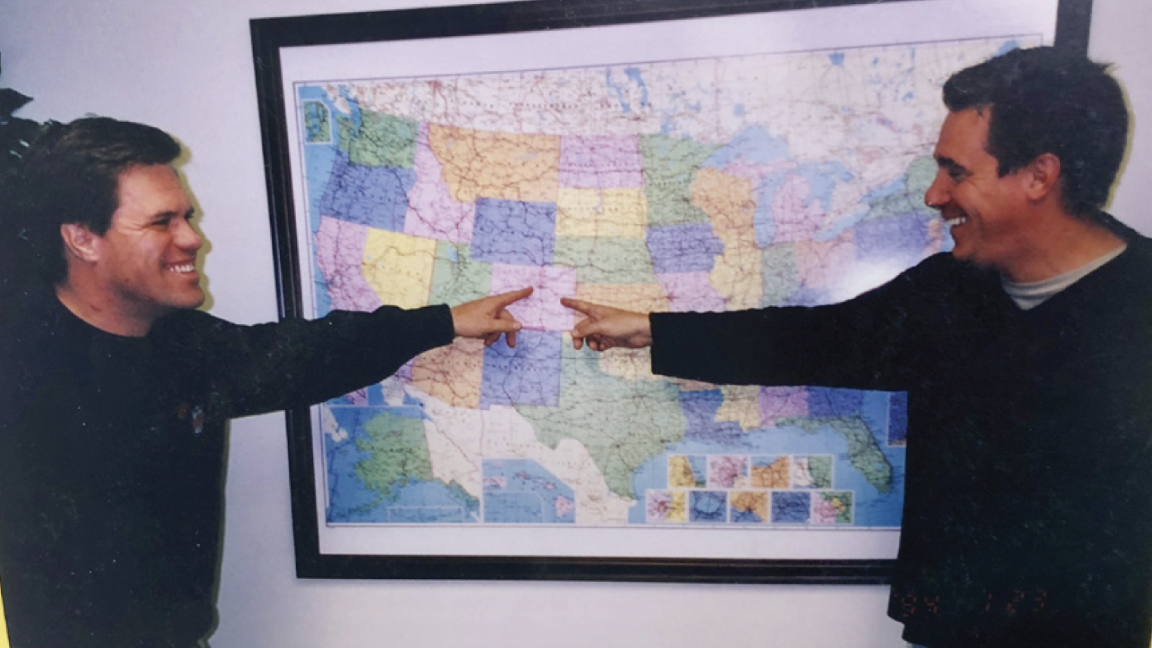
The decisive choice came in 2015. O’Rourke Sales agreed to buy DSI’s consumer electronics distribution division, including its Columbus warehouse. DSI would concentrate on satellite, broadband, security, energy, and accessories. Doug Robison explained the decision as a way to position the company for the AT&T opportunity. This was a choice about where to concentrate attention, with a division sale making that choice tangible.
By 2019, the company was shortening its public name to DSI and describing a broader set of services. Software, engineering, marketing, and sales execution belonged in the picture alongside shipments. The logic is easy to follow: once a distributor understands what repeatedly slows its dealers down, each adjacent task becomes a potential service.
Meet SARA. She knows the address.
The Sales and Reporting Application arrived in 2013 and later became SARA Plus. Its tools span service availability checks, order entry, inventory, installation scheduling, and financial administration. A dealer can check which services reach a customer’s address. Equipment can be tracked in warehouses and installers’ trucks. Schedules can be assigned without sending the same job through another paper trail.
In May 2026, SARA Plus announced completion of an enhanced platform rollout for DIRECTV commercial dealers. DSI described itself as DIRECTV’s exclusive commercial distributor and said all commercial sales in the indirect channels were now processed through the updated system. The browser interface works across mobile, tablet, and desktop. At that announcement, the platform supported order processing for 14 partners and millions of sales annually.
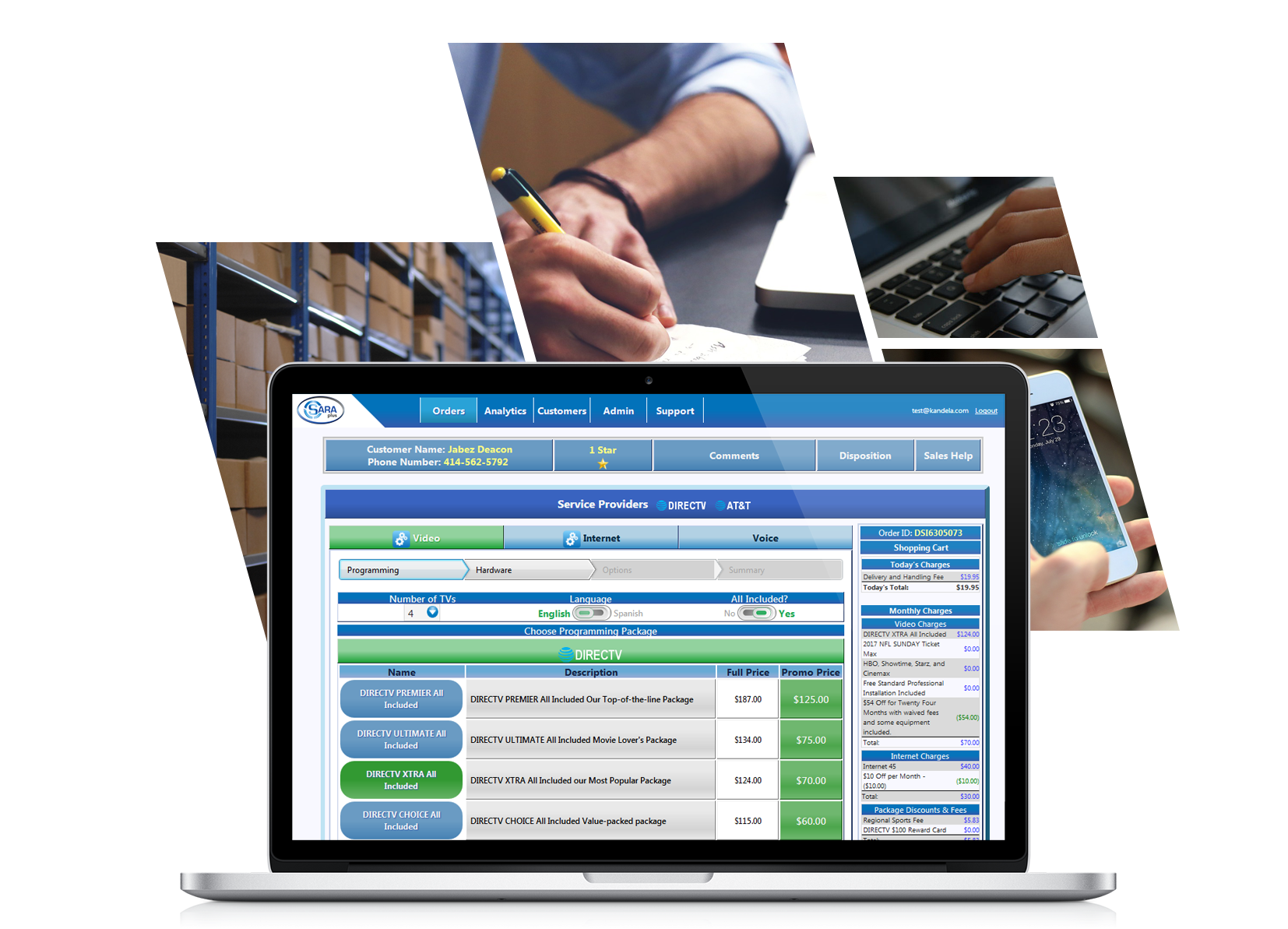
This is where DSI’s positioning becomes distinctive. A general customer database can record a prospect. A warehouse can dispatch equipment. DSI combines provider-specific order entry with the people and physical operations surrounding it. For a dealer working across supported brands, fewer separate handoffs are an attractive proposition. That advantage depends on how closely the dealer’s actual workflow matches those integrations.
The spreadsheet gets its eviction notice
The first bottleneck identified in DSI’s February 2026 DSIGem announcement was fragmented information: spreadsheets, emails, unclear order status, and slow commission disputes. The company’s response was a portal built with FastGem. Order details, payment information, dashboards, and disputes would share one place. Crucially, commission data would connect to individual orders. A missing payment could become a traceable question.
- 01SellSARA Plus
Order entry - 02DeliverFastGem
Post-sale work - 03ReconcileDSIGem
Commissions
DSI launched the initiative with a ten-dealer pilot, using feedback to refine it before wider adoption. Core access was offered at no cost to DSI dealers. An optional private FastGem instance added broader operational tools, including payroll, invoicing, recurring billing, technician scheduling, and inventory. That gives a smaller dealer a starting point without requiring it to adopt every available function immediately.
“We know our dealers need more visibility and quicker access to information.”Doug Robison · FastGem acquisition announcement · 2026
In August 2026, DSI acquired FastGem, announcing the transaction in September. FastGem founder Chad Caldwell joined as vice president of IT operations. DSI linked the purchase to deeper integration following the partnership and kept FastGem available as a standalone product. The sequence is instructive: cooperate, test with dealers, then bring the technology closer to the business that depends on it.
Software still needs somebody to pick up
The less glamorous part of DSI is substantial. Its field sales operation reports more than 100 representatives supporting over 5,000 locations and making over 12,000 store visits monthly. Training includes live sessions, on-demand learning, and English and Spanish instruction. Marketing support covers analysis, websites, email campaigns, and social media. Event services extend to personnel scheduling and budgets.
Its warehouse service advertises five distribution centers and two-day shipping to almost anywhere in the country. The engineering lab supports signal distribution design, certification, and complex DIRECTV installations. The Tower, its owned call center, reports more than 65,000 calls weekly, handling billing, activation, and order questions. Software sits inside a service operation with actual trucks, calls, training sessions, and installation problems.
Borrow the machinery. Keep the customer.
DSI’s business combines distribution and sales support for provider channels with software and operational services for dealers. The appeal is access: more products to offer, shared expertise, and tools tied to the providers being sold. Core DSIGem access also makes operational visibility part of the dealer relationship. The commercial value lies in keeping that relationship useful after the first order.
There is a transferable idea here. Find the recurring administrative trouble surrounding your product, give it a named workflow, and test the fix with a small group of customers. For a dealer, the practical test is equally specific: check provider coverage, order integration, installation requirements, and commission reporting before committing. A business outside DSI’s supported channels would need a different arrangement. The machinery earns its place when it fits the work.