Doug Robison had a correction to make. DSI was celebrating his thirty-ninth work anniversary, and colleagues were offering congratulations. He joined the conversation with a helpful piece of arithmetic: “For those of you doing the math on 39 years, this means that I started at DSI when I was 5 years old.”
It is a useful introduction to an executive whose career dates tend to arrive in unusually large numbers. He joined DSI in 1986. He became president in 2001. He took on the CEO role in 2012. By 2026, he had spent forty years inside a business that kept finding new things to do for the same kind of customer: the independent dealer.
The anniversary joke lets a little air into that chronology. Forty years can sound like an exercise in staying put. Robison’s working life has instead involved changes in what the company sells, how it supports sellers, and how far into their daily operations it reaches. The satellite equipment of the early years has acquired a considerable supporting cast.
Consider the latest addition. In August 2026, DSI acquired FastGem, software for managing the work that follows a sale. Robison described the practical problem in a sentence: “We know our dealers need more visibility and quicker access to information.” After decades in distribution, he was still talking about getting something to a dealer. The thing being delivered had changed.
Before the software, there was a map
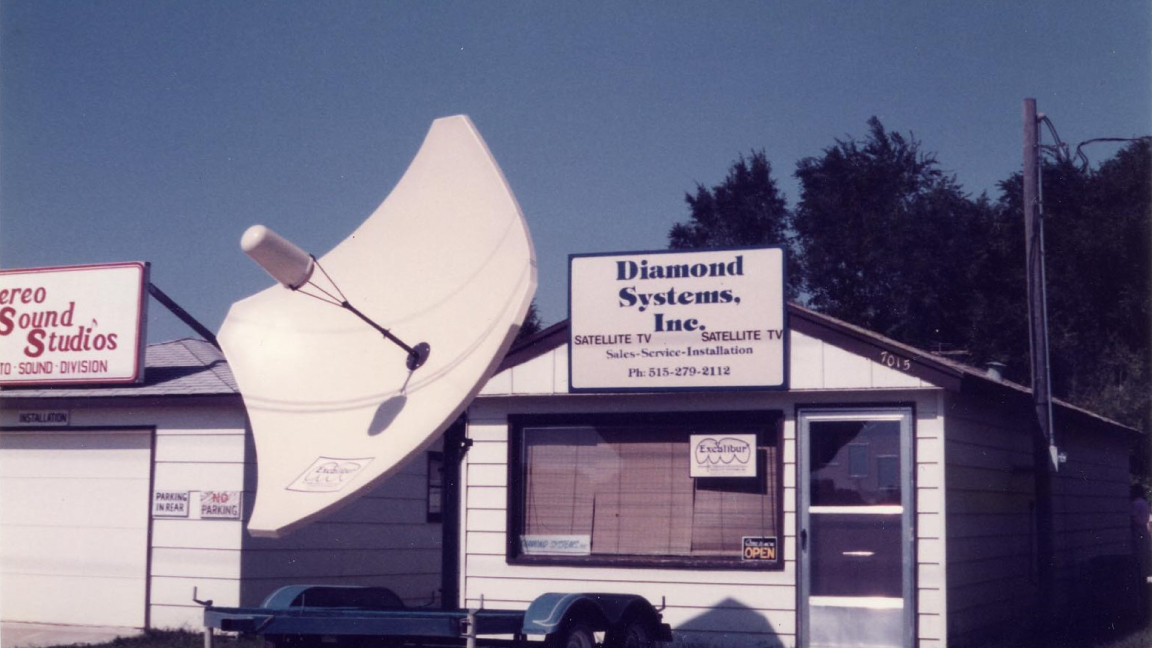
DSI began in Des Moines, Iowa, in 1984, selling C-band satellite equipment. The business was family owned, and its history includes an archival photograph of Dave and Doug Robison pointing toward one another in front of a large map of the United States. Both are smiling. For a company whose work would extend across the country, it is an unusually economical office decoration.
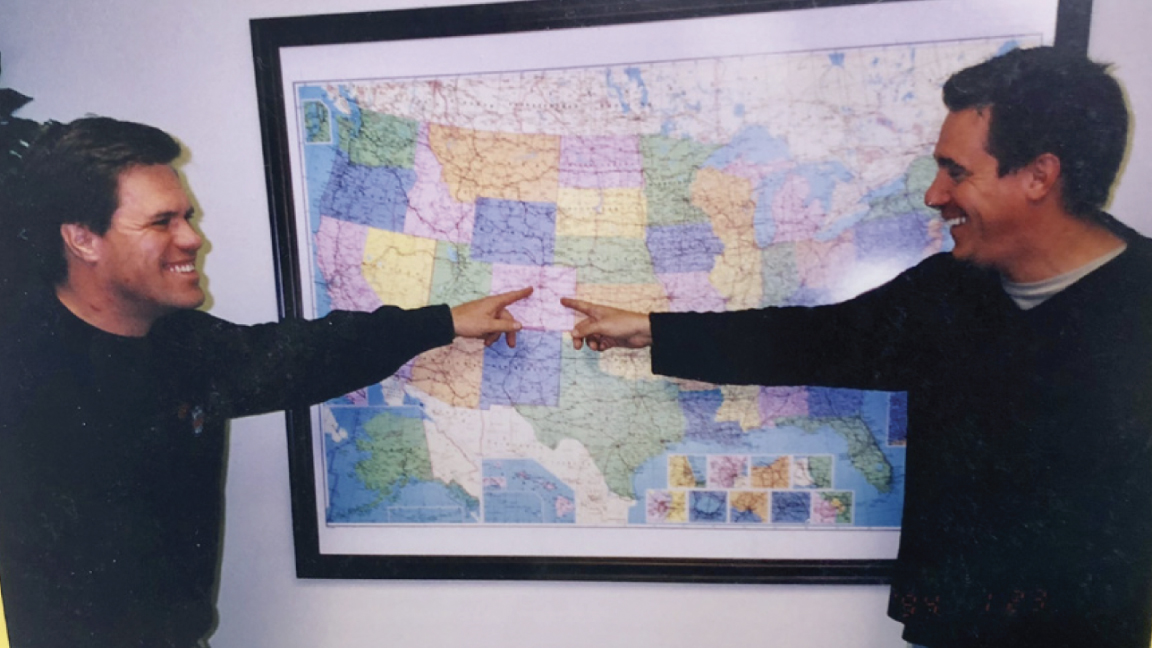
Doug arrived two years after the company began. In 1994, DSI was one of five original distributors involved in DIRECTV’s launch with RCA. That placed the company in a distribution network for a new television service, an undertaking that depended on businesses able to get equipment into the hands of local sellers.
By 2009, Robison was president, and the map had become a useful way of explaining his decisions. DSI formed an alliance with Digital Delivery Group, combining access to 59 pickup facilities. The announced plan included next-day delivery to more than 95 percent of the United States. Those were the alliance’s stated capabilities, tied to that moment, rather than a claim about today’s footprint.
Robison’s explanation concentrated on access: dealers would have more brands and more facilities available to them. The arrangement brought DSI’s satellite channel together with DDG’s custom installation network. Distribution can sound abstract until a customer is waiting for an installer and the installer is waiting for a component. Geography then becomes a rather personal business.
Later that year, DSI opened its thirty-first branch, a Chicago sales office in Elmhurst. Robison linked the opening to demand from independent dealers and emphasized convenient local service. Expansion, in his telling, began with customers needing something nearby. The branch count followed.
A second title, the same customer
In January 2012, DSI divided its sales operation into consumer electronics and DIRECTV/WildBlue groups. Jerry Satoren took responsibility for the consumer electronics group, reporting to Robison. Robison continued to oversee both, with more of his daily attention directed toward the satellite businesses. The structure made room for different kinds of selling under one roof.
Two months later, Dave Robison stepped down as CEO to concentrate on strategic work and remain involved through the board. Doug added the CEO title to the presidency he had held since 2001. It was a succession within a continuing family enterprise, with Dave retaining a role in its direction.
Doug’s response gave credit to Dave’s contribution and looked ahead to newer categories, including satellite broadband and computers. He had already been responsible for sales, marketing, merchandising, and the DIRECTV business. The additional title broadened his responsibilities without requiring him to learn the company from the reception desk upward.
The operating details continued to matter. In 2017, DSI opened a Portland distribution center to support equipment pickup for same-day and next-day installations and next-day shipments throughout Oregon. Robison discussed reaching customers more quickly and at lower cost. He also pointed to a planned Miami opening. The language was familiar: time, distance, equipment, dealers.
There is a particular discipline in that vocabulary. A warehouse opening offers little opportunity for grand philosophy, yet it reveals what a leader considers worth explaining. Robison explained the effect on the customer’s working day. A shorter wait for equipment was sufficient reason to open the doors.
When three letters had to carry more
By December 2019, the old description of DSI was becoming cramped. The company rebranded, moving from the industry names DSI Distributing and DSI Systems to simply DSI. Robison’s explanation was direct: “As we have changed, so has our look and story based on everything we are doing today.”
The changes were operational as well as visual. DSI’s work with AT&T included broadband, mobility, and video, with national training and sales support. Its services extended into marketing, engineering, logistics, and software. A business associated with moving hardware was increasingly involved in helping other businesses sell and manage services.
A new website followed in August 2020, presenting those capabilities to retailers and vendor partners. Robison treated the redesign as a way of making the broader offering visible. A company can accumulate services faster than its customers update their mental picture of it; the website was an attempt to bring the two into alignment.
New supplier relationships added further choices. In July 2020, DSI announced a partnership with Inspire, giving dealers an option in clean energy. In May 2021, it announced relationships with CenturyLink and Kinetic by Windstream. Robison discussed CenturyLink in terms of dealers adding internet and phone services for residential and business customers. With Kinetic, the emphasis was on another opportunity for dealers to grow.
These announcements concern different products, but they share a commercial unit of measurement: what an independent seller can offer next. Robison’s stated ambition was to broaden that seller’s available business. Electricity, internet, and television could sit in the same conversation because the dealer relationship connected them.
“As we have changed, so has our look and story based on everything we are doing today.”
Doug Robison · December 2019
The paperwork gets its turn
By March 2026, the attention had moved further into the dealer’s office. DSI announced its FastGem partnership and DSIGem, a platform intended to give dealers a clearer view of orders and commissions. It covered the sort of work that rarely makes an advertisement: following a transaction, checking its status, and resolving a disputed payment.
The launch included a pilot with ten dealers. Core functionality was to be available to all DSI dealers at no cost, with an optional private FastGem offering for businesses wanting broader management tools. That distinction mattered. The initial service addressed shared reporting needs, while the paid option offered additional operational capabilities.
In August, partnership became acquisition. FastGem founder Chad Caldwell joined DSI as vice president of IT operations. FastGem would remain available as a standalone product, while its integration with DSI’s SARA Plus order-entry software connected selling to post-sale management. The acquisition brought software and its founder into the same organization as the sales support operation.
That is a revealing turn in Robison’s career. The earlier distribution decisions concerned access to physical goods. The newer decisions concern access to the information surrounding a sale. Both address a dealer’s ability to finish work already begun. A customer signature is satisfying; a completed installation and a properly tracked commission have their own quiet charms.
- 01Find a customerMarketing & leads
- 02Make the saleTraining & order entry
- 03Follow it throughScheduling & customer management
A family business has to teach the family
The company behind those services has also grown beyond its original setting. In 2026, DSI received national Top Workplaces recognition, placing sixty-seventh among 408 midsize companies in its category. The program uses confidential employee feedback collected by Energage. Alongside the recognition, DSI described expanded onboarding and skills workshops, employee recognition programs, and resource groups.
Robison’s comments connected the workplace to the work delivered to clients. His team was spread across the country, he said, and its culture supported the people doing that work. The practical challenge is plain enough: family ownership does not automatically give a geographically dispersed employee the experience of joining a family. Training and consistent practices have to do some of the carrying.
A colleague, Alfredo Esquivel, offered another view after DSI’s national sales conference. He thanked Robison for leadership and support and described teams having autonomy alongside access to resources. It was praise from inside the operation, but its details were useful: room to act, help when needed, and a continuing emphasis on partner growth.
Robison’s own message to independent retailers, used in DSI’s recruiting materials, returns to the same commitment. Adding categories should make purchasing easier and help retailers offer more to their customers. Across warehouses, supplier agreements, training, and software, the dealer remains the person he is trying to equip.
The anniversary calculation, meanwhile, has become a year harder to defend. Robison has reached forty years at DSI. The old photograph still offers a fitting image of the enterprise: two smiling Robisons, a map, and plenty of territory between the edges. Today, some of the territory lies inside a dealer’s order book. He is still looking for a way to make it easier to navigate.