The internet has an awkward habit of needing things. Cable, connectors, cabinets, tools: an entire physical vocabulary sits underneath the apparently effortless act of getting online. Cédric Varasteh made a career in that vocabulary. In 1993, he founded Euro Techno Com, better known as ETC. Thirty years later, the group announced a new name, Netceed, for a collection of businesses stretching across borders. The little initials had travelled a considerable distance.
Consider the less glamorous side of a network upgrade. Someone must select equipment, arrange procurement and get materials to installers. A distributor that can handle several of those jobs has more to offer than a shelf of products. Varasteh’s business combined equipment supply with design, sourcing and logistics. Its appeal rested on helping customers manage the complicated journey between a network plan and a network that people could use.
That makes his career a useful counterweight to the familiar technology founder story. There is no need to invent a dramatic moment at a kitchen table. His documented decisions supply the plot: establish a specialist business, extend its reach, bring in investment partners, buy complementary operations and eventually prepare somebody else to run the group.
The packing list behind the connection
ETC began in France. By September 2019, when Carlyle announced its investment, the group had operations in France, the United States, Portugal and Israel, with its headquarters in Eaubonne, outside Paris. It served both major telecom operators and independent installers. Those customers differed in size, but all had to turn equipment purchases into working infrastructure.
Varasteh described a market in which operators were upgrading networks and preparing longer-term fibre and 5G deployments. He also described expanding the group’s range of technologies and services. The commercial logic was plain enough: as the customer’s job became more complicated, a supplier able to take on more of that complication could become more useful.
A good catalog answers “What can I buy?” A broader distribution operation must also answer questions about suitability, availability and delivery. Each answer introduces another responsibility. Seen this way, Varasteh was building a business around a succession of practical promises. The technical detail mattered because the customer ultimately had to install what arrived.
A schematic of the services around the hardware.
An American business, assembled in stages
In 2017, twenty-four years after ETC’s founding, Varasteh founded USTC Corp in the United States. The American expansion became particularly visible in 2021. Tom McLaughlin, previously a sales executive at CommScope, joined as president, reporting to Varasteh. Adding an experienced operator was one way to support the next stage. Acquiring established businesses was another.
That July, USTC bought Walker and Associates from the founding Walker family. The transaction added locations in North Carolina and Nevada and broadened the combined operation’s capabilities. Varasteh’s explanation emphasized technical expertise and a wider offering for customers. Buying a distributor meant acquiring relationships and knowledge as well as access to more products.
Comstar Supply followed in August. Its focus on outside plant materials and equipment brought another part of the broadband construction process into the group. USTC then counted seven American distribution locations. The sequence suggests a deliberate effort to cover more of the customer’s needs, with the physical footprint to support them. Geography was part of the service.
In June 2022, USTC acquired Florida-based Multicom from founder and CEO Sherman Miller. The announcement put its American distribution network at thirteen locations. Multicom also brought customers in Latin America and the Caribbean, alongside its communications product range. Another acquisition had widened both the catalog and the map.
These deals give Varasteh’s story its texture. It is easy to make an acquisition sound like a single event: signatures, an announcement, a new company name on a slide. For customers, its value depends on what becomes available afterward. More expertise and more locations only help if the combined business can make them accessible. The order still has to arrive.
- Walker and AssociatesNetwork products and services
- Comstar SupplyOutside plant materials and equipment
- MulticomCommunications products and wider reach
A bigger table of partners
Investment partnerships accompanied the expansion. Carlyle entered in 2019. By its June 2022 announcement of negotiations with Cinven, ETC’s revenue had tripled and exceeded €1 billion in 2021. The United States accounted for more than half of sales. The French-founded business had become substantially transatlantic.
The change went beyond buying companies. Product development included an innovation lab in Portugal for ETC-designed and branded products. Management and organizational changes supported the larger group. Varasteh was working with partners on a business whose size required more than the routines of its earlier years. Growth had produced a different operating assignment.
Cinven acquired a majority stake in October 2022, with Varasteh and Carlyle reinvesting in significant minority stakes. That arrangement kept the founder financially involved while introducing a new majority owner. The ownership structure changed; the international expansion continued. Early 2023 brought announcements concerning BTV Multimedia in Germany and Amadys, based in Antwerp.
BTV brought broadband brands, technical capabilities and a presence in German-speaking Europe and Denmark. Amadys added connectivity operations across markets including Benelux, Britain and the German-speaking region. The announced rationale emphasized complementary products, capabilities and geographic coverage. Another cluster of local businesses would become part of a larger offering.
Varasteh’s comment about the Amadys team included a short, useful sentence: “We have much to learn from each other”. In an acquisition announcement, that is an acknowledgment that expertise travels in both directions. The acquired company’s people know things the buyer wants. Keeping that knowledge useful is part of the work after the deal.
“We have much to learn from each other”
Cédric Varasteh, on the Amadys combination, March 2023
Thirty years, then a new name
On 27 March 2023, ETC announced its intention to rebrand as Netceed. The list of businesses involved showed how much Varasteh’s group had accumulated: USTC, Walker, Comstar Supply and Multicom in America; EuroTechnoCom in France; and operations carrying other names in Portugal, Britain, Poland and beyond.
There were people to bring together as well as names. In 2023, James DeCoe joined Netceed as senior vice president of products, procurement and technology after nearly twenty years at CommScope. His remit connected engineering, product selection and purchasing. It was a role that touched several parts of the promise Varasteh’s group was making to customers.
That appointment makes the integration story more concrete. A customer experiences a company through the work of separate teams: one helps choose equipment, another buys it, another arranges supply. A growing group must connect those responsibilities internally if it wants to offer them coherently outside. The organization chart, for all its lack of romance, becomes part of the customer’s experience. Varasteh’s expansion required experienced colleagues who could make those connections work.
A shared identity offered a way to present that collection as one organization. The name contained a small act of corporate memory. The letters “etc” remained inside Netceed, a deliberate tribute to the business Varasteh had built. Even a rebrand, it seems, can keep a few belongings from the old house.
The practical ambition was more demanding than a new sign. Bringing businesses under a single name invites customers to expect some coherence across them. Local expertise still has value, while the group promises access to a wider set of capabilities. That tension runs through the entire expansion story: how to make scale useful without losing the knowledge that made each operation worth buying.
Eighteen months to hand over the keys
The next major transition concerned Varasteh himself. On 19 February 2024, Alper Turken succeeded him as Group CEO, and Varasteh moved to chairman. The succession had been prepared over roughly a year and a half. Turken had joined in 2022 and worked on the American organization and growth opportunities before taking the top job.
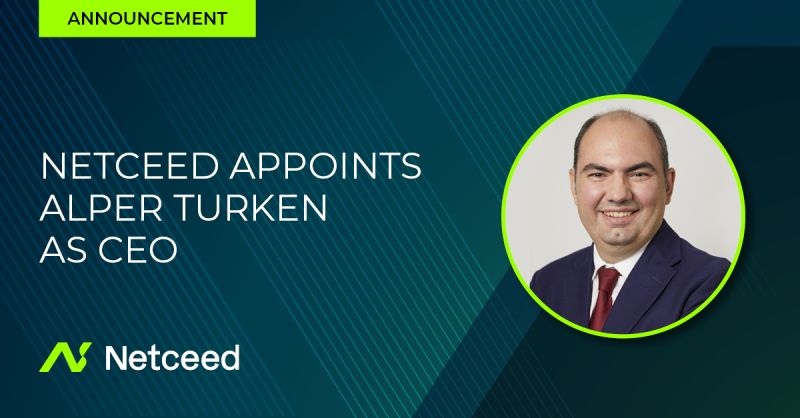
The company’s handover-day snapshot recorded eighty locations in nineteen countries, with 2,100 employees supporting more than 19,000 customers. Those are figures for that moment, rather than a permanent description. They establish the scale of the executive responsibility being transferred after approximately three decades of founding and leadership.
A planned handover adds a different kind of event to a founder’s biography. Earlier chapters concern extending the business: another territory, another team, another acquisition. Succession concerns transferring responsibility for the whole. The eighteen-month preparation period belongs alongside the expansion milestones because it shows that the change was itself a piece of organizational work.
The business keeps moving
Netceed’s subsequent history brings the story into the present. On 2 February 2026, it completed a recapitalization approved unanimously by lenders. Ownership transferred to institutional investors including Pemberton, Blue Owl and Hayfin. The transaction reduced debt and increased liquidity. Rajeev Suri, the former Nokia and Inmarsat CEO, was appointed chairman.
These events belong to the company’s later chapter. They also mean that Varasteh’s 2024 chairman appointment should be read as a dated milestone. The business he founded had continued to change its leadership and capital structure after his departure from the CEO role. A founder’s association can endure through changes in the organization’s formal responsibilities.
Follow the career from 1993 to the handover and a consistent commercial problem emerges: how to put more of the network-building process within a customer’s reach. Varasteh pursued it through distribution, technical services, acquisitions and partners. The resulting business crossed borders and eventually changed its name. Underneath the transactions remained an unusually stubborn piece of reality. A connection needs equipment. Equipment needs someone who can get it there.