In a 2014 agreement with BayCoast Bank, one item on Meganet’s price sheet deserves a second look. Router management for 18 sites cost $4,950 a month. The entire fiber project came to $18,505 monthly, before taxes and fees, plus $8,000 in equipment charges. These are historical contract figures, not today’s prices. But they reveal something a speed advertisement usually conceals: a business buys the connection and the work of keeping it useful.
- Meganet combines business internet, voice, and managed services under one regional carrier.
- Symmetric fiber and portable office extensions suit businesses that send as much as they receive.
- Local support is the pitch. Recovery planning is still the customer’s homework.
That distinction explains the appeal of this Fall River company. A bank branch needs its network to behave like plumbing. Someone has to coordinate equipment, circuits, and repairs while everyone else gets on with the day. Meganet occupies that practical territory between the national telecommunications company and the business with neither the time nor the staff to become one.
The interesting part of the bill
The bank agreement also listed Comcast circuits. Here was a regional provider assembling a service that included another carrier’s infrastructure. That is a useful correction to the usual picture of an internet company: owning every strand of glass is only one possible source of value. Taking responsibility for a complicated arrangement can be another. The customer’s problem is making the pieces work together, regardless of whose name appears on the cable.
Meganet’s current offer extends that logic. Internet sits beside hosted phones, email, websites, backup, managed firewalls, domains, DNS, and colocation. The commercial mechanism is recurring service revenue, with packages sized to each customer and quoted by the company. A small office can buy a narrower bundle; an organization with several locations can buy more coordination. Fewer separate supplier conversations are part of the product.
A merger with something to trade
Meganet began in 1996. Its 2007 merger with Cape.com joined two Massachusetts internet providers with complementary capabilities. Cape.com customers gained access to Meganet’s telecommunications services, including high-speed wireless. Meganet gained Cape.com’s web-development group. The announcement promised existing Cape.com customers unchanged monthly billing and broader technical support.
This was expansion through an exchange of useful skills. The company now describes its territory as southern New Hampshire through New York, with selected services available nationally. Its technicians are based in Massachusetts and Rhode Island. Independence matters to the proposition because pricing and support decisions remain local, according to Meganet. The implied advantage is proximity to the person who can actually make a decision.
Upload is half the conversation
The fiber offer begins with a detail that can get lost in broadband shopping: symmetry. Meganet lists matching upload and download tiers from 100 Mbps through 1 Gbps, with higher speeds subject to address qualification. An office sending backups, joining video meetings, and using cloud applications has traffic going both ways. A large download number tells only part of that story.
Buyers should start with their address and workload. Meganet explicitly makes availability and top speeds dependent on serviceability, with possible distance restrictions. This is a physical network business. A tidy service page cannot put fiber into a building that the network cannot economically reach. The right plan therefore starts with a site check, then a discussion about capacity, support, and what happens during an interruption.
The desk phone leaves the desk
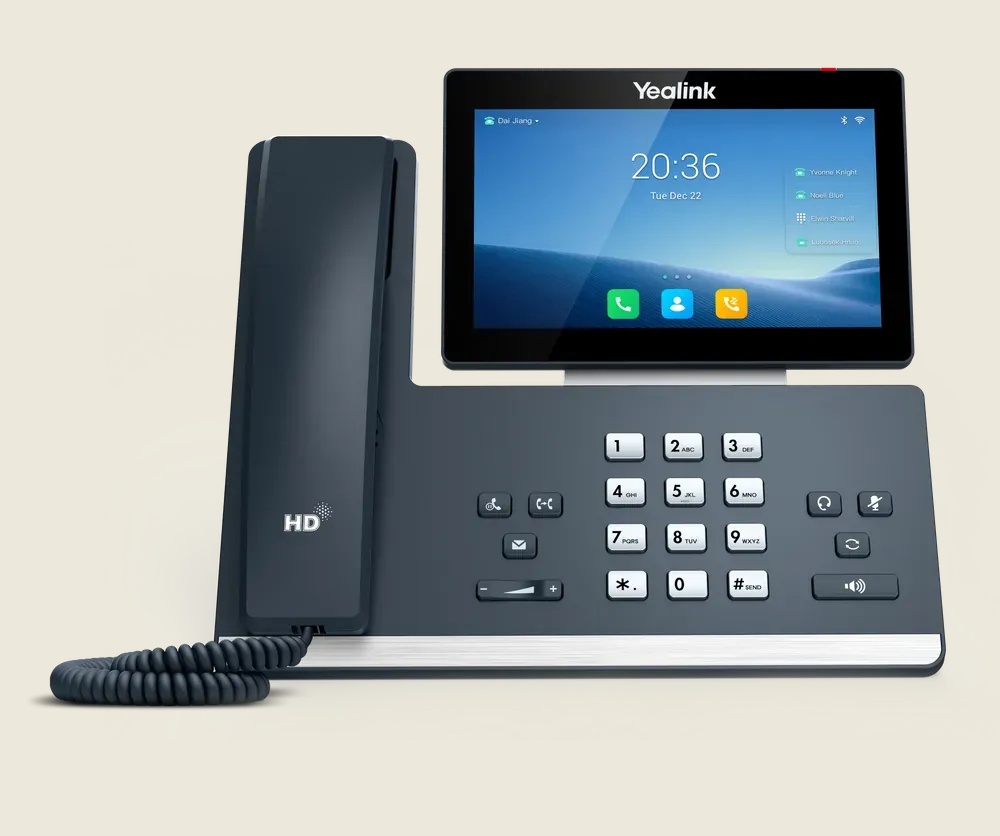
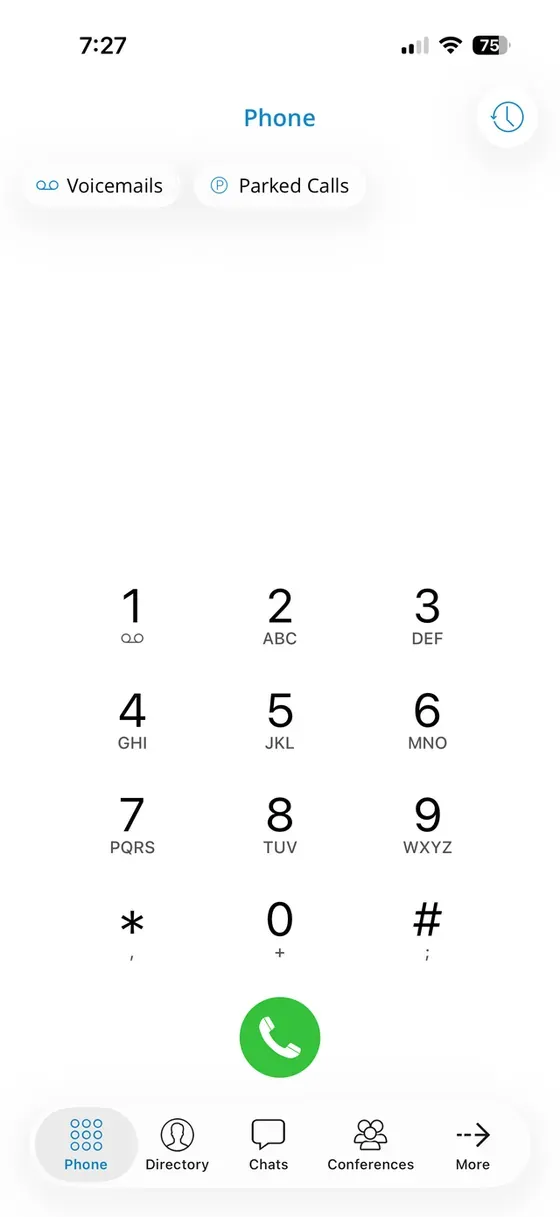
Voiceway, Meganet’s voice offering, makes the bundle easier to picture. Its Communicator software puts the office number on mobile and desktop devices. Hosted PBX features include call routing, voicemail-to-email, and mobile extensions. A worker can keep an office identity while moving between locations. Yealink and Cisco desk phones remain part of the mix; the handset has company.
For a business keeping an existing phone system, Meganet also offers PRI and SIP trunks. A June 2012 announcement introduced enhanced versions of those services. President Paul Joncas described customers moving toward IP-based calling to reduce costs and expand calling areas. The company’s response was to offer a bridge from installed equipment into newer services, giving customers another migration choice.
“Businesses are always investigating ways to maximize their phone usage.”
Paul Joncas · President · June 2012
An outage has a longer memory
The support proposition needs to be read alongside the incident record. On May 27, 2023, hardware failure interrupted the IMAIL email system. After service returned, some customers reported missing messages. Meganet initially estimated that fewer than 3% of users were affected. Later updates identified integrity problems in some backups. By July 13, the company said restoring the missing mail would risk the data already on its servers, so restoration would not be possible for the affected subset.
The hardware failed first. Recovery then ran into the integrity of the backups. That sequence is the useful lesson: getting a service running and recovering its history are different jobs. Local engineers can make communication easier, but accessibility does not by itself make lost information recoverable. A buyer evaluating any managed provider should ask to see a restoration process, including how its results are checked.
In November 2024, Meganet announced a mail-platform migration scheduled for December 10, describing work to improve reliability and performance. Some users needed account-setting changes; webmail contacts required manual export and import. The notice made the human work of a technical migration visible. Customers had steps to complete too. It was a later operational change, rather than proof that the earlier failure had a single, simple fix.
Buy the handoff. Keep an exit.
Meganet competes for buyers who might otherwise combine a national carrier, a separate phone platform, and several managed-service vendors. Its expertise lies in joining network access, voice configuration, hosting, and support. The May 2026 website relaunch puts that breadth on a cleaner storefront. The underlying proposition remains easy to understand: fewer places to explain the same problem.
There is a practical method here that other businesses can copy. Map which supplier owns each handoff. Ask who diagnoses a bad call, who checks the circuit, and who restores the mailbox. Consolidate where shared responsibility saves work. Keep independent copies of important information and test recovery. Where physical route diversity or specialist control matters more, a broader supplier mix may fit better. Meganet’s appeal rests on making an ordinary working day less complicated. That is a sensible thing to sell.