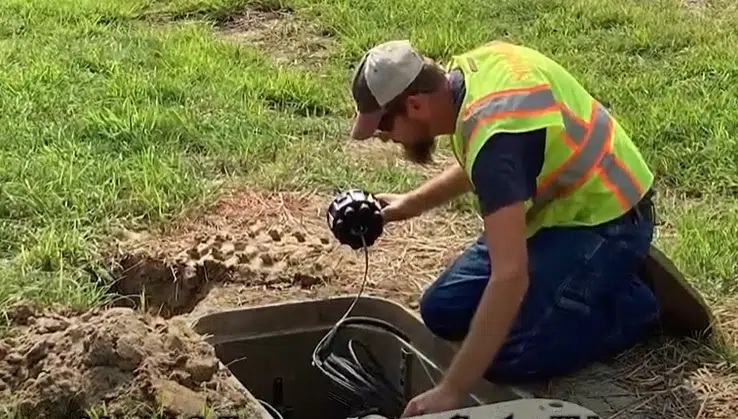
The awkward thing about selling the future is that someone eventually has to dig a hole. In Jasper, Indiana, Smithville encountered limestone while building a fiber network. The brochure could promise a fast connection. The ground had its own opinion.
- The work: fiber internet for homes, plus connectivity, voice and security for businesses.
- The wager: a $15 million citywide network in Jasper.
- The method: build in stages, reuse existing infrastructure, find partners.
- The catch: availability depends on your address, construction costs and local demand.
Smithville divided the Jasper project into 27 “fiberhoods.” Construction started in 2015; the company announced completion in 2021 after rock and pandemic restrictions contributed to delays. Its completion announcement reported more than 7,500 premises could connect and more than 3,000 residents had subscribed. It also said the project received neither taxpayer money nor tax-increment-financing funds.
Those are the useful numbers behind a familiar consumer purchase. A household sees a monthly bill. The company sees years of construction, equipment and customers who may decide to buy from somebody else. There is something pleasingly unfashionable about a business that must make its argument street by street.
A citywide fiber investment, built in 27 construction segments.
A quarry needed a telephone
Smithville began with a practical industrial problem. In 1922, J. K. Johnston established exchanges at Clear Creek, Smithville and Ellettsville to connect Monroe County quarry operations. Guy A. Draper bought the company in 1930 and developed it as a family business. That origin supplies an unusually tidy thread: a communications company born around stone would, almost a century later, find stone complicating its next network.
Its history records the replacement of manual service with dial technology and the construction of its first fiber rings in 1991. The medium changed; the reason to pay remained recognizable. Customers wanted to reach people and move information without turning communication into a separate chore.
Family ownership continues, but the corporate detail deserves care. In July 2024, Cullen McCarty became CEO of Smithville Telecom, LLC, a sister company to Smithville Communications. The appointment announcement said Darby McCarty remained CEO of Smithville Communications and chairman of both boards. A fifth-generation owner taking a new role is a more interesting fact than a vague assertion that somebody “took over.”
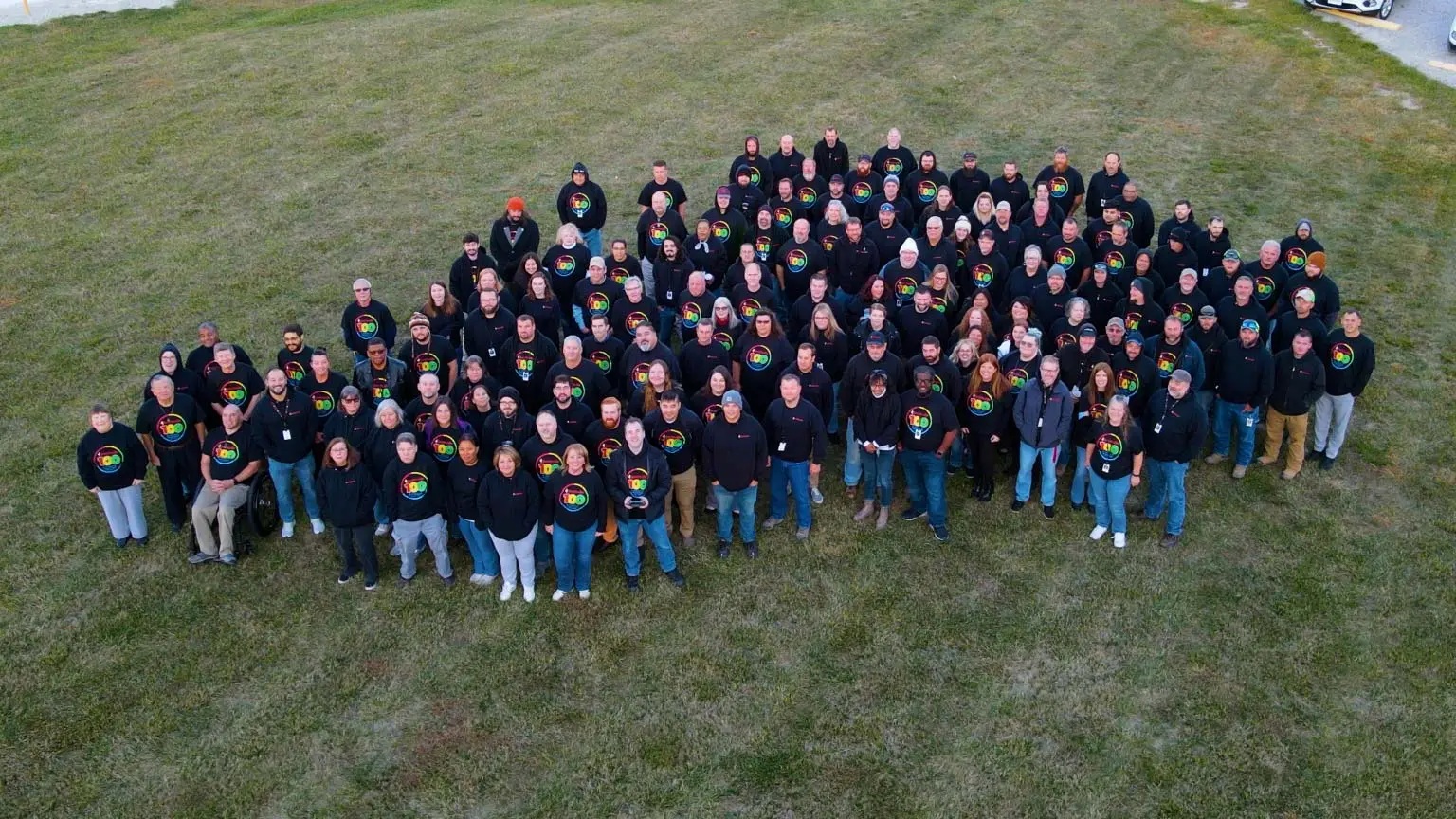
The expensive part comes before the subscription
A 2010 Calix announcement described a $128 million Smithville fiber initiative: a $90 million Rural Utilities Service loan and a $38 million broadband stimulus award. Engineering, materials, labor and equipment were all inside the figure. This was financing for infrastructure, with debt among its components; treating it like a venture funding round would obscure the business.
Darby McCarty’s explanation in that announcement connected growing bandwidth demand with a desire to lower long-term operating costs. Fiber was a service upgrade and an operating decision. The distinction matters. Customers can ask for a faster connection immediately; a provider must calculate whether the network can support the bill for constructing it.
Two funding components of one announced program. This is distinct from the later Jasper project.
Smithville’s centennial account put some rocky-terrain construction above $60,000 a mile. That historical figure is a useful antidote to the idea that broadband expansion simply means purchasing a better box. Before any recurring revenue arrives, the route has to exist.
One network, two reasons to use it
The economics become more interesting when another organization needs infrastructure in the same place. Smithville and South Central Indiana REMC announced their first active customers on a joint project in April 2021. The plan targeted about 3,400 homes and businesses, combining Smithville’s expertise with the electric cooperative’s physical infrastructure.
The organizations would market services separately. Customers could choose either provider. SCI REMC also needed connectivity for its electric smart grid. Two businesses therefore had overlapping reasons to build, without needing identical reasons to sell.
“building separate physical fiber networks represents an expensive option that blocks progress”James Tanneberger, SCI REMC / 2021
That observation, from the partnership announcement, is the most portable idea in Smithville’s story. A community considering broadband can first ask which organizations already have routes, facilities and compatible needs. Cooperation on construction can coexist with competition for subscribers. The same announcement described a planned timetable, however; a target is not evidence of completion.
The commercial-to-residential pattern appears elsewhere. Smithville’s 2023 Bedford announcement built on an existing business presence and proposed an initial residential phase of about 300 homes. It placed that project within a $10 million private rural-fiber investment for the year. Starting from something already built is a strategy worth examining before starting from a blank map.
A gigabit is only the beginning of the purchase
For a household, Smithville’s offer is straightforward: symmetrical fiber internet, meaning the advertised upload and download rates match. That helps distinguish the service for people who send substantial files or work on video calls, rather than chiefly receiving entertainment.
The residential page, checked October 1, 2026, lists fiber at $74.99 a month and Wi-Fi+ at $84.99. The first requires a subscriber-supplied Wi-Fi router; the second includes a managed Wi-Fi 6 router, app and additional controls. Unlimited data is included. Availability and actual performance remain subject to the stated conditions.
The extra $10 is a revealing distinction. The connection reaching a home and the wireless signal reaching a bedroom are different parts of the experience. A fast access line cannot settle every question about placement, equipment or indoor coverage.
Illustration of the service distinction, not a speed guarantee.
Smithville’s 2026 Wi-Fi advice discusses placement, interference and optional extenders. Its practical implication for a buyer is to describe the problem before choosing the package: is the connection inadequate, or does the signal struggle to reach the room where work happens?
The hospital buys a different promise
The business portfolio stretches from small-office internet to private connections between buildings. Smithville’s Dedicated Internet Access page advertises bandwidth up to 10 Gbps, guaranteed capacity and a service-level agreement. Its 99.9% reliability claim is a company commitment to examine in the contract, not a measurement supplied by this profile.
For a clinic moving records or a manufacturer depending on cloud applications, the question expands beyond download speed. What is guaranteed? Who responds? Under what terms? Smithville’s point-to-point service connects sites over its owned network without traversing the public internet. That architecture addresses a different need from browsing at home.
Its Cloud Voice product moves the business phone system onto Smithville-hosted equipment, with monthly charges and web-based administration. Home security adds professional installation, sensors, cameras and monitoring. These services extend the customer relationship beyond the fiber line itself.
Network protection has boundaries, too. The published DDoS service description specifies a filtering capacity and says larger attacks can trigger blackholing: dropping traffic directed at the affected network. A buyer should understand that response before assuming protection means every service stays reachable under every attack.
The map gets the final word
Smithville occupies the space between a local utility and an enterprise network operator. Its 2024 government capability statement reports more than 23,000 residential and business customers. That is a dated company figure, useful for scale without pretending to be a live subscriber counter.
Its build map distinguishes available fiber, construction, planned areas and DSL. It also notes that extensive work, supply-chain issues or low signup rates can delay or defer locations. The upgrade FAQ names cost, cable length, subscriber density and demand as planning factors. Family roots do not repeal those economics.
For residents, the copyable habit is to check an exact address before choosing a home or a provider. For communities, it is to establish demand and investigate shared infrastructure before announcing a deadline. Smithville’s method needs enough customers, workable routes and capital prepared to wait for subscriptions.
There is a lighter coda. In July 2026, Smithville announced a Wi-Fi Wagon, a portable, staffed network for community events, with a debut scheduled at Taste of Bloomington. A trailer is a small answer to a temporary crowd. A buried network is a large answer to enduring demand. Both begin with the same rather sensible question: where are the people who need the connection?