Don Thompson and Liz Watson grew up four blocks apart on Cleveland Avenue in Chicago. They had to go to Purdue to discover it. Two future engineers, a short street, a conversation about home: the coordinates of a marriage were already there. Decades later, when they needed a name for an investment firm, they chose the address their lives had in common.
By then, Thompson had run McDonald’s. His professional geography stretched far beyond the North Side. Yet the name he and Liz selected in 2015 was wonderfully specific. Cleveland Avenue sounds like a place where somebody knows your grandmother. In their case, it carries the memory of people who helped them get started, long before either could offer anyone a job or a cheque.
That choice is a useful way into Thompson’s story. The familiar version follows an electrical engineer to the chief executive’s office. The more interesting question comes afterward: what does someone do with everything that office has taught him?
The briefcase came early
Thompson was raised by his grandmother, Rosa J. Martin, near Cabrini-Green. She moved him to Indianapolis while he was still in elementary school, away from the growing presence of gangs. Education mattered in her household. So did finding a way to get things done with the money available.
He took a paper route, cleaned a cinema and his church, and did errands for older residents. He even had business cards. By seventh grade, he was taking a briefcase to school. This is an unusually thorough approach to career preparation; most children settle for borrowing a tie.
The briefcase earned him teasing. He kept carrying it. There is something appealing about a child who regards the executive look as useful equipment. Years before he would be responsible for a restaurant business, he was already comfortable looking slightly out of place.
Before the fries, the circuits
Purdue’s Minority Engineering Program recruited Thompson, whose strengths were mathematics and science. He attended the university’s Multi-ethnic Introduction to Engineering program before enrolling. In 1984, he graduated with a bachelor’s degree in electrical engineering, then joined Northrop’s defense systems business.
His move to McDonald’s came in 1990. The initial work involved restaurant systems: robotic equipment for transporting food and control circuits for cooking. A fast-food restaurant contains plenty of engineering, however little of it customers contemplate while waiting for lunch. Time, temperature, movement and repetition all have to cooperate.
This beginning matters because it gives his later career a practical foundation. Before he was responsible for the company’s direction, he worked on the machinery that helped dinner arrive. An engineer’s question - how does this actually work? - travels well into restaurant operations. A promising concept still has to survive contact with a kitchen.
A career in five stops
- 1984Purdue
Electrical engineering - 1990McDonald’s
Restaurant systems - 2006McDonald’s USA
President - 2012McDonald’s
President & CEO - 2015Cleveland Avenue
Co-founder
Learning the business at counter height
The move from technical work into operations took Thompson into a South Chicago restaurant, where he learned jobs ranging from making fries to assistant management. His subsequent responsibilities took the family to Denver, the San Diego area and the Midwest. The career advanced through places where the work was happening.
In 2006, he became president of McDonald’s USA. In 2010, he became the corporation’s president and chief operating officer. On July 1, 2012, he succeeded Jim Skinner as president and chief executive, becoming the first Black CEO in the company’s history.
Each promotion enlarged the distance between a decision and the people carrying it out. That is one of the awkward properties of management. The better your title, the easier it becomes to receive a polished account of how things are going. Experience behind a counter gives the person reading that account something concrete to compare it with.
The chapter that ended badly
The McDonald’s years did not finish with a victory lap. Customer traffic in the United States fell 1.6 percent in 2013 and another 4.1 percent in 2014. The company’s scale offered little protection from changing customer expectations and weakening results.
In January 2015, McDonald’s announced Thompson’s retirement, effective March 1. Steve Easterbrook would succeed him. Thompson had spent nearly 25 years at the company; his tenure at the top lasted less than three.
Those numbers belong in his biography alongside the promotions. Running a large company exposes a leader to a public verdict that can turn quickly. The experience also leaves behind knowledge that a departure cannot erase: how organizations operate, where decisions get stuck, and how difficult it is to make a plan work across thousands of restaurants. Thompson took that experience into a business where other founders would need help with their own plans.
A firm named for the way home
Don and Liz co-founded Cleveland Avenue in 2015. Based in Chicago, it invests in consumer businesses and technology, extending beyond its early association with food, beverages and restaurants. Thompson serves as CEO, bringing his operating background into conversations with entrepreneurs.
The firm describes its work in terms that go well beyond providing money. Its team helps with business analysis, organizational structure, strategy and access to industry relationships. Mentoring founders is part of Thompson’s role. A new business may need an introduction, an experienced sounding board or help working through an operational problem as much as another presentation about its potential.
There is a natural fit between that work and his earlier career. A founder with an appealing product must eventually answer some less glamorous questions. Who can make enough of it? How does it reach customers? Who manages the growing team? The answers rarely fit neatly into the photograph of the product.
One example of the network’s usefulness came from Bear Robotics. In 2022, co-founder Juan Higueros described the depth of Cleveland Avenue’s restaurant experience and its ability to connect the company with people across the industry. For a business putting robots into restaurants, knowing how restaurants buy and operate is a practical advantage. Thompson’s engineering background and restaurant career meet rather neatly in that particular kitchen.
Dreams have accounts payable
At an October 2024 gathering at Taste 222, the restaurant in Cleveland Avenue’s building, Thompson spoke with entrepreneurs about raising capital. His encouragement came with an accountant’s footnote: “dreaming big never paid all the bills.”
He described active investment as help with the unromantic essentials: supply chains, profit and loss, accounting and legal structure. At the same event, Cleveland Avenue’s Jason Mercer explained that the firm was giving more attention to profitability and supporting existing investments, while being more cautious about new ones.
“Dreaming big never paid all the bills.”
Don Thompson · October 2024
It is a useful glimpse of Thompson away from a ceremonial stage. Here were founders with immediate problems, and an investor acknowledging that ambition comes with obligations. His career makes the observation land with some weight. He has worked on cooking equipment, managed operations and answered for corporate results. The person offering encouragement has also had to explain a disappointing set of numbers.
Who gets a place at the table?
Cleveland Avenue’s CAST US fund gives the firm’s interest in access a defined geography. Its full name is Cleveland Avenue State Treasurer Urban Success. It focuses on Black, Latinx and women entrepreneurs on Chicago’s South and West Sides.
The fund launched with support from Arc Chicago, an investment fund created by the MacArthur Foundation for Benefit Chicago, a collaboration with The Chicago Community Trust and Calvert Impact Capital. It brings the question of who receives investment into the design of an actual fund.
There is a distinction between admiring resourceful people and making capital available to them. The second requires institutions, partners and decisions about where money goes. For Thompson, whose own entry into engineering began with a program that sought him out, that work has a recognizable precedent.
Don and Liz Thompson’s endowment for Purdue’s College of Engineering and Minority Engineering Program supports renewable scholarships.
The university gets a return, too
Don and Liz also established the Cleveland Avenue Foundation for Education in 2014. Liz leads the organization, now known as The CAFE Group, whose work supports educational opportunity and leaders of color. Their partnership gives education and business investment a shared family history, while each organization has its own work to do.
At Purdue, the Thompsons created a $1 million endowment for the College of Engineering and Minority Engineering Program. The scholarships are renewable, helping students continue an education once they have gained admission. Thompson served on the university’s Board of Trustees from 2009 to 2022 and led its Equity Task Force.
Purdue recognized him with its Dreamer Award in 2021. In June 2024, Don and Liz received the Chicago History Museum’s Jane Addams Making History Award for Distinction in Social Service. The recognition connects their public achievements with the work they have chosen to support beyond their own careers.
The street stays in the conversation
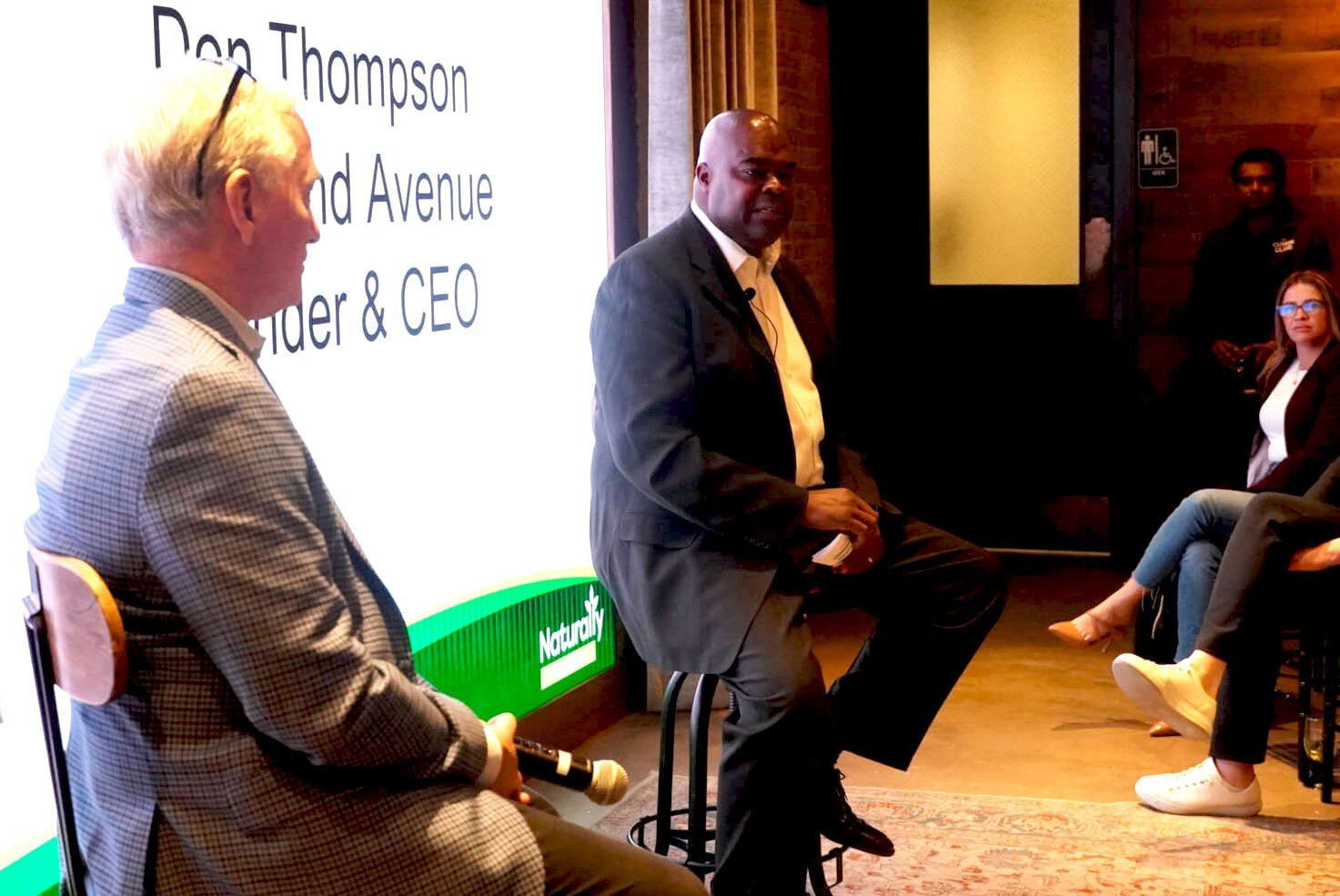
Thompson remains involved in public conversations about business. In October 2025, he joined a fireside chat at Chicago’s Future of Food Summit about Cleveland Avenue’s development and direction. In a July 2026 interview with Tyler Mathisen, he and Liz discussed leadership, partnership and the relationships that carried into life after McDonald’s.
One observation was particularly revealing. Leaving a CEO job shows you which relationships endure after people no longer need the title on your business card. For someone who now helps other people build companies, that is a useful thing to have learned firsthand.
The boy with the briefcase eventually got the executive office. He also learned what it feels like to leave it. The business he built afterward bears the name of a street that preceded both experiences. Cleveland Avenue gives Thompson a way to carry that history into the next meeting - and to invite someone else in.