A car can cross a state line in an instant. Its paperwork has a less straightforward journey. Before ownership is properly recorded, dealers, buyers and government systems have to agree on what has happened. Don Armstrong has spent much of his career working on that agreement. The subject lacks the glamour of a new engine. It does, however, have the advantage of being necessary.
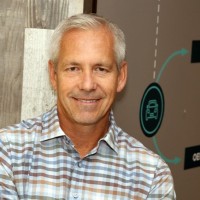
Armstrong is the co-founder and CEO of Vitu, the Agoura Hills technology company that connects vehicle transactions with government processes. His professional life runs through campaign-finance disclosure, public-service software and electronic vehicle registration. In the summer of 2026, it also acquired an academic punctuation mark: a completed doctorate at Grenoble Ecole de Management in France.
There is something pleasing about a veteran software executive becoming a student again. Armstrong already had a company, an earlier degree and years of practical experience. He completed the doctoral work while continuing to build Vitu. The combination offers a useful starting point for understanding his career: government systems have kept supplying questions, and he has kept working on answers.
The education of a government technologist
Before vehicle titles came campaign-finance records. At SDR Technologies, which he founded, Armstrong held both operating and technology leadership roles. His work included disclosure systems for government agencies. The recurring problem was information that needed to move through formal institutions, with rules attached. An attractive screen could help, but it could never do the whole job.
SDR was sold to NICUSA, where Armstrong subsequently served as chief architect. He also earned a business administration degree from California Lutheran University in 1999. Those roles placed software design beside the workings of government. His later vehicle business would occupy much the same intersection, with another set of documents and a different collection of counters.
In Michigan, Armstrong created an early online vehicle and watercraft registration-renewal system. Boats belong in this story, too. The familiar problem of renewing a registration becomes a software problem once the transaction moves online: a public obligation must become something a person can complete through a computer. That experience preceded his work with Vitu co-founder Kelly Kimball.
A partnership built around the paperwork
Kimball brought experience in electronic government. The founders also worked with Rob Cohen of Auto Advisory Services, a dealership-compliance business, on Vitu’s title and registration solution. It was a consequential combination of specialties: technology, government and the rules of selling a car. Each addressed a different part of the same transaction.
The partnership gives Armstrong’s story a wider cast. A dealer’s compliance obligations cannot be wished away by a programmer, and a government’s requirements do not disappear because a customer has clicked “buy.” Working with people who understand those requirements makes the software problem more concrete. Somewhere behind the interface, somebody still has to know which form is correct.
Vitu dates its founding to 2005 and its California DMVdesk launch to 2007. Those two years separate forming a company from putting its flagship product into the market. In a business concerned with official acceptance, that distinction matters. An idea can be written down quickly. A working service has to survive contact with the people who use it.
The pen finally gets a day off
One transaction makes the work particularly easy to understand. On March 24, 2021, a buyer purchased a vehicle and signed the required California DMV paperwork online. The DMV authorized the transaction; Vitu’s Authority Trust digital-signature service enabled it. A physical ink signature was no longer required for that sale.
The useful detail is the government’s acceptance. People were already accustomed to doing many things on a screen. Vehicle documentation had its own requirements. Bringing the buyer online, verifying that buyer and submitting an accepted signature were parts of one completed process. A signature field alone would have been a rather incomplete celebration.
For Armstrong, this milestone fits a longer professional pattern. His businesses have dealt with information that must be accepted by institutions. Campaign disclosures, registration renewals and vehicle-sale documents serve different purposes, yet the software has a similar responsibility: it must help a real transaction arrive somewhere that recognizes it.
A simplified view of the parties involved in a digital vehicle sale, rather than a technical process map.
Fifty states, plenty of homework
Vitu Interstate, launched in 2020, extended the business into title and registration processing across all 50 states. That scope is easy to put on a map and harder to express in a single product description. A buyer’s address and a dealership’s location need not be in the same state. The paperwork has to follow the actual sale.
A 2022 account of the business described almost 400 employees, 12 offices in 11 states and more than 400,000 vehicle-title and registration transactions per month. These are historical figures, but they show the scale Armstrong’s company had reached by then. The spare-desk beginning recorded in Vitu’s history had become an operation with many desks and many local responsibilities.
The Montana business illustrates how much of this work involves relationships. John Brueggeman, a former Montana senator, joined Vitu in 2012 and later led its entry into the state. Armstrong’s team included people who understood public institutions from inside them. Software could connect the systems; local knowledge helped connect the people.
Training became another part of the operation. Vitu’s Registration Management Professional program began classroom workshops in California in 2010. By 2023, it provided title and registration training in seven states. Teaching the rules belongs beside automating the forms: a dealership’s employees still need to understand the transactions they are handling. The classroom is a fairly practical companion to the computer screen.
Payments brought the business closer to the public counter, too. Vitu won a California DMV contract for a retail point-of-sale solution across the state’s 178 field offices. Registration payments and driver’s-license renewals joined the range of transactions it supported. For a customer at a counter, the technology company’s name may be incidental. Completing the errand is the part that counts. Armstrong’s business has repeatedly worked in that space between a formal requirement and an ordinary person’s afternoon.
Ownership has a life after the sale
National Title Exchange, or NTX, launched in 2022. By early 2025, it had handled more than one million electronic-title transactions with multiple state partners. Vitu announced that milestone in July. A title may be a modest-looking document, but moving it efficiently matters to the businesses waiting for it.
The participants extend beyond a buyer and a showroom. Lenders, auctions, dealers and other automotive businesses all appear in the title’s working life. The NTX milestone gives Armstrong’s business a different unit of measurement: completed transfers through an accepted system. A million transactions also means a million occasions on which the underlying process had to function.
There is a temptation to make digital progress sound weightless. Armstrong’s field resists that temptation. Ownership, financing and official records carry consequences. An electronic title remains a title. The digital part changes how information travels; the usefulness still depends on the institutions and businesses at either end.
The company grows around the transaction
In January 2025, Vitu completed its acquisition of Dealertrack’s registration and titling businesses from Cox Automotive. The purchase included registration and titling services, nationwide processing, Accelerated Title and collateral management. It widened the company’s work across the stages surrounding vehicle ownership, rather than simply adding another state to the map.
In November, Vitu acquired DDI Technology from IAA Holdings, an RB Global company. DDI supplied electronic-title and registration services to lenders and dealers. Armstrong described the goal in terms of bringing teams and relationships together, with a vehicle-title experience that could serve lenders, dealers, remarketers and government partners nationwide.
“We saw this as a strategic opportunity to bring together two exceptional teams with shared values and complementary strengths.”
Don Armstrong, on acquiring DDI Technology, November 2025
The emphasis on complementary strengths is revealing as a description of the transaction. The early partnership brought together government, technology and compliance experience. The later acquisitions assembled more services and customer relationships around vehicle ownership. The company’s size had changed; the practical need for different kinds of expertise remained.
A seat on both sides of the classroom
Armstrong has also maintained a working relationship with California Lutheran. He serves on the School of Management’s Dean’s Executive Council and has supported students through internships, employment, mentoring and consulting projects. In November 2022, he joined a fireside conversation attended by members of the school’s business clubs. In 2023, it named him its Distinguished Alumnus of the Year.
Then came the doctorate in France, completed in 2026 while he was running Vitu. His connection to education runs in both directions: he has offered students access to a working business and continued his own formal studies. That is a more interesting picture than a career expressed entirely in job titles. The chief executive still had coursework of his own to finish.
Armstrong’s story has accumulated acquisitions, transactions and qualifications, but its subject remains unusually everyday. Someone buys a car. Someone renews a registration. Someone needs the title to arrive. He has built a career around the details that stand between those intentions and their completion. The keys get their ceremonial handover. The documents, with considerably less applause, still have somewhere to go.
The working chronology- Business administration degree at California Lutheran.
- Vitu’s founding year in its company timeline.
- A California vehicle sale with digitally signed DMV documents.
- Dealertrack businesses and DDI Technology join Vitu.
- Doctoral studies completed in France.