The technician had no idea who was standing behind him. It was late 2008, and a University of Illinois student had managed to get his computer barred from the campus network. The machine contained a virus. The student had put it there deliberately, to study it. Campus IT, understandably, had taken a dim view of this extracurricular activity.
A young technician arrived, surveyed the damage and downloaded a program called Malwarebytes. Behind him stood Marcin Kleczynski, the teenager who had helped create it. He watched his own software restore his access to the internet. He let the technician leave without revealing anything. A product demonstration rarely comes with such excellent camouflage.
“He left never knowing who I was,” Kleczynski recalled. There are grander ways to announce that a business has arrived. This one involved a student room, a blocked connection and someone choosing the right tool without a sales pitch. For Kleczynski, the memory endured. Before the awards and the California offices, someone who needed help had found the thing he had made.
A free game with an expensive catch
Kleczynski was born in Poland in 1989 and moved to the United States with his family at three. He grew up around Chicago. At fourteen, he wanted what plenty of fourteen-year-olds wanted: a video game without the inconvenience of paying for it. The download brought malware onto the family computer. Pop-ups and advertisements followed. The antivirus software already installed had not saved him.
His problem had an immediate audience at home. Fixing the machine became his responsibility. He went online and found people willing to walk a stranger through the work. The help came through security forums, with instructions, logs and tools. Eventually, the computer worked again. The process had taken days. Gratitude and impatience proved a useful combination.
There was another education available at the computer repair shop where he worked as a teenager. An infected machine would arrive; the response was often to reformat it. Even a comparatively small infection could prompt that wholesale reset. It was a blunt remedy for a particular problem. Why couldn't the offending software simply be removed? Once he had experienced the difficulty himself, the question acquired some force.
He learned to program and began making small utilities. One early tool, About Buster, tackled the About:Blank infection. People used it. They brought him more problems. A domain name became available: Malwarebytes. For a project devoted to taking malicious software apart, it was a serviceable piece of wordplay. The internet had supplied the mess, the teachers and, eventually, the name above the door.
“It was a side project to help everybody.”
Marcin Kleczynski, recalling the early work
The co-founder in the comments
The people on those forums were more than an audience. They tested tools, reported missed infections and pointed out false alarms. A useful correction could arrive from someone he had never met. Bruce Harrison became a frequent contributor. He spotted threats so quickly that Kleczynski joked he had wondered whether Harrison was working for the other side. In this business, competence can briefly look suspicious.
Harrison became his collaborator and co-founder. They worked on the software for about a year, with Harrison handling the threat database and Kleczynski the rest. On January 21, 2008, they released the first Malwarebytes Anti-Malware. Kleczynski was eighteen. Their working relationship had grown through online exchanges, a practical arrangement well before remote founding teams became a familiar business story.
The early products addressed specific problems. RogueRemover, a predecessor, targeted fake security programs that frightened people into handing over money. The fraud depended on a nasty reversal: the apparent rescue was itself the trap. Helping a customer required understanding both what the software did and why a person might trust it. That combination would remain relevant long after the appearance of the computer screen changed.
The business kept a free way to remove malware, while charging for additional protection. This gave a person with an immediate problem a reason to try the software. A successful cleanup could become a recommendation. The pattern also gave the company an obligation: the free tool had to be useful enough that people would tell someone else about it. Advertising copy could only take that bargain so far.
People brought the problems. The software kept learning from them.
His mother had a different growth plan
By the summer of 2008, there was enough business to make university seem negotiable. Kleczynski raised the possibility of skipping it with his mother. The discussion was short. He went to Illinois. In a genre of founder stories crowded with triumphant departures from education, his includes a parent who declined to approve the plot.
He spent the next four years combining computer science with running Malwarebytes. The company occupied his dorm room and, later, his apartment. Classes, recordings of classes and trips to California had to coexist. He flew to San Jose two or three times a month. Some close friends knew what he was doing and helped keep him grounded. The rest of university continued around a business that was increasingly difficult to fit into student hours.
He graduated in 2012 with a bachelor's degree in computer science. The campus technician episode captures the oddness of that period: he could be a company's chief executive and still be the student waiting for somebody to restore his network access. Those roles sat together rather awkwardly. The degree nevertheless got finished. His mother could count that as a satisfactory release.
The connection to Illinois continued after graduation. He returned to speak to students and helped launch the computer science department's cybersecurity program. His advice allowed room for uncertainty. “There's no playbook on how to be an entrepreneur,” he said. That is a useful admission from someone whose earliest colleagues emerged from a help forum. A conventional recruitment manual would have struggled to describe the process.
The free download goes to work
Malwarebytes travelled from home computers into offices through people who already trusted it. Someone would use it on a personal machine, then recommend it to an IT colleague. Business demand brought different requirements: support, bulk purchasing and tools for managing more computers. A company could discover the product through an individual, but serving that company required an organization behind the download.
More people joined. Doug Swanson, who had been studying for a physics doctorate, became a development leader. Marcus Chung brought business experience and helped establish an office, support operations and a sales team. Kleczynski's job expanded with theirs. Writing a useful program had opened the door; keeping a growing company useful required people with skills he could not supply alone.
External investment followed years of selling the software. In 2014, Malwarebytes announced a $30 million round led by Highland Capital Partners. A further $50 million from Fidelity was announced in 2016. Recognition arrived too: an EY Entrepreneur Of The Year award and a Silicon Valley Business Journal 40 Under 40 honor in 2014, followed by Forbes' 2015 enterprise technology 30 Under 30 list.
The numbers mark a change in scale, though they leave out the daily work. Kleczynski had once been close enough to the forums to tidy their descriptions and remove inactive accounts himself. Larger teams meant learning to distribute responsibility. In a conversation with WorkBoard, he discussed using objectives and key results as the organization grew. A shared purpose needed some machinery behind it, including ways for people to know what mattered next.
- 2008Malwarebytes Anti-Malware launches.
- 2012Kleczynski completes his Illinois degree.
- 2014A $30 million investment round is announced.
- 2023ThreatDown becomes the business product brand.
Making room for the next problem
In November 2023, Kleczynski introduced ThreatDown as the brand for the company's business products. His explanation concentrated on complexity. Small IT teams had to deploy and manage protection while handling everything else their organizations required. Adding another console or another difficult integration could consume time they did not have. Security had to account for the person expected to operate it.
That concern gives the later company a recognizable connection to the teenager waiting for instructions. An expert may be able to assemble a solution from several tools and a long forum thread. Most people would prefer to get back to what they were doing. The technical work still matters; so does how much of it the customer must perform.
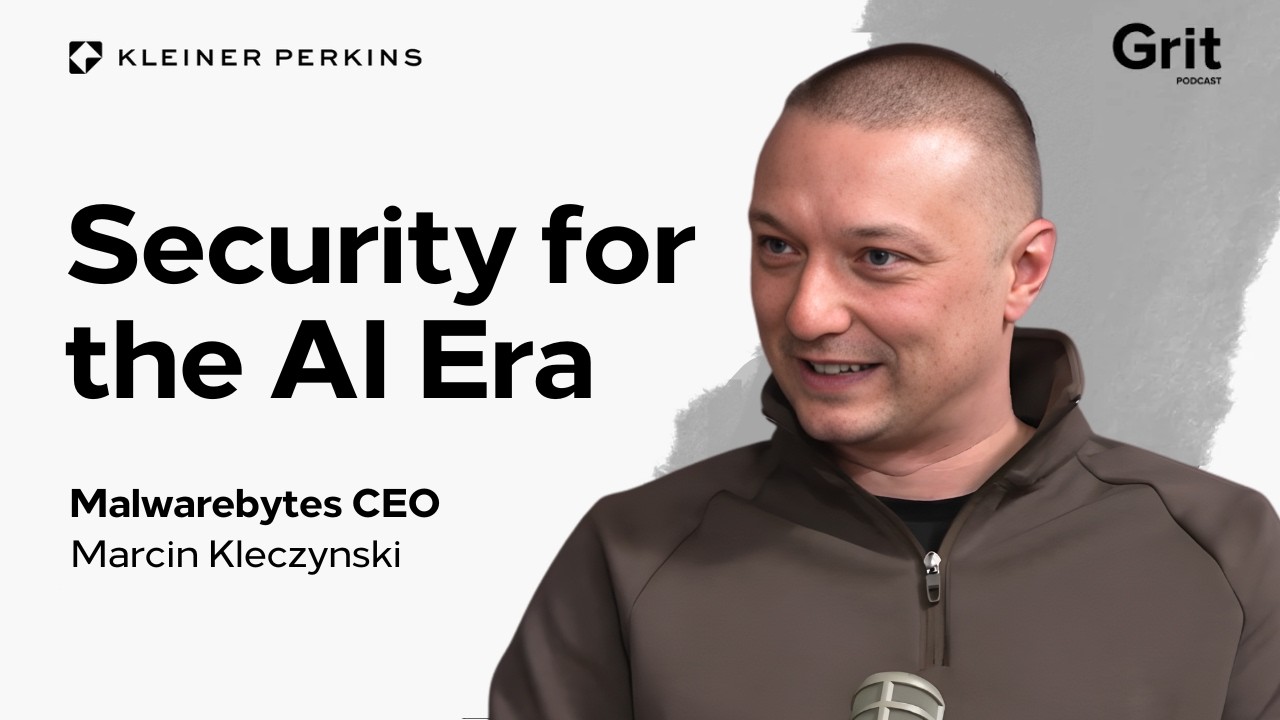
By 2026, the work included scams delivered through messages and links. Malwarebytes announced an integration with ChatGPT in February, bringing checks of suspicious material into a place people were already asking questions. “Cybersecurity shouldn't be confusing or out of reach,” Kleczynski said. In a February conversation on Grit, he also discussed AI-driven threats and the need to keep adapting the business.
He has interests beyond the next suspicious file. Aviation appears on his personal website, and he became a licensed pilot. Flying offers an appealing counterpoint to security work: procedures, instruments and a reason to pay attention. It is also a reminder that the person who stayed in school had ambitions extending beyond the company taking up his room.
Malwarebytes still offers a free malware-removal tool. That continuity matters in a story full of changing products and changing threats. Kleczynski began as someone asking strangers to help put a computer right. Years later, the small campus scene remains an apt measure of the work: a technician arrives, chooses his software and solves a problem. The founder can enjoy the moment without introducing himself. The pleasure in the episode is easy to understand. His name mattered less than the choice somebody made when a machine needed to work again.