A technology fashion has acquired a name that sounds rather like a competitive eating contest: tokenmaxxing. The appetite, in this case, is for AI computation. In July 2026, Dmitry Rakovitsky joined a conversation about the costs and business consequences of feeding it. For someone whose working life has included financial information, mobile products, augmented reality and chatbots, the subject offers a particularly apt entrance.
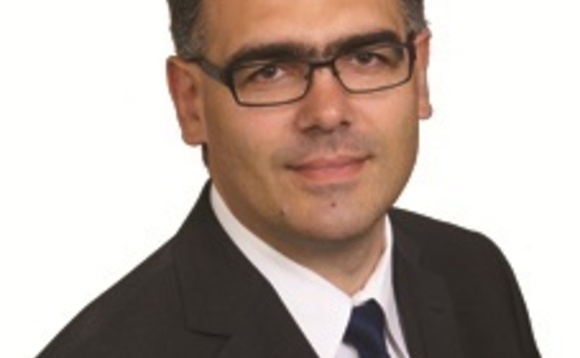
Rakovitsky, known professionally as Dima as well as Dmitry, is the co-founder and CEO of Roko Labs. He also co-founded Instabot. His career puts him among the people responsible for translating technical possibilities into products, teams and services that someone must eventually pay for. The invoice is an unfashionable document. It remains an excellent editor of extravagant ideas.
His July 21 appearance on EACCNY Pulse, with European American Chamber of Commerce New York executive director Yvonne Bendinger-Rothschild, addressed how AI investment can produce business results within a predictable budget. The discussion’s premise was straightforward: organizations can increase usage without having an equally clear account of the value they receive. That question supplies a useful frame for the earlier chapters of his career.
Before the bots, the market data
Rakovitsky’s working history includes Verint, Multex, Reuters and InfoNgen. The roles cover software development, product development and business development. Those are distinct responsibilities, even when a company prefers to gather them beneath the comfortable umbrella of “technology.” Someone must build the thing; someone must decide what it should do; someone must establish the relationships that let it reach a market.
At InfoNgen, he worked with Jeff Hendren on commercial partnerships. Hendren later credited Rakovitsky with securing long-term relationships that helped establish the company’s foundations. His assessment gives the technical résumé a commercial dimension. The ability to understand a system and the ability to earn a partner’s confidence can occupy the same person, although organizational charts sometimes go to considerable trouble to keep them apart.
He subsequently served as chief operating officer at CarryQuote, a Swiss mobile financial-data provider. That chapter had a difficult ending. In November 2012, CarryQuote closed after failing to obtain sufficient financing, and its customers moved to alternative services. Rakovitsky was among the staff reported to have joined S&P Capital IQ. A career account that includes this episode has more texture than the usual uninterrupted procession of launches.
It also places his later entrepreneurship in a concrete professional setting. Mobile access to information, the economics of serving customers and the work of operating a software business were already part of his experience. Roko Labs would bring product strategy and software delivery into the same undertaking, with Rakovitsky as one of three founders.
A camera, a brand, a very long patent title
Another chapter took him to Snaps, formerly GoldRun, as chief technology officer. Its company profile described an operating executive experienced in product strategy, global teams, contracts and budgets, with previous work at Reuters and CarryQuote. Alongside him on the leadership roster was Amy Kadomatsu, who would also become a Roko Labs and Instabot co-founder.
The work extended to augmented reality. Rakovitsky is named with Vivian Rosenthal and Steven Austin Bone on a patent for an augmented reality virtual content platform. Granted in October 2017, US patent 9,792,733 concerns technology for adding virtual material to images and connecting that activity with brand engagement. A phone’s camera becomes part of a commercial interaction: make a picture, add content, share it.
The patent’s formal title is impressively resistant to small talk. The underlying product idea is easier to grasp. A photograph can carry an experience beyond the moment it was taken. Here, Rakovitsky’s engineering work met consumer behavior rather than a financial information screen. It is a useful reminder of the variety concealed by the job title “software executive.”
The New Yorker who picked Texas
In September 2016, Rakovitsky published an article comparing American cities as places to start a business. His Roko Labs team considered cities with populations above 500,000, weighing access to investment, technical talent, living costs and workspace. The resulting exercise gave startup geography a decidedly practical treatment. Even an ambitious company must find somewhere to put its desks.
The article began with San Francisco and worked through the attractions and drawbacks of ten locations. Capital mattered, but so did the cost of being near it. Universities appeared as part of the talent picture. Apartment rents and coworking prices shared space with investment figures. It was an unusually domestic set of considerations for a subject often discussed as though founders live entirely on conviction.
Then came the recommendation: “We Choose… Texas!” Dallas, Houston and Austin gave the state three startup cities to consider, with costs, capital and talent contributing to the argument. A New York-based founder recommending another state makes a pleasingly awkward civic anecdote. More substantially, it shows the questions he put into this particular comparison: the resources a business can reach and the price of reaching them.
The four ingredients behind Rakovitsky’s startup-location comparison. Historical research, with a Texas recommendation.
The conversation becomes a product
Instabot added another form of software to Rakovitsky’s career. Founded in 2017, the business lists him as co-founder and CEO, with Kadomatsu as co-founder and Sergei Selin as co-founder and CTO. These are also the three names at Roko Labs’ founding. Their collaboration spans a client-services business and a product designed around automated conversations.
Instabot’s purpose is commercial and specific. It gives marketers, product owners and business owners tools for engaging users and improving conversions. Its product description places the chatbot where customers already interact with a business, including websites, apps and email campaigns. Responses can be combined with information from other systems, helping a company examine what visitors need and how an interaction develops.
That product territory also appears in an application filed in May 2017 for creating conversations within applications. Rakovitsky, Kadomatsu and Selin are named as inventors alongside Zakie Twainy and Aaron Weymouth. The document describes configuring prompts, responses and actions so that a conversation can be assembled and launched. This was a patent application; it should be read as a record of the proposed system.
A conversational interface has a deceptively social surface. Behind the greeting sit decisions about prompts, branches, information and the point at which an exchange should lead to an action. Rakovitsky’s work in this area predates the present AI spending debate by years. The business purpose was already explicit: make the interaction useful to the customer and to the company running it.
custom software engineering
& user engagement
Three founders, a wider map
Roko Labs dates its New York beginnings to 2012. Over the following years, its operating footprint expanded. The company opened a Latin American center in 2019 and one in southeastern Europe in 2021. Its published history records a global team exceeding 350 people in 2024; its current organization page reports more than 400 employees working across 20 countries.
The company also appeared on the Inc. 5000, ranking 3,961 in 2020 and 4,158 in 2021. Rankings provide a dated marker rather than a complete account of a business, but these establish that Roko’s growth story was visible before its later investment announcement. Rakovitsky’s CEO role continued as the organization grew beyond its original New York setting.
On October 24, 2023, Roko Labs announced a growth investment from WestView Capital Partners. The announcement described services extending from product planning and interface design to engineering and cloud operations. It also identified a customer base ranging from startups to Fortune 500 companies, including financial services and business software. For Rakovitsky, the partnership opened another stage in running the firm.
“We are excited to join forces with WestView in our next chapter of growth.”
Dmitry Rakovitsky · October 2023
The relationship brought Rakovitsky and Selin together with WestView’s investment team, including Greg Thomas and Jeff Klofas. Selin spoke about expanding services and the delivery footprint. Those ambitions put a practical meaning on growth: additional capacity, additional work and the organization required to support both. There is considerable engineering behind a software business before anyone opens a code editor.
The people behind the product brief
Accounts from former colleagues add some human scale. Bob Eilbacher, who worked with Rakovitsky on product development and launches, described a leader attentive to detail and deadlines. Hendren’s recommendation emphasized trusted commercial relationships. These are colleagues’ judgments, attached to work they shared with him. They make the portrait more particular than a collection of executive adjectives would.
Instabot’s company story includes another connection: involvement with Mouse, the nonprofit that helps young people develop technology skills. The team describes mentoring students and raising donations through its network, an association it dates to 2013. Its account places the work in the context of people who had changed the founders’ own trajectories. The beneficiaries here are future builders, with projects and possibilities still ahead of them.
Return to that July 2026 conversation, and the title “founder and CEO” carries a little more content. There are financial-data operations behind it, a camera-based invention, a city comparison with rent in the arithmetic, and software built to conduct conversations. The technologies have changed. The question on this occasion is thoroughly recognizable to anyone who has run a business: what useful result will the expenditure produce?