At Fitch Ratings, the AI system worked. That was part of the problem. It could draw on financial documents and generate answers, but feeding it cost too much. Roko Labs examined the machinery around the model: how documents were divided, which passages were retrieved, and how much material reached each prompt. The company reports that it cut token use and LLM costs by 66%, with the model unchanged and output quality maintained.
- Custom software, AI and product design for complex businesses.
- Finance, healthcare and life sciences are recurring specialties.
- The useful question: which part of the workflow actually needs fixing?
There is a revealing business proposition in that little repair job. Companies can spend considerable money making an impressive machine do ordinary work badly. Roko sells the expertise to connect the machine to the work. Sometimes that means AI. Sometimes it means replacing an awkward interface, rebuilding a data platform, or keeping an existing application running.
01 / The bill was in the plumbing
The Fitch engagement took less than a month, according to Roko’s case study. Smaller, coherent document segments and more selective retrieval reduced unnecessary context. The practical lesson is pleasantly unglamorous: examine what you send the model before deciding you need another model.
Roko occupies the space between a strategy consultancy and an outsourced engineering team. A buyer can bring a product idea, an aging application, or a troublesome AI deployment. The services span research, roadmaps, interface design, development, testing and cloud operations. Private equity firms can also use its technology due diligence and transaction support to assess software before buying a business.
The alternative might be an internal team, a specialist AI shop, or a larger digital engineering firm such as EPAM or Globant. Roko’s pitch combines those responsibilities in one relationship. Its distinguishing evidence is the specificity of the work: financial research, medical documentation, engineering calculations and nuclear oversight all appear in its project portfolio.
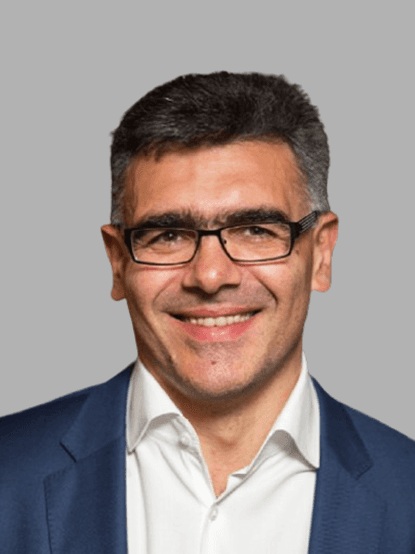


The founders are Dmitry Rakovitsky, Sergei Selin and Amy Kadomatsu. WestView Capital Partners backed the business in October 2023. That investment supported an organization already delivering across the United States, Europe and Latin America. This is a services business: clients pay for scoped work and continuing support, with estimates built around the assignment.
02 / Faster people, slower queues
Roko’s most instructive AI case may be its own. Engineers used AI for coding, debugging and documentation. Individual tasks accelerated. Delivery remained inconsistent. The improvements ran into code reviews, testing delays, deployment pipelines and the effort of coordinating teams. More code arriving at a queue does not make the queue disappear.
The team can type faster. The product can still wait.
What Roko’s internal delivery case illustrates
A structured assessment changed the approach. Roko introduced shared prompt libraries, repeatable workflows and documented validation practices. It extended AI into testing and technical documentation rather than leaving each developer to improvise. Its account describes better consistency and visibility, without attaching a headline percentage to those outcomes.
That fits a staffing choice on its careers page: developers work in dedicated teams on one product, with long assignments that let them learn the client’s business. The advertised culture includes flexible hours, remote work and education support. Continuity matters when the difficult knowledge lives in someone’s explanation of why a seemingly sensible change would break everything.
03 / The expert stays in the room
Consider drug applications. Roko describes a three-month project for a cell and gene therapy services firm, building AI-assisted drafting for Investigational New Drug submissions. The system combined a fine-tuned model, document retrieval and a custom interface for uploads and expert review.
The proof of concept focused on two sections. Roko reports 80% accuracy for generated documents and a 50% reduction in time per IND. Those numbers describe a bounded project. They leave a substantial role for the person checking the draft. A plausible paragraph and a dependable regulatory document are different deliverables.
the task
the evidence
and operate
Editorial synthesis of Roko’s project approach.
At the International Atomic Energy Agency, the assignment was a secure analytics environment called ESEE. Disconnected information, awkward interfaces and manual handoffs complicated analysts’ work. Roko describes more than three years of engineering, 489 screens and continuing support. Traceability and security constrained the design from the beginning. An attractive dashboard alone would have solved very little.
04 / A stopwatch is a better brief
The commercial-construction example is easier to picture. VMC Group needed engineering calculations and reports to move faster. Roko built E-Generator over a reported 15 months. Its case describes report cycles shrinking from as long as 14 days to 24 hours, plus roughly $200,000 in annual savings from replacing outside services.
In the accompanying testimonial, VMC’s chief executive calls it a multimillion-dollar investment. That gives the project a useful sense of scale: custom engineering can be a serious capital decision. The relevant comparison is the value of faster work, reduced dependence and ongoing operating costs across the system’s life.
A buyer can copy the discipline before hiring the company. Pick one recurring task. Measure its delay, cost and error burden. Identify the next person who must trust its output. Start with a bounded implementation and test the handoff. Custom development makes more sense when the workflow has enough volume or consequence to justify the effort; a standard tool may suffice for a simple, occasional task.
That approach asks something of the customer, too. Someone has to explain the exceptions, supply usable information and decide what counts as a good result. A retrieval repair helps when irrelevant context drives the bill. It offers less when the source material itself is unreliable. An automated draft helps when specialists can check it; removing that review would change the proposition. The sensible buying question is whether the organization can support the new process after the initial team has delivered it.
Roko’s cases make a persuasive argument for looking between the steps. The expensive context. The review queue. The analyst hunting through disconnected records. Those are specific problems a team can investigate, price and fix. Start there, and the technology brief gets considerably clearer.