The machine is the problem. Metaltronica wanted to show an event audience its Cybele mammography system without shipping the equipment out of the city. A brochure could travel easily enough. But paper has trouble explaining how a complicated machine behaves. DigiTrends supplied another way in: a virtual reality demonstration that let visitors explore the system’s modules. The exhibit became something people could handle without the machine being there.
- The work: custom software, mobile apps, medical simulations and enterprise AI.
- The distinctive thread: pharmaceutical communication, where explaining a product is part of the job.
- The buyer’s lesson: define the task, then choose the technology.
That small logistical puzzle is a useful entrance to DigiTrends. Browse the company’s services and you encounter a familiar software-agency vocabulary: apps, websites, AI, digital transformation. Look at the actual assignments and the picture sharpens. Here is a business repeatedly asked to make specialized information usable, often for people working in healthcare. The interesting unit of analysis is the assignment.
01A machine that travels without a crate
Cybele brought a particular communication problem. Its combination of mammography, ultrasound, bone mineralometry and biopsy was difficult to convey through static presentations, according to DigiTrends’ project account. The virtual version gave an audience a way to inspect individual modules. It also offered Metaltronica a repeatable demonstration for different locations.
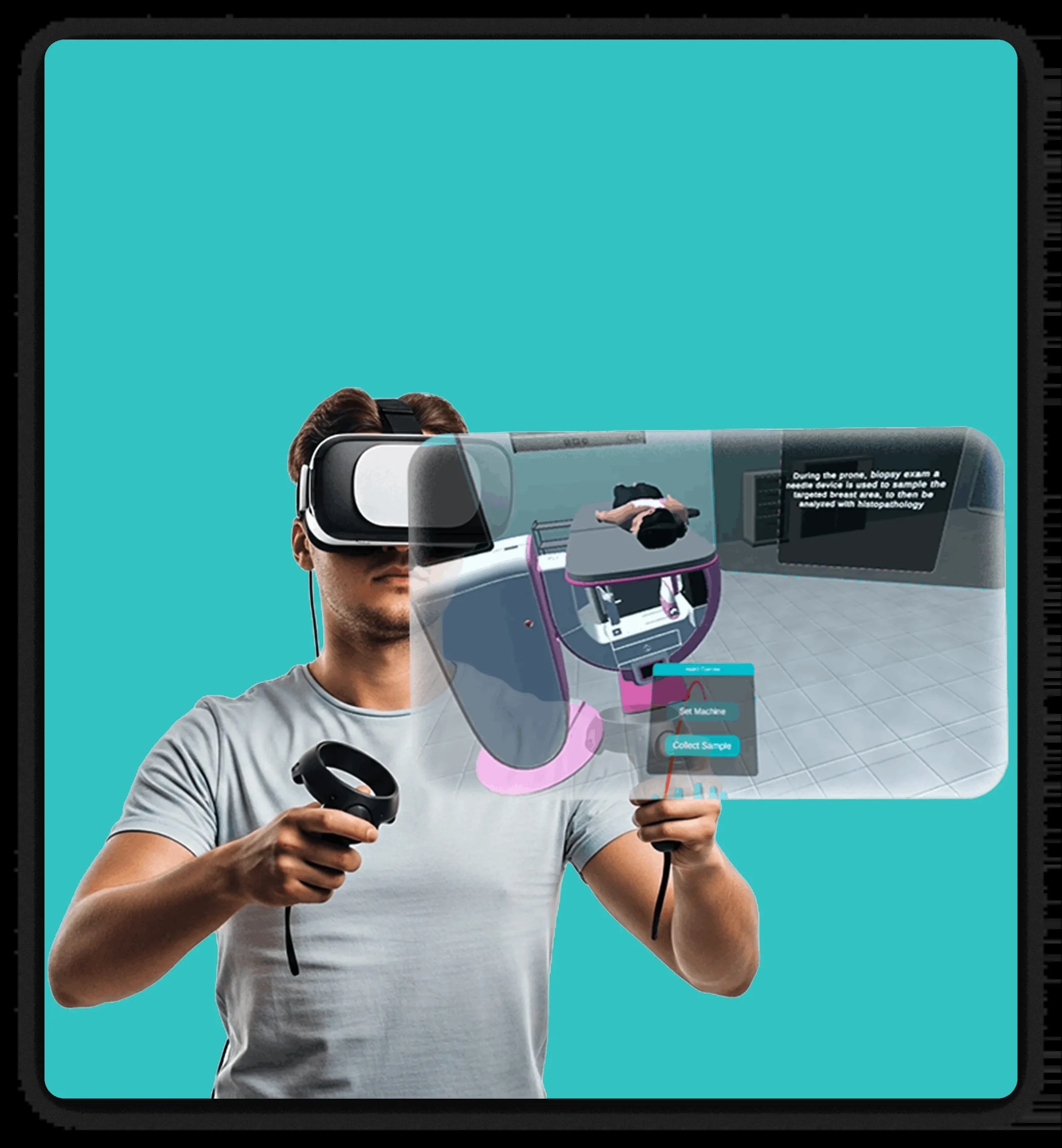
The distinction matters. The immediate obstacle was physical transportation; the accompanying obstacle was explanation. A virtual model addressed both. That makes the choice intelligible even to someone thoroughly tired of headsets. The test for a buyer is straightforward: does spatial interaction help the audience understand this particular object? If the answer is yes, the medium earns its place in the budget.
02A niche hiding in the sales conversation
Founder and CEO Samad Saleem has described the opening he saw in pharmaceutical digitization. In a 2023 interview, he traced DigiTrends’ beginnings to 2010, when his team identified demand for technology in an industry still early in its digital adoption. The team came with digital marketing experience. Its opportunity lay in applying that experience to a specific kind of customer.

The portfolio still carries that imprint. DigiTrends describes a surgical learning simulation for GSK, a medication-management app for BeeSmart Rx Health and dermatology websites for Fidia. These are different deliverables for different moments: learning a procedure, remembering a prescription, finding product information. The company also offers e-commerce, financial software and general application development, giving customers a wider set of services to commission.
“They delivered exactly what we wanted without any delays.”
Muhammad Usaid Khalid / Getz Pharma
Client review on Clutch, October 2023
Its market position is easier to understand through that mix. A general development shop competes on engineering capacity. A marketing agency competes on communication. DigiTrends brings both into briefs involving pharmaceutical products and professional audiences. That combination gives it a reason to be considered; buyers still have to assess the relevant team and work.
03The brief comes before the headset
Consider BeeSmart Rx. DigiTrends describes an application with medication scheduling, reminders and refill alerts, alongside communication among patients, caregivers and health professionals. The value proposition begins with coordination. A reminder needs to arrive when it is useful; information needs to reach the right person. Attractive screens are only one part of that assignment.
That suggests a useful way to write a software brief. Begin with an observable action: explore a machine, find a document, manage a medication schedule. Then ask what prevents it. This is an editorial reading of the projects, and something another company can copy without copying the code. It gives the discussion a destination before anyone debates the technology stack.
04Buying the build, keeping the knowledge
DigiTrends sells commissioned development and consulting. Its Clutch listing advertises a $5,000 project minimum and hourly rates of $25-$49. Those numbers start a procurement conversation. They do not price a hospital integration or the Cybele experience. For a disclosed example, Getz Pharma’s diagnostic learning website engagement was listed below $10,000.
Clutch listing, checked October 2026. Indicative supplier pricing; scope determines the quote.
There is a human cost to manage, too. Clutch’s review synthesis flags disruptions when project personnel changed. A sensible buyer would specify a named owner, a handover process and a record of decisions. Domain knowledge is useful only while someone can retrieve it. Maintenance and ownership deserve space in the brief from the beginning.
05The next queue is in SharePoint
The company’s newer offerings bring the same question into office work. DigiSight is described as an AI assistant for SharePoint search, document summaries and connected workflows, including Outlook email tasks. A separate AI Compliance Agent is marketed around a document repository with offline search. Both target the effort of getting useful information out of organizational files.

Its expansion also has a geographic direction. In February 2025, DigiTrends announced a fintech agreement with Saudi company Seen Tarbi. In May 2026, it announced an AI Center of Excellence built around structured adoption and controlled pilots. The ambition is broader than pharmaceutical communication, while the proposed entry point remains a specific organizational problem.
06Start with the awkward part
For a prospective customer, the useful question is what deserves custom work. A standard requirement may already have a serviceable product. A specialized workflow may justify a development partner, provided the customer supplies expertise, timely decisions and a maintenance budget. DigiTrends’ most memorable example begins with an awkward object and a clear purpose. Someone needed to show a machine. Software gave it a way to travel.