A patient’s journey through a clinic ought to be a single story. In software, it can become several: one record for the appointment, another for the consultation, another for the bill. Each system may work. The person moving between them becomes the integration layer. Much of smartData Enterprises’ work begins in this thoroughly unglamorous place: the handoff.
- It builds: custom business software, with a substantial healthcare practice.
- The current bet: reuse familiar components, then engineer the differences.
- The buyer’s lesson: specify the broken handoff before specifying the next feature.
SmartData sells software consulting and development: web applications, mobile apps, AI, cloud infrastructure and the connections between systems. Its customers range from entrepreneurs to established businesses. Healthcare, logistics, retail, property and financial services appear across its portfolio. The common problem is less an absence of technology than an awkward arrangement of the technology already there.
The second time should be easier
Software firms accumulate experience. SmartData wants to accumulate usable parts. In a January 2026 strategy article, senior business-development director Ashish Chaubey describes reusable components called Pods: modules that can become the starting material for another customer’s system. His argument is straightforward. Repeating ordinary engineering consumes time that could go toward the customer’s particular problem.
Think about permissions, calendars, audit trails and subscription billing. Customers need them, but their existence rarely explains why someone chooses a product. The interesting engineering happens where those familiar pieces meet an unfamiliar business. Reuse shifts the starting line. Whether it saves money depends on how much adaptation the next project requires.
“We don’t sell hours”
smartData’s current homepage pitch
That pitch marks a change in emphasis for a contract development business. SmartData now promotes engagements measured against business results, backed by existing software assets. Read it as a commercial proposition: agree what should improve, then build toward that result. A buyer still needs a scope, acceptance criteria and someone empowered to decide whether the work actually helps.
The named products show the range. SmartTrial organizes clinical research for sponsors, research organizations and trial sites, including forms, invoicing and audit records. SmartBridge handles document generation using templates, language models and text extracted from files. It also offers masking of protected health information. These are specific workflow tools within a broader engineering offer. A customer choosing between them and a bespoke build needs to establish which functions are ready, which require configuration and which still need development.
A calendar travels between clinics
The company’s Teledocs.app case makes reuse concrete. A clinic-network operator needed a telehealth platform that other clinic operators could adopt. SmartData describes a ten-week plan spanning 27 modules, borrowing appointments, forms and access-control components from its Impact Health EHR. The goal includes subscriptions and AI-assisted clinical documentation.
and refactoring
eight tracks
integration, go-live
Company-described plan, not a measured delivery result. *Middle phase inferred from the stated opening and closing phases.
The revealing step comes before the additions. SmartData says it assesses how the borrowed components fit, then creates an integration layer. It reserves the opening weeks for handover and refactoring, and the closing weeks for testing and launch. This is work in progress described by its builder, rather than evidence that every feature shipped on schedule.
There is a useful distinction here for anyone buying software. Reusable does not mean interchangeable. A component arrives with assumptions about data, permissions and the system surrounding it. The buyer should ask to see those assumptions. Otherwise, the work saved inside the component may reappear at its edges.
What broke was the handoff
Another published case concerns a multi-location orthopedic and spine practice. Clinical records and scheduling lived apart from lead management, video consultations and imaging. Staff faced duplicate entry and fragmented workflows. The failure described here is operational: expanding the practice exposed the cost of moving information between applications.
SmartData describes building a unified clinical, practice-management and billing platform while preserving existing workflows. Its account includes converting more than 50 paper forms into configurable templates, introducing them by department and connecting patient records to the existing lead-management system. Certification testing is scoped separately. A development requirement should not be mistaken for a certification already earned.
For a clinic manager, the attraction is practical. A patient should not need to become a fresh administrative puzzle at every step. For a software buyer, the lesson is equally practical: map the duplicated task, identify who owns the record and test the whole journey with the people doing the work.
The price of a starting point
Public pricing gives this story some ballast. SmartData’s Clutch profile lists a $10,000 minimum project and an hourly rate below $25. Its most common reviewed project band is $10,000-$49,999. Those figures describe a directory listing and past engagements, not the price of the healthcare systems above.
Most common project band in Clutch reviews.
Scope, integrations and ongoing support change the bill.
The same review profile records praise for project management alongside occasional time-zone communication difficulties. Offshore delivery still needs overlap, clear decisions and a way to surface trouble early. A low hourly rate cannot compensate for a requirement that spends three days waiting for an answer.
A company built across distances
The background helps explain the breadth. Founder and chairman Dr. Sanjai Tiwari started the US parent in Silicon Valley in 1996. India engineering operations followed in 1999. Co-founder and global CEO Ajay Tewari came from an eleven-year Merchant Navy career. Coordinating people across borders preceded his work coordinating software teams.
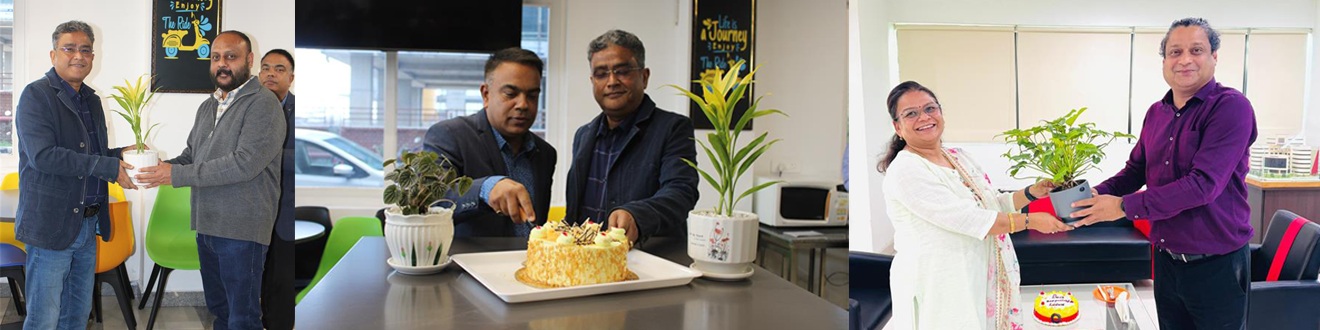
The company calls employees smarTians. Its public culture includes cricket, a cultural league and long-service recognition. In September 2026 it announced an agreement with IIT Tirupati to explore research collaboration in AI and related fields. These details describe an established services organization trying to give accumulated experience a new commercial shape.
SmartData sits between the independent developer, the specialist software shop and the larger consultancy. Its case for selection is the combination of domain familiarity, delivery capacity and reusable assets. That combination matters when existing systems need substantial adaptation. For a standard need already served by a ready-made application, commissioning a custom build may buy unnecessary responsibility.
The transferable idea is modest and useful. Before asking how quickly a team can build, ask what it has already learned to build. Then inspect the joins.