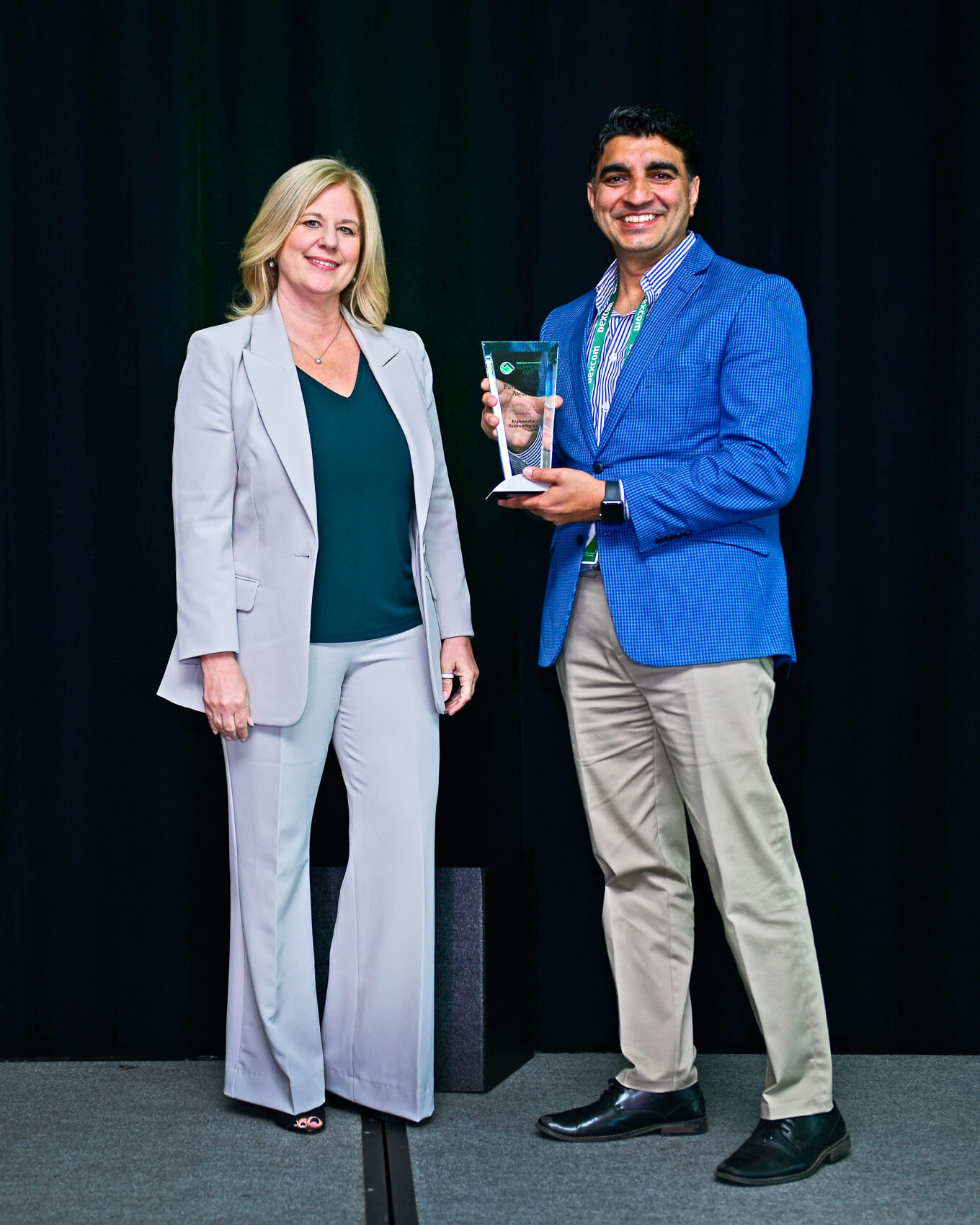
A support agent can have excellent software and still spend the day copying information between screens. At Dexcom, the glucose-monitoring technology company, Algoworks worked on the machinery behind that familiar frustration: service workflows, orders, complaints and the systems connecting them. The interesting part is what a successful technology project looks like here. Someone gets an answer sooner.
- Algoworks combines software engineering, Salesforce integration and experience design.
- Its 2023 combination with FROM brought engineering capacity and customer research into the same business.
- Its AI pitch starts with a bounded task, then expands when the results justify it.
In June 2026, Algoworks announced that Dexcom had named it Supplier of the Year. Its account credits a multiyear Salesforce Service Cloud transformation with improving service turnaround by 15 to 20 percent across the United States and Canada. That is a company-reported result. It is also a useful introduction to a business whose most consequential work often happens between the screens.
The queue behind the software
Dexcom’s engagement included an earlier move from Oracle Service Cloud to Salesforce, followed by broader integration and workflow standardization. Phone, chat and email support needed to connect with order management and regulatory complaint handling. An agent’s interface was one part of an operating system that stretched across departments.
Software buyers often describe these jobs by naming the platform. But “implement Salesforce” leaves out the difficult questions. Which records belong together? Who owns the next action? Can a person see enough information to finish the call? Those questions explain why Algoworks sells design and engineering together.
The workshop before the website
The Avis Budget Group relationship offers an earlier version of the same lesson. According to Algoworks’ case study, the engagement began in 2013 with fragmented digital work, friction from previous agency relationships and business and IT teams pulling in different directions. A workshop in early 2014 helped align those teams. The agency-of-record appointment followed.
The assignment grew to encompass booking journeys, optional extras and tools for employees. Algoworks describes research and multivariate testing as central to that work. Its case study reports a 9 percent uplift from an initiative adding member rates to pricing. A small interface decision can matter when it sits directly in the path of a purchase.
The handoff is part of the product.The lesson running through these engagements
This history belongs to the combined business, including the predecessor design operation. It should not be read as evidence that the original Algoworks engineering company independently held every relationship now presented under its name. The merger makes that distinction especially useful.
Two businesses, one handoff
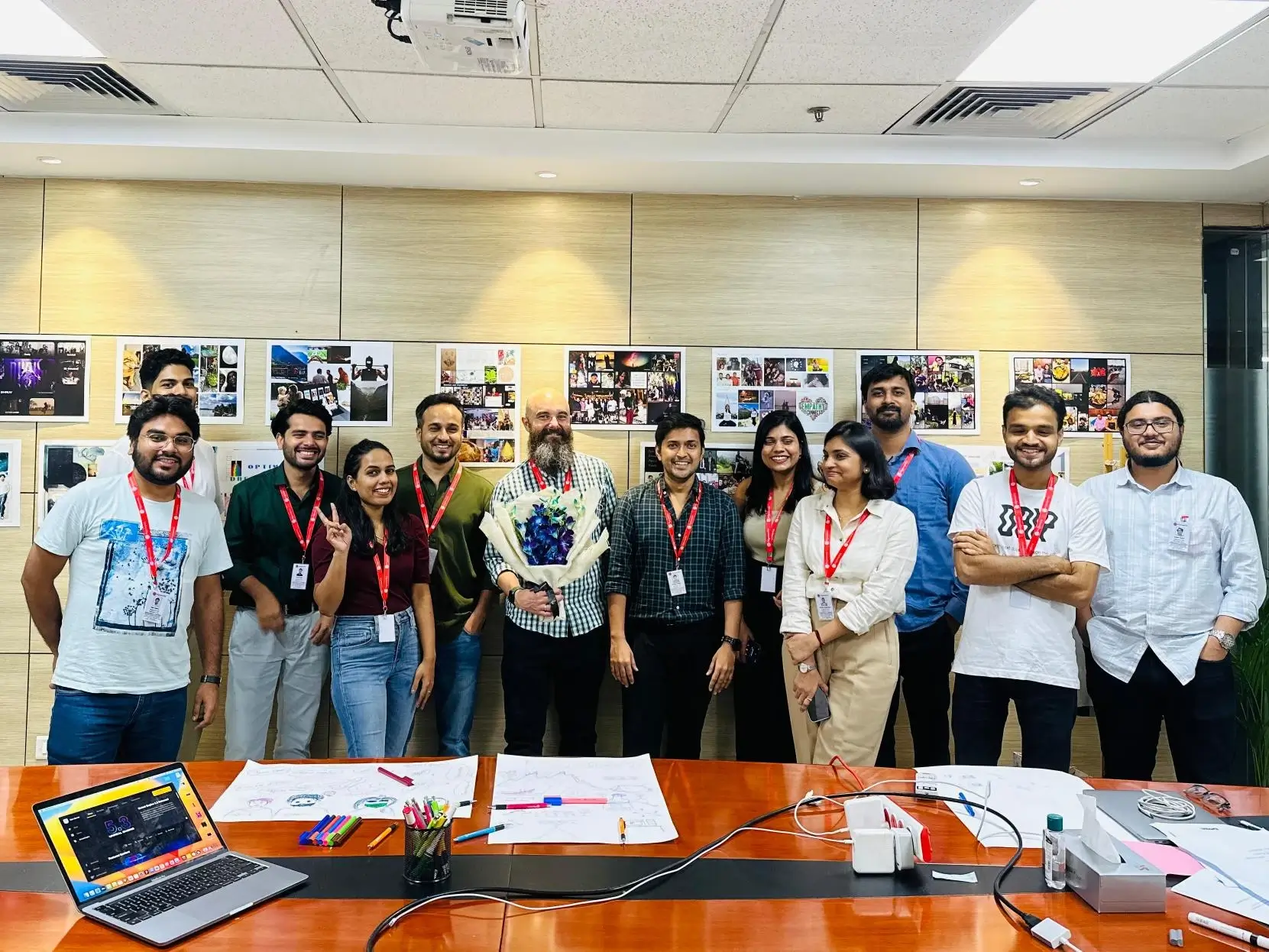
Ajeet Singh, Pratyush Kumar and Rachit Agarwal founded Algoworks in 2006. In founder interviews, the opportunity was straightforward: companies wanted affordable offshore development, but needed confidence in delivery. Mobile applications, web engineering and Salesforce work became important parts of the offer.
In 2023, FROM, backed by private equity firm Trivest Partners, acquired Algoworks. FROM brought digital strategy and product design; Algoworks added engineering capacity and Salesforce expertise. In June 2025, the integrated business publicly adopted the Algoworks brand, with Derek Harrar as chief executive. The combination addressed a familiar services problem: a design can lose its meaning on the way to implementation.
Today, the offer runs from defining the problem through building and operating the technology. Customers can commission mobile applications, modernize web platforms, connect enterprise systems or improve an existing Salesforce environment. Cloud engineering, DevOps and ongoing support extend the relationship beyond launch. The business earns fees for expertise and delivery, rather than depending primarily on a single subscription product.
The company also publishes smaller Salesforce utilities. Opportunity Manager offers pipeline views and editing tools; Approval Manager consolidates approval requests. These products expose the same preference for improving work inside a platform customers already use. They complement a services business rather than defining the entire company.
AI, one task at a time
Algoworks calls its AI approach Everyday AI. It begins with an ideation session and a system-readiness audit, selects a foundational use case and then moves into adjacent opportunities. The appeal is practical: a buyer can evaluate a bounded change before approving a much wider program.
- 01Check readinessPeople, data, systems
- 02Prove one taskSet a measurable goal
- 03Expand nearbyReuse what works
For an unnamed Fortune 150 manufacturer, Algoworks describes delivery predictions using factors including weather, route length and inventory, paired with a redesigned dealer interface. It reports 20 percent fewer support calls. The same case discusses an AI troubleshooting prototype for technicians. A prototype with promising economics remains a different achievement from a deployed system producing measured savings.
The conditions matter. An order prediction needs usable operational data. A service recommendation needs a workflow that someone understands and trusts. Algoworks’ web engineering material explicitly treats data hygiene, stable processes and integration maturity as prerequisites for AI readiness. Adding a model does not remove those dependencies.
Buy the work, measure the change
What does this cost? Algoworks’ Clutch listing gives a minimum project size of $10,000. That is an entry threshold, not a price for a Dexcom-scale transformation. Buyers are purchasing a scope: research, implementation, integrations, testing and potentially continuing support. Each adds work that a polished demonstration can hide.
Algoworks fits between specialist development shops and broader transformation consultancies. Its distinction is the combination of experience design, platform integration and engineering delivery. Buyers comparing firms should test that combination on a real workflow: ask the team to show how research changes the build, and how the build changes an operating metric.
The lesson readers can copy is simple enough to put in the next project brief. Watch a person perform the task. Identify the delay. Agree on a baseline. Fix a bounded part of the process and measure it again. At a rental counter or a support desk, the result should be visible to someone who has never heard the phrase digital transformation.