A patient preparing for surgery has plenty to remember. There are appointments, instructions, and the peculiar anxiety of trying to be a good patient while life carries on. Pip Care addresses that problem with coaching, personalized surgical care plans, and reminders. Its co-founder, Joy Kincaid, says HTD Health helped bring the product’s minimum viable version to market in three months.
- HTD plans, designs, and builds software for healthcare organizations.
- Its work spans surgical navigation, connected devices, and clinical data.
- The useful lesson: settle the workflow and integration questions early.
Three months is an attractive number. The more interesting detail is what Kincaid credits: technology strategy, knowledge of existing digital health tools, and choices about the technology stack. Shipping quickly required decisions about the machinery behind the app. That is a useful way into HTD, a consultancy whose contribution often sits somewhere a patient will never see.
Three months, many moving parts
Founded in 2016, HTD works exclusively in healthcare. Buyers include care delivery organizations, medical device companies, healthcare software platforms, payors, and investors. They hire it for advice, product design, engineering, data work, and integrations. The company reports more than 250 delivered products and projects. That figure describes its portfolio, rather than the number of hospitals or patients it serves.
A virtual care service needs scheduling, messaging, billing, and records. It also needs a coherent experience for the person receiving care. HTD’s service menu puts those concerns together. A founder can ask it to map an initial product; an established software company can ask for engineering help; a device maker can ask how its hardware should communicate with an application.
- 01UnderstandPeople + workflow
- 02DecideBuild + buy
- 03ConnectSystems + data
- 04TestUse + improve
The screen is only the beginning
Consider Vave Health, which makes a handheld ultrasound device. HTD developed a mobile application and then led usability testing with physician users. A device can be portable while its software remains awkward. Testing asks whether the interface is clear and useful to the clinician actually operating it, under the demands of a working day.
HTD describes a design process that begins with research, moves through user stories and wireframes, and reaches clickable prototypes before implementation. That sequence gives a team opportunities to discover that an assumption was wrong while changing it remains relatively straightforward. A polished screen is evidence of design effort. Observing someone use it answers a different question.
Zus Health presents another kind of puzzle. Its shared data platform gathers records from different sources, removes duplication, enriches the information, and summarizes a patient’s clinical story inside an electronic health record. Zus brought in HTD for engineering help with aggregating, summarizing, and interpreting data at scale. The deliverable is useful context at the point of care, with software doing the assembling.
There is a revealing warning in HTD’s own guidance on patient engagement: borrowing consumer technology metrics can mislead. More interaction with an app may simply mean more work for a patient. A useful check-in, or information collected without another manual step, can matter more than another visit to a dashboard. Product success needs a definition that belongs to the care being delivered.
A consultancy that can tell you to buy
Custom software firms have an obvious incentive to write software. HTD’s partnership with Extra Horizon offers a useful counterpoint. Announced in April 2023, it pairs HTD’s delivery work with an existing medical backend platform. The stated rationale is to devote effort to new customer value rather than recreate infrastructure that is already available.
HTD also lists Healthie, Awell, Redox, and other ecosystem partners. Its partners page says it has no financial relationship with those partners, presenting objectivity as the reason. For a buyer, the important question becomes specific: which part of our product needs to be distinctive, and which part should use a service somebody already maintains?
“We are not externally funded but have grown from zero to eight-digit revenue over 7 years.”
Zachary Markin · October 2023 interview
What the invoice is buying
HTD sells professional services to organizations. Its Clutch listing gives a $100,000-plus minimum project size and an hourly range of $100 to $149. Those are directory figures, not a proposal for a particular engagement. They put the buying decision in perspective: commissioning a product means budgeting for research, engineering, testing, and the surrounding systems.
Minimum project listed on Clutch
That work has operational complications of its own. A 2024 NordLayer case study describes HTD struggling with cumbersome security tool management. Multiple applications and separate configurations increased the maintenance burden. Simplification became the reason to change its setup. Even a firm selling technical expertise has to decide when adding another tool makes the organization harder to run.
Start with the person holding the device
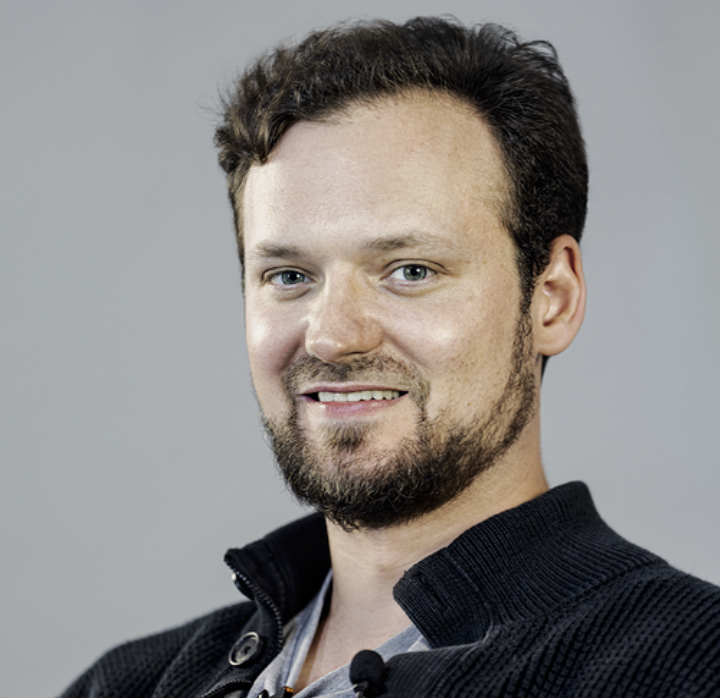
Markin’s earlier venture was Fresh Corner Cafe, serving fresh food in underserved Detroit communities. He describes teaching himself software engineering to build that business’s infrastructure. The route to healthcare technology ran through a practical distribution problem. HTD’s distributed team now brings engineering, design, and product expertise to a different set of practical constraints.
The approach has limits worth understanding before procurement. In HTD’s forum on connecting to Epic, interoperability lead Brendan Keeler discusses enterprise sales barriers as well as technical ones, and warns that FHIR interfaces may not cover every integration need. A development team cannot code its way past every organizational dependency. Buyers still need access, agreement, and a workable implementation plan.
There is something straightforward to copy here. Identify the task that matters to the patient or clinician. Test it with those people. Decide what existing infrastructure can handle. Budget for connections and accessibility early; HTD says accessibility became a strategic project focus in 2025. Then judge the software by whether that original task became easier. For the patient preparing for surgery, that might be one less instruction to lose.
Go a little deeper
Explore HTD Health, its project library, and research and commentary.
WATCHZach Markin interviews Boston Children’s innovation chief John Brownstein ↗Connecting to Epic with Brendan Keeler ↗