Consider a software project designed to predict when a baby will arrive. The prediction is the part everyone wants to talk about. But in Mindbowser’s published childbirth project, the engineering also involved moving patient information into Epic, keeping it current through a SMART on FHIR app, and sending infant details and procedures back after delivery. Before a clever prediction becomes useful, a lot of ordinary information has to reach the right place.
- Mindbowser builds healthcare software and connects the systems around it.
- Its model combines custom engineering, clinical knowledge and reusable components.
- The buyer’s real test: can the workflow survive contact with the hospital?
This is a useful way into Mindbowser, a company whose work sits between product development and healthcare plumbing. Hospitals, digital health startups, payers and medtech businesses hire it to build applications, connect records and devices, and automate work. The interesting question is how a general software business came to see those connections as its specialty.
A fortune, then a ceiling
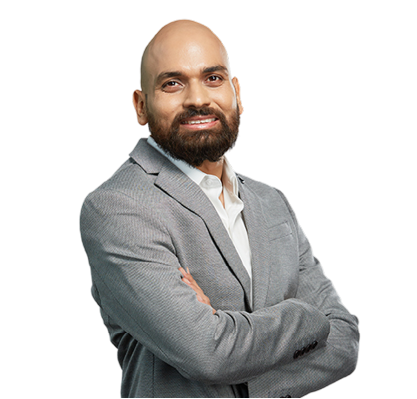
The beginning was agreeably odd. In its tenth-anniversary letter, Mindbowser recalls a first customer who wanted an app that told fortunes when the phone was shaken. It was 2012. Ayush Jain and Pravin Uttarwar were starting a business in a market discovering what smartphones could do. Jain became CEO; Uttarwar became CTO.
Consulting provided money to keep building. In a 2024 interview with Sramana Mitra, Jain explained that earlier ideas had not worked out, partly because of timing and co-founder circumstances. Services attracted demand and brought in upfront payments. Customers, in effect, financed the next stretch of the company’s education.

Then growth became stubborn. Jain told Mitra that annual revenue lingered around $800,000-$900,000 for two or three years, with roughly 60-70 people. One problem was the customer mix: startup clients could struggle commercially even when the engineering was good. Their difficulties limited the portfolio Mindbowser could show its next buyer.
From around 2016-2017, the founders became more selective. They also priced work they wanted to learn from more attractively and converted former customers into commission-based US sales representatives. The lesson is practical: an agency’s portfolio reflects the jobs it accepts. Choosing customers changes what the next customer believes you can do.
The pivot had homework
COVID brought demand for digital health and telehealth projects. In the next part of that interview, Jain reported revenue of $2.5 million in 2020 and $3.5 million in 2021. Those are historical founder-reported figures. In 2021, the founders chose a concentrated healthcare strategy.
The commitment had an operational cost: developers needed to understand the industry. Jain described mandatory 30-day healthcare training and hiring domain expertise for projects. In 2022, the company began developing reusable components he called “replicable recipes.” Knowledge acquired on one engagement could become a starting point for another.
“replicable recipes”
Ayush Jain’s name for the reusable pieces, 2024
That is the part other services businesses can copy: select a recurring customer problem, teach the team its context, and preserve the repeatable work. It requires an investment in expertise before every hour can be billed to a new build. Repetition becomes useful when the team understands which details must change.
One record, fewer detours
Today, ConnectHealth packages part of that approach into an EHR integration platform. Mindbowser describes connections to more than 20 EHRs, customer-cloud deployment, visual workflows and an AI workflow builder called Helix. For a healthtech business selling into several providers, the attraction is reusing a connection layer as its customer base expands.
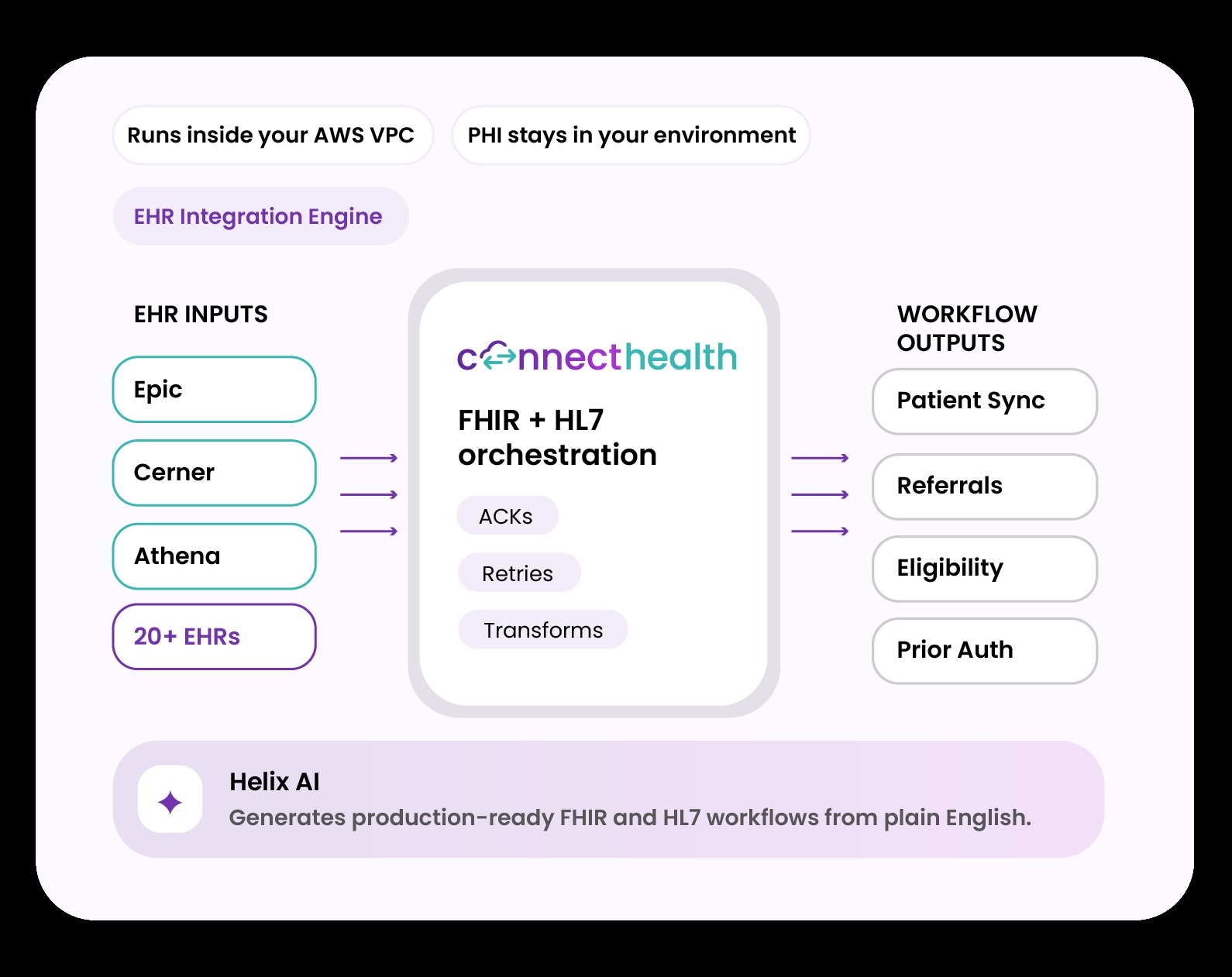
The surrounding business remains broader. Mindbowser offers product design, software development, cloud engineering, testing and ongoing support. It sells managed delivery and additional engineering capacity, alongside integration technology. This is a B2B engineering relationship: the scope, staffing and support obligations matter as much as the feature list.
Conceptual diagram, not a measured customer result.
WearConnect addresses wearable data. Its Dexcom integration materials discuss authorization, token refresh and mapping glucose readings into EHR workflows. Those details explain the work better than a vague promise of connected care. A glucose reading needs the right patient, permission and destination before it can help anyone.
The portfolio makes the proposition tangible. ChartBiopsy summarizes medical histories for physicians and advanced practitioners. A separate physician-education project tracks credentials and continuing education. Different screens, similar underlying challenge: making information accessible within a professional’s working day.
The price of a useful shortcut
Buyers face a choice between internal engineering, another specialist consultancy, or integration platforms such as Redox and ELLKAY. Mindbowser’s pitch combines implementation help with reusable infrastructure and healthcare expertise. Its AWS services page describes Advanced Tier partner status. The useful comparison is the complete delivery arrangement, including who maintains mappings when systems change.
The insurance-verification case materials make that point sharply. A dental workflow needed custom mapping because payer responses differed. Mindbowser reports 15-20 minutes saved per patient in that implementation. Treat that as a vendor-reported project result. A sensible budget conversation separates discovery, integration, cloud operations and continuing maintenance.
Recent ConnectHealth releases are revealingly specific: hospital VPN automation in July 2026; universal data mapping and Open Dental connectivity in August. These are the kinds of changes a working integration product needs. They also suggest what to ask in a demo: show the actual record, the mapping and the failure log.
Success still depends on access to the relevant EHR, production validation and the availability of the required connector. A sandbox cannot reproduce every hospital edge case. And a working data connection needs an operating model around it.
In a September 2026 HLTH essay, Jain argued that rural remote monitoring must account for clinician attention. That brings the story back to the childbirth project. The prediction, the dashboard and the device all need somewhere useful to land. Mindbowser’s opportunity lies in making that last journey work.