- Osana sells modular software to providers, payers, and pharma companies.
- It started B2C, but bad provider technology forced a B2B pivot.
- Its wedge is the patient journey; its product is the infrastructure below it.
- Public pricing is unavailable. Enterprise scope and integrations determine cost.
- The playbook works only when the institution commits people, money, and ownership.
There is a particular kind of modern disappointment that begins with a beautiful blue button marked “Book appointment.” You press it. A spinner appears. Then the clinic calls to say the slot was never actually available. Somewhere behind the polished screen, a schedule did not speak to a record, or a record did not speak to a receptionist, or a receptionist was left to reconcile both by hand. The button was digital. The institution was not.
Osana built its company in that awkward distance. Founded in 2019 by Andrés Lawson and Jorge López, two former Bain colleagues who had already built businesses together, the company now sells software infrastructure to the people who finance and deliver care across Latin America. Hospitals, insurers, and pharmaceutical companies buy it. Patients experience it as a portal, a WhatsApp message, a virtual waiting room, a prescription that turns into an appointment, or a reminder that arrives before a problem becomes urgent.
This distinction matters. Osana is not a digital clinic competing for the patient's loyalty. It is the white-label machinery that lets an existing institution offer a contemporary experience without throwing away every system it already owns. The patient may never encounter the Osana name. That anonymity is part of the product.
The first thing that failed was the premise
The founders' original idea was direct and generous: sell an inexpensive consumer health plan focused on primary care. But a plan is only as useful as the network behind it. Osana found provider technology that was closed, inconsistent, and difficult to connect. The consumer proposition could not outrun the machinery required to deliver it.
So the company changed customers. Instead of solving access directly for individuals, it began supplying the technology to providers and payers that already served them. In a 2021 interview, Lawson described the move as organic: from a particular use case, to a SaaS product, to a platform, and finally to infrastructure. The grand architecture came last.
“From the particular use case, we first developed a SaaS-type solution, moved to a platform, and ended with infrastructure.”Andrés Lawson, translated from Spanish
That sequence is the useful bit. Osana did not begin by announcing an operating system for a continent. It began with the stubborn workflow in front of it. During the pandemic, those workflows became painfully obvious. PAMI, Argentina's public health insurer for older adults, needed telemedicine that people over 70 could actually use. Sanatorio Güemes needed appointment confirmations and a way to follow COVID patients without asking physicians to telephone every person who had been tested.
One early Güemes tool was almost comically plain: a patient entered an identity number, received a test result, and, if positive, answered triage questions that placed the case on a color-coded clinical dashboard. The product did not need theatre. It needed to remove an anxious wait and a pile of manual calls.
A front door with plumbing
The fashionable phrase in healthcare software is “digital front door.” It suggests a single, friendly entrance for appointments, records, prescriptions, and messages. But a door that opens onto six locked rooms is not much of an improvement. Osana's differentiator is its insistence on the plumbing: APIs, connectors, rules, patient identity, data, and workflows that extend into the systems behind the interface.
What the platform connects
The current provider product advertises an unusually practical menu: virtual queues that tell people when to approach the clinic; pre- and post-surgical journeys that reduce missing paperwork and delayed procedures; appointments offered directly from a prescription; and self-admission that moves form filling away from the reception desk. For payers, Osana promotes continuous auditing, personalized member service, remote monitoring, and real-time data. Pharmaceutical companies can use the same underlying platform for patient-support programs.
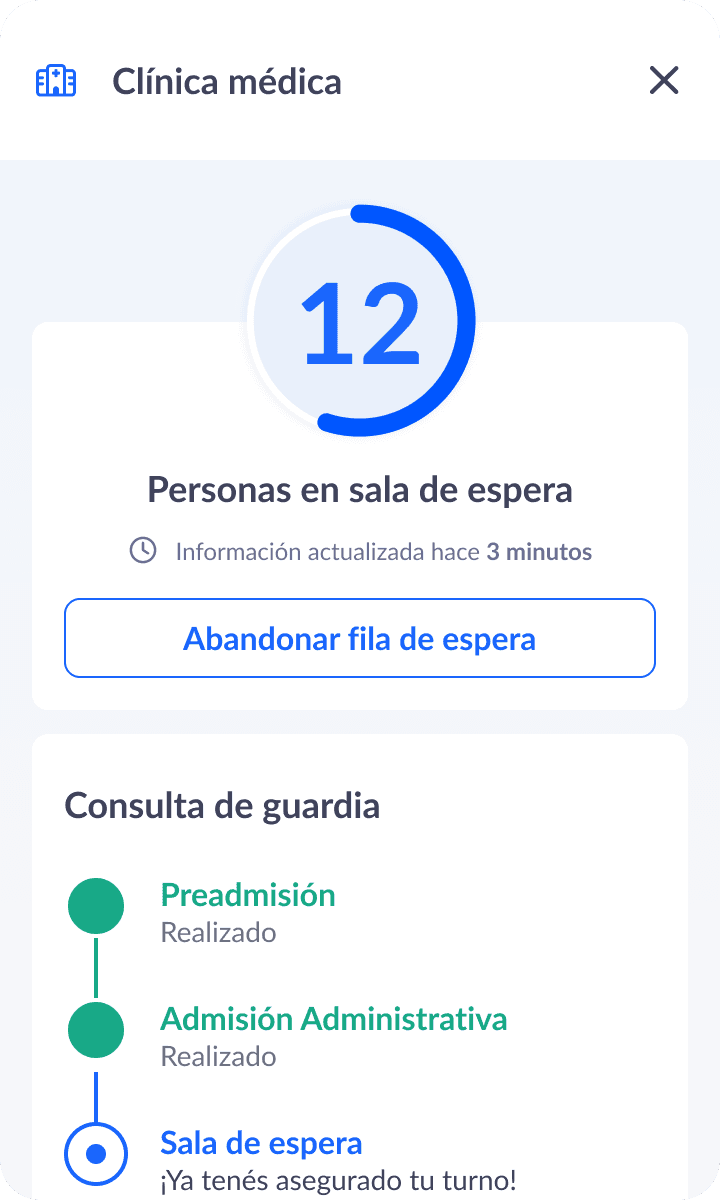
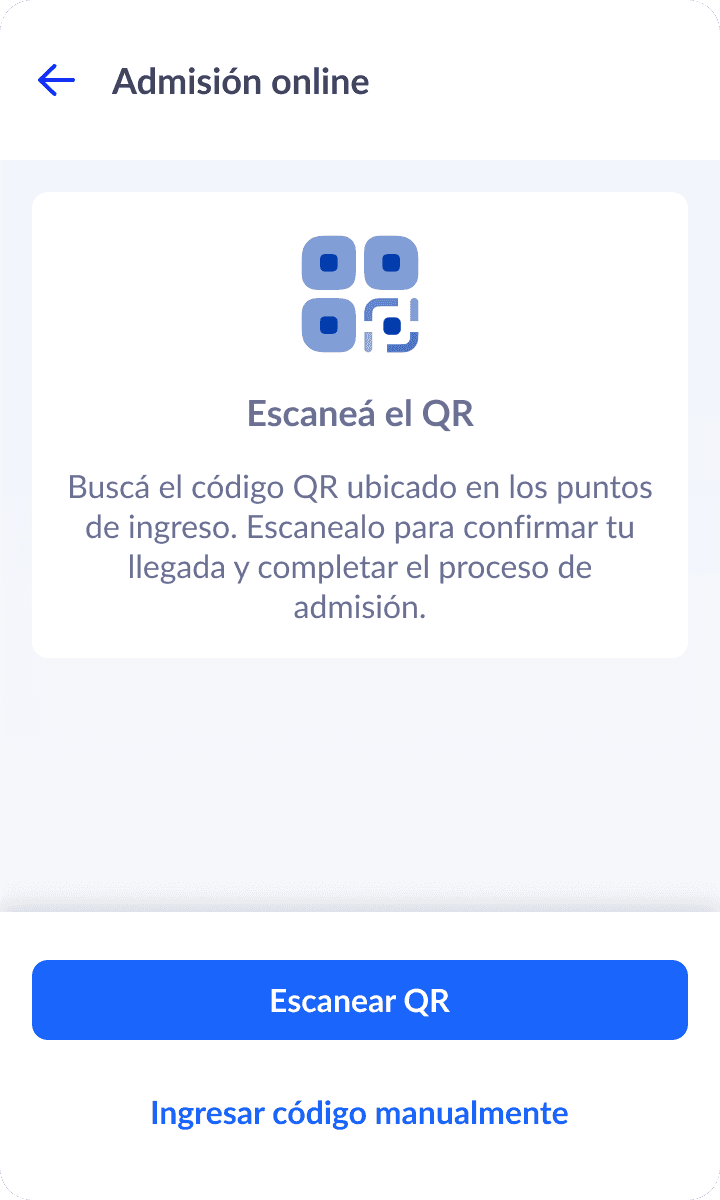
It is enterprise software, sold through demos and implementation conversations rather than a public price card. That makes the exact cost impossible to generalize: modules, patient volume, integrations, and institutional complexity all matter. The economic pitch is comparative. Buying the connective layer should be faster and cheaper than assembling product managers, healthcare specialists, designers, security staff, and engineers to build each journey from scratch.
The number that belongs to a receptionist
Sanatorio Güemes offers the clearest public test. The Buenos Aires institution had operated a patient portal since 2014, so it was not a digital novice. Its work with Osana began with appointment confirmations and COVID follow-up, then expanded into Mi Salud Online 2.0. The new portal brought self-service into one place across a bot, the web, and an app.
By 2023, Güemes reported more than 91,000 active portal users. In a three-month comparison between 2021 and 2023, self-managed appointment activity through the channel had grown more than 210 percent. This is the sort of metric that becomes more interesting the longer you stare at it. It describes appointments, yes. It also describes calls not placed, queues not joined, interruptions not handed to staff, and patients who did not have to negotiate office hours merely to ask for care.

Güemes also supplies the caution. Its innovation director said digitalization required an institutional decision expressed in human, financial, and physical resources. The hospital pulled interested physicians into project teams, formalized how departments submitted technology requests, and kept iterating. Osana supplied external muscle; it did not supply permission, governance, or a functioning internal culture.
Productize backward.
Start with one expensive, irritating workflow. Build it beside the people who operate it. Notice which integration, rule, and interface repeats. Only then turn those pieces into a platform. In healthcare, “actions that do not scale” are often tuition.
Local habits beat imported elegance
Osana's Latin American position is more than a pin on a market map. Its early product thinking was WhatsApp first, because that is where many patients already are. Its PAMI work forced the company to consider older users. Its buyers operate under different national regulations, with legacy vendors that often have not traveled beyond their home markets. A reusable platform must therefore be standardized enough to scale and configurable enough to survive contact with each institution.
The market alternatives sit on both sides. An institution can build internally, preserving control but accepting time and staffing costs. It can buy a narrow point solution for scheduling or telemedicine, which works until the patient's journey crosses a product boundary. Or it can keep a monolithic incumbent system whose stability comes with slow change. Broader infrastructure companies such as Commure pursue related ideas, but Osana's wager is regional: local channels, local integrations, local operating knowledge.
Investors funded that wager quickly. A $6.5 million seed round was followed in August 2021 by a $20 million Series A led by General Catalyst, with Quiet Capital, Preface Ventures, FJ Labs, Afore Capital, K50 Ventures, and Addition among the backers. Osana used the round to hire, accelerate the product, and expand toward Brazil and Mexico. Public reports put its client networks above six million patients by 2021-22. The World Economic Forum selected the company as a 2023 Technology Pioneer, and Osana later joined the EDISON Alliance with a commitment to positively affect more than two million people by 2025.
The conditions hidden inside the button
The model has limits. A modular layer cannot rescue unusable source data. An API cannot settle which department owns a workflow. A white-label app cannot make clinicians adopt a tool that adds work. Cross-border expansion also multiplies privacy rules, reimbursement customs, integrations, and procurement cycles. The platform is a poor fit when a buyer wants a decorative app while leaving operations untouched.
But under the right conditions - executive ownership, a narrow first problem, committed operators, usable data, and permission to integrate - the invisible approach compounds. A confirmation flow becomes a portal. A portal becomes self-admission. A COVID dashboard teaches remote monitoring. The patient still sees a blue button. This time, something happens behind it.
Follow the thread
Explore the company, the product, and the long-form conversation in which Lawson explains the B2C-to-B2B pivot.