At a conference, a chief executive started a product demo for a promising customer and got a blank error screen. The company was Synack, a cybersecurity platform. The screen did what failed software does best: it ended the conversation more effectively than any competitor could. Synack's account of the episode says the lost opportunity turned a familiar annoyance into a board-level concern. Its sales engineers had already been spending as much as one-fifth of their working week maintaining the staging environment behind those demonstrations.
Demostack exists for precisely this sort of moment. It makes editable simulations of software products that can be shown in a meeting, opened later by a buyer, or handed to a partner or new employee. The ambition is larger than a prettier slide deck. It is to give the product story its own dependable operating system.
- Demostack sells a cloud platform for cloned demos, live overlays, guided tours, sandboxes and analytics.
- Its main buyers are enterprise software teams whose products are complex, sensitive or expensive to stage.
- The economic question is the time spent preparing and repairing demos; enterprise pricing is by custom quote.
- A useful copyable move: build a short demo library around buyer problems, then measure what happens after the call.
The hidden department inside every demo
A software company may have a sales team, a product team and an engineering team. It may also have an unofficial demo maintenance department, staffed by people who never applied to join it. Someone resets a test account. Someone plants believable data. Someone asks engineering to hide a feature that is not ready. Someone checks that a dashboard contains figures worth showing. Then the buyer asks to see a different workflow.
Jonathan Friedman had met the problem in an earlier job, according to the account published when Demostack came out of stealth in 2021. He founded the company in 2020 with Aaron Hakim and Gilad Avidan. Their answer was a product that could copy the experience of using software while freeing the demonstration from the live system's data, quirks and uptime. The trio's roles were CEO, CTO and chief product officer, respectively.
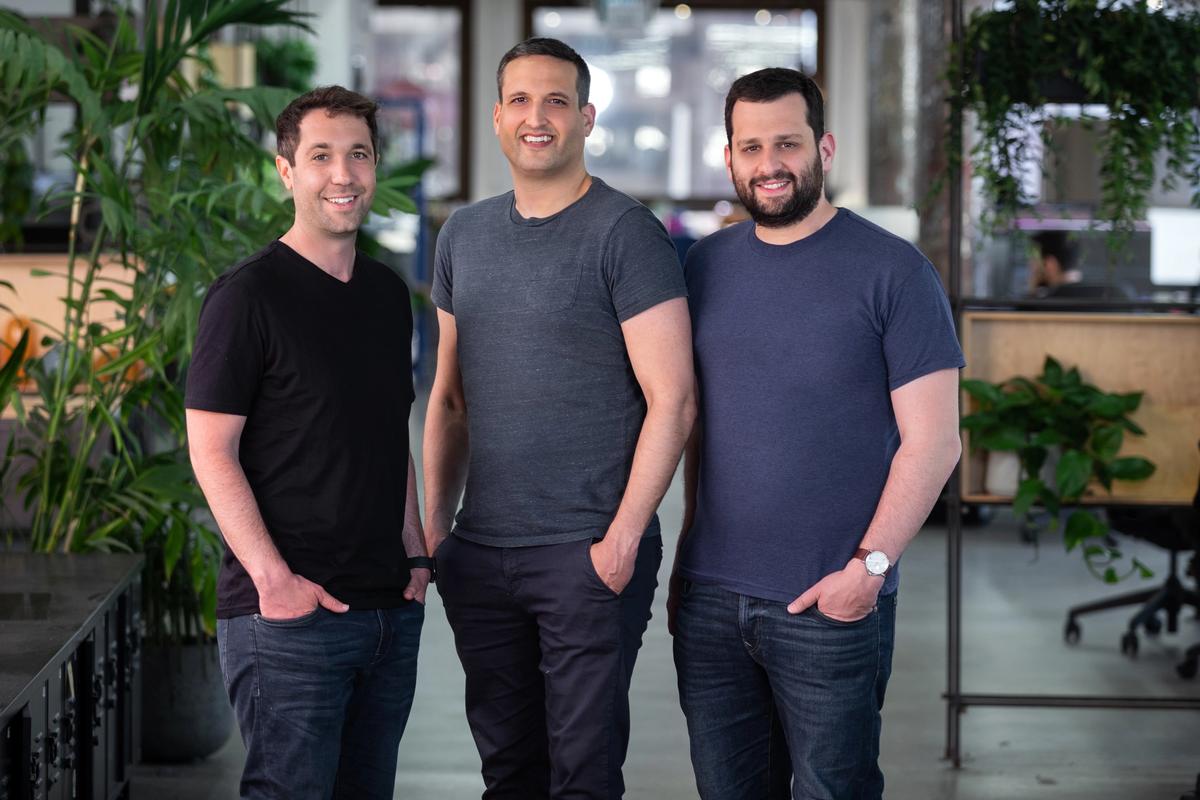
Demostack raised a $4 million seed round in late 2020 and a $13.5 million Series A announced in March 2021. Tiger Global led a $34 million Series B in April 2022, bringing disclosed funding above $50 million. That money bought room to build a company around an awkward proposition: the demo should be treated as infrastructure, even though it looks, to the customer, like a performance.
A convincing copy, with the dangerous parts removed
The product's center is the Cloner. Demostack says it captures how an application's front end behaves and simulates the back-end responses needed for chosen workflows. The result is an independent environment: close enough for a realistic walkthrough, separate enough that a seller is not gambling on production data or an unstable test tenant. Teams can replace names, figures, logos, images and flows with point-and-click tools. A session can reset for the next visitor.
That distinction matters for products whose customers have confidential information. A pharmacy benefits seller may need to show a patient-specific savings story while keeping real health information out of the room. RxSS says it used Demostack to simulate its portal with curated plan data rather than expose protected health information. It reports a fourfold gain in sales enablement efficiency and says an 18-month backlog of engineering demo changes was cleared. Those are customer-reported outcomes, but the mechanism is easy to see: a controlled example can be both safer and more relevant than the record that happens to exist in a live account.
A clone is only one format. Demostack also offers live overlays for teams that need actual back-end behavior, guided tours for a set route, mobile app demos from a laptop, and sandboxes that let prospects explore after a meeting. Playbooks bundle these assets with decks and other materials. Analytics show who opened a shared asset and which features held their attention; a Salesforce integration can bring that activity into the CRM. This is why the company now describes itself as a product simulation layer for go-to-market teams rather than a tool for one sales call.
The bill for a bad demonstration
There is no public menu of Demostack subscription prices. Its pricing page sends buyers to a sales conversation and says enterprise governance, high-fidelity cloning, integrations and implementation help are part of the proposition. The more revealing price tag belongs to the old process. Synack says its engineers spent the equivalent of more than a full-time salary maintaining demos. After rebuilding its library around shorter, persona-specific flows, it says demo builds fell from more than 100 hours to under 10. A presentation that once lasted an hour could become a 10- to 15-minute conversation.
Gainsight's story adds a useful complication. It had tried another venture-backed demo product first, but found the setup cumbersome and the resulting click path too rigid for technical questions. With Demostack, it says the response time for a custom demo fell from 48 hours to about one, and customized demos won at a rate 25 percent higher than standard ones. These figures are from the customer case study, not a controlled experiment. The distinction is still worth understanding: speed helped because the team could answer a real buyer question sooner, without pretending every buyer wanted the same tour.
“We used Demostack for a multi-million dollar RFP and it allowed us to showcase the value of our product with a much stronger story in the demo.”Bryan Rowland · BlueVoyant
Hunters, another cybersecurity company, used a sandbox as an express proof of concept. Prospects could try a controlled version before the team connected a full environment to their cloud systems. Hunters reports that many sales cycles shortened by half. The condition is crucial: the sandbox can speed an early evaluation; a customer who needs to validate a live integration will still need a real proof of concept. A simulation makes the first serious look cheaper. It does not settle every technical question.
The demo becomes a colleague
Demostack's latest releases stretch the original idea. In 2025 it introduced AI-assisted editing of demo data. In 2026 it announced an MCP connection intended to let people ask questions about demo performance from tools such as Claude, ChatGPT and Gemini. Its June 2026 announcement added Builder Agent, which proposes edits to a simulation from a plain-language instruction, and Demo Partner, which is designed to guide a viewer through a product without a human presenter.
The interesting question is no longer merely whether a sales engineer can prepare a demo faster. It is how much of the engineer's product knowledge can travel with the asset. A partner in another region, a new hire, or a buyer revisiting a feature at night may all need a little explanation. Demostack is trying to put that explanation inside the experience. Whether its agents produce better buying conversations is a newer claim than the measured customer stories; the company has not published comparable outcome figures for those releases.
Competitors such as Reprise, Walnut, Navattic and Storylane also help teams show software without building every demonstration from scratch. Demostack emphasizes independent interactive clones, live overlays, sandboxes and enterprise controls in one system. Its own pricing page acknowledges that this costs more than simpler demo tools. For a small product with a clear, fixed walkthrough, a light tour may be enough. For a complex application with sensitive data, many buyer personas and a queue of engineering requests, the extra machinery has an obvious job.
What anyone can borrow
The transferable lesson is more modest than buying a platform. Start by counting the hours spent resetting demo data, waiting for a custom build and rescuing broken calls. Then choose one buyer problem and make a five-minute path through it. Prepare a believable set of data, give sellers a way to adjust the story, and send the buyer something useful to open afterward. Look at what they actually inspect. Only then decide how much technology the operation deserves.
A bad demo is often blamed on a nervous presenter. The blank screen at Synack suggests a less theatrical explanation. The presenter may be standing in front of a small, neglected piece of infrastructure. Demostack's business is to make that piece visible, maintainable and, on the day it matters, boringly reliable.