The first person to say yes is rarely the last person who matters. An account executive may spend months with an enthusiastic champion, leave a meeting feeling wonderfully understood, and still lose the deal to someone whose name never appeared in the notes. A procurement lead asks a different question. A security officer sees another risk. The economic buyer never receives the introduction. The neat little org chart, meanwhile, sits in a slide deck with the serene confidence of a map drawn before the roads were built.
Centralize, founded in San Francisco by Rachit Kataria and Will Wang, sells a way to keep that chart in motion. It combines CRM records with email, calendar and call activity to show who is involved in an account, how a team knows them and who appears to be missing. The point is not a prettier diagram. It is a decision before the next call: whose trust still has to be earned?
The short version
- Centralize builds live stakeholder maps for complex business deals.
- It flags missing people, weak coverage, quiet champions and possible warm introductions.
- Individual reps can start free; Pro costs $49 per user each month; enterprise terms are custom.
- Its July 2026 funding announcement named Brex, LangChain, CoreWeave and other users.
The blank box is the interesting one
A CRM can hold plenty of contacts and still conceal the shape of a buying committee. Centralize starts with the account, draws the hierarchy and marks the gaps. Its public product illustration shows a chief revenue officer, a vice president of sales and an empty place where the vice president of revenue operations should be. It is a fictional example, but the empty box states the company's idea more clearly than a dashboard full of completed tasks: the person absent from the relationship may have the loudest voice at approval time.
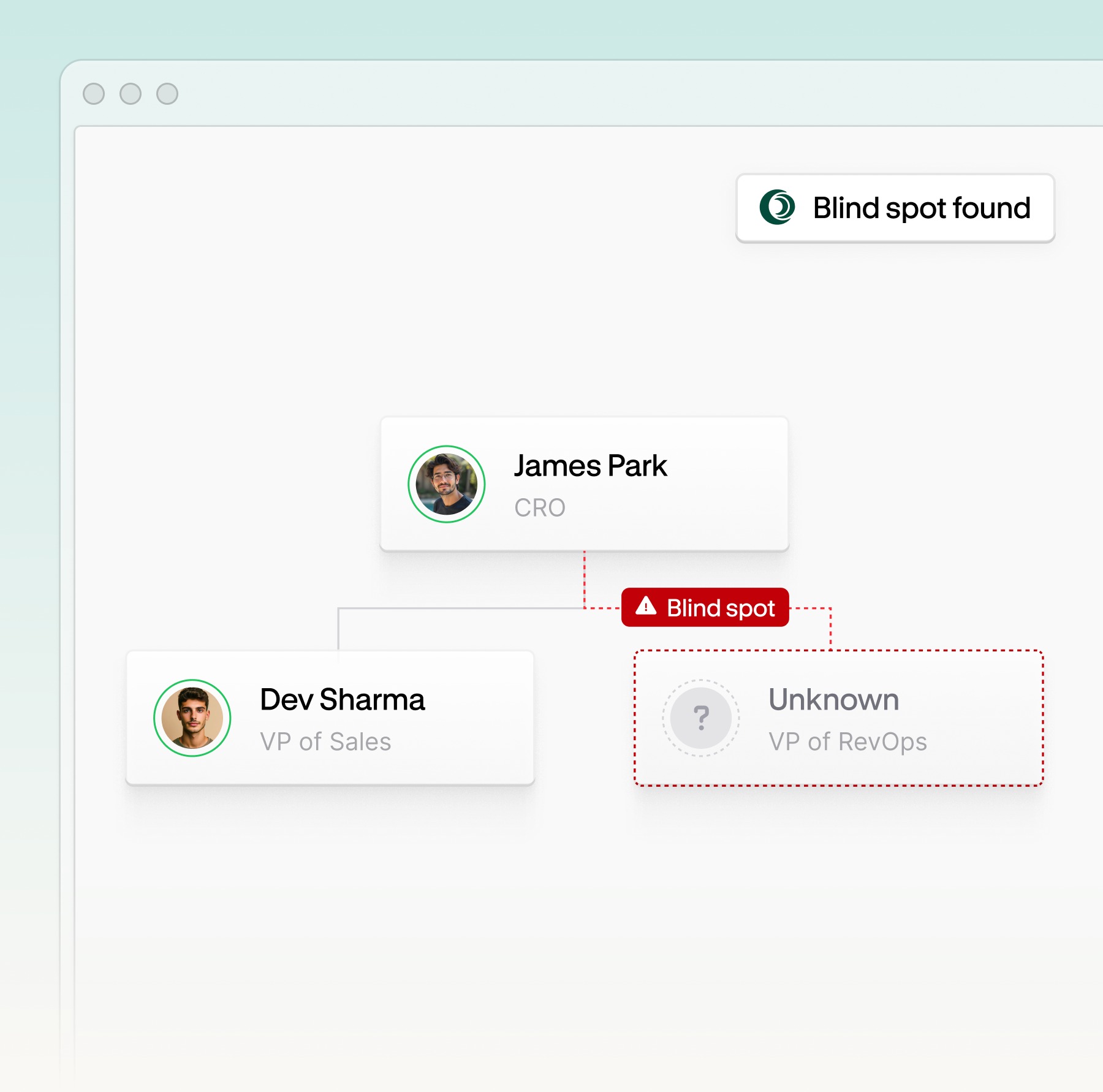
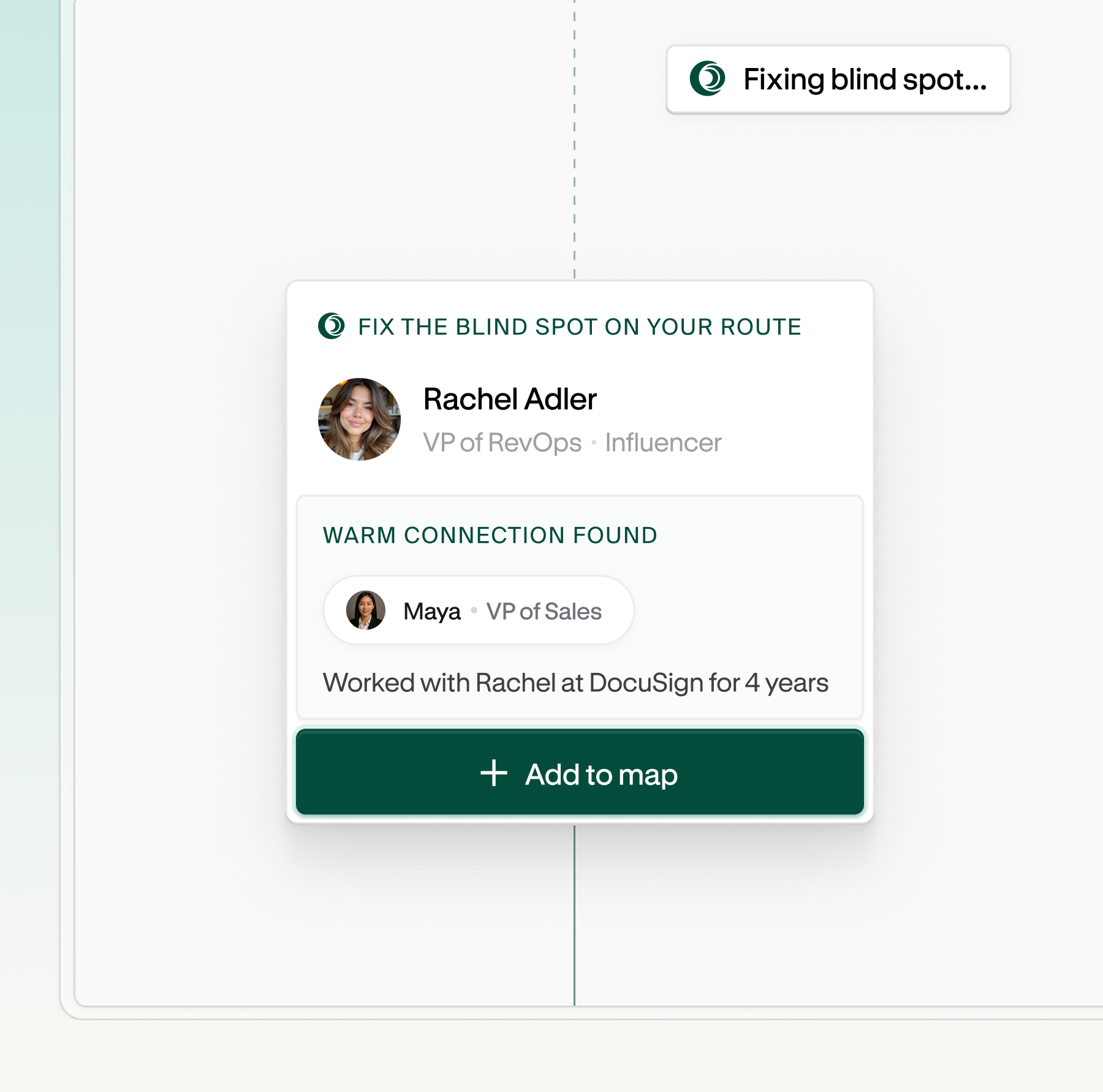
Once that gap is visible, a seller can look for a path through colleagues, executives or other contacts, then decide whether to ask for an introduction. Centralize also recommends contacts and outreach, scores relationships and shows where engagement is thinning. Its assistant, Centra, is pitched as a way to ask questions such as who owns the budget. Its Slack app can send job-change notices and meeting briefs. A champion's departure is no longer a bit of office gossip discovered after the forecast has been committed.
The parts work together. A map without fresh activity becomes a souvenir. An alert without context becomes another notification to dismiss. Centralize's argument is that the chart, the changes and the next suggested action should live in one shared account view. A sales leader, account manager and customer success manager can then see a similar picture, even if they arrived at the account by different routes.
One deal, three moves
A product built from an annoyance
Kataria and Wang met in their first week at the University of Southern California. Kataria later worked on Facebook Shops and at AtoB; Wang built Slack's prototyping team and helped launch Huddles. Those are different products, but both jobs demanded attention to how people actually use software amid the mess of daily work. Their Y Combinator Winter 2024 launch described sales teams building account maps by hand in PowerPoint or trying to keep entire CRM lists in their heads. The first failure, in other words, was clerical: the map took too long to make and went stale almost immediately.
The company has since moved from selling that automated map to promising navigation. Its July 2026 manifesto makes the philosophical version of the pitch in one compact line: “Relationships have folklore.” Centralize wants that folklore to become institutional memory. It is a persuasive distinction for a team whose best account knowledge often belongs to one rep, then disappears when that rep leaves or the customer reorganizes.
“CRM never managed relationships - it managed records.”Rachit Kataria, July 2026 company announcement
There is a practical business decision underneath the rhetoric. In July 2026, Centralize announced a $15 million Series A led by NEA, bringing its announced funding to $19 million, and opened a free tier for individual sellers. Before the self-serve launch, Kataria wrote that the team had to bring customers in and demonstrate the product itself. A single rep can now make an account map, show it in a deal review and invite the rest of the team. The founders changed the first sale from an organization-wide promise into a useful first map.
The price of a clearer picture
The free plan includes five Standard accounts and automatic maps. Pro, listed at $49 per user per month, adds five Smart accounts, Centra, suggested contacts and other intelligence features. Each extra Smart account is listed at $5 monthly. Enterprise pricing is custom; that tier carries Salesforce and call-recorder integrations, single sign-on and dedicated support. The distinction matters. A seller can test the map alone, while the deeper connections and governance that a large revenue team needs sit behind an enterprise conversation.
Centralize is used, according to its funding announcement, by teams at CoreWeave, Cognition, LangChain, Decagon, Brex, Webflow, MaintainX and Cresta. The company says LangChain made it part of new-hire onboarding and cut sales ramp time by more than three weeks. At Brex, it says reps found senior decision-makers in days rather than weeks. These are company-reported outcomes, not universal promises. They do, however, show why the same map can be valuable before a prospecting call, during an active deal and after the sale when account ownership changes.
Where it sits on the sales desk
Salesforce holds the account record and now offers its own Buyer Relationship Map. Gong is built around conversations and revenue intelligence. Diagram tools can draw almost anything, provided someone keeps drawing. Centralize occupies a narrower seat: it tries to update the buying-group picture automatically and turn a relationship gap into a next move. Its own comparison guide is frank that different teams need different tools. A company buying one more sales platform should compare the time to a useful map, the accuracy of the hierarchy and whether the suggested action changes a real account decision.
That is also where the idea faces its test. A suggested warm path is only as useful as the underlying network and the person's willingness to make an introduction. Email and calendar history can show contact without revealing confidence or influence. The buyer may have a quiet veto that no software sees. Centralize can reduce the guessing, but a seller still has to read the room, ask well and earn the meeting.
The useful lesson is small enough to copy without buying anything: take one important account, draw every stakeholder who can approve, delay or block it, then circle the names nobody on the team knows. Ask who has a credible route to each circle. Update that page after every meaningful conversation. Centralize's wager is that software can keep such a page current across hundreds of accounts. The habit begins with admitting that the blank spaces are information.