Deepak Menaria watched the young entrepreneurs make mistakes. Sometimes he smiled. The participants were supposed to notice what had gone wrong for themselves, which is a rather inconvenient arrangement if you have enrolled in a programme hoping the teacher will supply the answers.
It was 2013, and Lemon Ideas, the organisation he had founded in Nagpur, was running CEO@10K. Eleven people had been selected from more than a hundred applicants and divided into two teams. Their assignment was to turn business ideas into working, profitable ventures within 21 days. Lemon supplied funds instead of charging them for the training. The lesson had a budget and an expiry date.
That small experiment offers a good way into Menaria’s career. He has worked in software, managed talent, helped build a nonprofit and created an entrepreneurship school. At Lemon, he calls himself Chief Idea Farmer. The title permits a little mischief. The early programme suggests he also understood when to leave the seedlings alone.
A dated snapshot of CEO@10K, the early Lemon Ideas programme. Real funds. Two teams. Decisions to live with.
Before the farmer, the people person
Menaria arrived at founder education with experience of building a company and developing people inside one. He co-founded Lambent Technologies, which subsequently became part of GlobalLogic. By 2011, his work at GlobalLogic included an associate vice-president role in human resources and responsibility for learning and development across its Indian locations.
His professional concerns included employee engagement, retention, recruitment and training. These are subjects with a human complication built into them: the organisation may have a plan, but each person arrives with a different history, appetite and set of ambitions. A training programme has to meet somebody before it can teach them.
His education crossed computer engineering, management and psychology. He earned an MBA from Nagpur University and later studied innovation and creativity at IIM Ahmedabad. The combination makes sense alongside the work he eventually chose. Entrepreneurship involves a system to understand, a business to organise and people whose behaviour will occasionally spoil the neatness of both.
He was also a founding volunteer with ONE Foundation from 2011. His eventual move into Lemon belongs to a wider interest in young people and learning. By 2013, he was making his case in public talks: implementation mattered, and useful ideas could come from people without an impressive educational pedigree.
At a July gathering at the Vidarbha Industries Association, he distinguished creativity from innovation and stressed putting ideas into practice. It is an argument with a welcome lack of ceremony. Having a thought is an enjoyable private event. Making it useful requires the participation of a less obliging world.
Three cities in one awards ceremony
There is a personal geography beneath the programmes. Menaria was born in Udaipur, where his family roots remain. His early schooling took place in Visakhapatnam. Nagpur became the city where his career and sense of purpose developed. He calls it his “Karma Bhumi,” his place of action.
After the Innopreneurs Season 12 awards, he noticed that the winning cities included all three. Udaipur, Visakhapatnam and Nagpur had turned up together on a list of ventures. He described the coincidence as an emotional moment, an invitation to remember the people and experiences that had made his own journey possible.
For someone whose work involves other people’s beginnings, this was an unusually personal way to read the results. The map of a competition briefly resembled the map of a life. His response was gratitude for the contributions of people he knew and people he did not. An awards ceremony can apparently double as a geography lesson.
The jockey needs practice
In 2015, Menaria published an essay asking whether India could become a country of creators. His concern was the gap between aspiring to join a company and imagining oneself starting one. He wanted more young people to consider the second possibility, with the preparation it required.
His argument placed considerable responsibility on the person carrying the idea. An unprepared team could struggle with a promising concept. Passion had to be accompanied by execution, the ability to manage different parts of an enterprise and a willingness to validate assumptions through experiments. The jockey, in his analogy, needed as much attention as the horse.
That emphasis makes the school an intelligible next step. Lemon School of Entrepreneurship launched in 2015, giving the work of preparing founders an institutional home. Menaria’s interest was in the awkward distance between knowing something about business and being ready to attempt one. Reading about swimming is an excellent dry activity.
He also argued for a collective effort: encourage another person to consider entrepreneurship, provide support and make the option easier to imagine. The ambition was larger than a single intake. A culture of creating ventures would require families, educators and experienced professionals to take the possibility seriously.
“Innovation by EveryONE!”
Deepak Menaria’s stated mission
His later writing added the language of conscience and sustainability to this practical preparation. He discussed the intersection between a venture and its founder’s own priorities, and the need to consider ecology alongside economics. Those concerns broaden the test of a business beyond whether its pitch is persuasive.
There is a demanding idea beneath the cheerful vocabulary. A founder must work out what they are prepared to build, why it matters to them and how it affects other people. Menaria’s approach gives those questions a place beside customers, teams and execution. The business plan has company.
A room full of people who might help
Menaria has repeatedly taken the conversation outside a single classroom. In January 2014, he and the Lemon team brought an Innovation Yatra to IMT Nagpur. The session introduced students to startup examples and funding, then invited them to bring forward ideas for practical connections and guidance.
Later that year, as a resource person on Jagriti Yatra, he encountered the energy of hundreds of young travellers. His account dwelt on discussing their ideas, successes and failures. The range matters. A conversation confined to success can be pleasantly unhelpful to someone whose next attempt has yet to work.
By May 2015, he and Rajeev Roy were presenting a workshop in Raipur whose propositions included removing barriers of age, money and geography. One of the stated rules welcomed craziness. A workshop agenda rarely grants permission so explicitly. The larger point was to widen who could see themselves taking part.
In October 2017, he facilitated a two-day Idea to Reality workshop in Nagpur. Its subject was ideation, but its format returned to experiential learning. The title captures a persistent concern in his work: the interesting distance between being able to describe something and being able to make it happen. A name on a workshop poster can be ambitious. This one also supplied a fairly direct statement of the task.
In November 2020, he taught project feasibility and viability in an entrepreneurship skill-development course organised by Jhulelal Institute of Technology with the Maharashtra Centre for Entrepreneurship Development. The subject gives his encouragement a practical qualification. An idea deserves examination as well as enthusiasm. Would it work? Under what conditions? What needs to change before someone commits resources? These are less glamorous questions than announcing a new venture, and useful ones to ask early.
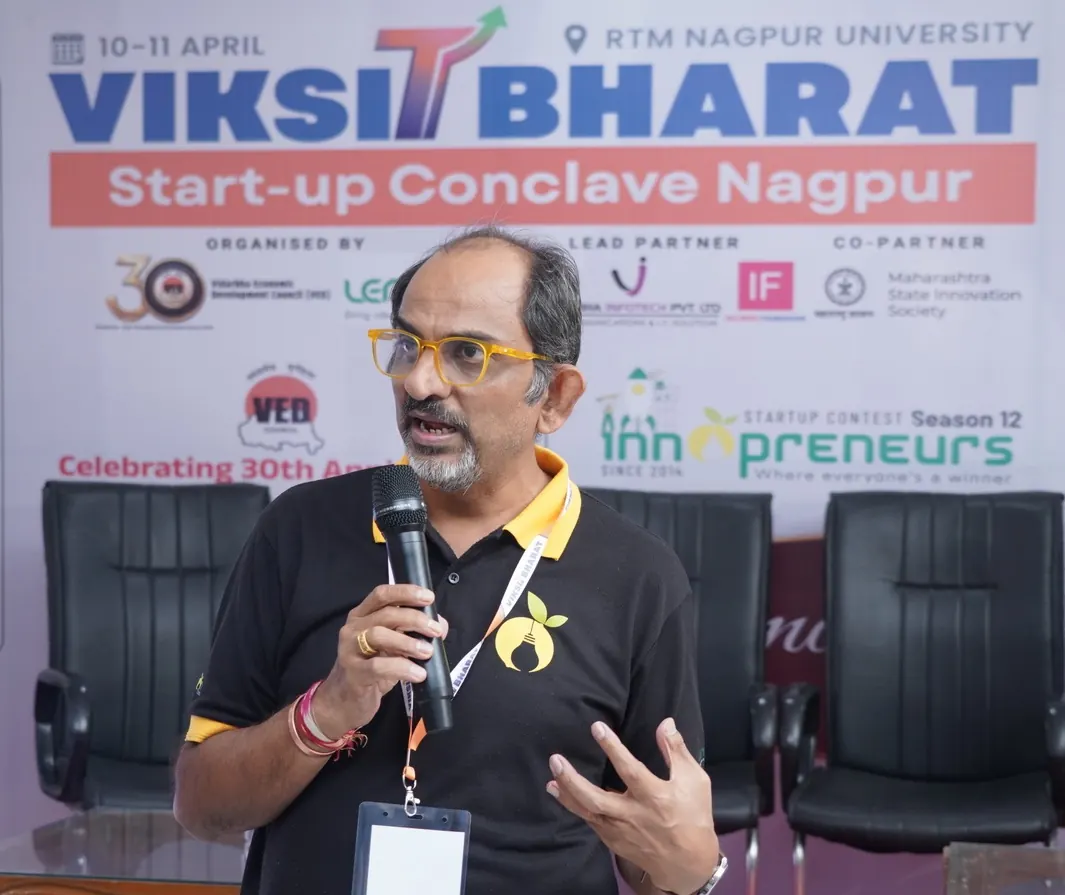
The practical work continues in smaller settings, too. In August 2024, he joined a Gupshup session for selected startups at AIC-RMP. A conversation with a limited group has different possibilities from a stage address: there is room for the question that does not fit neatly on a slide.
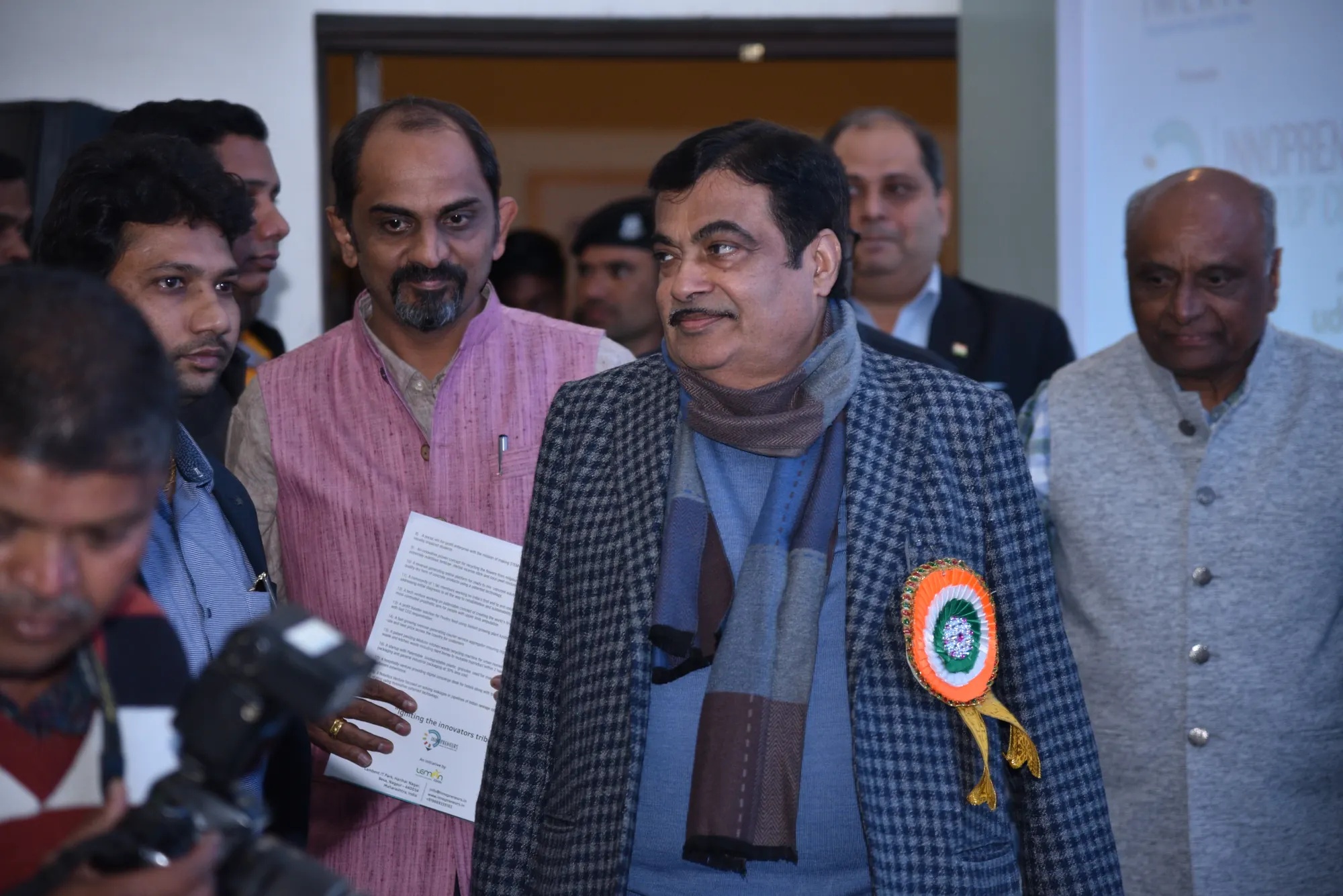
Nimitai’s own account of Innopreneurs Season 12 offers a concrete example of his mentoring. Its team describes Menaria personally connecting them with venture capitalists in the room and giving strategic advice. Introductions are modest things to put on a career timeline. For the people being introduced, they may be the most useful part of the day.
The next person to begin
Lemon’s activities have accumulated around that work. Innopreneurs began in 2014. The school followed the next year. Today the organisation describes four routes into its ecosystem: contests, cohorts, community and consulting. They offer different ways to encounter people, test an idea, learn with peers or help an institution build its own programme.
- 01 / ContestPut an idea in front of others.
- 02 / CohortWork through a structured programme.
- 03 / CommunityExchange experience and connections.
- 04 / ConsultingBuild programmes with institutions.
The range is a reminder that Menaria’s occupation is difficult to reduce to a single classroom or event. Lemon’s team includes people leading training, school initiatives, incubation, technology and programme coordination. His cultivation metaphor has acquired colleagues, each attending to a different part of the work.
The calendar has also moved younger. School programmes include Innopreneurs Junior and the Bharat Innovation Olympiad. Lemon’s October 2026 schedule lists continuing pitching rounds for Innopreneurs Season 13, alongside the Olympiad. The same broad invitation now reaches children who are still deciding what they might become.
That brings the story back to the original assignment. A person arrives with an idea and encounters the complication of trying it. There may be training, a contest, a conversation or an introduction. Eventually, someone has to make a decision without waiting for permission from the answer sheet.
Menaria’s chosen title leaves room for that uncertainty. A farmer can prepare the ground, tend it and keep returning. Growth still has its own timetable. In Nagpur, his work has given aspiring founders places to begin, people to ask and opportunities to discover a useful mistake before it becomes an expensive habit.