Roberto Touza David once paid €1,800 for a business plan. It was 2005, and he was starting his first company. Years later, he put the expense into a manual for entrepreneurs, describing it as a mistake. The detail has survived rather better than the reassurance he hoped to buy. A young founder wanted to do things properly. Someone could supply a document. Whether the document could settle the important questions was another matter.
That small transaction is a useful entrance to Touza’s working life. Today, he is CEO and co-founder of Startups.st, helping design the programs through which other people attempt to build companies. His subjects include business models, customers, investment and growth. His recurring concern is what happens when a confident explanation reaches the world outside the meeting room. The world, inconveniently, has its own agenda.
The price of being certain
His second company arrived in 2010. Touza recalls taking it through one of Spain’s early startup accelerators, where the team received advice to build a minimum viable product. They invested money and effort. He later judged the result harshly: the experiment had consumed resources and distracted them. His account is openly irritated with advice offered by people whose practical experience he questioned.
There is an uncomfortable distinction here. Following a method can feel like making progress, even when the method is being used badly. A prototype exists. Work has happened. The bank balance can certainly confirm that something happened. But the question the experiment was supposed to answer may remain untouched.
Touza’s response was to keep working on the problem of how entrepreneurs learn. His explanation of Lean Startup in an interview is deliberately economical: make assumptions explicit, investigate them through affordable experiments and commit resources as understanding improves. He describes the aim as “to learn very quickly.” It gives ambition a practical companion: a way of discovering when the plan needs changing.
“to learn very quickly”
Roberto Touza David, on his working method
There is restraint in that formulation. It leaves room for a founder to be excited without treating excitement as a sales forecast. It also makes the next step smaller. Instead of proving an entire future, someone can investigate a particular uncertainty. For a person with limited money and a strong attachment to an idea, that can be a useful change of scale.
An accelerator has to earn its calendar
At Órbita, the accelerator developed with CEEI Castellón and the provincial government, that thinking acquires a timetable. Touza has helped design and co-direct the program. Its 2022 edition selected ten startups for five months of work, beginning with a diagnosis of each business and the creation of an individual roadmap.
The program combined training with mentoring and regular review. Every three weeks, participating companies chose a challenge connected to their objectives, worked on it and presented the results to the other projects. Marketing, sales, strategy, finance and teams all appeared in the curriculum. The point of that schedule was to give an abstract growth ambition somewhere concrete to land.
Inside the 2022 edition of Órbita
Órbita ranked first in the 2022 Funcas accelerator ranking. Recognition is a clear milestone; the more revealing detail is the work preceding the final presentation. A roadmap requires someone to decide what matters for this company. A review requires someone to explain what changed. A group of founders gets to see the distance between an intention and a result.
The fifth edition also made room for something called Decelerator Day: a social day for participants, mentors and the team. Even an accelerator, apparently, can appreciate taking its foot off the pedal. At the closing Demo Day, five companies received €20,000 each in equity-free prizes. There was a finish to the program, even if the companies’ work continued.
A classroom with several countries in it
Touza’s career has taken him through settings that do not all look like a startup campus. His professional biography includes work at IBM, the boatbuilder Rodman and a technology research laboratory at the University of A Coruña. It also records work establishing entrepreneurship support at Erasmus University in Rotterdam. Those are different kinds of organizations, with different reasons to ask how new projects get started.
The teaching has been similarly varied. Public biographies describe him as an instructor at EOI and ICEX-CECO and a director of entrepreneurship master’s programs at IEBS. His team’s work with Navarra’s Equilicuá program included preparing vocational teachers to teach entrepreneurship and innovation. Helping a teacher explain a method gives the work another life beyond the original class.
His project portfolio extends from Spanish regional programs to work involving Delft University of Technology and YES!Delft. It includes The Break Fellowship, undertaken with Impact Hub and Mentor Day, supporting European women entrepreneurs through a combination of online work and time in Spain. In that project, the responsibilities included coordinating local organizations and the challenges participants would address.
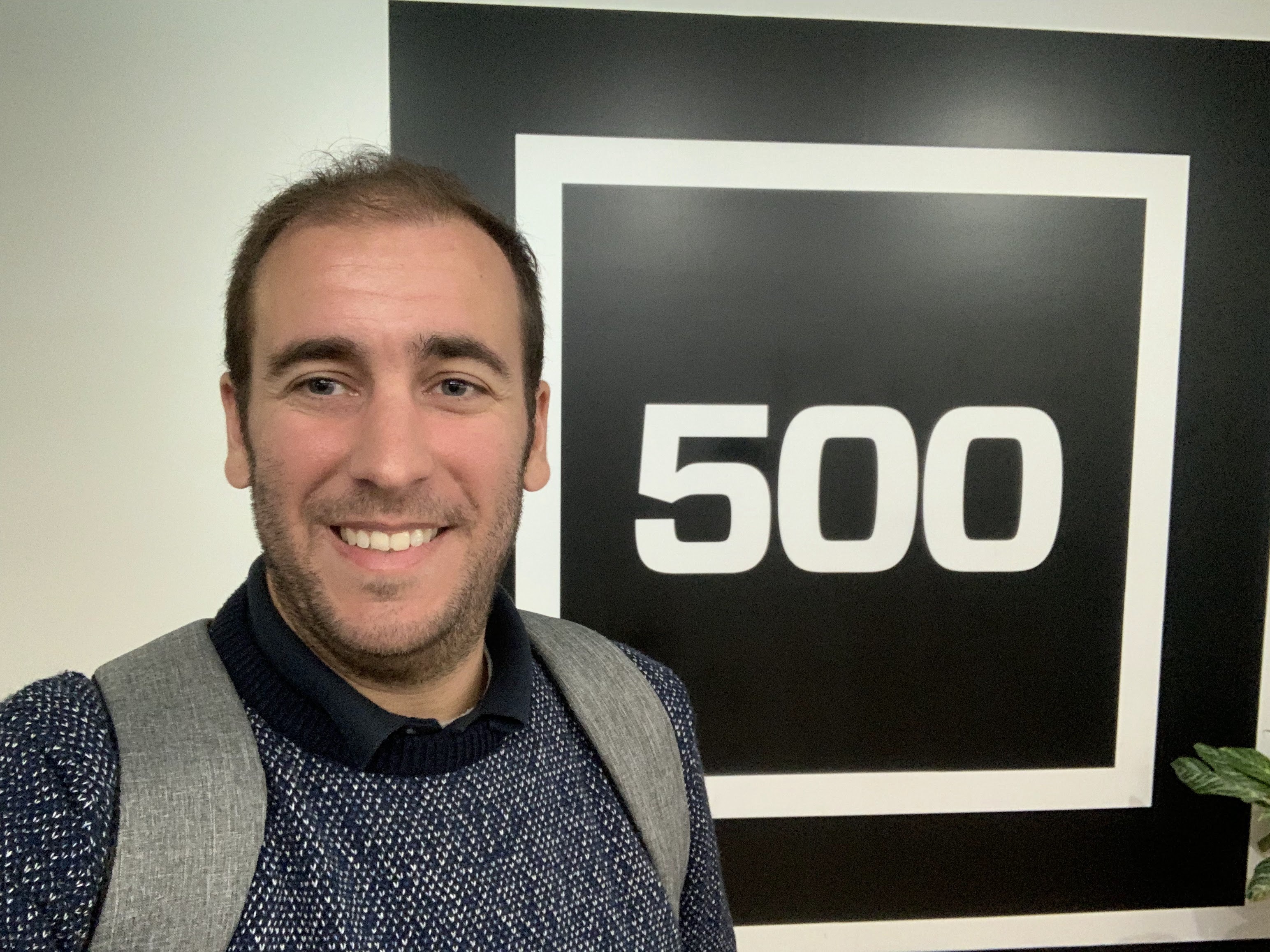
Startups.st is a shared enterprise. Its co-founders include Juan Carlos Bugallo and Raúl Touza, who leads international work. The company describes a process that starts with diagnosis, moves through practical training and connections, and continues beyond the pitch with a subsequent roadmap. That sequence gives a sense of the organization Touza leads: people arranging the conditions in which other people can build.
The geography matters because a company needs more than a general introduction to entrepreneurship. It needs customers, collaborators and access to the institutions around it. A program in Cáceres has a local setting; an international fellowship brings people into one. The difficult work lies in making those connections useful to the particular business.
The manuals, and the cook in the kitchen
Touza has also put his teaching into manuals covering minimum viable products, startup metrics, Scrum and scaling. The subjects form a practical progression: design an experiment, understand the response, organize the work and consider how a business might grow. The vocabulary can become elaborate. The underlying problems are familiar to anyone who has tried to get a new undertaking beyond its first enthusiastic conversation.
His 2017 minimum viable product manual gives the reader a more domestic example. He likes cooking for his partner, family and friends, he explains, while describing himself as an amateur. Then he asks the reader to imagine a restaurant venture. The restaurant is hypothetical. His limited experience is the useful ingredient: enjoying something at home leaves plenty to learn about operating a business around it.
The example works because it puts the author inside the uncertainty. He is someone who can cook dinner and still have substantial questions about a restaurant. A reader can recognize that gap without a glossary. It is also a welcome reminder that startup thinking can begin in a kitchen, far from a screen full of fashionable company logos.
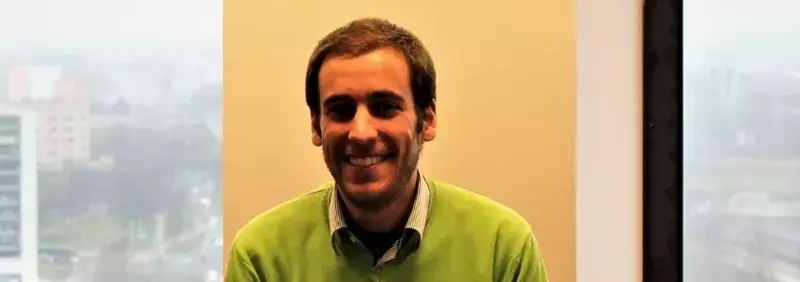
That willingness to examine a founder’s limitations runs through his public conversations. In the February 2025 Innovadores interview, the discussion included rapid growth, organizational culture, choosing program metrics and preserving startup independence. The questions get larger as a company grows. So does the need for a founder to develop alongside it.
Faster tools, familiar questions
By September 2026, Touza’s resource library included structured decision-making with artificial intelligence and calculating the return on AI adoption. These are specific managerial questions. Which decision needs help? What would an improvement look like? How would someone know whether the expenditure was worthwhile?
The connection to his earlier work is easy to follow. A minimum viable product needs a purpose; an AI tool needs a job. Both can produce activity that is easy to display. Their usefulness depends on what changes for the person doing the work or the customer receiving the result.
- QuestionChoose the uncertainty.
- ExperimentMake it testable.
- EvidenceReview what happened.
- DecisionChoose the next step.
His Substack introduction sets out an ambition to assemble 350 resources for entrepreneurs, founders and CEOs. The collection includes investment research, customer interviews and business tools as well as AI. The variety suggests a working reference shelf: something a founder can return to when a particular problem arrives, rather than read once and consider the subject finished.
Permission to be wrong
On 20 September 2026, Touza published a collection of lessons on building startups. He urged founders to stay close to customers, observe actual product use and concentrate on solving a specific problem. He warned against treating a friendly investor response as a commitment. In the middle of the advice sits a short sentence: “No tienes que tener razón siempre.” You do not have to be right all the time.
It is a useful sentence for someone who earns a living helping others make decisions. It leaves space for revision. It also places responsibility back with the founder: listen, investigate, decide and keep going. A mentor can improve the questions. The business still has to meet its customers.
The €1,800 plan belongs to an earlier chapter. The question it raises has stayed with him. What can an entrepreneur reasonably know before committing the next portion of time, attention or money? Touza has built much of his career around making that question workable. The reward is modest enough to be credible: a clearer decision before the next expensive lesson.
Follow the work
Explore Touza’s website, Startups.st and his founder resource library. Follow him on LinkedIn or X.
Read the business creation interview, explore the Órbita 2022 program, or listen to his conversation on Innovadores.