On January 12, 2015, Getwear processed its last order. Yaakov Karda’s custom-jeans business had reached the end of a six-year effort. The product was tangible, complicated and carefully made. Yet the next opportunity lay in something less photogenic than denim: the work of answering customers’ questions.
There is a certain indignity in discovering that the business inside your business may have had better prospects than the one on the sign. Getwear sold tailored jeans online. Its team also learned how to guide people through an unfamiliar purchase. That second activity would help give Karda and his colleagues a fresh start.
They founded Chatra in 2015. Six years later, Sendinblue, the company now called Brevo, acquired it. Between those dates sits a change in judgment worth examining. Karda had already tried making something customers might learn to want. His next company addressed work that businesses were already doing.
A useful skill in an unsuccessful business
Getwear let shoppers customize jeans online. It developed a production operation in India and software to support the process. Karda’s later account of the closure is unusually willing to examine the premise. The company had built an elaborate answer before establishing how many people were asking the question.
Customer enthusiasm and a sustainable market turned out to be different measurements. People could like the jeans and return for another pair while the business still struggled to find enough new buyers. A garment can fit beautifully; the economics are under no obligation to follow suit.
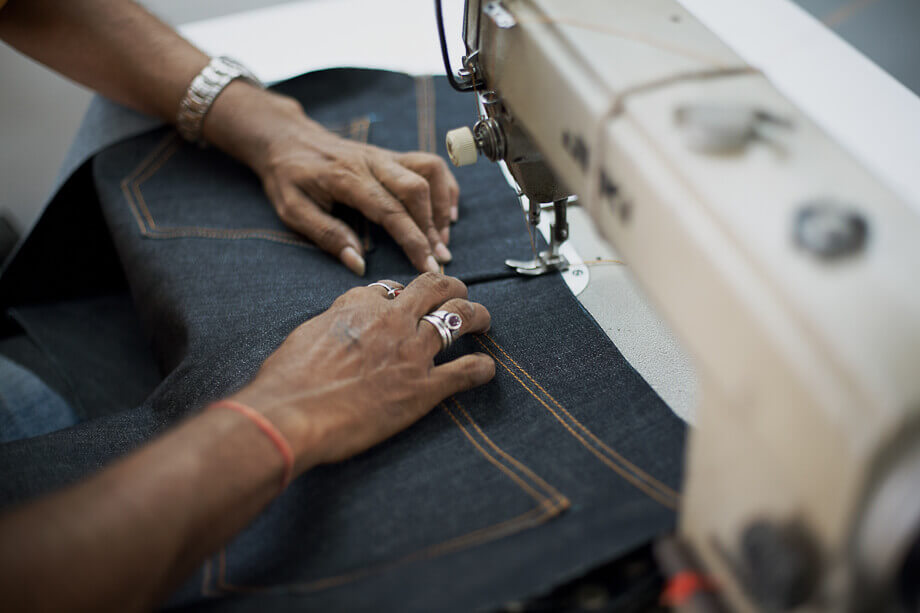
For Karda, the useful experience included customer support. An online tailored-clothing purchase could require guidance about measurements and ordering. Helping someone finish that process gave the team repeated practice at the point where an attractive website meets a hesitant human being.
Their introductory Chatra blog made the transition with a joke about a “hugs and cute kittens factory.” Live-chat software won the business-planning contest. The humor carries a fairly practical observation: they enjoyed helping customers, had become good at it, and wanted to give other businesses tools for the same work.
That is a more interesting inheritance than a heroic tale of starting from nothing. There had been years of work. There were colleagues, customers and habits. Closing the jeans company changed which parts could be used again. The next product came from paying attention to what remained useful.
Before the chat window, a personal computer
Karda’s customer work began before either company. In high school, he helped people build and repair personal computers. The sequence is revealing: a person arrives with something they need to accomplish; technical knowledge is useful insofar as it helps them get there.
His education took a less predictable route toward software. He studied at Saint Petersburg State University and later at Istituto Europeo di Design. The latter period, in 2007 and 2008, fits the fashion chapter of his career. His biography contains room for both a clothing business and a customer-messaging company.
The continuity is easier to see in the work than in the industry labels. Helping a computer owner, answering a clothing buyer and designing a support tool each require attention to someone else’s uncertainty. The product changes. A question still has to reach a person capable of answering it.
His published books extend that attention. Chatra’s catalogue includes guides to customer loyalty, difficult conversations, customer reviews and building a customer-service team. These are everyday subjects with consequences. A frustrated buyer is unlikely to be consoled by a company’s excellent intentions if nobody can explain what happens next.
There is also a guide to customer-conversation metrics. Even conversation, apparently, must eventually submit its paperwork. The pairing is characteristic of the public work: service as a human activity, accompanied by the practical business of organizing it, measuring it and making it repeatable for a team.
“You asked, we heard!”
Yaakov Karda, announcing a Chatra update
That little line appears in an update about letting businesses change the text of a mobile button. It is a small example, which is why it is useful. A customer-support philosophy becomes visible when someone asks for a modest improvement and the product makes room for it.
Making room for the next question
Karda’s product posts provide a view of Chatra through the tasks its customers needed to finish. In one update, he described an invisible mode. A colleague could remain available to join an important conversation without receiving every new chat. Founders, managers and engineers could participate selectively.
It is an unglamorous organizational problem. The person who knows the answer may have another job to do. Sending every interruption their way is expensive; keeping them entirely outside the conversation can be expensive, too. The feature made a little space between those two inconveniences.
Another update focused on the chat widget’s appearance and the amount of room proactive messages occupied. On mobile, a business wants to offer help while leaving the visitor enough screen to continue shopping. Customer service has to be present without behaving like an overenthusiastic shop assistant blocking the doorway.
Karda also described a Facebook integration in development, bringing messages from a business page into Chatra’s dashboard. The attraction is straightforward: a customer’s choice of channel need not dictate which separate place an employee must remember to check. The conversation can become easier to manage.
A later post announced chatbots built from predefined scenarios and a visual editor. It also introduced team chat, with general and informal channels. One feature helped handle visitor questions; the other helped colleagues communicate. The company was working on both sides of the support desk.
Read together, these updates make the product feel concrete. They concern buttons, notifications, message windows and colleagues. For a founder whose earlier company had attempted a complicated new purchase experience, there is something telling about this collection of adjustments to work customers already recognized.
A visitor asks.
A team finds the answer.
The conversation continues.
Six years later, a different kind of ending
Chatra’s founding team comprised Karda, Maria Karda, Artem Polikarpov and Slava Olesik. It built a messaging platform for small and medium-sized businesses. The work had a clear commercial setting: companies needed to communicate with customers across live chat, email and social channels.
On September 21, 2021, Sendinblue announced three acquisitions: Chatra, Metrilo and PushOwl. The combined amount exceeded $47 million. Each product addressed a different part of online commerce, from customer messaging to analytics and push notifications. Chatra had become part of a larger plan for business communication.
The scale of the announcement makes a useful contrast with the origin. An operational skill from a closed clothing venture had become software another company wanted to own. That connection is specific enough to be instructive without requiring anyone to pretend the first venture secretly went according to plan.
In April 2024, Karda and Katya Rozenoer brought the story to Bootstrapped. Its first episode devoted 27 minutes to building and selling Chatra. The show’s description says the business had reached seven-digit annual recurring revenue by 2021. The conversation made the operating history available beyond an acquisition announcement.
Rozenoer’s account of starting the podcast adds another connection. She had watched her friend build and sell Chatra and wanted more attention paid to founders who worked with limited resources. She also recalled recommending The Lean Startup during the Getwear years. Advice, friendship and later reflection overlap in this story.
Another founder at the other end
Karda has also worked as an entrepreneur-in-residence at WeWork Labs and as a startup mentor. A recorded Lean Canvas workshop puts him in the position of helping others examine a business. His public record includes repeated efforts to turn personal experience into material another founder can use.
That matters because mentoring asks something different of experience. Having lived through a decision supplies examples. Helping someone else requires listening closely enough to work out whether those examples apply. His LinkedIn recommendations emphasize both a broad view of business questions and attention to practical details.
His current public profile lists him as co-founder and CEO of NetIntent, an advertising-technology platform for content publishers, based in Tel Aviv. Chatra is now an earlier chapter. The career has continued beyond the software company most closely associated with his name.
For someone reading his story while building a company, the useful exercise is quite ordinary: look at the work happening around the product. Which conversations recur? Where do colleagues repeatedly help someone complete a task? Those questions fit the history of Chatra without turning it into a promise that every failed venture contains a successful replacement. Karda’s next step depended on a particular team with particular experience. The detail gives the story its value. Customer support was already part of their working day, long before it became the category on the new company’s website.
The thread running through it is a willingness to return to the work: answer a question, inspect an assumption, explain a decision. Getwear’s final order was a definite ending. The useful knowledge proved harder to close down. Somewhere between the jeans and the chat window, Karda found another customer waiting.
Keep the conversation going
Writing, listening and a workshop from Karda’s public work.
The Getwear retrospective ↗The Chatra acquisition retrospective ↗Listen to Bootstrapped ↗Watch the WeWork Labs Lean Canvas workshop ↗Explore Karda’s customer-support guides ↗Yaakov and Katya’s co-founder.cc ↗Yaakov Karda on LinkedIn ↗Yaakov Karda on X ↗Visit Chatra ↗The 2021 acquisition announcement ↗