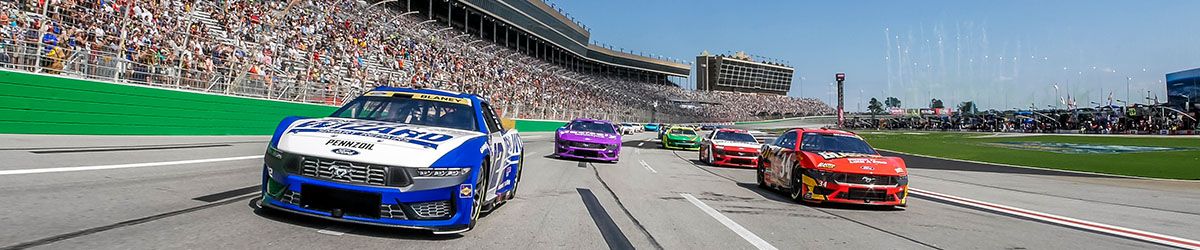
A used pickup truck, a trailer and a limited-edition Harley-Davidson made a rather unusual prize package for a NASCAR race. At the newly named EchoPark Speedway in June 2025, that was the offer awaiting the Cup Series winner. The truck came from EchoPark. The motorcycle connected the occasion to Sturgis. In one cheerful bundle, three strands of David Smith’s business world had found a parking space together.
Smith is chairman and chief executive of Sonic Automotive, the Charlotte company whose interests stretch from franchised car dealerships to used vehicles and powersports. His brother Marcus leads Speedway Motorsports. Their father, Bruton Smith, built businesses around selling cars and putting on races. The speedway announcement brought those family interests into the same picture, with EchoPark’s green branding spread around a venue previously known as Atlanta Motor Speedway.
It was a conspicuous place to put the name of a business that had recently needed to get smaller. Two years earlier, Sonic had suspended operations at a collection of EchoPark locations. The distance between those closures and the new signs makes Smith’s tenure worth examining. A family surname can open a door. It cannot make an expensive used car cheaper to acquire.
A surname, followed by a long apprenticeship
David Bruton Smith joined Sonic’s organization in 1998. Before his corporate titles accumulated, he served as dealer operator and general manager at several of its dealerships. That detail matters in a business where the executive suite and the service drive can produce very different accounts of the same working day.
His subsequent path ran through corporate strategy and development. He became vice president of corporate strategy in 2005, senior vice president of corporate development in 2007, and an executive vice president and director in 2008. The vice chairmanship followed in 2013. By March 2018, his responsibilities included the title of chief strategic officer.
The CEO appointment came that September, when he succeeded his brother Scott. Jeff Dyke became president at the same time. Sonic described the change as the implementation of its succession process. David had spent roughly two decades inside the organization before taking the chief executive’s job; his family connection and his operating experience belonged in the same account.
In July 2022, he also became chairman. The combination placed him at the intersection of the company’s strategy and its board. Alongside those duties, he is a director and officer of Sonic Financial Corporation, Sonic’s largest shareholder, and a co-owner and director of Speedway Motorsports. The family business has several doors, and his name appears on more than one.
The appeal of a nearly new car
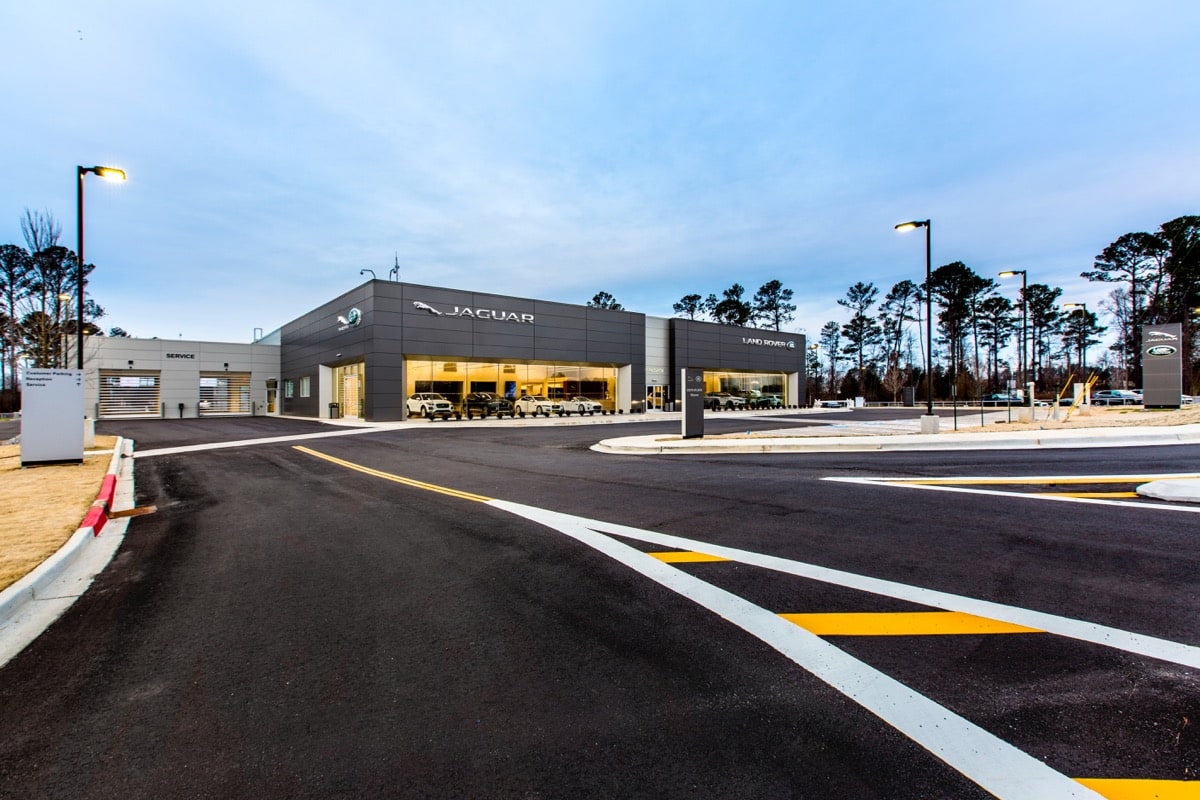
EchoPark offered Smith a way to broaden Sonic’s earnings beyond the fortunes of new-car franchises. In his first full-year results commentary as CEO, he pointed to a sharp increase in EchoPark’s fourth-quarter 2018 unit sales and argued that the business could help soften swings in manufacturers’ new-vehicle volumes and incentives.
The logic was accessible. A company selling new vehicles depends partly on what manufacturers build, how they price it and which incentives they offer. A separate used-car operation gives the retailer another route to a customer. It also gives the chief executive another set of problems to manage, because a vehicle must be bought before it can be sold.
That last transaction is where the grand plan meets an unromantic constraint. Retailers need an adequate supply of cars at prices that leave room for a margin. A familiar brand and a polished buying experience cannot release a company from that arithmetic. For Smith, EchoPark became a test of how far an attractive retail proposition could travel through an unattractive supply market.
When the expansion map had to shrink
In June 2023, Sonic announced that operations would be indefinitely suspended at eight EchoPark locations and 14 related delivery and buying centers. Three Northwest Motorsport locations within the segment also closed. The second-quarter charge associated with the closed stores was about $75.2 million, including impairment charges, severance and inventory adjustments.
The business explanation was painfully concrete: fewer available used vehicles and higher wholesale prices. Lower new-vehicle production and low leasing activity had reduced the later supply of the cars EchoPark wanted to sell. Expansion could add places to trade without making the underlying stock easier to obtain.
Smith’s response kept the longer-term strategy in place while accepting a smaller operation. President Jeff Dyke, discussing the quarter, stressed the value of difficult near-term decisions. Their roles in the episode were shared. Smith had responsibility for the direction; Dyke and the operating teams had to make the revised network work.
Closures are an awkward chapter in any growth story. They also give this one its substance. The important question became whether the remaining business could produce better results. Another pin on the map would have been a rather poor answer.
The smaller business begins to pay
For the full year 2024, EchoPark reported segment income of $3.5 million, compared with a $132.5 million segment loss in 2023. Its adjusted EBITDA moved from a loss of $83 million to a positive $27.6 million. Those measures describe different things, but both showed the direction of the change.
The distinction deserves space. Adjusted EBITDA removes certain costs and adjustments; it is a non-GAAP measure, rather than net income. The reported segment-income figure provides another view of the recovery. A reader can recognize the improvement without asking a single favorable number to carry the whole argument.
In 2025, EchoPark’s adjusted EBITDA reached $49.2 million. The sequence gave Smith evidence that the business could earn money after its retreat. It did not establish that every expansion decision had been right, or that the next stage would be easy. It established something narrower and more useful: the revised operation had delivered positive annual results.
“We remain focused on operational excellence, cost control”DAVID SMITH · FEBRUARY 2026
A strategy with grease on its hands
The more ordinary side of Smith’s company deserves attention too. Selling a car creates one transaction. Maintaining it can bring a customer back repeatedly. Sonic’s franchised dealerships include parts, service and collision work, alongside new and used vehicles and finance and insurance operations.
At the close of 2024, Smith highlighted a net increase of 335 technicians, exceeding the company’s goal of adding 300 that year. The number gives a useful human scale to an otherwise abstract discussion of operating capacity. More service work requires people who can actually perform it.
There is less ceremony in adding technicians than in renaming a speedway. Yet the two activities belong to the same chief executive’s brief. One gives the company visibility; the other helps it serve the vehicles already in its customers’ driveways. The spectacle is easier to photograph. The staffing requirement has to be met all the same.
The family reunion has a contract
The June 2025 speedway agreement gave EchoPark naming rights for seven years. It also made the overlap between Smith’s retail business and his family’s motorsports interests unusually visible. David’s company supplied the consumer brand; the venue belonged to the Speedway Motorsports world led by Marcus.
The relationship carried a governance dimension as well as a marketing opportunity. Sonic’s proxy filing describes the arrangement as a related-party transaction and records the involvement of its governance committee and independent directors in the sponsorship arrangements. The agreement provided for annual fees of $9.5 million, with increases beginning in the fourth year.
That is part of understanding Smith’s position. Family connections can bring related audiences and businesses together. Public ownership requires those connections to be documented and evaluated. For a shareholder, the new name on the grandstand and the contract behind it are parts of the same story.
More cars sold. A more complicated score.
By the second quarter of 2026, the figures resisted an uncomplicated victory lap. Sonic recorded $3.9 billion in revenue. EchoPark sold 19,601 retail used vehicles, up 17 percent from a year earlier. Its adjusted EBITDA, however, fell 15 percent to $13.9 million. Higher volume and lower earnings could occupy the same results announcement.
Smith emphasized the company’s diversified business model. The operating detail showed why execution still mattered: sourcing inventory, managing costs and maintaining earnings per vehicle. Growth in customer numbers was welcome, but it did not settle the profitability question. The recovery had reached a new stage rather than a permanent conclusion.
Meanwhile, Sonic continued buying businesses. Its August 2026 acquisition of Porsche Walnut Creek took the group’s Porsche dealership count to six. In September, the company announced that Sonic Powersports had sold 1,135 motorcycles during the Sturgis Rally. Luxury cars and motorcycles widened the company’s retail interests while EchoPark worked on its next phase.
Those developments leave Smith with an unusually varied collection of responsibilities: premium showrooms, nearly new cars, service departments and motorcycle retail. They also leave him with a consistent task. Each business must turn its particular customer appeal into earnings after the costs of serving that customer have been paid.
The name on a speedway is easy to read from a distance. Smith’s contribution takes closer inspection: the dealerships he managed, the strategy he inherited and developed, the locations closed, the technicians added, the results that improved and the margins that still require work. For someone whose family has spent decades around racing, the useful measure remains what happens over more than one lap.
Follow the next lap
Company updates, public profiles and the speedway announcement.
- Sonic Automotive · Executive biography
- David Smith on LinkedIn
- EchoPark Automotive · Speedway Motorsports
- 2024 financial results · 2025 financial results · Second-quarter 2026 results
- EchoPark Speedway announcement · 2026 proxy filing
- Watch: the speedway naming announcement on YouTube
- Sonic Automotive: X · Instagram · Facebook · YouTube · LinkedIn