At four in the morning, the cupcake business required David Hanna to be a baker. Later, his corporate finance job required something else entirely. The two occupations make an improbable entry on the same résumé, but Hanna has described doing both. Long before he became co-founder and CEO of Finmo, he was learning how much enterprise fits into the hours before the office opens.
There is something usefully deflating about the cupcake detail. Finance founders tend to arrive in public with a vocabulary of scale, platforms and markets. A cake needs to be made, sold and delivered. Its customer has little interest in the founder’s vision if the order disappoints. Hanna’s account of his early ventures brings that ordinary accountability into a career otherwise populated by international banks, payment companies and regulators.
When he spoke at the Singapore FinTech Festival in November 2025, he called his talk “From Cupcakes to Global CEO.” The title supplied the contrast. The more interesting part was the continuity: a founder describing his preparation as a collection of jobs, mistakes and repeated attempts, rather than a single flash of inspiration.
The apprenticeship before the title
Hanna’s account begins with mailroom work and includes delivering cupcakes in a battered van. It is an origin story with actual deliveries. The small business belonged to the same personal history as the later financial career, rather than serving as an amusing detour to be edited out once the job titles became more impressive.
His children sometimes helped bake. In the closing passage of his festival talk, he assigned different lessons to different chapters: discipline to the mailroom, resilience to cupcakes, precision to risk management. He presented experience as something assembled over time, including the parts a conventional biography might hurry past.
“How you do anything is how you do everything.”
David Hanna, The Founders Peak
That is a demanding maxim for a business involving icing. It also offers a more practical account of ambition than the idea that an entrepreneur must always have known the destination. You can take the immediate task seriously before you know which future task it is preparing you to handle.
A career spent noticing what can go wrong
Hanna built more than two decades of experience in financial services and payments. His career includes senior roles at PayPal, Ernst & Young, Zurich, ING Bank and Banxa. He has also advised businesses and invested in startups. That gives his eventual move into founding a particular texture: he arrived with experience of institutions and their operating demands.
At Rapyd, he served as Chief Risk and Compliance Officer. At PayPal, he spent more than six years as Regional Director for Enterprise Risk and Compliance; at EY, more than six as a senior manager in compliance and regulatory work. He studied Business Management at La Trobe University. The progression placed regulation, money movement and organisational complexity within the same field of view.
The transition to CEO therefore carried a useful question. What happens when the executive accustomed to examining the risks takes responsibility for the whole venture? A company needs revenue, customers, technology and permission to operate, often at the same time. Hanna’s professional background had already made him familiar with the inconvenience of those dependencies.
Fourteen banks, one morning deadline
One conversation Hanna recalled in 2025 makes his eventual business easier to understand. A mid-sized fast-moving consumer goods company operated in seven Asian markets and maintained fourteen banking relationships. Each relationship came with its own portal, approvals and reporting format. One employee’s morning was devoted to collecting balances and updating a master spreadsheet before ten.
Consider the peculiar economics of that arrangement. The company had expanded across countries, built relationships and earned money. Simply establishing where that money sat had become a job in its own right. International growth had brought an administrative companion that arrived every morning and never took the hint.
Hanna also described his own frustration with keeping track of finances spread across accounts and obligations. The corporate version multiplies the same difficulty across entities, currencies and jurisdictions. His explanation for starting in Asia was equally concrete: different markets had different banking systems, so connecting them was part of the product’s purpose.
An example Hanna described in July 2025. Illustration of the workflow, not a measured Finmo result.
Permission was part of the product
Finmo was founded in 2021. Its four main areas of work bring together money movement, cash management, foreign-exchange risk management and integrations with other financial software. Those categories are worth spelling out because the founder’s ambition extends beyond getting a payment from one account to another. The finance team also needs to understand balances, exposures and commitments.
Asked for a favourite company memory in March 2025, Hanna singled out the Monetary Authority of Singapore’s Major Payment Institution licence in 2023. He described it as validation of the company’s regulatory work and an opening for growth. For a founder with his background, the answer has a certain consistency. The celebratory milestone was permission to do the work properly.
In his own writing on international expansion, Hanna has stressed the practical differences between jurisdictions: licensing obligations, reporting, data rules and local banking practices. His proposed response includes local expertise, training and relationships with partners in each market. The picture is of expansion that needs people who understand the territory, alongside software that can connect it.
That thinking became visible in the United Kingdom in July 2025, when Finmo announced authorisation as an electronic money institution. Hanna described the UK as a hub within a broader international structure. The licence supported plans for accounts, payments and foreign-exchange services, with additional compliance and operations staff in the country. Growth required an organisation on the ground.
There are people behind the plumbing
Hanna co-founded Finmo with Akhil Nigam, Richard Oh, Raj Vimal Chopra and Thomas Kang. The company’s leadership draws on careers in payments, banking, technology and compliance. It is a useful cast for a venture whose customers need multiple parts of their financial operations to work together; the founding team itself brings several different specialisms to the table.
Familiarity helps, and can also make for a good story. Hanna recalled that Oh used to avoid him during visits from Australia to Singapore in their PayPal days, suspecting a compliance review. They eventually became co-founders. Somewhere between the visiting risk executive and the future business partner, a professional relationship acquired a rather different purpose.
By 2025, those relationships were extending into formal partnerships. In May, Tribe Payments and Finmo announced plans to combine payment and treasury services across Asia-Pacific and Europe. Hanna described an exchange of capabilities: Tribe could help Finmo with card issuing and acquiring, while Finmo could help Tribe extend its regional reach. Partnership, in this account, had specific work to do.
In November, a collaboration with Standard Chartered added another expression of the same approach. Announced at the Singapore FinTech Festival, it connected Finmo with the bank’s infrastructure for global currency accounts, starting in Singapore. The offering brought account management, foreign exchange and payment activity into the same working environment. The connections were becoming part of what a customer could actually use.
Capital, followed by something less photogenic
Finmo announced an $18.5 million Series A in February 2025, bringing total funding to $27 million. Quona Capital and PayPal Ventures co-led the round, with Citi Ventures participating. The intended uses included product development, AI capabilities and international expansion. For Hanna, the investor list also linked his new company with a business that had occupied a substantial chapter of his earlier career.
He later said Finmo had reached break-even before that fundraising. In his telling, the distinction mattered because new capital could accelerate plans rather than simply sustain operations. He also described a distributed company with approximately 120 people, with technology and development in India and teams across several markets. Although Finmo is headquartered in Singapore, he said he was personally based in Australia.
The next product chapter included MO AI, which Hanna described as a way to help finance teams interpret cash information and carry out tasks conversationally. The ambition was practical: identifying a currency shortfall, helping with exposure decisions or reducing the steps involved in creating an invoice. The test of such a tool sits in the workday it is meant to improve.
A new office, and the same old question
On 8 September 2026, Hanna joined his co-founders at the opening of Finmo’s new global headquarters in Suntec City. Singapore Minister of State Alvin Tan attended. The occasion came with a reported milestone of more than US$1 billion in monthly transaction volume, alongside eleven licences and regulatory permissions across eight markets.
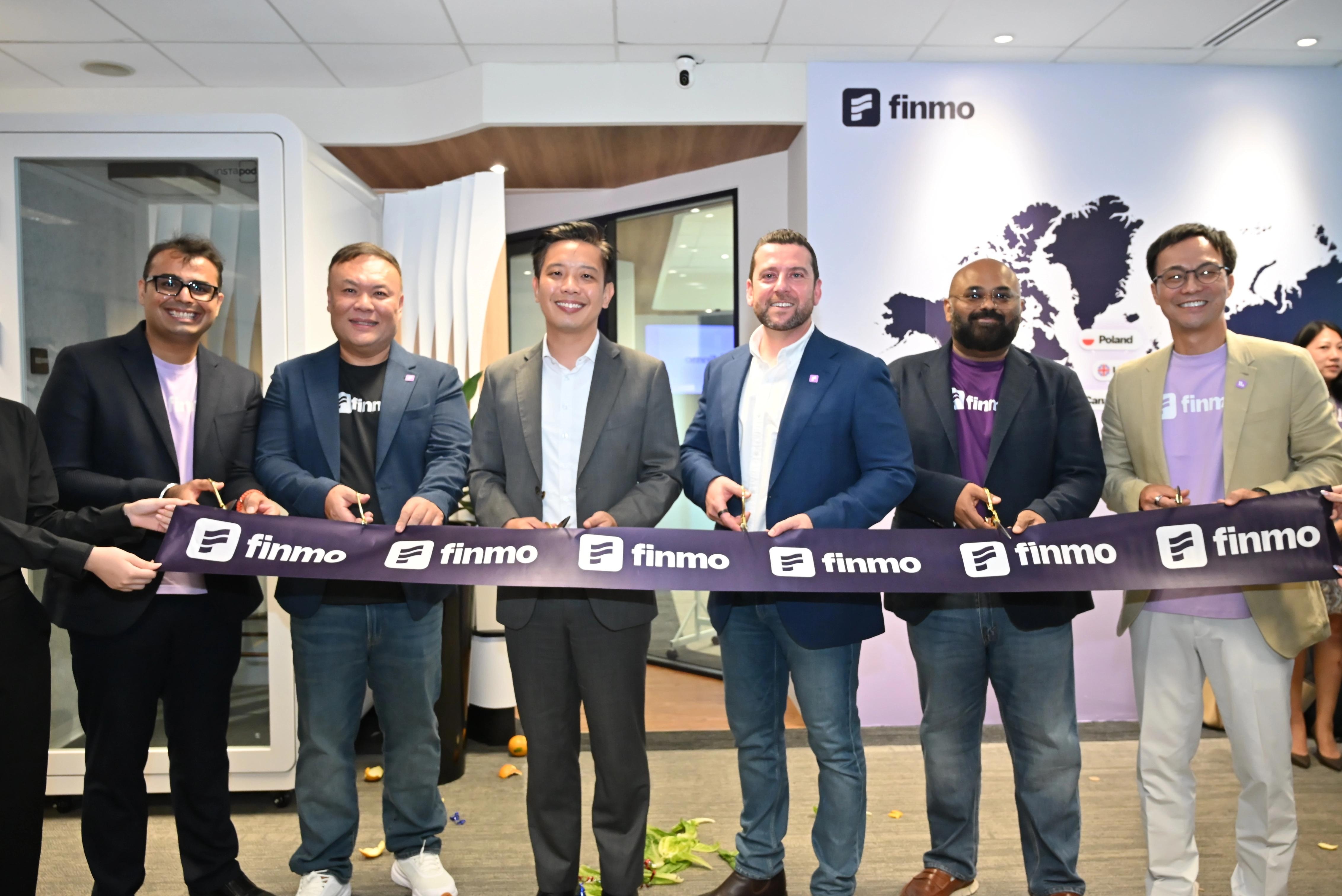
Company-reported figures at the September 2026 headquarters opening.
“Payments and treasury are two sides of the same ledger,” Hanna said at the opening. It is a compact statement of the work he has chosen: connect the movement of money with an understanding of the business’s financial position. A new office offers a ribbon to cut. Making those two activities work together provides the less photogenic daily assignment.
The cupcake episode remains useful here. Its appeal is the scale of the task: a person gets up early, makes something and faces the consequences of delivering it. Hanna’s present work involves many more people and considerably more money. The customer’s question retains a familiar shape. Will the thing you promised make my day work better?