David Adkin had a problem that looked rather like success. His software mockups had become so persuasive that colleagues sometimes mistook them for the finished product. The screens looked ready. Somewhere beyond the presentation, however, someone still had to make the thing work.
For a designer, this is a curious kind of compliment. You have communicated an idea so clearly that people believe you have already delivered it. Now comes the small matter of explaining that the apparently finished app is a picture of an app. The button has excellent manners and no occupation.
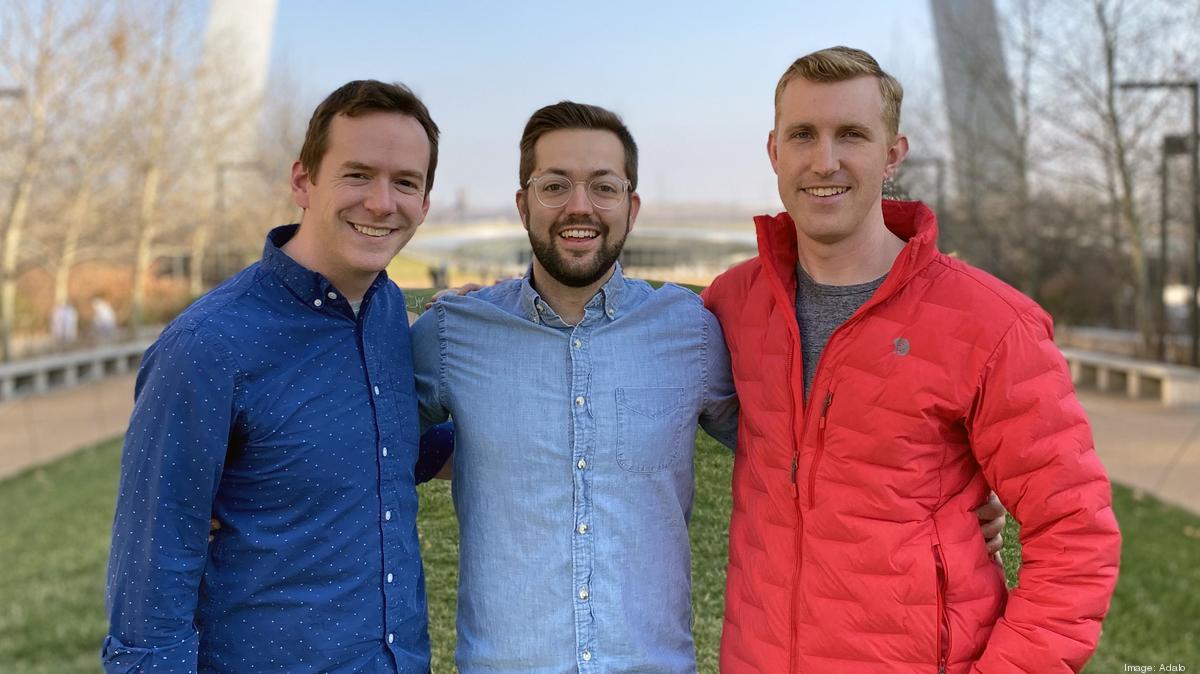
Adkin took the gap seriously. He would go on to co-found Adalo with Ben Haefele and Jeremy Blalock, helping create a visual way to build mobile and web applications. His route into the business began with a question familiar to anyone who has designed something they cannot yet produce: how much further could the drawing take you?
The picture that could not do the job
Before software came architecture. Adkin studied at Washington University in St. Louis, including a Master of Architecture from 2011 to 2013. While finishing that degree, he became interested in design as a skill that could travel between fields. He left architecture for a technology startup in St. Louis and worked across user experience, product and branding.
His professional history includes a lead designer role at Second Street. That range matters to the story. A product has to be understandable before someone uses it, useful while they use it, and recognizable when they encounter it again. Adkin had been working on several sides of that encounter before starting a company of his own.
He also wrote about the work. His essays in UX Collective include questions about which features to launch with, whether designers spend too much time perfecting details, and how a designer becomes an entrepreneur. These are the questions of someone examining the decisions around a screen as well as the screen itself.
The tools were changing quickly. Sketch, InVision and other prototyping products made it easier to demonstrate an increasingly believable experience. Adkin tried learning to code through Treehouse, but found the progress slow. His own tendency toward perfection made the distance to a result he would willingly show anyone seem longer still.
He began to imagine the tools catching up with the illusion. If a designer could specify so much of an experience visually, perhaps that visual work could eventually become the functioning app. The idea supplied a direction. Building a company around it required a more practical experiment.
“Love the problem.”
David Adkin, on starting a software business
Twelve apps, twelve weeks
Before Adalo became something people could use for themselves, Adkin used its early platform for other people. He found clients, sold projects, designed their apps and built them. When the platform lacked a capability, the technical co-founder could add it. A client’s request therefore did two jobs: it defined a delivery and tested the tool intended to make future deliveries possible.
His portfolio records twelve apps in twelve weeks during the early agency period. That is a useful number because it describes repetition. A prototype can survive a carefully chosen demonstration. A run of different customers asks a less accommodating set of questions. Each customer arrives with their own idea of what ought to be simple.
In his later account of the launch, Adkin described projects beginning at around $500, then moving into the thousands as confidence grew. Those first payments mattered even when they were small. Someone had committed money to the result. A politely encouraging conversation had become a job with an expectation attached.
There is a peculiarity to making an app builder: your first usable product must help create somebody else’s first usable product. The founders could not settle every design question by inspecting their own interface. They had to find out whether another person’s business could actually be represented inside it.
- 01Sell an appA real customer brings a real job.
- 02Build itAdkin uses the unfinished platform.
- 03Find the gapsMissing capabilities inform development.
Eventually, the founders paused new client work to make the software easier for other people to operate. That was an awkward transition: the service was producing customers and money, while a self-service product required time spent improving what happened after the founder stepped away. The person who knew every workaround had to make fewer workarounds necessary.
Adkin later turned the experience into a No Code Conf workshop. His advice was practical enough to include reasons to reject a client. An unclear idea, a shifting brief or an inability to commit could make a project difficult before anyone opened a design tool. The presentation covered pricing, scope and the value of showing a small working piece of an app.
Three names walk into a search engine
The founders were learning another form of usability, too: could anyone understand, remember and find their company? Before Adalo, they tried Apto Labs, Proton and Foundry. Each name came with a plausible explanation. Each also produced a different problem. It was a miniature product-development cycle conducted entirely in nouns.
Apto Labs needed a Latin backstory. Proton was meant to suggest building blocks, but made an approachable product sound more technical. Foundry evoked making things, then proved difficult to distinguish online. Customers reached the wrong sites or used the wrong domain. The name was supposed to open a door; sometimes it sent people to another building.
The eventual choice honored Ada Lovelace. Adalo gave the team a story that suited the invitation they wanted to make: more people should feel able to create software. Their account of the naming process is amusing because they describe the mistakes plainly. The explanations were clever. The reactions were more instructive.
A builder needs more than a canvas
Adalo was founded in 2018 and launched publicly in late 2019. In May 2021, it announced an $8 million Series A led by Tiger Global. Participants included Zapier’s Wade Foster, GitHub’s Jason Warner and Makerpad’s Ben Tossell, alongside Oceans Ventures and OldSlip Group. By then, the company reported more than 220,000 users and more than 1,000 paying customers.
Those figures belong to that moment in the company’s history. They show how far the project had traveled from individual client jobs. They also made the original proposition more demanding. An app someone relies on needs to remain useful after the pleasing first experience of putting it together.
The plans accompanying the investment extended beyond the editor. Adalo wanted to expand responsive web capabilities, broaden its marketplace and create an academy covering the app-development process. Education belonged beside the software because making an interface is only part of launching an application. There are decisions about the product, its audience and the route to publication.
The same practical issue appeared internationally. In June 2023, transcosmos announced an Adalo support package in Japan following the April launch of Adalo 2.0. The offer included consultation and development support for businesses trying to use the platform. Adkin described the partnership as part of a longstanding ambition to spread software creation around the world.
An invitation to build becomes more meaningful when someone can accept it. That may require a better control in the editor, an explanation of the next step, or a partner who understands a business’s requirements. Adkin’s early customer work makes that broader understanding of the product easy to recognize.
Designing the company, too
There was another system to work on: Adalo itself. In an early company essay, Adkin described how the intention to share the startup’s progress had slipped behind feature requests, customer questions, marketing, investor conversations and hiring. Even a recurring calendar appointment for community contact could lose to the day’s more insistent demands.
He also addressed Blalock’s departure, explaining that the co-founders had disagreed about leadership and company culture. After efforts to reconcile those differences, they parted ways and the board appointed Adkin CEO. He credited Blalock’s contribution and described a renewed commitment to communication and stronger foundations across the product, community and team.
The architecture background gives that last concern a certain resonance, although the organizational difficulties were ordinary enough. A growing company needs arrangements that people can understand and work within. Good intentions do not answer every question about responsibility. Someone still has to decide how decisions get made.
St. Louis supplied part of Adkin’s support network. Adalo received an Arch Grant in 2019. He later appeared among the inaugural Arch Grants Fellows, a program bringing founders together for peer advice and business growth. The person helping customers build also belonged to a group intended to help founders keep learning.
The question outlasts the job title
Adkin’s place in Adalo’s history is now co-founder and former CEO. In October 2026, the company publicly introduced Astha as CEO, explaining that she had taken over internally in June. James remained chairman. The company had moved into another chapter of leadership, with the original visual builder still part of its offering.
That leaves a clear way to understand Adkin’s contribution. He experienced a constraint as a designer, helped imagine a tool to remove it, and then used the unfinished tool to do paid work. The resulting lessons came from customers with something to accomplish. The app had to carry its own weight.
A convincing mockup had once made people believe the work was done. Adkin’s early experiment took him past that pleasant misunderstanding, into the less tidy business of delivering. There is a quiet satisfaction in the change: eventually, the button really did have a job.