A disappointing job interview is rarely advertised as a route into robotics entrepreneurship. Damion Shelton can make a case for it. After an interview with Google went badly, he walked out and received a call from a local entrepreneur interested in commercializing his laboratory’s work. There was an offer to become chief technology officer. Shelton accepted. The neatly planned career had acquired a plot.
His recollection comes with a useful footnote: “I didn’t know what I was getting into.” The company was threeRivers 3D, and he would spend years turning scanning technology into a business. It is an origin story with refreshingly little destiny in it. Someone called. He said yes. Then came the work that a telephone conversation cannot possibly describe.
Today, Shelton is co-founder and chairman of Agility Robotics, the company behind the two-legged warehouse robot Digit. Since August 2026, he has also led Carnegie Mellon University’s Swartz Center for Entrepreneurship. Having helped machines leave the laboratory, he is now helping researchers do something comparably awkward: leave the laboratory with a company.
Two degrees, several ways of thinking
Shelton graduated from the University of Pittsburgh in 2001 with degrees in bioengineering and history and philosophy of science. It is an appealing combination for anyone proposing to put machines among people. One discipline asks how systems function. The other offers practice questioning the assumptions under which people say they function. The degrees establish the breadth of his training; his subsequent career supplies the practical examination.
At Carnegie Mellon, he earned a master’s degree in robotics in 2004 and a doctorate in 2007. Jonathan Hurst, his future Agility co-founder, was part of the same graduate robotics world. Pittsburgh became a continuing base for Shelton, even as the company they would build grew out of Hurst’s research at Oregon State University.
Before that partnership came threeRivers 3D. Shelton co-founded the imaging company and served as its CTO; the business was acquired in 2012. His later conference biography described a roboticist interested in building products rather than stopping at proofs of concept. That distinction has consequences. A demonstration earns its applause in minutes. A product continues the conversation through deliveries, customer questions and the inconvenient discovery that somebody expects it to work again tomorrow.
A robot in search of its working day
Agility was founded in 2015. Shelton became CEO, with Hurst bringing the legged robotics research that underpinned the venture. Their early robot, Cassie, was a research platform whose conspicuous assets included two legs and an ability to make complicated movement look oddly companionable.
Shelton has recalled joking that Cassie was good at being a robot. There is a commercial education inside that joke. Making an interesting machine and identifying a sufficiently valuable job for it are separate achievements. The second determines who pays for the first.
Digit supplied an upper body and arms, opening up material handling. In 2019, Agility and Ford announced a partnership exploring how a walking robot might complete the last part of an autonomous delivery. The vehicle would handle the road journey; Digit would cover the ground between vehicle and doorstep, including the sorts of surfaces and steps that make a front door such an irritating destination for wheels.
The appeal was easy to grasp. Nobody ordering a parcel has ever regarded its arrival somewhere in the vicinity as quite the same thing as delivery. A robot able to bridge that final distance could connect two otherwise incomplete pieces of automation.
The difficulty, as Shelton later explained, was dependence: humanoid delivery would be tied to progress in autonomous vehicles. Warehouses offered a more contained setting for related physical tasks. The engineering could meet a customer’s immediate problem without waiting for another difficult technology to finish its own education.
A change of setting brought the customer’s problem closer.
The glamour of moving a plastic bin
By October 2020, Agility announced a $20 million investment and said Digit had been shipping to customers since July. The round was co-led by DCVC and Playground Global. The company was putting a price and a delivery process around technology that, only a few years earlier, had belonged principally to research.
In April 2022 came a $150 million Series B, again led by DCVC and Playground Global, with Amazon’s Industrial Innovation Fund participating. For Shelton, still CEO, the task now included turning investment into development and production. Capital gives hardware companies room to build. It also makes the question of what they will deliver rather more pointed.
RoboFab made that question physical. Announced in September 2023, the Salem, Oregon facility covered 70,000 square feet, with plans to begin at hundreds of robots and scale beyond 10,000 annually. Those figures described intended capacity. They were a statement about the manufacturing system Agility wanted to build, rather than a count of machines already working for customers.
Then came the wonderfully unromantic object at the centre of the business: the tote. GXO’s 2023 pilot put Digit at a facility handling Spanx orders in Flowery Branch, Georgia. In June 2024, the relationship became a multi-year commercial agreement. Digit’s work included taking totes from other mobile robots and placing them on conveyors.
It sounds modest because warehouse work is full of tasks that sound modest when described once. Repeat them across an operation and they become the operation. Connecting one automated process to another can be commercially useful without producing a scene anyone would purchase a cinema ticket to watch.
Totes moved at GXO’s Flowery Branch facility, reported by Agility in November 2025.
A cumulative handling milestone, rather than an hourly throughput figure.The later tote milestone gave a concrete number to Agility’s emphasis on useful work. It also suggests a sensible way to read Shelton’s career: pay attention to the small action that can be repeated. A walking machine is fascinating. A walking machine with an assigned task, a customer and a place in a workflow starts to become a business.
A founder makes room
On March 4, 2024, Peggy Johnson became Agility’s CEO. Shelton moved to president after leading the company from its founding. Johnson arrived with experience at Microsoft, Qualcomm and Magic Leap, as Agility prepared to expand deployments and manufacturing. A business assembled around a research breakthrough now required the organizational machinery of commercial growth.
Shelton’s responsibilities continued to change. In December 2024, Agility named him chief engagement officer, concentrating on commercial and investor relationships. Its current leadership page lists him as co-founder and chairman of the board, contributing strategic guidance on growth and commercialization.
These titles trace an adjustment familiar to founders, though seldom made easy by familiarity. Creating a company establishes a relationship with it; the relationship need not retain the same job description forever. Shelton’s route has taken him from executive responsibility toward governance, external engagement and mentoring.
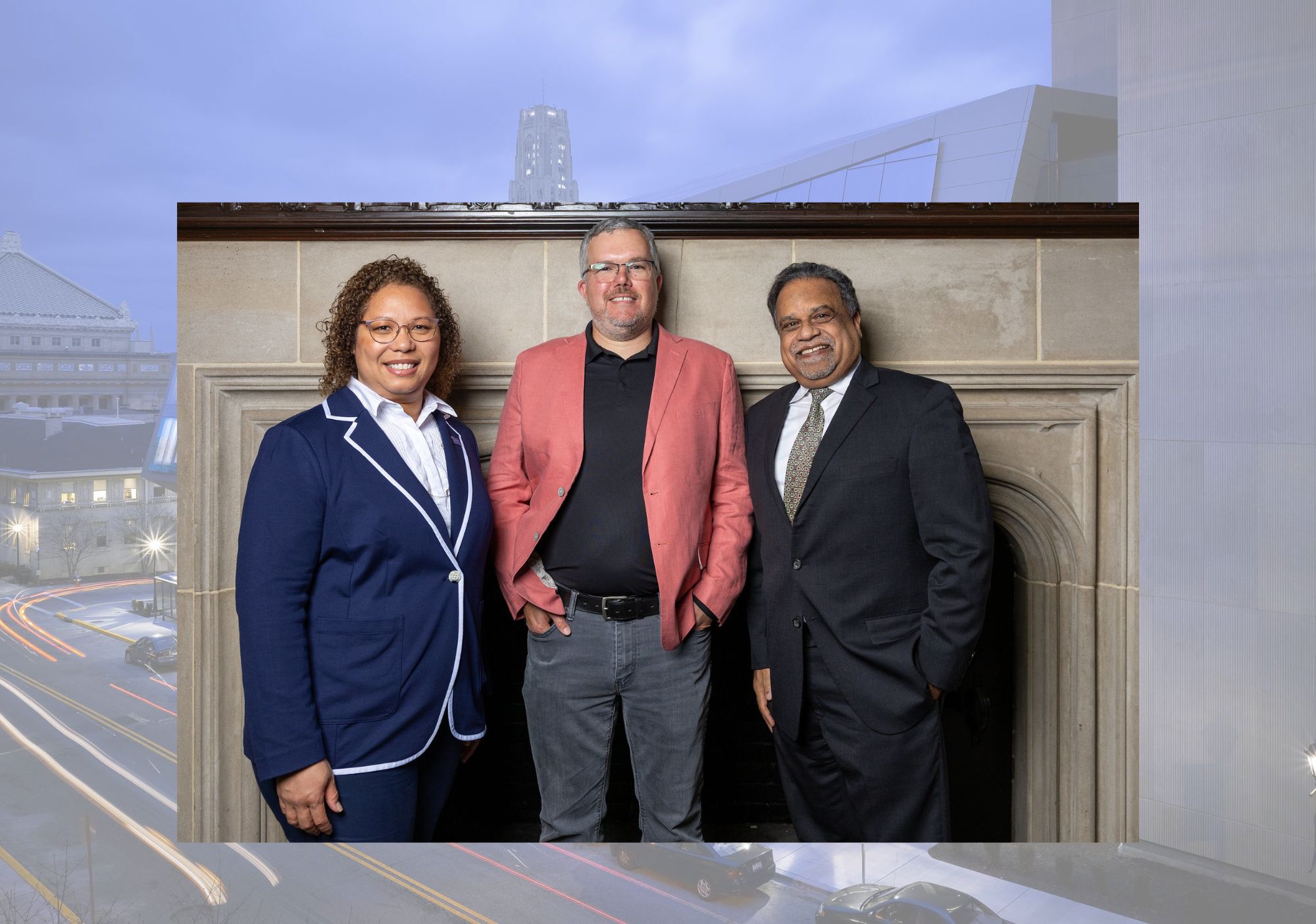
His undergraduate university recognized that work in April 2025, naming him its Distinguished Alumnus in Bioengineering. The photograph has a pleasingly terrestrial quality: three people at an alumni celebration, with no robot required to explain why they have gathered. The technical career has acquired a human audience of teachers, colleagues and successors.
Taking the long view to Washington
In March 2026, Shelton appeared before a U.S. Senate Commerce subcommittee. His prepared testimony treated robotics as an industrial and economic question, drawing on the history of agricultural mechanization to explain his expectations for automation. A founder trained in history and philosophy of science had found a setting where the second degree could join the first at the table.
He argued for experience in controlled workplaces, industrial safety practices and evidence that could support public confidence. He also urged American policymakers to take Chinese robotics capabilities and supply chains seriously. These were arguments from an industry participant with a stake in the outcome. Their significance lies in the scope of the discussion: engineering, manufacturing, rules and public acceptance belong in the same room.
Agility itself announced a proposed combination with Churchill Capital Corp XI in June 2026, setting out a route toward a public listing. The announcement made completion conditional on approvals and other closing requirements. For the chairman, the company’s next chapter therefore involved another audience with questions: prospective public shareholders.
“A view from the future.”
Shelton on mentoring founders
Back on campus, with the customer in mind
Shelton began at the Swartz Center on August 17, 2026. His remit includes helping researchers and founders connect with mentors, investors and industry, and strengthening the path from discoveries to ventures. The return brings a CMU robotics graduate back into an institution where promising technical work is a daily occurrence. The scarce ingredient is often the experience of carrying it into use.
He has described mentoring early founders as offering “a view from the future.” It is a good description of what experience can provide without pretending to predict an outcome. Someone who has already dealt with customers, fundraising and changing leadership responsibilities can help a new founder recognize decisions while there is still time to make them.
His own public commentary retains an appetite for technical detail. On LinkedIn he discusses robotics hardware and the economics of deployment, alongside the pleasures of being back at CMU. The combination suits this stage of his work: curiosity about how the machinery functions, paired with attention to whether anybody can use it.
There is something nicely circular about the assignment. Shelton’s first company began when another entrepreneur saw a business possibility in laboratory work and called him. Now he occupies a position designed to help more of those connections happen deliberately. A useful invention deserves a chance to meet its customer. It may still require a telephone call.