Bryan Salesky likes driving. In 2021, while running a company devoted to taking the driving out of cars, he described weekends at muscle-car shows, a fondness for MotorTrend TV and a pickup of his own. “I drive a pickup myself.” It is a pleasing complication in a business that often introduces the future by announcing the retirement of something people enjoy.
His case for autonomy allowed room for that enjoyment. There were journeys people wanted to make for the pleasure of the road, and journeys they simply needed completed. He could love choosing his own course and still work on a machine that would do the choosing. The engineer and the car enthusiast shared the same garage.
That distinction offers a useful way into a career whose public milestones can look deceptively tidy: a robotics competition won, a billion-dollar automotive commitment, a startup closed, another founded. Salesky has worked across railway software, mining equipment, Google’s self-driving hardware and urban autonomous vehicles. Today he is co-founder and chief executive of Stack AV, developing autonomous trucking technology in Pittsburgh. The vehicle has changed several times. His interest in getting software to act in the physical world has endured.
Before the robotaxi, the railway
Salesky was born in Woodhaven, Michigan, outside Detroit, and later settled in Pittsburgh. He graduated from the University of Pittsburgh in 2002, then went to Union Switch & Signal to work on railway software. His early assignments included software intended to prevent trains from colliding on stretches of track without conventional signal systems.
The move to Carnegie Mellon University’s National Robotics Engineering Center came in 2004. It put him inside an institution where robotics had an industrial life as well as an academic one. Machines needed to perform jobs. Sensors and software had to cooperate with equipment that was large, expensive and stubbornly physical. A promising algorithm still had to get along with the rest of the machine.
In 2007, he was software lead for Carnegie Mellon’s Tartan Racing team when it won the DARPA Urban Challenge. The competition carried a $2 million prize. Salesky’s part in that win belongs to a team story: the university’s engineers brought together the many elements required to make an autonomous vehicle work. It was an early, public demonstration of the field’s possibilities, years before Argo AI existed.
Tartan Racing wins the DARPA Urban Challenge.
Bryan Salesky: software lead.
His commercial work at NREC also included Caterpillar’s autonomous mining trucks. Later, at Google, he oversaw the development and manufacture of self-driving hardware: sensors, computers and vehicle programs. The sequence gave his career an unusual breadth. He had led software work and taken responsibility for the physical equipment that made software useful. Autonomy, in his working life, came with a parts list.
The difficult art of seeing
Ask what makes an autonomous car hard to build and Salesky’s answer has often begun with perception. In a 2018 conversation, he singled out the challenge of using sensors to see and understand the surrounding world. A vehicle has to turn observations into something it can act on. More storage, faster processing and improved sensors help, but the street keeps setting new questions.
Pittsburgh supplied an obliging examiner. Salesky pointed to the city’s changing grades, unusual road geometry and complicated intersections as reasons it made a useful test environment. A road can be perfectly familiar to its residents and deeply inconvenient to a computer. Pittsburgh has never required artificial intelligence to make its intersections interesting.
The work also involved revisiting what had already happened. In 2020, Salesky described recording sensor information on public roads and replaying it in simulation, checking object detection and making sure capabilities had not regressed. Progress had to survive another look. The test drive continued after the car returned.
“Bryan’s a pragmatist.”
Larry Burns, former General Motors research leader, 2020
That description fits the methodical approach colleagues attributed to him. The interesting tension is between ambition and procedure. A company can promise a changed transportation system, while an engineer must establish whether a particular revision still does its job. Salesky’s public explanations frequently returned to that smaller unit of work: gather information, test it, understand the result, then decide what comes next.
A billion dollars, and a calendar
Salesky and Peter Rander co-founded Argo AI in 2016. Rander brought his own Carnegie Mellon background and experience at Uber’s autonomous-vehicle operation. Brett Browning, another roboticist with Carnegie Mellon and Uber experience, joined Argo’s leadership. The company’s beginnings were threaded through an existing network of people who had already spent years working on autonomous systems.
Ford’s announcement in February 2017 changed the scale of the undertaking. The automaker committed $1 billion over five years. Argo would develop the self-driving system for a vehicle Ford then planned for 2021. A startup in Pittsburgh suddenly had an industrial partner, a conspicuous sum of money and a date against which almost every subsequent conversation could be measured.
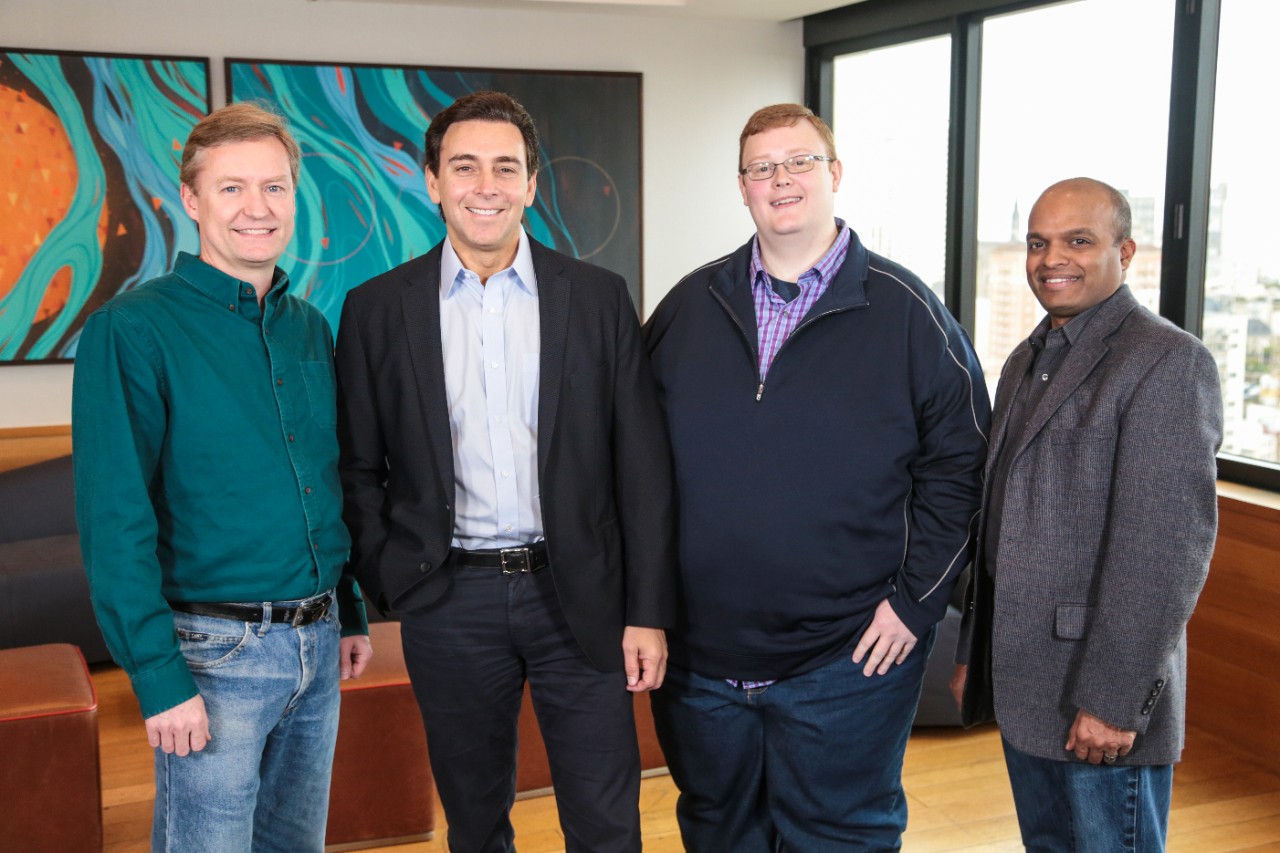
The partnership was a deliberate part of the business design. Argo’s job was to develop a system that could work with an automaker’s vehicles. Hardware, software and the operation of a future fleet would have to meet. Volkswagen later joined Ford as an automotive partner, widening the venture’s reach and adding another manufacturer to the assignment.
Argo also kept ties to university research. In 2017 it announced collaborations with Carnegie Mellon’s Deva Ramanan and Simon Lucey and Georgia Tech’s James Hays. The researchers would continue teaching and working at their universities while spending time with Argo. It was an arrangement that acknowledged how much of the underlying work remained a research problem, even with a commercial vehicle program waiting for it.
By 2021, Argo, Ford and Lyft were planning autonomous ride-hailing deployments in Miami and Austin. Argo did offer autonomous rides to the public in those cities. The company had moved beyond an idea and a funding announcement into vehicles and passenger services. The remaining distance to a durable business, however, still mattered.
In October 2022, Ford and Volkswagen withdrew support, and Argo closed. Ford said Argo had failed to attract new investors; its own investment priorities were moving toward driver-assistance technology with a nearer commercial horizon. A company founded around a long technical assignment had reached the limit of its financial arrangement. Years of engineering work did not decide the outcome on their own.
- 2007Tartan Racing wins
- 2016Argo AI founded
- 2022Argo AI closes
- 2023Stack AV launches publicly
- 2026Peterbilt collaboration on display
The colleagues came back
On September 7, 2023, Stack AV announced its autonomous trucking business. Salesky was CEO, Rander president and Browning chief technology officer. The familiar names mattered: the new company brought together people whose shared work extended through Argo and into the earlier robotics ecosystem. They were starting a company with considerable experience of one another.
SoftBank Group supplied backing, resources and AI expertise. At its public launch, Stack reported 150 employees across its Pittsburgh headquarters and 15 states. Its stated objectives were practical freight concerns: improve truck uptime and efficiency, address operating costs and make supply chains more reliable. Those were the company’s goals, with the engineering and commercial work required to deliver them still ahead.
The trucking focus also returned Salesky to heavy machinery. His experience with autonomous mining vehicles preceded the robotaxi business. In his explanation of Stack, that earlier work supplied relevant knowledge about automating large equipment. The new venture changed markets while drawing on a much older part of his career.
Even the name did two jobs. Salesky explained that Stack could refer to material being moved, as well as the layers of technology required to move it. Software founders are sometimes accused of naming companies for other software founders. Here, at least, the freight department could join the joke.
“This is our life’s work.”
Bryan Salesky, discussing his return to autonomy in 2023
A truck with a familiar assignment
In May 2026, the next chapter acquired a specific shape: a Peterbilt 579 equipped with Stack’s autonomous technology, presented at ACT Expo in Las Vegas. Stack described the vehicle as the result of a year-long collaboration agreement with PACCAR. It combined Peterbilt’s vehicle platform with Stack’s system, using lidar, radar, cameras and AI-based perception software.
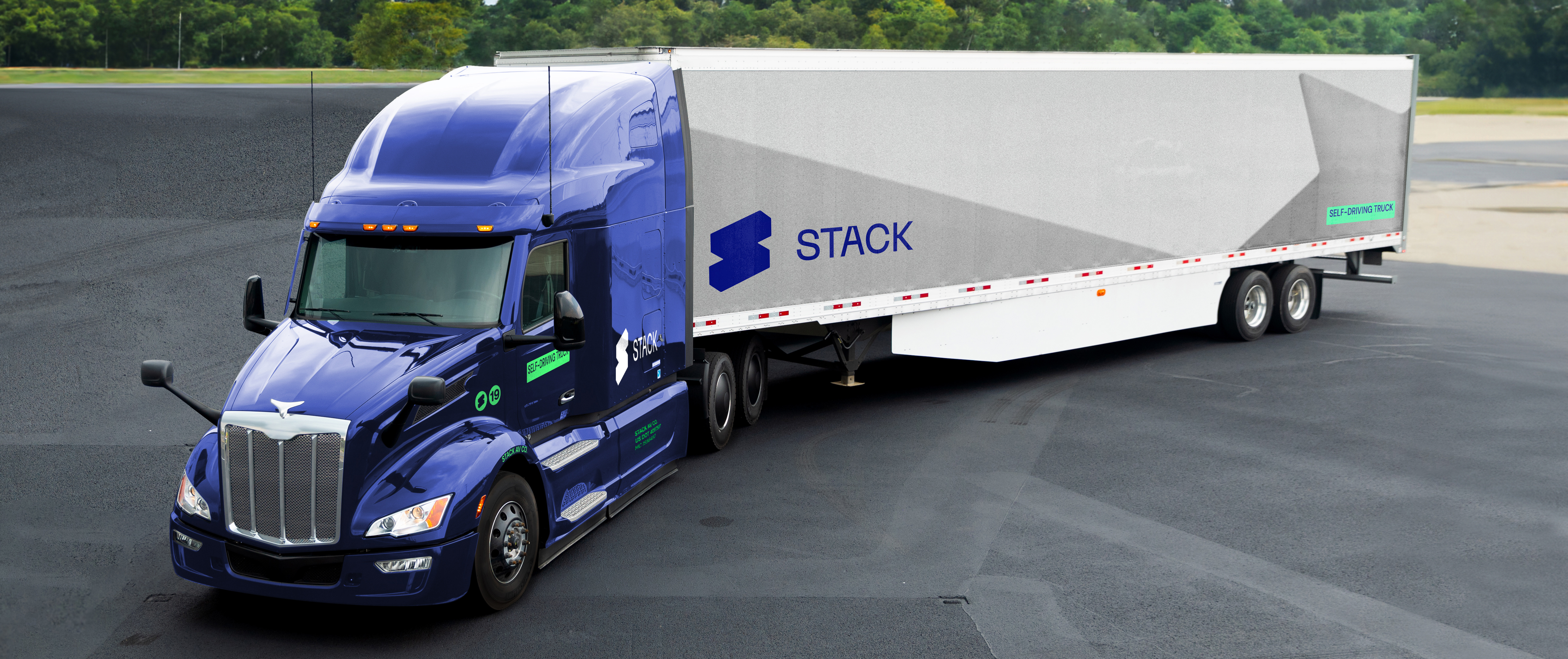
The announcement linked two familiar demands in Salesky’s career: develop the autonomous system and work with the people who build the vehicle. It also offered a concrete milestone without settling the whole commercial question. A truck on an exhibition floor is one point on the route to an operating freight business. Manufacturing, testing and deployment each carry their own work.
That distinction remained visible later in the year. In July, PACCAR’s chief executive named Stack among its autonomous-technology partners and said the manufacturer had no plans to remove drivers at that point. The collaboration was progressing within an industry where the pace of development and the decision to operate without a human remained separate judgments.
The city stays in the picture
Pittsburgh runs through Salesky’s story beyond the headquarters address. He studied at Pitt, worked at Carnegie Mellon, built Argo there and returned with Stack. He also serves as a University of Pittsburgh trustee and joined PNC’s board in October 2021. When the bank announced his appointment, it emphasized his experience in technology, AI and product development.
Those connections give the career a geography as well as a chronology. The institutions are different, but they recur: university laboratories, an industrial city’s companies, colleagues who have worked together before. For a field so often described through a coming transformation, there is a surprising amount of continuity in the people doing the work.
The pickup enthusiast who helped build a self-driving car company now leads a self-driving truck company. Behind that sentence sit a competition, commercial engineering programs, a closed venture and a team assembled again. Salesky has given the next chapter a new vehicle and familiar collaborators. Pittsburgh, with all its awkward turns, is still on the route.