BREAKING Terraline CEO Graham Doorley builds electric long-haul truck 100 yards from Tesla factory CLASS 8 500+ mile range on a single charge - Tangra LH1 sets new bar for freight electrification WAYMO VIA The project Doorley led at Waymo became one of the most ambitious autonomous trucking programs alive FUNDING $14M raised - Trucks VC, Climate Capital, and SQM Lithium Ventures back Terraline's vision CROWLEY DEAL 130-year-old logistics giant picks Terraline as first EV truck partner for Florida fleet PHOENIX EXPANSION Terraline opens engineering HQ in Greater Phoenix - 30 new engineering roles BREAKING Terraline CEO Graham Doorley builds electric long-haul truck 100 yards from Tesla factory CLASS 8 500+ mile range on a single charge - Tangra LH1 sets new bar for freight electrification WAYMO VIA The project Doorley led at Waymo became one of the most ambitious autonomous trucking programs alive FUNDING $14M raised - Trucks VC, Climate Capital, and SQM Lithium Ventures back Terraline's vision CROWLEY DEAL 130-year-old logistics giant picks Terraline as first EV truck partner for Florida fleet PHOENIX EXPANSION Terraline opens engineering HQ in Greater Phoenix - 30 new engineering roles
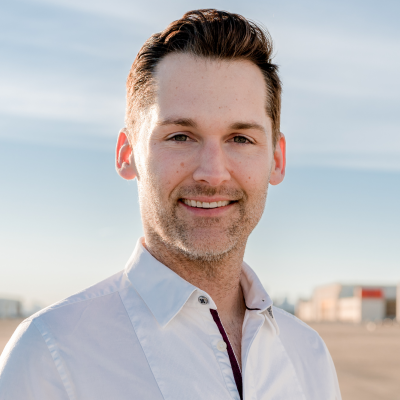
Graham Doorley, Founder and CEO of Terraline
Founder & CEO

Electric Freight // Deep Tech // Fremont, CA

GrahamDoorley

"The man who taught a robot to drive a truck is now building the truck that makes human drivers unstoppable."

Eight years building Waymo's autonomous brain. Two years shaping the Model S chassis. One very bold bet that the future of freight runs on electrons - not algorithms.

Electric Trucks Waymo Alum Tesla Alum Founder Decarbonization Class 8
500+
Miles per charge
$14M
Total funding raised
8
Years at Waymo / Google X
27
Employees (2024)
3M
Mile durability target
#1
Lowest drag, any Class 8

The Clean-Sheet Bet

Graham Doorley is standing 100 yards from Tesla's Fremont factory, building a truck from scratch. Not modifying an existing platform. Not bolting batteries onto a diesel chassis. A clean sheet - the way you make something when you actually believe the old way is broken.

He spent the better part of his career inside the most forward-thinking machines of the last two decades. At Tesla, he owned the entire front and rear suspension of the Model S - the geometry, the sourcing, the production. At Google X and then Waymo, he spent eight years on self-driving systems, eventually leading the internal team that started Waymo's autonomous truck project. That team grew into Waymo Via, one of the most closely watched programs in the industry.

Then in 2021, Doorley walked away from one of the most enviable perches in Silicon Valley and started Solo Advanced Vehicle Technologies. The name later changed to Terraline. The conviction never did.

We had a clean sheet of paper. You can't use a legacy platform to build an electronic or autonomous vehicle.

- Graham Doorley, Terraline CEO

The pivot Doorley made at Terraline is the interesting part. He came out of the autonomous world. His resume reads like the syllabus for a self-driving truck PhD. But when he sat down to design the company, he made an unusual call: the first product would be built for human drivers.

The reason is brutally pragmatic. Autonomous trucking regulations are slow. Fleet operator buy-in takes time. But diesel emissions aren't waiting. The US freight industry moves roughly 70% of the country's goods on diesel trucks. That number is not declining without serious hardware intervention. Doorley's read: get the electric platform deployed now, with human drivers, and leave the door open for autonomy when the regulatory and commercial stack catches up.

"We're not an autonomy company," he told Trucking Technology News. "Having come from the autonomous industry, I am enabling the driver." That sentence, from a Waymo veteran, lands differently than it would from anyone else.

The result is the Tangra LH1 - a Class 8 long-haul truck built from the ground up as a battery-electric vehicle, with the lowest drag coefficient of any Class 8 production truck, active aerodynamic elements, tandem multi-speed electric axles, and a stated range of 500+ miles on a single charge. It is designed to do 3 million miles over ten years, roughly four times the working life of a typical commercial truck. The business model isn't traditional truck sales - it's trucks-as-a-service, leased on a cost-per-mile basis to fleet customers.

Crowley, the 130-year-old maritime and logistics company, picked Terraline as its first electric truck partner. Pilot testing began in Florida in early 2024, with a formal option to order vehicles for delivery in 2026.
From Satellites to Suspension to Self-Driving - and Back to Steel

Before Terraline, before Waymo, before even Tesla, Doorley spent time at Lockheed Martin analyzing satellite components after graduating from Carnegie Mellon. Physics plus materials science is a strange combination for someone who ends up building trucks - unless you understand that both disciplines are fundamentally about how things fail under stress.

Stanford's Mechatronics program was where it clicked. Mechatronics is the discipline that sits at the intersection of mechanical engineering, electrical engineering, and computer science - the exact intersection where modern vehicles live. Doorley graduated in 2010 and went straight to Tesla, arriving in time to shape the suspension geometry of a car that would redefine the industry's expectations of what a production EV could be.

The jump from Tesla to Google X in 2013 was a bet on where the industry was heading. Self-driving was still theoretical enough to be dismissed by most of Detroit, which made the talent pool at Google X unusually concentrated. By the time Waymo was spun out as a separate entity in 2016, Doorley had become a senior engineer in self-driving systems - and was tapped to start the truck project with a small in-house team.

The real prize in this country's logistics industry is a 500-mile vehicle.

- Graham Doorley

That project - started with a handful of people in a small team - eventually scaled into Waymo Via, which became a multi-hundred-million-dollar program and one of the few serious attempts to deploy fully autonomous commercial freight at scale. Doorley watched it grow from seed to something substantial, then made the call to leave.

What he saw from inside was both encouraging and clarifying. Autonomous trucking is technically achievable. But the timeline to commercial deployment at scale, navigating regulatory approvals, insurance frameworks, and fleet operator hesitation, is measured in decades, not years. Meanwhile, diesel freight emissions are already a crisis. The decarbonization problem didn't have time to wait for the autonomy problem to solve itself.

So he started Solo AVT in late 2021, recruited a team from Waymo, Tesla, BMW, Ford, Faraday Futures, and Rivian, and began building from scratch. Not modifying. Not adapting. Clean sheet.

The Doorley Doctrine

"

Change is coming to freight logistics at an incredible pace, and it's an industry imperative to serve that growth sustainably.

"

We're not an autonomy company. Having come from the autonomous industry, I am enabling the driver.

"

Our success has to be of our own making and can't be predicated on the progress of autonomous technologies and regulations.

"

If our customer wants a driver, we're OK with that - we're agnostic. The real prize in this country's logistics industry is a 500-mile vehicle.

"

Securing this agreement with Crowley validates our team's hard work and gets the industry closer to meeting state and federal emissions mandates.

"

Arizona's business-friendly environment, exceptional engineering talent, and reduced operations costs made moving from California an easy choice.

A Resume Built in Motion

2001 - 2005
EDGE Product Development - Mechanical Engineer. Designed dynamic seating systems for the US Navy. The starting point for understanding how things hold up under real-world stress.
2002 - 2006
Carnegie Mellon University - BS Physics, Materials Science & Engineering. An unusual double major that maps directly to understanding how materials fail at scale.
2006 - 2008
Lockheed Martin Space Systems - Specialty Engineer analyzing satellite components. High-reliability engineering at the extreme end of the tolerance spectrum.
2008 - 2010
Stanford University - MS Mechanical Engineering (Mechatronics). Where mechanics, electronics, and software converge - the exact skillset needed to build a modern EV.
2010 - 2012
Tesla Motors - Mechanical Systems Engineer. Designed the entire front and rear suspension of the Model S. The car that proved EVs could be performance vehicles.
2013 - 2016
Google [X] - Mechanical Engineer. Four years working on the moonshot that became Waymo. When self-driving was still a research project, not a business.
2016 - 2021
Waymo - Senior Engineer, Self-Driving Systems. Led the internal team that started the Waymo truck project - which became Waymo Via.
2021 - Present
Terraline (fka Solo AVT) - Founder & CEO. Building the Tangra LH1: a clean-sheet, 500+ mile range, battery-electric Class 8 long-haul truck.
Why Freight Electrification, Why Now
70%
of US goods move by diesel truck
500+
miles range - matches diesel long-haul
📈
3M
mile lifespan target per truck
🌎
0
tailpipe CO2 emissions in operation

The Receipts

Founded Terraline (formerly Solo AVT) in 2021 - building freight transportation's first clean-sheet battery-electric Class 8 truck from scratch in Fremont, CA

Led Waymo's first self-driving truck team - a small in-house project that scaled into Waymo Via, one of the most ambitious autonomous trucking programs ever launched

Designed the entire front and rear suspension system for the Tesla Model S - the car that forced the auto industry to reconsider what an EV could be

Raised $14M+ from Trucks Venture Capital, Climate Capital, and SQM Lithium Ventures - securing investment from both the automotive VC ecosystem and the raw materials supply chain

Signed Crowley - a 130-year-old maritime and logistics giant - as Terraline's inaugural US electric truck partner for Florida fleet operations

Developed the Tangra LH1 with the lowest drag coefficient of any Class 8 production truck - a meaningful aerodynamic achievement given the constraints of moving a 40-ton freight vehicle

Announced engineering HQ expansion to Greater Phoenix, Arizona - creating approximately 30 specialized engineering positions

Assembled a team of alumni from Waymo, Tesla, BMW, Ford, Faraday Futures, and Rivian - a concentration of EV and AV engineering talent unusual for a 27-person company

Fun Facts & Field Notes

Terraline's Fremont manufacturing facility sits 100 yards from Tesla's gigafactory - close enough to the world's most famous EV operation to be intentional.

The Tangra LH1 is designed for 3 million miles of service life - roughly 4x the typical commercial truck. That's not a spec, that's a business model argument.

Graham holds a Physics degree AND a Materials Science degree AND a Mechatronics Masters. That's three disciplines that map directly to knowing why EV batteries fail.

Crowley, a company founded in 1892, chose a 27-person startup over established OEMs as its first EV truck partner. That's either very brave or very well-researched.

The Tangra LH1 is both autonomous-ready AND human-optimized - designed so the question of "who's driving?" is entirely up to the fleet operator, not the truck.

SQM Lithium Ventures - the VC arm of the world's largest lithium producer - invested in Terraline. When the battery supply chain bets on your truck, that's a useful data point.

Share This Profile

Spread the signal