After selling Signal HQ, Dallas Hogensen played golf for 30 days straight. Then he started calling businesses most technology founders would have driven past. Dirt farms. Trailer-park manufacturers. He was considering a search fund, a way to buy an existing business and improve it. One conversation involved a businessman selling trailer skirts through a spreadsheet. To Hogensen, this sounded like an invitation.
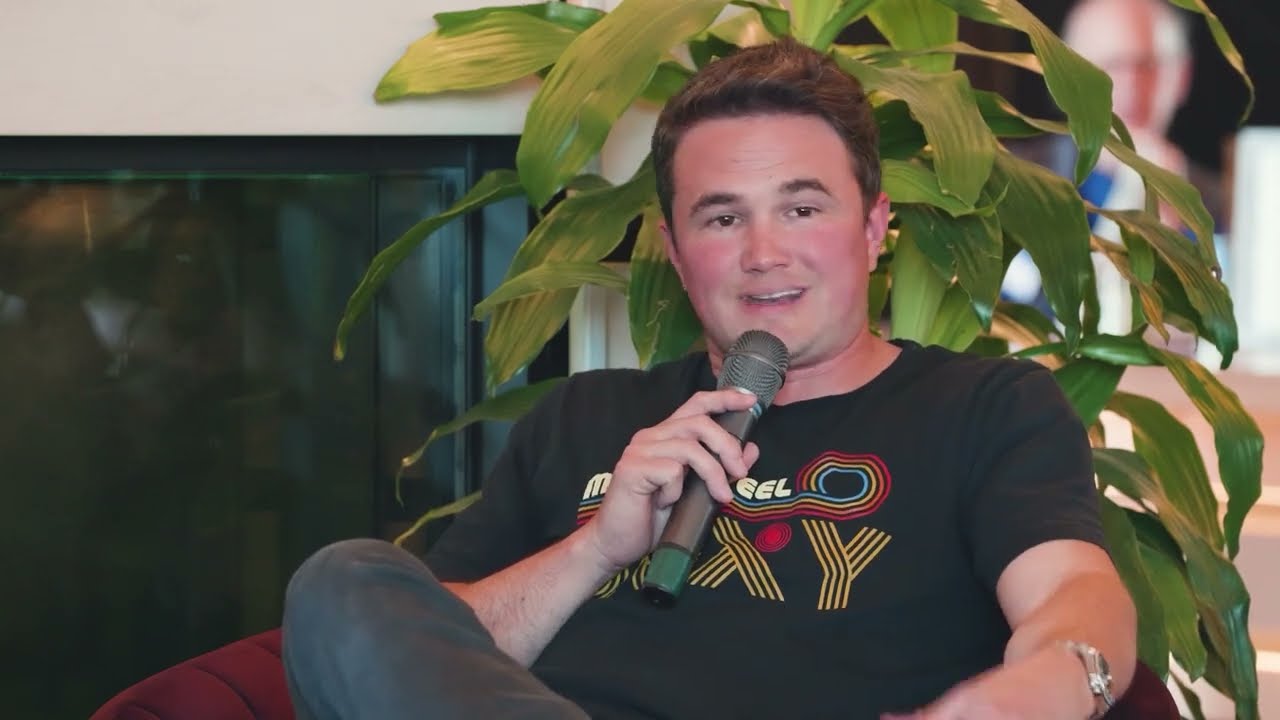
He had spent years learning how marketplaces grow. Now he wanted to find a business where that experience could matter over decades. His search eventually brought him to Felux, a Cleveland company connecting steel buyers and sellers. The transition came with a memorable slogan, “Make Steel Sexy,” and a less glamorous assignment: teaching software to understand what people mean when they order metal.
That assignment has become the useful tension in his career. Hogensen can sell a future. Steel requires him to understand the particulars of the present. A slogan can get someone to look up. The material still has to arrive in the right specification.
The education on the early bus
Hogensen grew up on an Oregon ranch and played sports through college. At Oregon State University, he studied business; the university later listed him among Pi Kappa Phi’s notable alumni. His first experience building an organization was a college fraternity. He assembled its initial group of roughly 70 people without much knowledge of fraternity traditions.
The attraction was the chance to make something with other people. A team needs members, a purpose and reasons to return. Those are familiar problems for anyone trying to start a company, even when the earliest budget has more to do with a house than a product roadmap.
He initially worked in finance, then moved to San Francisco to enter technology. At Rocket Lawyer, he deliberately sought a telephone sales job with frequent calls and quick feedback. He took an early bus from the Marina, arrived before most colleagues and answered East Coast inquiries. After reaching his daily target, he contacted founders through LinkedIn, asking specific questions about their businesses.
There is something pleasingly practical about this route into the industry. He made himself useful before asking to be interesting. The calls supplied repetition; the conversations with founders supplied a wider view. Each offered an education the other could not provide.
His next stop was iCracked, an on-demand phone-repair business. He remembers living on a sailboat and skateboarding to work. The scene belongs to an earlier startup era, but its central problem remains ordinary: build a service people can depend on while the company itself is still being assembled.
Passengers, restaurants, then a different kind of customer
Over the following years, Hogensen worked across companies serving quite different needs. He co-founded Liveli, focused on restaurant staffing, and Signal HQ, a sales-intelligence business. Those companies were acquired in 2016 and 2020, respectively. He also held senior sales roles at Lyft. His career accumulated marketplaces rather than a single industry specialty.
At Lyft, he helped build the corporate and commercial business on top of the consumer ride network. He helped grow Lyft Business from its beginning into a billion-dollar revenue unit. The underlying network already existed; the task was to make it useful to organizations buying travel for other people.
A person ordering a ride and a company managing employee transport occupy different purchasing worlds. The second buyer needs controls, records and an account of where the money went. Hogensen’s work at Lyft put him close to that distinction. It is a useful background for someone who would later ask manufacturers to buy an essential input through unfamiliar software.
His work also extended into professional communities. He became a founding member and chapter leader of Revenue Collective, subsequently known as Pavilion, in Denver and Phoenix. Organizing people had remained part of the job, long after that first college house.
These chapters make his move into steel easier to follow. The constant was the work of connecting participants and giving them a reason to transact. The merchandise changed. So did the consequences when a transaction went wrong.

“Where is nobody looking?”
Dallas Hogensen, on his search for overlooked industries
A recruiter opens the steel door
Felux began in Cleveland in 2019. Hogensen joined in 2020 and is credited as a co-founder alongside Chris Day and Todd Leebow. Day brought steel-industry operating experience; Leebow led Majestic Steel USA. Hogensen brought experience building technology companies and selling to businesses. The combination gave the venture people who understood both the proposed software and the industry expected to use it.
The introduction came through an executive recruiter Hogensen knew from Lyft. He was living in Denver and researching offline industries. A conversation about a steel marketplace fit the question he had been asking: where had established businesses attracted investment while technology investors paid relatively little attention?
That question is more disciplined than merely looking for an unfashionable sector. A business can be overlooked for excellent reasons. Hogensen was looking for existing trade, existing customers and an awkward buying process. The opportunity would depend on whether software could improve that process enough to earn a place in it.
Steel supplied a demanding test. Buying involves matching specifications, finding available material, negotiating terms and arranging its movement. A marketplace has to account for the whole transaction. A neat catalog alone cannot tell a purchasing team whether an order will work for its plant.
By 2021, Felux offered tools for sourcing, procurement, logistics, financing and payments. Suppliers could send inventory into the marketplace through email. That last detail is revealing. Even early on, the company was trying to work through a channel its customers already used.
Before the transaction, a dictionary
Hogensen discovered that steel businesses could describe the same material differently, even within a single company. The software therefore needed a consistent way to interpret product descriptions before it could reliably match a buyer with a supplier. He made that shared data language central to his vision for Felux.
This is where the story becomes less photogenic and more interesting. A consumer marketplace can often show a picture and a price. Industrial purchasing asks a product description to carry much more responsibility. If two businesses use different names, a search may fail before either side has had the chance to discuss an order.
Translation is part of the product. Every description that becomes comparable makes another potential match possible. For Hogensen, the steel opportunity depended on doing that patient work beneath the visible marketplace. The ambition was large; the route ran through details that resist a convenient summary.
- 01UnderstandGrade, gauge, coating
- 02MatchBuyer needs + supply
- 03MoveTerms, freight, delivery
A conceptual view of the transaction. Each step gives the next one something reliable to work with.
The numbers grew. The job changed.
Felux announced a $5.1 million seed round in August 2021, led by Expa with 8VC and Lightbank participating. A $19 million Series A followed in June 2022, led by EquipmentShare. That round included Signia Venture Partners, Suffolk Technologies and JumpStart Ventures, among others. The company reported roughly $24 million raised across the two rounds.
The transaction figures showed the pace of adoption. Felux reported $64.9 million of platform transactions in 2020 and $454 million in 2021. These are the values of transactions facilitated, not money the company booked as revenue. Keeping that distinction visible makes the achievement easier to understand.
By 2023, Hogensen was describing a change in emphasis toward dependable revenue and profitability. Felux had reduced its workforce from a peak of 36 to less than half that size. The shift makes the career story more substantial than a sequence of funding rounds: he had to adjust the organization as conditions changed.
A marketplace can produce impressive totals while leaving difficult questions about the economics of each transaction. Growth gives a founder evidence of demand. Running the business requires another set of answers about what serving that demand costs. Hogensen’s public account of this period included both.
The next opportunity is already in the inbox
Felux’s current product presentation concentrates on requests for quotes arriving by email. The software identifies requests, quotes, purchase orders and shipping documents, then organizes information about customers and products. Its website describes analyzing six months of email history and keeping a dashboard updated as new messages arrive.
The distinction it wants customers to see is between completed orders and demand that never became an order. A seller may know what shipped while missing the requests that received no quote. Felux presents those unanswered requests alongside quoted, won and lost business, broken down by customer, product and salesperson.
For Hogensen, this is a particularly concrete expression of the original steel thesis. The data is buried inside an everyday workflow. Giving it structure could help a company decide what to stock or which customer to call. The test is whether that information improves an actual decision.
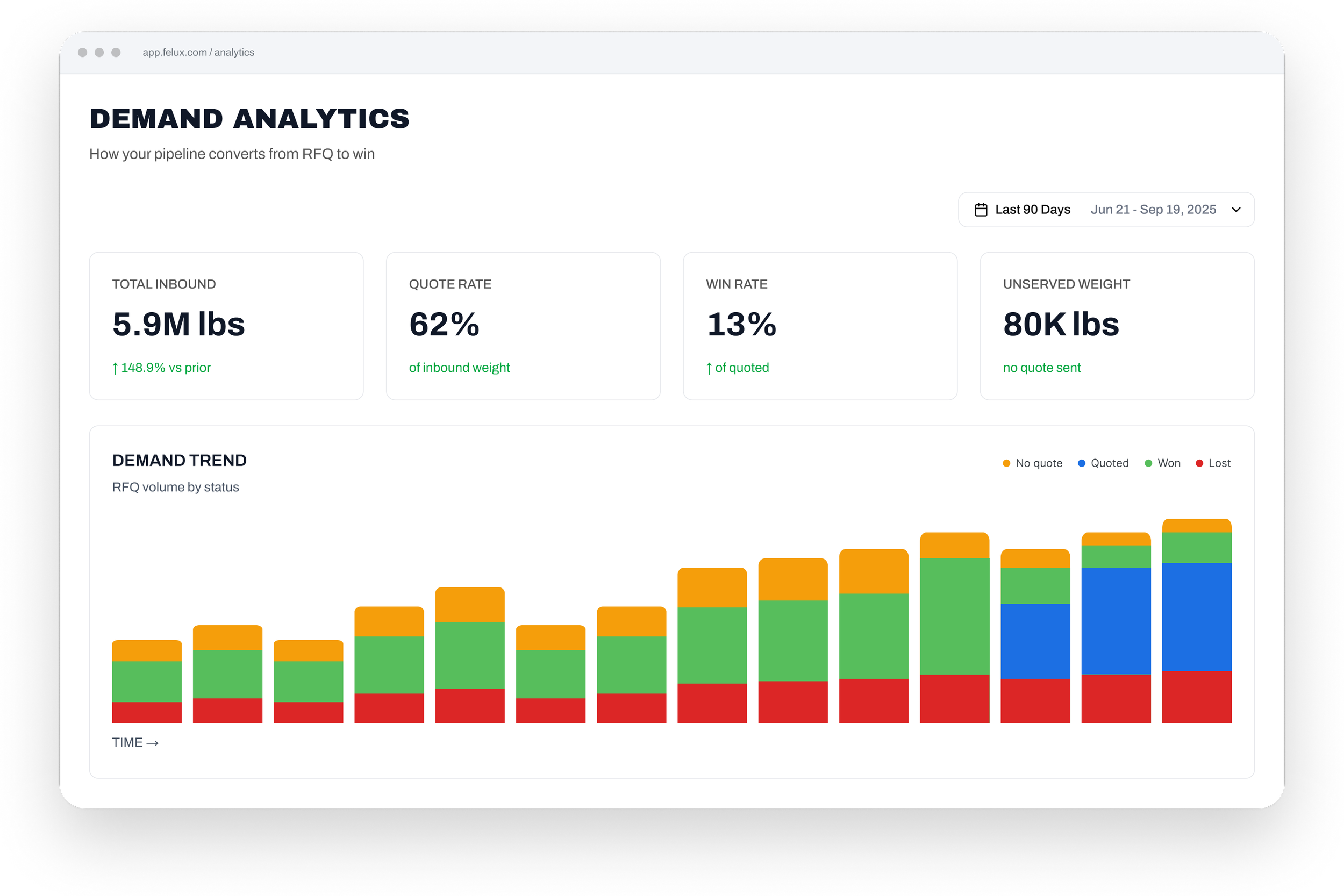
The company also presents an email-based quoting interface and customer records assembled from correspondence. The emphasis on fitting into existing habits gives its broader industrial ambition an accessible starting point: the next message in a sales team’s inbox.
A Cleveland company with room for more founders
In June 2024, Hogensen and Day won EY’s Entrepreneur Of The Year East Central Award. It was regional recognition for the pair, awarded by an independent panel assessing entrepreneurial purpose, growth, impact and long-term value. The shared award fits the company’s origins: the technology operator and the steel operator working on the same problem.
Hogensen’s Cleveland ambitions extend beyond Felux’s own transactions. He has described wanting employees to go on to start technology companies in the area. It is an unusual measure for a CEO to offer: success partly counted in the businesses people build after leaving.
That aspiration brings the story back to his early interest in assembling a community. A fraternity, a professional network and a company are different institutions. Each creates opportunities for people to meet, learn and try something together. Cleveland gives that impulse a place to take root.
There is still room for the joke on the T-shirt. But the more revealing picture of Dallas Hogensen is an operator learning the vocabulary of a trade, changing his company’s priorities and finding useful information in an overlooked request. Steel offers him plenty of material. The work is deciding what to make of it.