On August 1, 2024, Boston riders gained a new option: tap a contactless bank card, phone or watch and board. There was no need to stop and reload a CharlieCard. For someone approaching a subway gate, the change could feel almost trivial. For the organizations delivering it, that small gesture represented years of engineering, negotiation and revised expectations.
- Cubic connects fare payments, traffic systems and defense training.
- It sells equipment, integration and years of ongoing service.
- Boston shows why a simple interface needs a carefully built project.
Cubic Corporation lives inside that discrepancy. Its customers buy systems that make complicated operations look ordinary: collecting a fare, coordinating traffic signals, reconstructing an air combat exercise. The passenger wants a green checkmark. The pilot wants to understand what happened. Neither should have to think about the machinery connecting the event to the answer.
That makes Cubic an unusual technology company. You rarely choose it from an app store. A transit authority, defense organization or major contractor chooses it first. You encounter the consequences later, at a station entrance or in a training debrief. Its work sits where software must cooperate with equipment, institutions and people who are already moving.
Before the turnstile, a wattmeter
Walter J. Zable founded Cubic in a San Diego storefront in 1951. Its first product measured microwave power. The name expressed his interest in engineering precision. Distance-measuring instruments and satellite surveying followed. Long before a fare reader became an everyday object, Cubic was learning how to measure physical events and turn them into useful information.
The defense connection is direct. Tracking aircraft and missile tests helped establish the technical foundation for instrumented combat training. In 1973, Cubic installed an early “Top Gun” air combat training system at Marine Corps Air Station Yuma. Measurement could now help answer a question pilots care about: what actually happened up there?
Transit grew through acquisition and deployment. Western Data Products gave Cubic an entry into automated fare collection in the early 1970s. Contracts followed in places including San Francisco and Hong Kong. The apparent jump between missiles and railway tickets becomes less mysterious when you follow the underlying skills: sensing, communications, data processing and systems integration.
the event02Move
the data03Make
a decision
ONE TECHNICAL THREAD, TWO VERY DIFFERENT MARKETS.
The gate is only the visible part
Today, Cubic Transportation Systems supplies fare-payment technology to agencies in New York, Boston, Chicago, Los Angeles and San Francisco, among other markets. Cubic Defense supplies secure communications, digital intelligence and training capabilities. These are institutional markets with long purchasing cycles, demanding interfaces and equipment that cannot be replaced every time a software fashion changes.
The business model reflects that environment. Cubic earns money from designing and integrating systems, supplying hardware and software, and providing continuing operations, maintenance and support. Umo adds a subscription model: agencies share a hosted platform rather than commission every capability separately. Its app brings trip planning, payment and travel information together; reloadable cards provide another route into the system.
BC Transit’s deployment schedule spanned 30 transit systems in 2024. That is a different proposition from a custom metropolitan overhaul. The useful distinction is between buying a shared product that evolves and buying a project whose requirements must be negotiated. Both can work. They create different dependencies, bills and responsibilities.
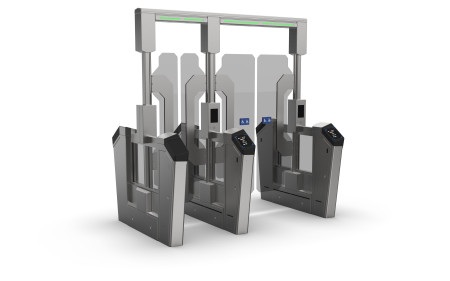
FEnX, introduced in February 2025, puts the same argument into a gate. Cubic says its computer vision can distinguish fare evasion from legitimate movement, including a parent accompanying a child. Commercially available parts and remote configuration address less glamorous needs: repairing equipment and changing station behavior. Those design choices matter alongside detection claims; operators must live with the gate after the demonstration ends.
Boston put a price on the hidden work
Boston shows how difficult the promise can become. The original fare-modernization contract was approximately $723 million. A 2020 amendment brought it to roughly $935 million. These were project agreements involving financing and continuing service obligations, not a retail price for readers. Comparing them with another city’s headline contract value requires care about scope and duration.
The trouble appeared before broad passenger adoption. Public reporting and the Massachusetts audit record describe technology challenges, delivery delays and inadequate project controls. The state auditor found delays in 44 of 93 sampled submittals. Its overview says both the MBTA and the project company recognized that the original contract did not meet the project’s needs.
The response was contractual and operational: an amended agreement, revised delivery plans and a phased introduction. In July 2024, MBTA general manager Phillip Eng described the preceding year as requiring a “course correction.” Contactless payments launched that August on buses, trolleys and at gated subway stations. Existing CharlieCards remained usable. A visible improvement had arrived; the wider transformation was a larger undertaking.
The lesson for buyers is practical. Agree on acceptance tests, access for riders without bank cards, privacy rules and responsibility for legacy equipment before promising a launch date. Treat those decisions as part of the product. A technically capable reader cannot settle a fare-policy dispute or rescue an agreement whose obligations are unclear.
“course correction”Phillip Eng, MBTA general manager, July 2024
The replay, the relationship, the bill
In defense, the equivalent of the green checkmark is the useful replay. Cubic’s SPEAR software integrates training data for analysis and reconstruction. An August 2026 alliance with Draken connects those capabilities to adversary training and range control. In May, Cubic also announced a Raytheon selection to deliver data-link equipment for Poland’s MS-110 reconnaissance-pod program.
Cubic’s breadth is a meaningful distinction: it combines physical hardware, software, integration and service across transportation and defense. It competes for particular programs, not one universal market. In transit, alternatives include suppliers such as Scheidt & Bachmann, as well as extending existing equipment. Its installed relationships are an asset; Boston demonstrates that experience alone does not guarantee a smooth replacement.
The latest changes keep the financial question in view. In September 2026, Cubic announced an agreement for up to $175 million in new financing to support liquidity and operations. That followed its approximately $3 billion acquisition by Veritas Capital and Evergreen Coast Capital in 2021. In October, former MTA chief Elliot “Lee” Sander became transportation CEO.
For agencies, the opportunity is fewer payment obstacles and better operational information. For defense customers, it is connected training and communications. The conditions matter: reliable integration, clear ownership of decisions, sustained funding and accessible alternatives. Cubic’s history offers something worth copying: carry a useful technical competence into adjacent problems. Its harder projects offer the companion discipline: budget for everything that happens between the measurement and the human being.