A submarine can be late because of something most people will never see. Somewhere between the drawing of a hull and its first voyage sit motors, drives, switchgear and the factories that build them. For Leonardo DRS, that hidden territory is the business. The Arlington company supplies the equipment that helps military platforms see, calculate, protect themselves and move. Its most revealing product might be its position: inside other companies’ machines.
- Four specialties: sensing, computing, protection and electric propulsion.
- $3.648 billion: revenue in 2025, up 13%.
- The wager: make the essential equipment, then connect it better.
This is a useful company to understand even if you will never buy a thermal sight. Defense coverage gravitates toward the finished object: the tank, the fighter, the submarine. DRS draws attention to the supplier underneath it, where a relatively narrow engineering capability can become an enduring place in a very large program.
01 / The company inside the machine
DRS occupies an interesting middle ground. It can act as a prime contractor, integrate a system, or supply a component. Its equipment can travel across platforms rather than depend on winning the competition to build the entire vehicle. Former chief executive William Lynn described that position as “platform-agnostic.” The practical advantage is choice: a new vehicle and an upgrade to an old one can both need better electronics.
Consider the Family of Weapon Sights - Individual. Its thermal imagery can be sent wirelessly to a soldier’s helmet-mounted display, allowing the soldier to see the sight’s view without shouldering the weapon. In October 2026, DRS announced a $63 million Army production order. The engineering problem includes the connection between two pieces of equipment and the human using them.
Or consider Trophy, developed by Israel’s Rafael and offered in the United States by DRS. It detects and tracks incoming anti-armor threats and activates countermeasures. Here, DRS’s contribution includes bringing a partner’s technology into the American military’s equipment and procurement environment. Expertise means knowing how the pieces fit.
A conceptual map of the portfolio, not a single product.
02 / A radar gets a ride
The company began in 1969, when engineers Leonard Newman and David Gross opened Diagnostic/Retrieval Systems. Its anniversary history describes early Pentagon study contracts and work in passive submarine detection. The founding question was already about extracting something useful from signals.
The portfolio grew through acquisitions. A particularly consequential one arrived in November 2022, when DRS merged with tactical radar specialist RADA and returned to public trading. The transaction gave it radar capability alongside its other sensors. It also supplied a different route to market after a planned 2021 IPO was postponed because market conditions did not support the valuation its parent wanted.
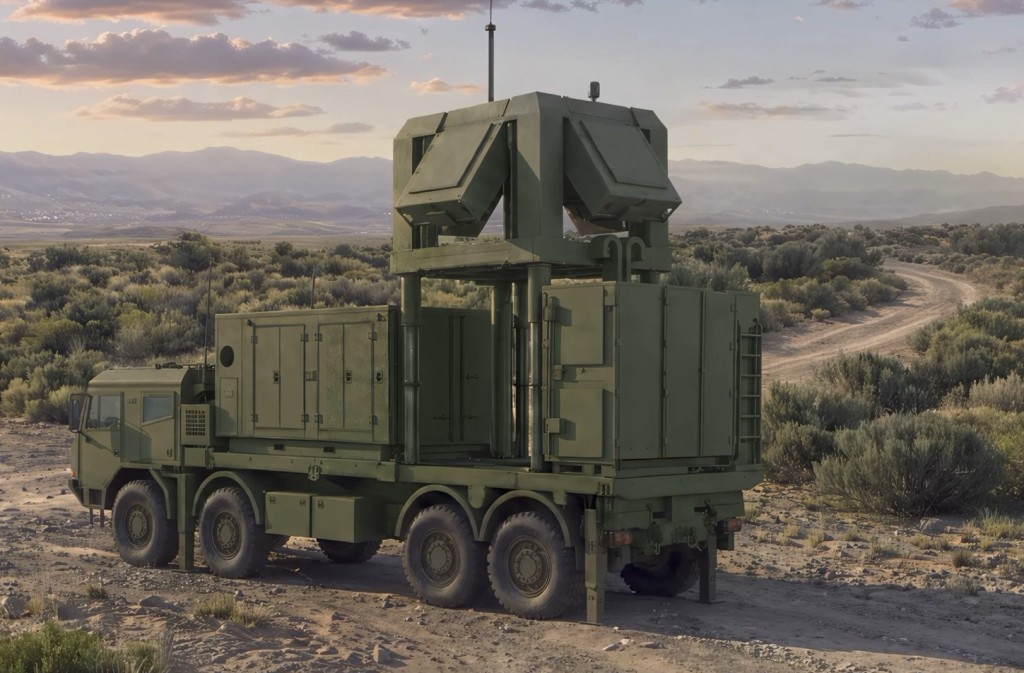
In October 2026, DRS launched cxMHR and said initial production had begun. Four radar panels and supporting equipment fit into one containerized system. The proposed convenience is easy to grasp: move the surveillance equipment together, deploy it on one vehicle, and connect it to an air-defense network. The integration is part of the product.
03 / The $120 million answer
Submarine propulsion makes the economics more tangible. Contracts announced in January 2024 were worth more than $3 billion when fully funded, covering Columbia-class propulsion equipment through shipset 12. DRS supplies the permanent-magnet main propulsion motor, motor drives, switchgear and controls. General Dynamics Electric Boat and the Navy chose the company for those components.
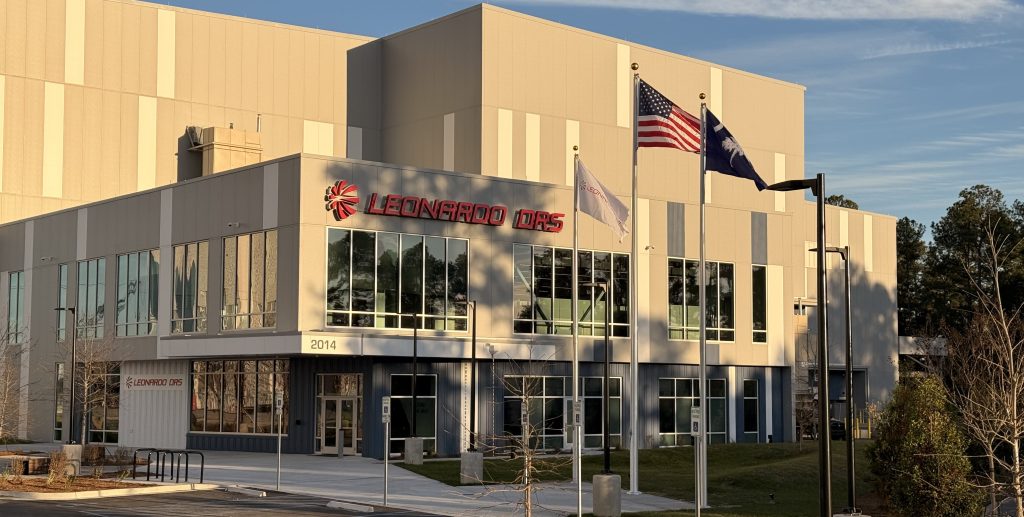
Winning the work creates a second problem: producing it. In January 2026, DRS opened a naval power and propulsion facility near Charleston, South Carolina. The project had been announced as an approximately $120 million net investment. More than 140,000 square feet are devoted to manufacturing, assembly, integration and testing, including capabilities for naval steam turbines.
“It’s really about capacity and efficiency.”
John Baylouny, on the Charleston investment
Baylouny explained that bringing more assembly work inside DRS would reduce dependence on suppliers. That is the unglamorous companion to a contract announcement: floor space, skilled workers and equipment that must arrive in sequence. A factory is a bet that future demand will justify today’s fixed costs.
04 / Growth has a customer
The customer concentration is substantial. Direct and indirect U.S. government business accounted for 80% of 2025 sales. The Navy and Army each represented 36% of total revenue. Other customers include allied governments and commercial buyers. DRS sells through contracts and subcontracts for development, manufacturing, integration and support.
Annual reported revenue. Growth percentage rounded.
Revenue reached $3.648 billion in 2025. In the second quarter of 2026, revenue was $913 million and funded backlog reached $5.1 billion. Funded backlog matters because an announced opportunity and money committed to work are different things. October’s counter-drone IDIQ award, for instance, carried a $500 million ceiling; DRS still has to compete for task orders.
Growth has friction. DRS reported that higher material costs and less efficient execution pressured 2025 profitability. The conclusion of a legacy foreign ground-surveillance program also hurt its Integrated Mission Systems segment. A specialized supplier still has to price, build and finish the work correctly.
That puts weight on the people doing the work. DRS describes workforce readiness, safety and supply-chain resilience as priorities, and supports veterans and military families. Those are stated commitments, rather than proof of what every employee experiences. They do fit a business whose products must survive demanding use long after the sales presentation ends.
05 / When seeing creates another problem
More sensors produce more information. Someone must reconcile it. In July 2026, DRS agreed to buy mission-software company Raft for $450 million in cash, with closing expected in the fourth quarter, subject to approvals and other conditions. DRS described fragmented data architectures as an obstacle to faster decisions. That explains the direction of travel: connecting hardware with software that combines its outputs.
The lesson another business can borrow is quite specific: learn which connection makes your customer’s equipment more useful, then invest there. The limits are specific too. This approach needs patient capital, reliable production and customers willing to fund long programs. Budget changes, delayed parts or integration trouble can undo the arithmetic. DRS’s future will be decided where its story began: turning a signal into something someone can use.
For a prospective customer, the useful starting point is therefore the equipment already in service. What must it detect? Which display must receive the information? How much power is available? Those questions make the supplier’s catalogue intelligible. They also explain why an impressive component, on its own, may solve very little.