Imagine buying a roomful of expensive processors, then discovering that their productivity depends on a cable. This is the awkward fact underneath the AI boom. A cluster has to move information between machines, repeatedly and predictably. A connection that briefly drops can interrupt that cooperation. Credo has built its business around making those connections behave.
- Credo sells the chips, cables and optics that move data through AI infrastructure.
- Annual revenue reached $1.34 billion in fiscal 2026.
- Its next optical design spreads traffic across more, slower channels.
The signature product is wonderfully unglamorous: a purple active electrical cable. The interesting part lives at its ends. Electronics restore the signal, allowing copper to do useful work where a passive cable becomes difficult to deploy. In a business obsessed with what happens inside a processor, Credo found an opportunity just outside it.
The cable gets a brain
At high data rates, getting a recognizable signal through a physical channel becomes an engineering problem. Credo’s answer starts with SerDes, short for serializer/deserializer. These circuits turn parallel data into a high-speed serial stream and recover it at the receiving end. Signal quality, timing and power consumption become matters of circuit design.
An active electrical cable, or AEC, adds signal-conditioning intelligence to copper. Credo’s catalog includes short links within and between racks, with different configurations for different reaches and ports. Its published 400G options, for example, range from one-meter connections to a SPAN version reaching seven meters. Distance is a design decision, not a footnote.
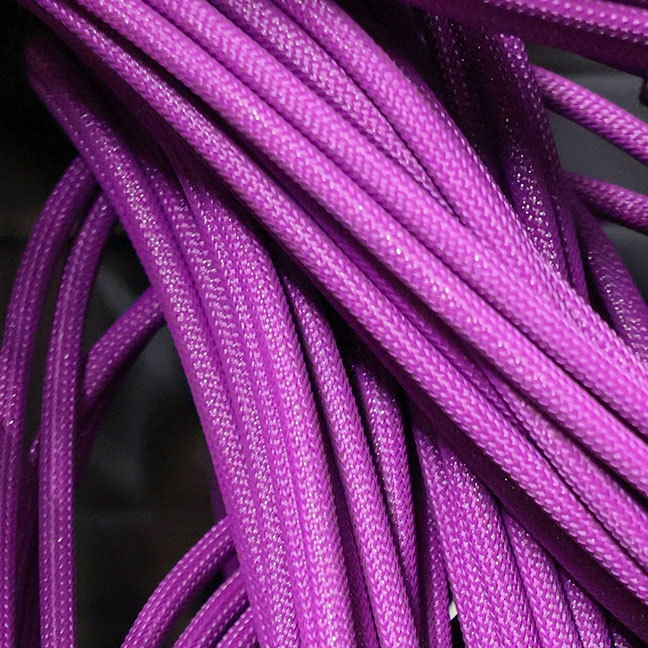
There is a practical benefit beyond the data sheet. Thick passive copper bundles consume space and resist bending. Credo says AECs can use up to 75% less volume than direct-attached cables. For someone arranging a crowded rack, a smaller cable is an unusually tangible improvement.
A circuit with several lives
Credo began in 2008. Co-founders Lawrence Cheng and Job Lam brought semiconductor experience; Cheng had directed analog design engineering at Marvell. Bill Brennan became CEO of the predecessor business in December 2013. The company’s expertise grew from analog, digital and mixed-signal engineering into products that address a complete connection.
That foundation can be sold in several forms. A chip designer can license Credo’s SerDes intellectual property. An equipment maker can buy chips or chiplets. A network operator can deploy finished cables or optical modules. The business combines product revenue with IP licensing, royalties and engineering services. One body of expertise gets several routes to a customer.
Optical digital signal processors help move data through optical modules. Retimers regenerate signals on Ethernet or PCIe connections. MACsec devices address link security. These are related jobs with different engineering constraints. Broadcom, Marvell and Astera Labs compete across portions of the portfolio, alongside cable suppliers. Credo’s pitch combines power efficiency, signal integrity and system-level support.
The order book blinked first
Technical competence does not make customer demand predictable. In February 2023, Credo disclosed that its largest customer had reduced its demand forecast for certain products. The company said the reasons were unrelated to its performance. Its fiscal fourth-quarter revenue outlook fell to $30 million-$32 million, and the shares nearly halved.
The distinction matters. A connection can work exactly as intended while the purchasing plan changes underneath it. Credo’s annual-report disclosures describe a business largely dependent on purchase orders rather than long-term buying commitments. Customers can change timing. Suppliers still have to plan inventory and engineering work.
Growth subsequently accelerated. Revenue rose from roughly $193 million in fiscal 2024 to $436.8 million in fiscal 2025, then $1.335 billion in fiscal 2026. The following quarter, ended August 1, 2026, produced another $479 million. Those figures establish the commercial expansion. They cannot make the earlier concentration problem disappear.
Selling fewer interruptions
Who buys this? Hyperscale operators, networking equipment makers, optical-module manufacturers and AI infrastructure providers. Two named collaborations make the use case concrete. In February 2026, TensorWave announced plans to deploy Credo’s ZeroFlap cables and optics across future AMD-based clusters. In May, Rebellions described integrating the cables into its RebelPOD inference systems.
The shared concern is continuous operation. A link flap is a connection dropping and returning. ZeroFlap addresses that instability; the name describes an operating goal, rather than a universal guarantee against every network failure. Credo’s PILOT platform adds telemetry and debugging tools, helping administrators investigate link health instead of treating a connection as an inscrutable black box.
“Our portfolio now spans connectivity from millimeters to kilometers, with solutions across optics and copper.”
Bill Brennan, CEO · September 2026
For a buyer, that means checking the behavior of a network under load, including how quickly a fault can be isolated. The useful question is whether the connection helps the rest of the installation deliver dependable work. Bandwidth establishes capacity; diagnostics help someone keep that capacity available.
The next trick: slow down
In October 2026, Credo described a 1.6T active light cable targeting distances up to 50 meters. Its architecture divides fast electrical lanes into many lower-rate optical channels. More parallel paths reduce dependence on complex signal processing. The announced design targets 12 watts per cable-end. These are product targets, awaiting proof through deployment.
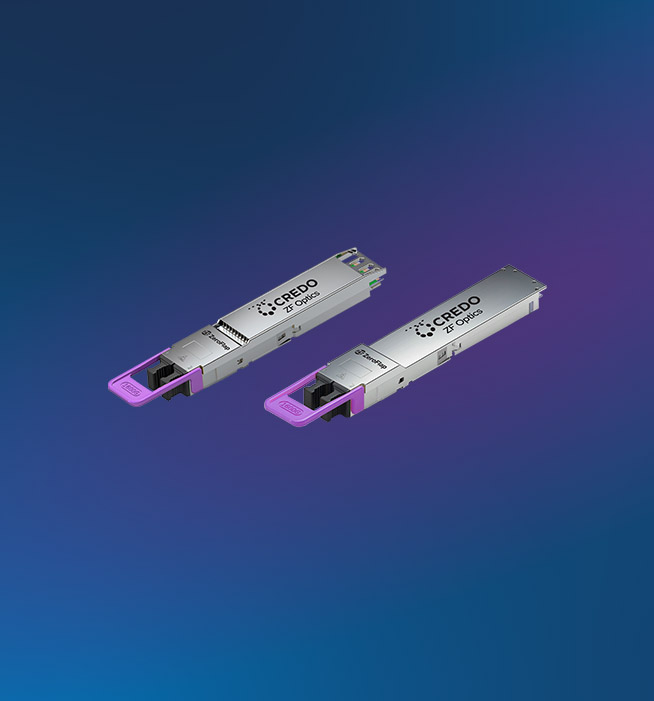
Credo’s move into optics also broadens the choice it can offer. A longer run does not have to fit the economics or physical limits of a copper connection. Conversely, an optical product’s added reach does not automatically make it the sensible purchase for neighboring machines. Matching the medium to the installation remains the customer’s job.
The October announcements also reached beyond network cabling. Credo demonstrated its OmniConnect Weaver memory fanout gearbox on an AMD Versal evaluation board, exploring memory capacity and bandwidth for programmable logic-based AI accelerators. It is another application of the same underlying concern: useful computing depends on where data can travel. For a prospective buyer, the next step is a workload-specific evaluation that measures the connection under the conditions of the intended installation, including power and fault recovery.
The expansion costs real money. Credo raised a $100 million Series D in 2020, then received approximately $183.8 million in gross primary IPO proceeds in 2022. Its 2026 agreement to acquire DustPhotonics specified $750 million in cash plus shares upfront. Completed in May, that purchase brought silicon-photonics technology inside the company.
There is a useful discipline here for builders: price the complete connection. Consider watts, distance, cable bulk, diagnostics and interruptions alongside bandwidth. Short copper runs and longer optical links solve different problems. The lesson to copy is the measurement habit: find what makes the whole system wait, then decide which connection earns its place.