David Lazovsky kept coming back with homework. In the early weeks of 2020, investors examining his proposed photonics business raised objections about the speed and accuracy of its electronics, the implications for software, and the risks of manufacturing it. Daniel Franke, one of those investors, remembers nearly talking himself out of the investment. Then Lazovsky would return with another patent, another technical model, another version of the idea. The sales pitch came with revisions.
There is something pleasantly unglamorous about this beginning. A future AI infrastructure company being argued into existence, calculation by calculation. Long before Celestial AI became an acquisition target, its founder had to persuade people who understood precisely how many things could go wrong. Franke eventually invested. His later description of the company began with a single word: “Relentless.”
By February 2, 2026, Celestial AI belonged to Marvell. The acquisition agreement had put an approximate $3.25 billion value on the upfront cash and shares, with additional consideration tied to future revenue milestones. Lazovsky joined the buyer and became executive vice president and general manager of its Data Center Networking Business Group. A business built around the movement of information had carried its founder into a larger job.
The distance between those two moments is the useful part of his story. It runs through manufacturing equipment, a materials research company, public markets and venture capital. Along the way, the mechanical engineer developed an interest in a question that sounds almost impolite amid an AI boom: what good is an expensive processor if it spends its time waiting?
A mechanical engineer in the thin-film business
Lazovsky studied mechanical engineering at Ohio University, attending from 1990 to 1994. His early career took him into Applied Materials and the machinery used to make semiconductors. That placed him close to the practical negotiations between what a chip designer wants and what a manufacturing process can reliably deliver.
His assignments were international as well as technical. From 2000 to 2002, he was based in Grenoble, France, directing European business management for Applied Materials’ metal deposition business. He subsequently worked as technology program manager for Endura 2, the company’s 300-millimeter metal deposition platform, before managing strategic accounts. His responsibilities included a semiconductor equipment business exceeding $1 billion.
Thin films are an excellent antidote to vague ambition. The films may be tiny; the consequences of getting them wrong are quite substantial. Lazovsky’s work involved equipment, customers and the complicated business of getting new processes into factories. Those concerns would recur throughout his career, even as the names on the office door changed.
In September 2004, he founded Intermolecular. Its business combined semiconductor and clean energy research with intellectual property licensing. He served as president, chief executive and a director until October 2014. Between those dates, the company made the journey from startup to a Nasdaq listing in 2011.
Before moving data, he accelerated experiments
Intermolecular addressed a different sort of waiting: the time required to discover and validate useful materials. Its high-productivity combinatorial approach allowed researchers to investigate variations in materials and processes. Semiconductor development was becoming more demanding, and the company offered customers a way to make that experimental work more productive.
The interest extended beyond conventional chips. In 2009, Intermolecular brought in Craig Hunter, who had founded and managed Applied Materials’ thin-film solar business, to lead its solar effort. The aim was to apply the company’s research methods to photovoltaic development. Lazovsky’s career was already crossing the boundaries between semiconductor manufacturing and energy technology.
His own name also appears on inventions. A patent for molecular self-assembly in substrate processing lists David E. Lazovsky alongside Tony P. Chiang and Majid Keshavarz. Its technical subject is far removed from a consumer AI application: arranging molecular layers with chosen properties on a substrate. The machinery beneath the machinery has occupied a fair portion of his working life.
After Intermolecular, his roles included executive chairman of POET Technologies and chairman of energy storage company ESS. In November 2019, POET announced that he was stepping down as executive chair while remaining a director. He also became a venture partner at Khosla Ventures. These were different seats around the same broad table: complicated physical technologies trying to become viable businesses.
The company with the unwieldy first name
During his time at Khosla, Lazovsky examined developments in photonics and semiconductors. He met professor Nikos Pleros, whose optical computing research helped inform the early architecture. He recruited Preet Virk and Michelle Tomasko to the founding team, combining semiconductor management and engineering with software experience.
The venture initially went by Inorganic Intelligence. A 2020 photograph captures the three founders together: Virk, Lazovsky and Tomasko. The name sounds as though someone has put the periodic table in charge of marketing. Virk later explained that it was cumbersome to type and poorly matched to the direction of the business. Celestial AI, with its reference to light, stuck.
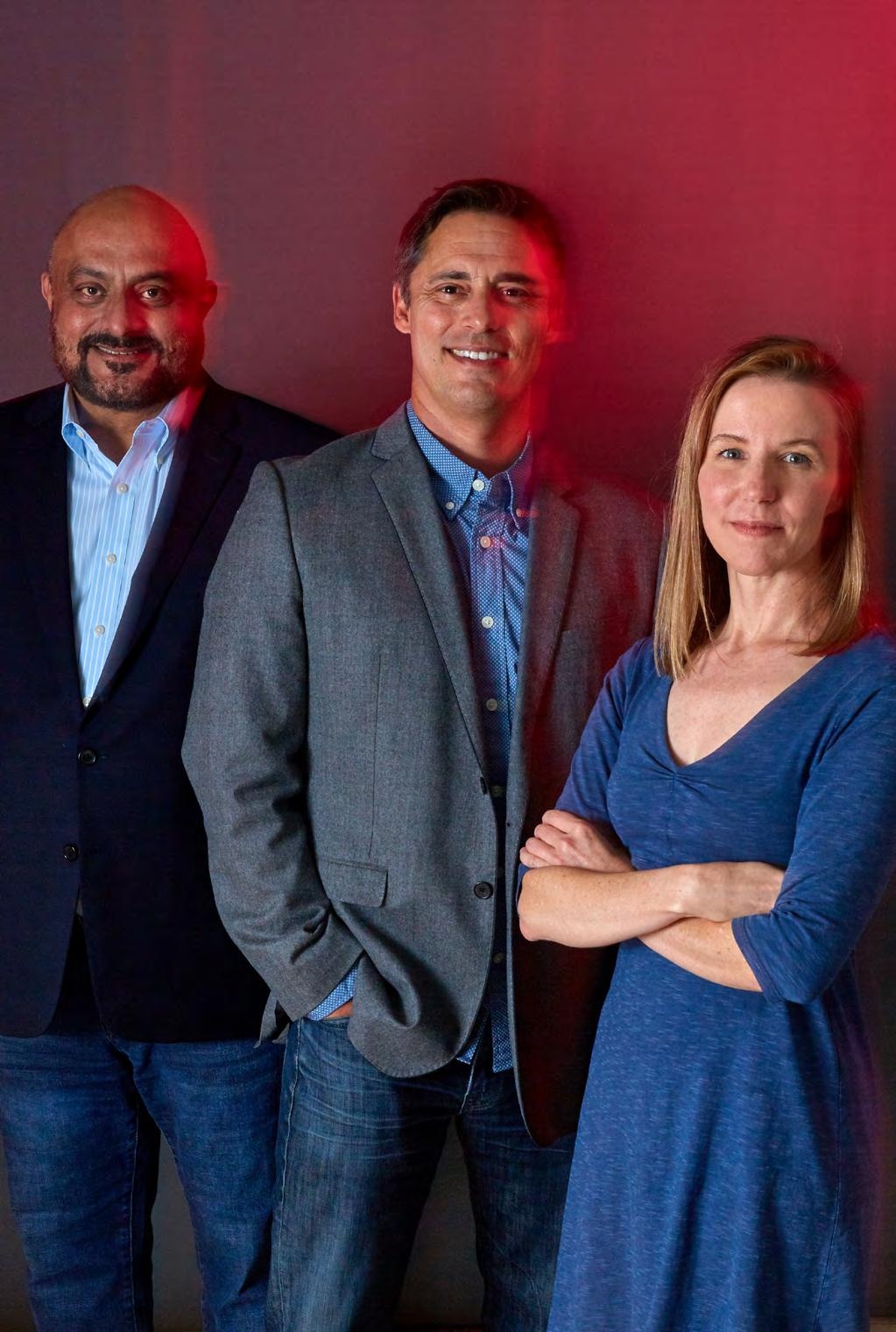
Celestial AI dates its founding to April 2020. Its eventual focus, the Photonic Fabric, addressed the connections linking processors and memory. The company’s earliest ambitions included optical computing; the commercial proposition became increasingly centered on helping electronic AI systems exchange data efficiently.
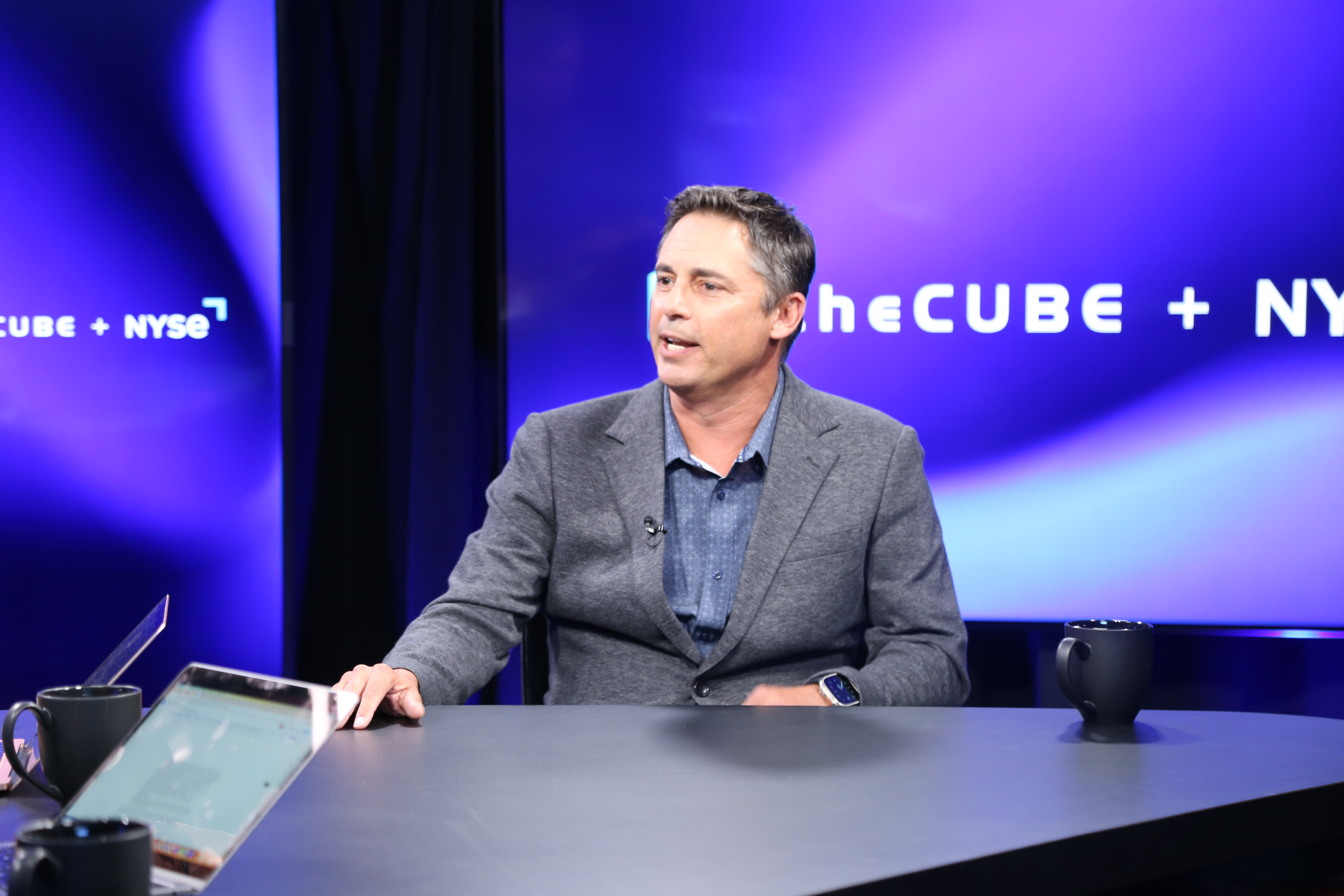
That distinction matters to Lazovsky’s positioning. In a 2024 interview with theCUBE, he described a platform available to companies such as Nvidia, AMD and the large cloud operators to improve their systems. He was selling connections into an existing computing world, with all its established suppliers, protocols and customer expectations.
An expensive chip, waiting for its next assignment
The memory problem is easy to picture even when the circuitry is difficult to describe. An AI processor needs data to do useful work. Memory holds that data. The connection determines how quickly it can arrive. Adding processing capacity leaves an awkward gap if the information cannot move fast enough to keep the hardware occupied.
Celestial AI’s Photonic Fabric uses optical links for that movement. The ambition encompasses connections inside processor packages and between systems across racks. In his public explanations, Lazovsky repeatedly returned to memory capacity, bandwidth and latency: how much information can be held, how much can move, and how long the trip takes.
The economics follow the architecture. If customers buy additional processors to obtain the memory attached to them, they may pay for computing resources they do not actually need. Separating the growth of memory from the growth of compute offers a different way to allocate that spending. It is a practical proposition for an industry whose appetite for hardware can make purchasing resemble competitive sport.
In 2024, Celestial AI described customer work on Photonic Fabric chiplets and partnerships spanning design and packaging, including Broadcom and Samsung. The company emphasized compatibility with existing workflows. For Lazovsky, the commercial challenge included fitting a new technology into the customer’s system, rather than asking the customer to reorganize everything around a component.
The awkward work between prototype and production
The team had manufacturing questions to settle alongside architectural ones. Imec worked with Celestial AI on photonics development and prototype wafers. Virk and photonics engineering leader Subal Sahni later described choices involving devices, packaging, testing and supply chains. By the end of 2021, the team numbered approximately 25 people.
These details give the enterprise a human scale. Twenty-five people is a group that can still know one another’s names, even when the technology they are discussing requires several disciplines and an agreeable foundry. Photonics, analog electronics, software and packaging all had to meet in a system customers could adopt.
Money arrived to support that work. A $175 million Series C in March 2024 was led by Thomas Tull’s U.S. Innovative Technology Fund. The following March brought a $250 million Series C1 announcement led by Fidelity Management & Research Company. In August 2025, the final close put that round at $255 million and cumulative funding at $520 million.
Celestial AI also received the Global Semiconductor Alliance’s 2024 Start-Up to Watch award. The recognition belonged to the company and its team. It came during the period when the business was assembling customer relationships and the industrial capabilities needed to turn its optical approach into deployable infrastructure.
“Marvell is the ideal home for our Photonic Fabric”
David Lazovsky · December 2025
A sale with more work attached
Marvell announced its acquisition agreement on December 2, 2025. Alongside the approximate $3.25 billion upfront consideration, it outlined up to $2.25 billion in additional consideration contingent on revenue milestones. Those were transaction terms for the company’s equityholders, with future conditions attached.
Lazovsky’s explanation of the agreement emphasized production scale and access to customers. The deal closed on February 2, 2026, bringing Celestial AI’s people and technology into Marvell’s Data Center Group.
By October 2026, Lazovsky was presenting at Marvell’s investor day as the executive leading its Data Center Networking business. His remit covered strategy, product and technology direction, and execution across that portfolio. He had taken another company through a major transition, and remained responsible for what happened afterward.
The investor’s memory of the early pitch survives the transaction rather well. Questions arrived; Lazovsky returned with something people could examine. A patent. A model. A revised design. Across materials research and optical connections, his career has repeatedly brought him to the space between an appealing idea and a working industrial system. It is a crowded space, full of objections. He seems to have found plenty to do there.
Keep following the light
- Marvell executive biography
- David Lazovsky on LinkedIn
- Celestial AI website
- Watch: theCUBE conversation (2024)
- Watch: Optica interview (2025)
- Watch: Nasdaq interview (2024)
- Listen: Growth Investor conversation
- Read: Celestial AI joins Marvell
- Read: the early founders, 2020 (PDF)
- Read: the manufacturing journey
- Read: an early investor’s recollection
- Explore: Celestial AI company profile