A screen above a food counter has one obvious job: tell a hungry person what to order. Give it a price, a photograph and a reliable power supply, and the problem seems solved. Then multiply that screen by 8,400. Introduce regional prices, different food brands, several kinds of hardware and a marketing team that would like to change lunch before lunchtime. The photograph is suddenly the easy part.
- Creative Realities runs the software and services behind enterprise display networks.
- Its 7-Eleven work kept existing hardware while enabling localized digital menus.
- Menu design is tested against sales data, not merely approved for its looks.
- The CDM acquisition expanded the business; debt and continuing losses complicate the picture.
The screens were already there
Creative Realities occupies an awkward, useful place between advertising and information technology. It designs what appears on a display, supplies proprietary software to manage it, integrates that software with other systems, and handles deployment and ongoing support. Its customers buy a functioning network. A screen that looks wonderful while showing yesterday’s price is an expensive way to start an argument.
The 7-Eleven assignment makes the distinction tangible. AT&T appointed Creative Realities to modernize the convenience-store network’s digital signage. Existing equipment had to remain useful. The company’s case study describes a mixture of devices and networks that made provisioning and maintenance difficult. Its answer was a middle layer of software between the hardware and Clarity, its menu-board platform.
The accompanying project PDF credits signageOS with that interface. It reports a resulting network of more than 8,400 screens across over 2,100 US stores, with 99.9% CMS uptime. Those are the supplier’s figures. The practical achievement was avoiding a hardware replacement while giving the corporate team control over menus tailored to brands, locations and geographies.
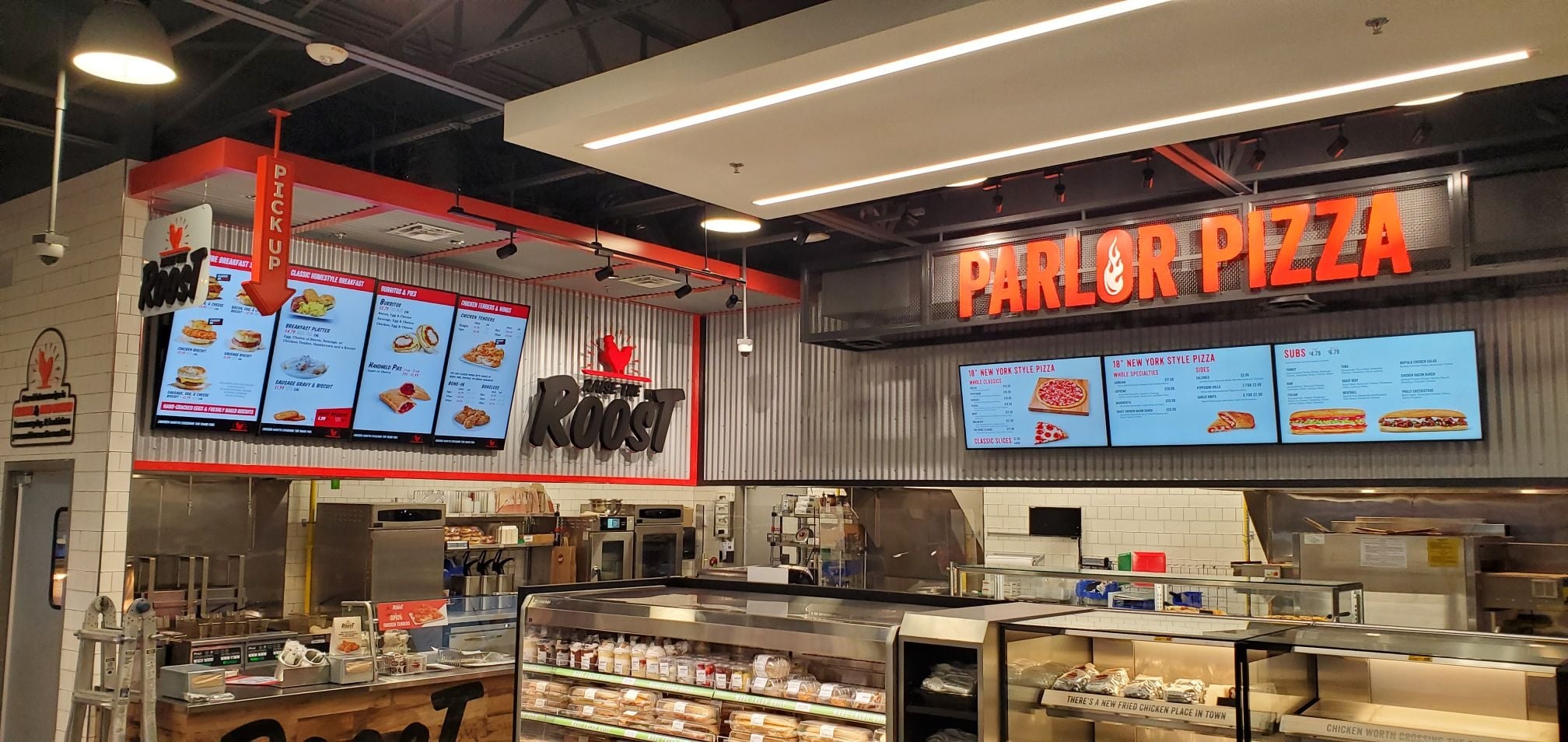
This is also where persuasion entered the project. The case study says the customer needed convincing to use enterprise content automation. Creative Realities built an interface that could personalize content down to product and price while preserving real-time corporate changes. The lesson is modest and useful: central control becomes easier to accept when local differences survive it.
Clarity connects menu content to point-of-sale data, pricing and inventory. ReflectView serves broader enterprise signage needs: content scheduling, device management, network optimization and integrations. Reflect eXperience adds browser-based local control with assigned permissions. These products divide responsibility between headquarters, individual locations and the machines themselves. That division is much of the product.
Sales and device reports feed the next round of decisions. Illustrative workflow.
A menu is a small experiment
There is a temptation to judge digital signage as decoration. Creative Realities’ analytics work offers a more demanding question: what did people buy after the decoration changed? In an anonymized national fast-casual case, it replaced menu content and an existing digital-board solution at 20 sites. The goal was to increase average checks through beverages and sides while making the menu easier to read.
After 12 weeks, the company reports a 1.5% overall sales lift at test sites against controls, equivalent to an annualized average of $24,000 per store. That annual figure is an extrapolation, not a full year of observed sales. The measured comparison, rather than the projection, is the useful part of the account.
The old solution was already digital. The intervention concerned how choices were presented. For an operator, this suggests a sensible purchase order: identify the commercial problem, collect a baseline, change the content, and compare results. Replacing every screen before asking that question risks buying a brighter version of the same confusion.
A menu board is a sales experiment with a power cable.THE OPERATOR’S VIEW
The customer examples are pleasingly ordinary. In November 2024, Creative Realities named drive-thru coffee chain 7 Brew and Steele Brands, owner of Crisp & Green and PURALIMA, as Clarity users. Their needs included regional pricing, limited-time offers and consistent menus across growing franchise networks. A 2023 Freshëns announcement described real-time and location-specific menu updates for a brand with 350 locations.
These are repeated coordination problems. A promotion must appear in the right place, an unavailable item should not invite an order, and a franchise should be able to make an authorized change without acquiring the keys to every other franchise. Software earns its place by making those tasks repeatable.
The concession stand has a media plan
A restaurant wants to sell lunch. A venue may also want to sell the attention of the person waiting for lunch. Creative Realities operates on both sides. AdLogic schedules and reports advertising campaigns across place-based networks; CPM+ supports programmatic advertising. The business combines hardware and project sales with recurring software, support and content-management work, plus media monetization services.
Its advantage is the breadth of that assignment. A standalone CMS, an audiovisual integrator and an internal creative team can each solve a portion. Creative Realities offers to coordinate those portions through its own platforms and services. Hardware flexibility matters here: ReflectView supports Windows, BrightSign and Android players. Compatibility can preserve earlier investments, as the 7-Eleven project illustrates.
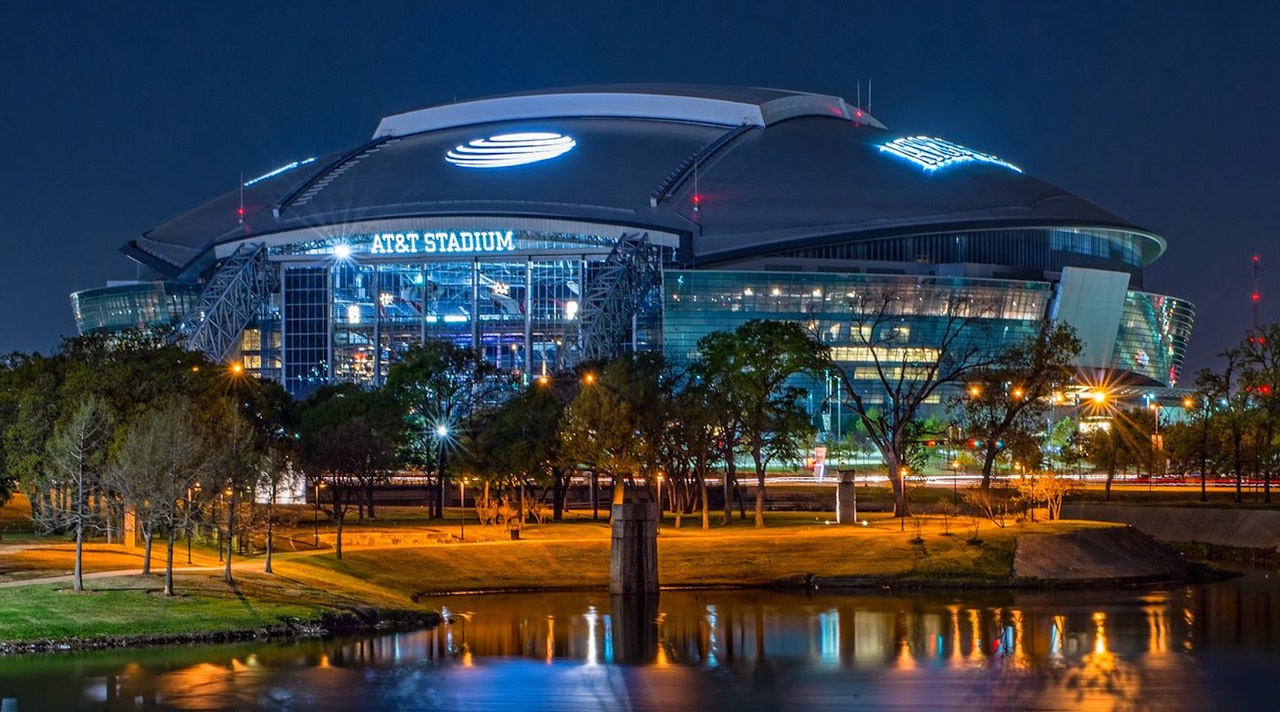
The FanConnect partnership extends that coordination into venue IPTV. The companies describe an integrated workflow joining Clarity menus, event schedules, POS data and venue screens, with a first deployment scheduled for Durham Bulls Athletic Park. Content could change with the event or respond to a major play. FanConnect’s Brett Crossley supplied the concise ambition: “In-venue screens should respond to the energy of the event.”
A useful boundary follows. Advertising inventory needs advertisers, credible reporting and room in the customer experience. Filling a display with promotions can interfere with its primary job of helping someone order. For a small business with rarely changing content, an enterprise service arrangement may also exceed the coordination problem it solves.
The Canadian expansion came with a bill
Creative Realities’ history is a succession of combinations. Jason Friedman founded the original business in 1997 after work in theater and as a concert roadie. The listed company later took the Creative Realities name through its Wireless Ronin merger history. Reflect Systems joined in February 2022, broadening the software portfolio. The name has continuity; the organization underneath it has changed considerably.
The next large move closed on November 7, 2025: the purchase of Cineplex Digital Media. The announced price was CAD 70 million before adjustments. Financing terms included a $36 million senior term loan from First Merchants Bank and $30 million of convertible preferred equity from North Run Capital. The purchase price and the financing package measure different things.
CDM brought North American installations and a substantial Canadian business. The acquisition announcement described more than 6,000 locations and 30,000 endpoints, with customers including RBC, Scotiabank, Tim Hortons and AMC. It also brought a mall advertising network across 95 shopping destinations. Creative Realities was buying ongoing customer relationships and media operations alongside technology.
Growth has more than one ingredient
Approximate figures. The non-CDM portion is calculated by subtraction; it is not a measure of organic growth.
The results deserve arithmetic rather than applause. Second-quarter 2026 revenue was $21.5 million, including approximately $7.4 million from CDM. The company still reported a $4.2 million GAAP net loss. Annualized recurring revenue reached approximately $20.5 million; its definition includes maintenance, support and content management as well as SaaS, and assumes contracts renew on existing terms.
Physical work also intruded on the software story. First-quarter 2026 installations were delayed by winter storms, and transitioning away from an outsourced installer for a large CDM customer incurred $500,000 in one-time costs. In 2025, the wind-down of a US Stellantis engagement prompted a software impairment disclosure. A growing installed base still depends on customers staying, technicians arriving and deployments completing.
Borrow the method before buying the network
The transferable idea is to make the screen accountable. Inventory the equipment before replacing it. Give local teams explicit permissions. Connect prices and availability to the system that records them. Test content against a baseline. Budget for installation and continuing care. Creative Realities’ own mix of software and services shows how much work continues after the display is switched on.
Its model fits organizations where that work repeats across many sites, brands or events. It becomes less persuasive when the content hardly changes, the data is unreliable, or nobody owns the update process. An attractive menu cannot repair inaccurate inventory. The useful question for a prospective customer is wonderfully unglamorous: who will make sure tomorrow’s screen is right?