There is a version of the air-purifier business that is very boring. You buy a plastic tower, you plug it in, and every few months you are supposed to remember to order a replacement filter that you will probably forget until the machine starts wheezing. Coway looked at that forgettable moment - the filter you never change - and decided it was the whole business.
The company most Americans have never heard of is the one behind the Airmega air purifier they keep adding to an Amazon cart. Coway is a South Korean home-wellness manufacturer with roughly $3.4 billion in global revenue, and its American operation runs out of an office on Wilshire Boulevard in Los Angeles. It sells air purifiers, reverse-osmosis water purifiers, self-cleaning bidets and water softeners. But the more interesting thing it sells is a subscription.
01 — THE ORIGINA crisis turned into a business model
Coway was founded in 1989 in South Korea, starting with water purifiers and adding air purifiers and a research center by 1995. Then came the 1997-98 Asian financial crisis, and with it a problem: a water purifier was a large upfront purchase at exactly the moment nobody wanted to make one. Instead of discounting, Coway changed the shape of the transaction. It let people rent the machine by the month, and folded delivery, installation and filter replacement into the fee.
That decision did two things at once. It removed the price barrier, and it removed the chore. A technician - branded "Cody" in Korea - would show up on a schedule to swap the filter and check the machine. The customer never had to think about maintenance, and Coway never had to win the sale twice. The relationship simply continued.
The model traveled well across the product line. What worked for water purifiers worked for air purifiers, then bidets, then water softeners and mattresses. Each new category was another thing you could rent instead of buy, and another reason for a technician to be at your door. Today the parent company manages more than 7.65 million rental accounts in Korea - roughly one in three to four households.
02 — THE PRODUCTSAir, water, and a bidet that cleans itself
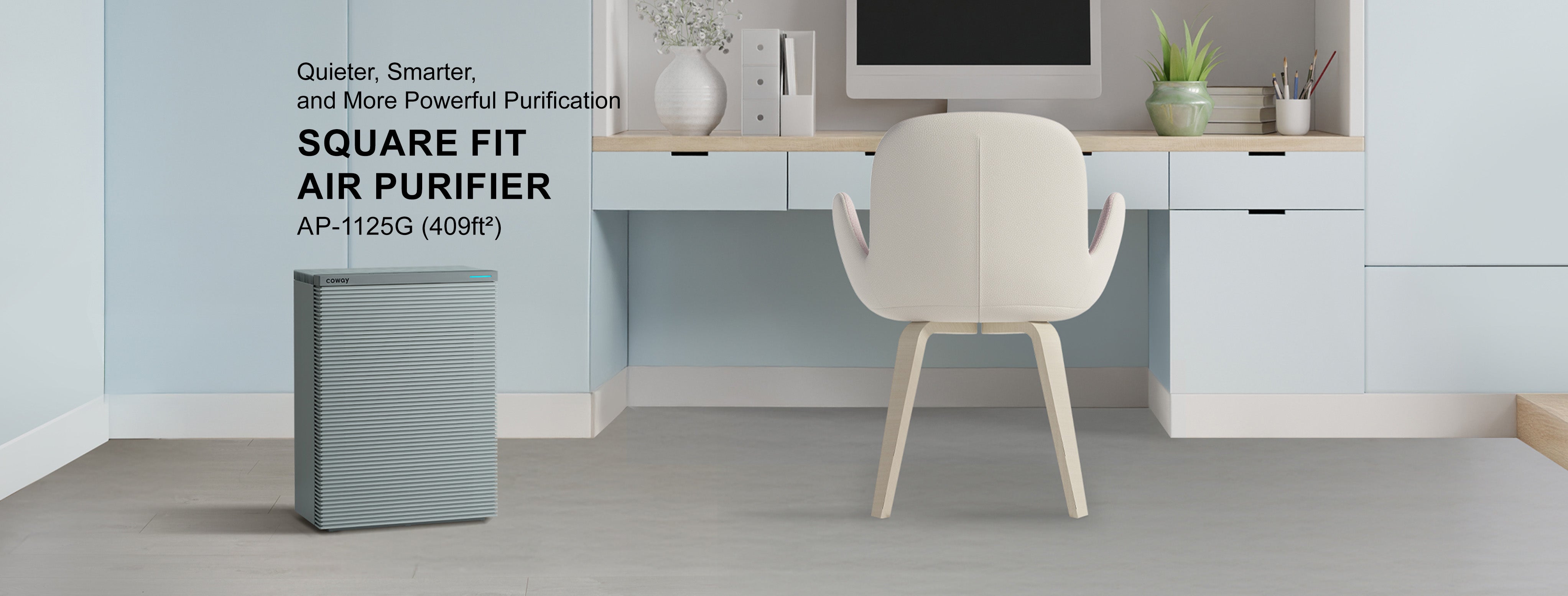
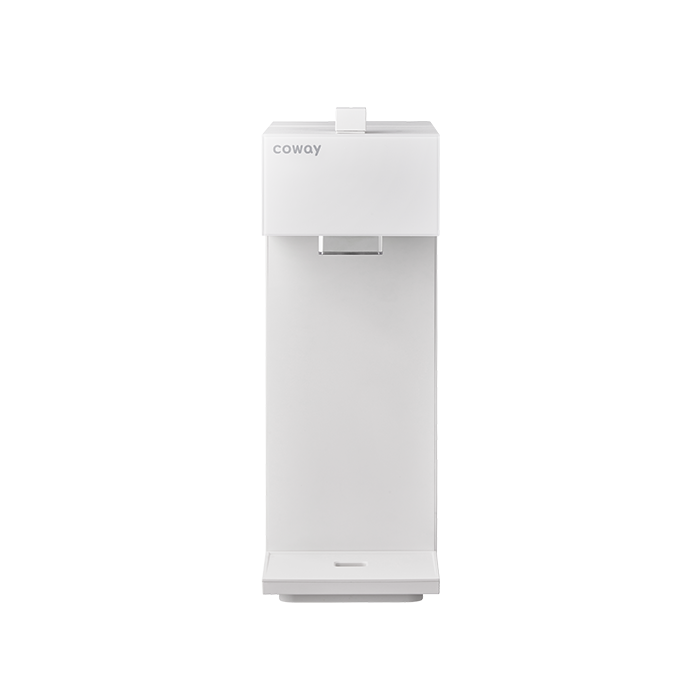
Coway USA's catalog splits into three jobs: air care, water care and body care. In air, the Airmega line runs from the compact Square Fit up through the Noble, Ultra and the design-award-winning Icon, which uses the company's HyperCaptive filtration to capture 99.999% of particles down to 0.01 microns - and, in a very 2020s flourish, charges your phone wirelessly on its top plate. In water, the range covers countertop, standing and under-sink reverse-osmosis systems, including hot, cold and ice models. In body care, the Bidetmega bidets add UV sanitization and self-cleaning nozzles, alongside home water softeners.
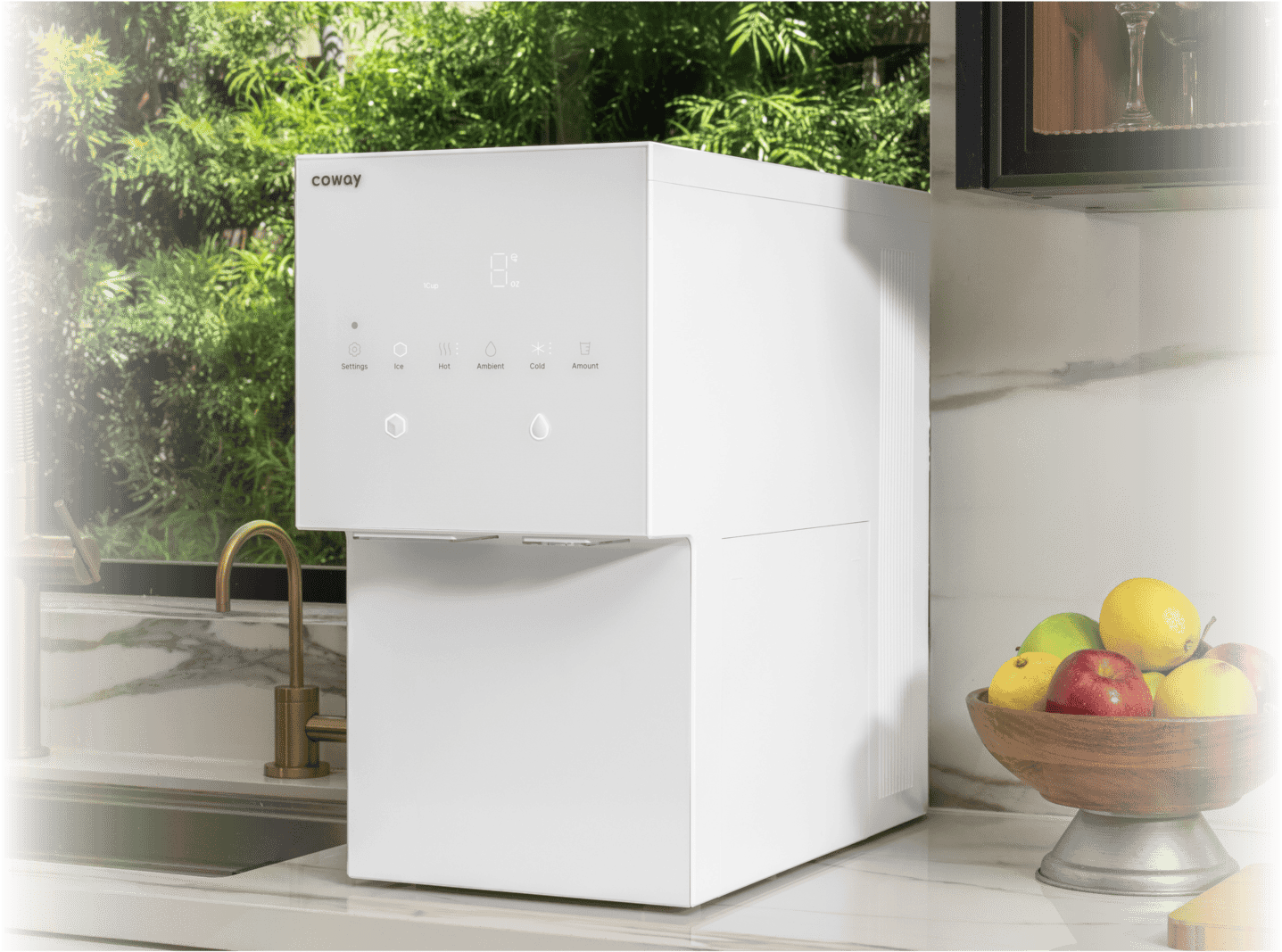
The pricing tells you where the company thinks the value is. You can buy most products outright at retail - Airmega is a fixture on Amazon, Walmart and Home Depot - or you can lease them. Water purifiers rent for roughly $22.99 to $62.99 a month, air purifiers for $34.99 to $55.99, and body-care units for $27.99 to $43.99. Either way, the filter is the recurring line item, and the filter is the point.
03 — THE MOATThe technician is the product
Plenty of companies make a good HEPA filter. What is harder to copy is a field service network. In Korea, Coway fields roughly 12,000 service agents - several times the size of competitors' 3,000-to-4,000-person teams. That reach is why the subscription holds: the value a customer pays for every month is not the box, which they already have, but the person who keeps it working.
The United States is the harder test. Americans are less accustomed to routine in-home service visits, so Coway USA adapted rather than forced the Korean playbook. Its "Heart Service" offers in-home maintenance where it makes sense, but it also runs a self-service track that ships filters to your door on a schedule for you to install yourself. Same recurring relationship, lower friction.
04 — THE NUMBERSA quiet compounding machine
The parent company's chart is the kind founders daydream about: revenue climbing from 89.4 billion won in 1998 to 1 trillion won by 2005 and past 4 trillion won in 2025 - about $3.4 billion, a 15% jump on the prior year. Over 40% of that now comes from outside Korea, with Malaysia alone generating more than a trillion won a year. Coway USA contributes an estimated $160-$168 million.
The ownership twist is that Coway is controlled by Netmarble, a mobile-game company that acquired a majority stake in 2019 for about 1.74 trillion won. It is an odd pairing on paper - games and water filters - but the boring bet paid: since the deal, Coway's revenue is up roughly 64% and operating profit has nearly doubled.
05 — THE DESIGNAppliances you leave out on purpose
One reason the rental model works is that people are willing to keep these machines in view. Coway has won a Red Dot Design Award for 17 consecutive years, and for the Airmega Icon it worked with fuseproject, Yves Behar's studio, to make an air purifier that reads as a piece of furniture rather than an appliance. It is a small strategic detail with a large consequence: a purifier you are proud to display is a purifier you keep subscribed to.
06 — THE MARKETWhere Coway USA fits
In the US, Coway sits in a crowded field. In air, it competes with Levoit, Dyson, Blueair, Honeywell and Molekule. In water, with Kinetico, Multipure, Brita and Aquasana. In body care, with Toto and Bio Bidet. Most of those rivals sell you a product and move on. Coway's differentiator is the serviced subscription and the technician network behind it - a harder thing to stand up, and a harder thing for a customer to leave.
The company keeps widening the definition of home wellness. In 2025 it launched Coway Life Solution for funeral and senior-care services, and in 2026 it introduced TheraSol, a home medical-device brand. The through-line is consistent: recurring relationships around health inside the home, sold one filter, one visit, one month at a time.
What can a reader actually take from Coway? The playbook is unusually copyable: find the recurring, forgettable chore hiding inside a one-time purchase, take it off the customer's plate, and charge for it forever. It does not work everywhere - it needs a consumable (the filter), a service network expensive enough to deter imitators, and a product people will keep in plain sight. Where those line up, a boring appliance becomes a 28-year growth streak.