An aircraft engine has a serial number. So does the part that replaces a part inside it. Somewhere, software must remember what went where. The Air Force’s Comprehensive Engine Management System, or CEMS, performs that decidedly unromantic task. In Concept Plus’s account, the system covers more than $40 billion in propulsion inventory. The interesting question is what happens when the software supporting that responsibility needs to change.
- The work: modernize federal software, cloud infrastructure, and data systems.
- The specialty: Oracle expertise applied to defense, health, and civilian missions.
- The useful idea: change in stages, with operations and training built into the plan.
Ten thousand small pieces of continuity
Concept Plus reported a modest-sounding CEMS milestone in January 2026: roughly 10,000 work tickets moved into the Air Force’s BES Agile Services Toolkit. Following service-level agreement approval, the migration took less than two months and included testing and training. It sat inside a $33 million sustainment and modernization contract awarded in March 2025. That figure covers the wider assignment; it is no price tag for moving tickets.
A ticket is an agreement about unfinished work. Lose its history and somebody must reconstruct the conversation. Seen this way, transferring tickets becomes a practical test of modernization: can the organization improve its tools while preserving what it knows? For a reader responsible for an old enterprise system, that question is more useful than another promise about digital transformation.
A five-year contract for teaching end users an Oracle-based maintenance system. Adoption has its own budget.
The old browser in the war room
A different Air Force program supplies the sharper picture. LOGFAC helps planners assess logistical feasibility. According to Concept Plus’s May 2026 case study, the old application depended on aging Oracle Forms and Internet Explorer, alongside accumulated technical debt and security vulnerabilities. Planners still needed it. The assignment combined replacement work with continued availability.
The company reports refactoring 156 forms and reports, resolving 416 security findings, and operating the rebuilt capability in AWS Cloud One. A translation layer let the team modernize without invasive database schema changes. These are company-reported results. Their practical appeal is clear: change the interfaces and engineering around an established database without forcing every dependency to move at once.
This is where the company becomes easier to understand. An old system contains both useful institutional memory and expensive constraints. The engineering judgment lies in distinguishing them. A cloud destination alone cannot make that decision. Somebody has to understand the application, the security obligations, and the people whose work depends on it.

Move the house. Or rebuild it.
Concept Plus makes that distinction explicit in its Oracle offerings. FusionBridge moves Oracle E-Business Suite infrastructure to Oracle Cloud Infrastructure while keeping EBS as the system of record. FusionAdvance replaces EBS with Oracle Fusion Cloud applications covering finance, human resources, and supply chain. The names sound related because the decisions are related. The amount of organizational change is different.
FusionBridge
Keep EBS → Move to OCI
Infrastructure changesFusionAdvance
EBS → Fusion Cloud applications
Applications and workflows change“stabilize before they transform”
Concept Plus, describing FusionBridge
That phrase is a useful buying principle. An agency facing aging infrastructure can address the platform first. An agency whose workflows and data model require replacement faces a broader redesign. Preserving the application will only carry it so far. And these particular Oracle paths fit organizations with Oracle estates; the same product choices would make little sense for an unrelated stack.
The wider portfolio includes software development, cloud operations, cybersecurity, data analytics, and AI. Named offerings include Audit360 for managing audit workflows and a Unified Movement and Data Platform for integrating information in austere or disconnected environments. These sit alongside contracted services. In health, the company describes support for military exposure records, hearing conservation, and medical workforce systems. The common problem is making existing information usable across complicated operations.
The acquisition that explains the business
In January 2019, Concept Plus acquired DAI Solutions, a consultancy in organizational development, communications, learning, and change management. That purchase deserves attention. It placed the human work of adoption beside the technical work of implementation. The Air Force’s separate MRO training award, announced in 2024, makes the connection tangible: users need instruction to turn a deployed application into a working practice.
US Information Technologies followed in an acquisition announced in January 2022, adding Oracle-focused federal expertise. Put the two purchases together and a coherent strategy emerges: deepen the technical bench and improve the organization’s ability to absorb change. That is an interpretation of the acquisitions, but a useful one for buyers comparing a specialist with a larger general-purpose integrator.
A specialist with an operating job
Founder and CEO Ahmad Abuzaakouk established Concept Plus in 2008. The business earns its place through implementation, development, sustainment, operational support, and training engagements. Agencies can buy through established contract vehicles, including its GSA schedule. Concept Plus also resells Oracle technology and cloud services. Its relationship with Oracle is central: Oracle lists the company as its 2025 North America Service Partner Technology/Cloud Customer Success Award winner.
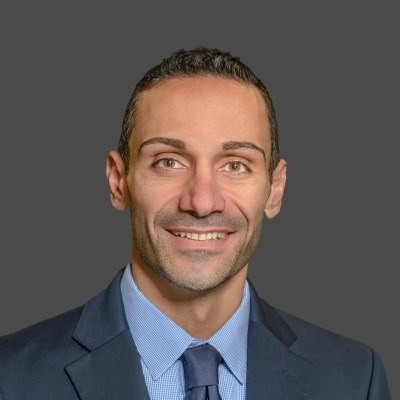
Blue Delta Capital Partners announced a minority growth investment in November 2023, intended to support expansion, executive leadership, and board development. In January 2026, former Leidos executive Milad Bahrami became president. The company’s careers material also promises dedicated training funds, certifications, and tuition reimbursement. For a services business, developing the people doing the work belongs beside winning the next contract.
For procurement teams, the comparison set includes large federal integrators such as Leidos and GDIT, as well as other Oracle specialists. The useful comparison is the proposed team, its experience with the actual application, and the boundaries of its responsibility. Who handles the database? Who owns the migration rehearsal? Who trains the users? Who answers when something fails after deployment? A specialist earns its place when those answers are concrete. A long list of capabilities is a starting point for that conversation.
The lesson readers can copy is procedural: preserve essential records, separate platform moves from application redesign, and fund training explicitly. Success still depends on accurate data, security approval, and users prepared for change. Concept Plus’s appeal is in taking those dependencies seriously. Before choosing the new system, somebody has to account for everything the old one remembers.
Follow the work
Explore Concept Plus’s services, people, and public projects.